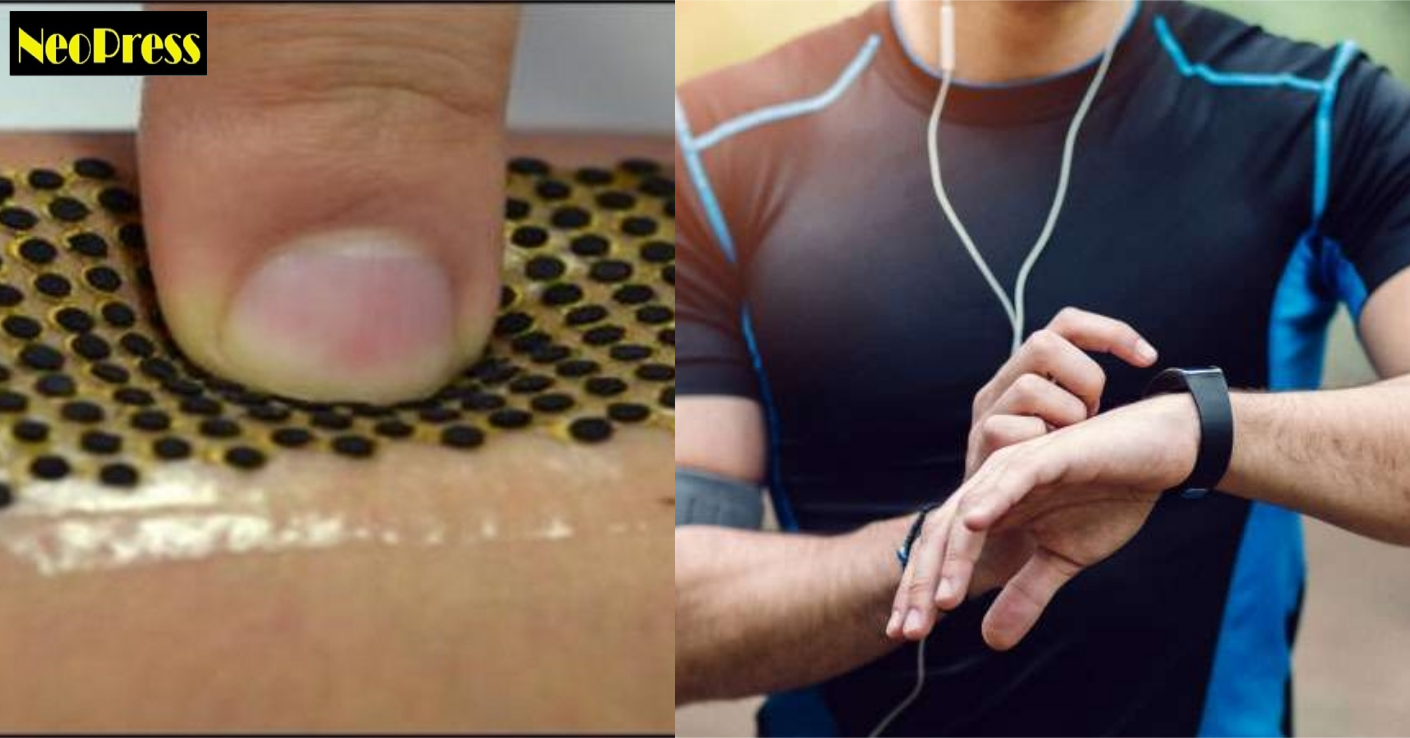
Now, your sweat can power wearable devices

Researchers have developed stretchable fuel cells that extract energy from sweat and are capable of powering electronics, such as LEDs and Bluetooth radios.

In a paper, published in the journal Energy & Environmental Science, the researchers described how they connected the biofuel cells to a custom-made circuit board and demonstrated that the device was able to power an LED while a person wearing it exercised on a stationary bike.

The biofuel cell that the Engineers from the University of California San Diego in the US developed can stretch and flex, conforming to the human body.

The research led by Professor Joseph Wang, who directs the Center for Wearable Sensors at the university, used a combination of clever chemistry, advanced materials and electronic interfaces.

The researchers explained that biofuel cells were equipped with an enzyme that oxidises the lactic acid present in human sweat to generate current. This turned the sweat into a source of power.

To make the biofuel cells flexible and stretchable, the engineers decided to use what they call a “bridge and island” structure developed in Professor Sheng Xu’s research group.

Essentially, the cell is made up of rows of dots that are each connected by spring-shaped structures. Half of the dots make up the cell’s anode and the other half are the cathode. The spring-like structures can stretch and bend, making the cell flexible without deforming the anode and cathode.

The basis for the islands and bridges structure was manufactured via lithography and is made of gold. As a second step, researchers used screen printing to deposit layers of biofuel materials on top of the anode and cathode dots. The researchers’ biggest challenge was increasing the biofuel cell’s energy density, meaning the amount of energy it can generate per surface area.

Increasing energy density is key to increasing performance for the biofuel cells. The more energy the cells can generate, the more powerful they can be. To increase power density, engineers screen printed a 3D carbon nanotube structure on top the anodes and cathodes.

The structure allows engineers to load each anodic dot with more of the enzyme that reacts to lactic acid and silver oxide at the cathode dots. In addition, the tubes allow easier electron transfer, which improves biofuel cell performance, the study said.

As a technology lover you may like our daily important technology news series. It’s a playlist and you can retrieve the total day-wise videos. Please consider subscribing our YouTube channel:

Author: Technology Vista

Tagged : /

New technology to keep fruit vegetables fresh for 1,000 days!!

When efforts are being made to reduce wastage of perishable commodities by boosting cold chain system, an Indian company has introduced “Black Box” technology, which can ensure preservation of any agriculture commodity for 1,000 days.

Saahil Peerzada and Sachin Adhikari of Viztar Agritech have tied up with Spain-based Nice Fruits to offer new technology in cold storage plants in the Indian subcontinent, with the first two to become operational in Hyderabad in the next seven months.

“The Black Box is an unique technology and is developed by scientists in Spain. It can be easily set up in any factory or plant. In normal cold storage, nitrogen is used. However, in ‘Black Box’ system there will be neither nitrogen nor any preservative. The stored commodities will have their natural content, nutrition value intact for 1,000 days,” Peerzada told IANS.

“Be it fruits, vegetables or meat, anything can be kept fresh for 1,000 days using ‘Black Box’.” Peerzada said the technology was tried and tested worldwide and it was patented in the US. Peerzada’s company will be technology and well as equity partners in these cold storage plants to be set up in the Indian Subcontinent.

“We have tied up with Hindustan LNG to set up two such storage plants in Hyderabad,” he said. Subsequently, similar plats will be set up in Maharashtra for mangoes and in Uttar Pradesh. Talking about the benefits of the technology, Peerzada claimed that returns to farmers will increase four-fold.

“Farmers are forced to throw their produce on the road after prices go down. They cannot store it due lack of proper preservation and storage facilities. With our technology, farmers will not be required to go to markets and sell their produce at modest price. They can come to us and get four times the price,” Peerzada said.

He said that cold storage factories will store agriculture produces from farmers and export them “on their own terms”. “It will be win-win situation for both farmers and traders. Also, it will help the country in getting more foreign exchange,” Peerzada said. Initially, the capacity of these storage will be 30 tonnes per day, which will be increased to 1,000 tonnes per day later, he said.

As a technology lover you may like our daily important technology news series. It’s a playlist and you can retrieve the total day-wise videos. Please consider subscribing our YouTube channel:

Author: Technology Vista

Tagged : /

This is how Nokia is evolved over the years!

Nokia is the oldest and most fondly remembered mobile technology company. Its progress is something worth documenting. It’s time to reminisce.

The networking equipment arm dates back almost to the company’s inception, but the phone division was disbanded. A new company, HMD, recently took up the mantle and it just launched its first flagship, the Nokia 8.

PureView, which debuted with the eponymous Nokia 808 PureView, started with a huge, high-resolution sensor with on-chip image processing. 808’s measly single-core processor would never have handled the torrent of data, but PureView made zooming into 38MP photos feel all so smooth.

Then, we had ClearBlack – the brand name for a polarization filter on the display. It debuted a year earlier with the Nokia C6-01 and Nokia E7. It has been used on both LCD and AMOLED screens with spectacular effect – just like polarized glasses reduce glare, so does ClearBlack.ClearBlack stayed at Microsoft too, but the Nokia 8 has an unbranded polarization filter. Afterall, the screens were completely viewable even in broad daylight.

Nokia (not HMD) is building professional VR cameras through its OZO division and, as any movie maker will tell you, sound is just as important as visuals. So the Nokia 8 has HDR mics as well, three of them, plus the same advanced algorithms behind the OZO camera’s sound capture. Nokia N86 had an impressive camera and screen of its own, but we want to talk audio recording. It featured MEMS digital microphones that promised CD-quality audio. The 808 PureView improved on that with high dynamic range microphones, “Nokia Rich Recording”, which scaled to an impressive 140dB.

Nokia had used the “Xpress” name earlier for Xpress-On Covers – a collection of phone covers (front and back) that could be changed quickly and easily. Those date back to at least 1998’s Nokia 5110. (GSMArena trivia: this is the second phone that entered our database). And back then, all phones had their own personality (i.e. not a screen-covered rectangle) and the best ones let you customize them.

Speaking of audio, we can’t help but think back to XpressMusic. It was Nokia’s answer to the Sony Ericsson Walkman phones and Apple’s iTunes (which was a day-one feature of the iPhone). Then there was Comes With Music, a year of free music downloads for Nokia 5800 owners. This later morphed into MixRadio which Microsoft shut down last year (it already has Groove, not need for two music services).

Despite the name, the Nokia 8 is a product of HMD – a relatively new company. Still, it has a close partnership with Nokia and as you can see, the Finnish juggernaut has plenty of knowledge that it accumulated over the years.

And of course, we still have the subject of electronic maps to mention. In 2007, Nokia bought NAVTEQ, the biggest supplier of electronic maps at the time, and Smart2Go by Gate 5, a smart and feature phone navigation app (which was later renamed Nokia Maps). Nokia quickly released it as a free download, but initially kept voice-guided navigation as a paid feature. That is until it made it completely free on all its Symbian phones in 2010.

Maps (later renamed Here) was sold off to a German automotive consortium in 2015, so the Nokia 8 just uses Google Maps. Nothing new, the Nokia 6110 Navigator used Route66, a competing app, instead of the in-house solution. The next version, 6210 Navigator did use Nokia Maps 2.0, though.

It’s pretty evident that ClearBlack and PureView are two features we won’t mind making their way to Nokia 8!

As a technology lover you may like our daily important technology news series. It’s a playlist and you can retrieve the total day-wise videos. Please consider subscribing our YouTube channel:

Author: Technology Vista
Tagged : /

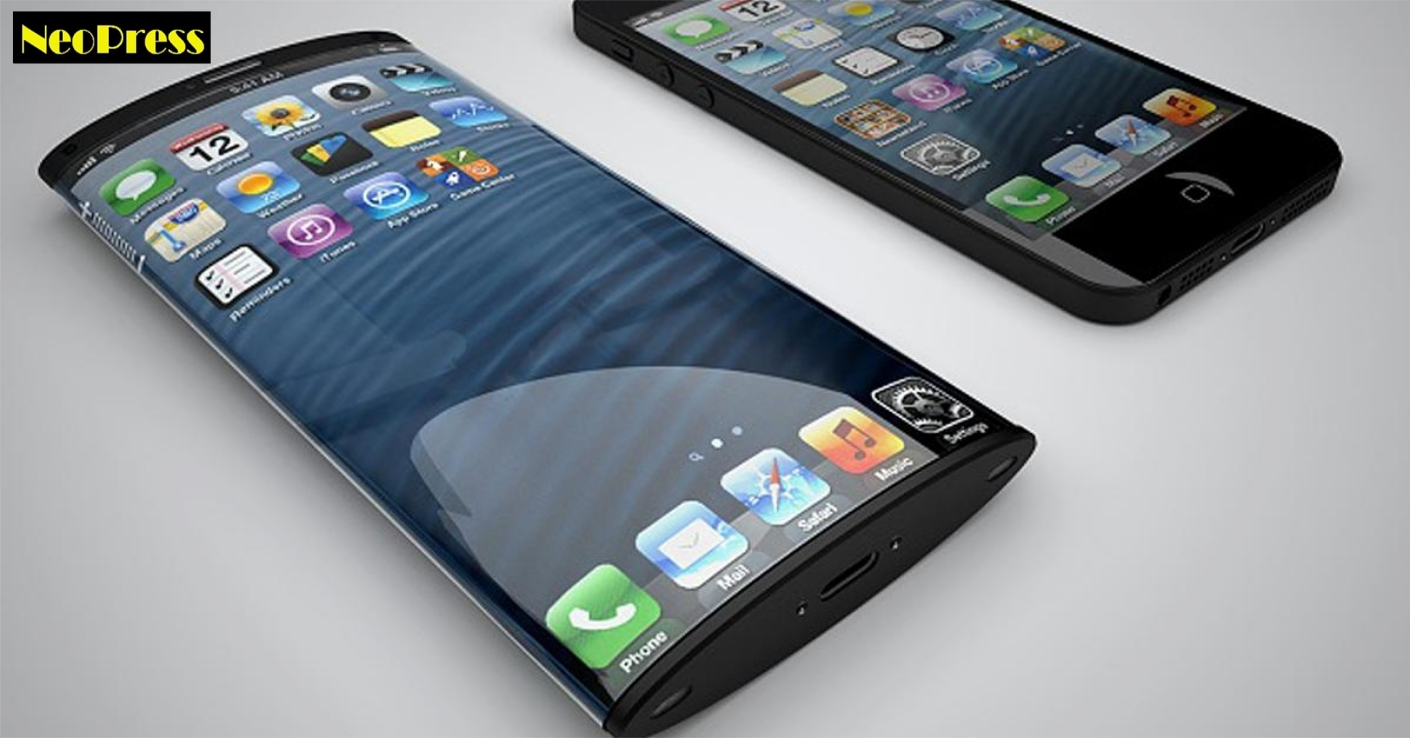
The Choice Between iPhone 8 and iPhone 7s- Which Will Make the Cut?

Everyone is hung up on the release of iPhone 8. But really, are we overlooking the sufficiency of iPhone 7s/7s Plus?  Here’s all that has been speculated and reported about Apple’s three new rumored phones.

About iPhone 7s/7s Plus:

To begin with, the price which has been estimated as $649 and $769 respectively. The design is reportedly largely unchanged from current iPhone — 4.7- and 5.5-inch for the 7s and 7s Plus. There is a possibility of a glass body and stainless steel edges (both specs still iffy).

There should be an LCD screen, possibly with True Tone tech like the newer iPads. The rear cameras follow horizontal dual-camera system. In short, incremental improvements over iPhone 7 and 7 Plus. Apple has put in its newest A11 processor and a traditional home button and touch ID. With a release date of September with widespread availability and possible wireless charging, the iPhone 8 certainly has itself a fair challenge.

About iPhone 8:

With an easy price estimation of over $1,000, this iPhone is way on the wrong edge of affordability. It is speculated to have a 5.8-inch with edge-to-edge display, glass body, and stainless steel edges with an overall size close to the 4.7-inch iPhone 7. OLEDs have surpassed LCDs in certain key image-quality and performance metrics, and with organic light-emitting diode (OLED) display via Samsung (supplier), this is set to be Apple’s first non-LCD iPhone.

Its rear camera are vertical dual-lens with optical-image stabilization, possible augmented reality capabilities. Maybe it would include a “SmartCam” function that could detect various kinds of scenes and/or motion and make adjustments automatically, according to software developer Guilherme Rambo with possible support for 4K video recording at 60 frames per second.

This too has Apple’s newest A11 processor and wireless charging with front-facing camera expected to have facial recognition with 3D sensing. Face ID could be implemented in lieu of the physical-button-based Touch ID, according to Bloomberg and others.

Lastly, with limited availability that will possibly constrained until early 2018, and high volume shipments to be delayed by months, Apple has certainly amped up the mystery quotient on this one.

width="560" height="314" allowfullscreen="allowfullscreen">

Author: Technology Vista

Tagged : /

Snapchat may overtake Facebook in the US

Photo-sharing app Snapchat is expected to overtake Facebook for the first time in the US, as the user growth of Facebook will slow among teens and adults, market research firm eMarketer has said.

Snapchat is forecast to overtake both Instagram and Facebook in terms of total users aged 12 to 17 and 18 to 24 for the first time in 2017, that will shoot up Snapchat’s share of US social network users to 40.8 per cent.

The decline in user growth will also impact Facebook’s ad revenues as the company tries to make the platform an attractive destination for the advertisers by boasting about its young users.

Facebook reported nearly $9.2 billion in ad revenue in the second quarter of 2017, a rise of 47 per cent from the same period last year.

“We see teens and tweens migrating to Snapchat and Instagram. Both platforms have found success with this demographic since they are more aligned with how they communicate-that is, using visual content.

“Outside of those who have already left, teens and tweens remaining on Facebook seem to be less engaged-logging in less frequently and spending less time on the platform,” said Oscar Orozco, a senior forecasting analyst at eMarketer.

According to the market research firm, Facebook’s loss of monthly users between the ages of 12 and 17 will accelerate to 3.4 per cent this year compared to a 1.2 per cent drop in 2016.

eMarketer also predicted that Facebook-owned Instagram is expected to post growth of 23.8 per cent this year. Its monthly users under 12 years age are also expected to increase 19 per cent, and those in the age group of 12-to-17 to 8.8 per cent.

As a technology lover you may like our daily important technology news series. It’s a playlist and you can retrieve the total day-wise videos. Please consider subscribing our YouTube channel:

Author: Technology Vista

Tagged : /

New electronic skin tracks heart rate, respiration

Taking the technology of wearables to the next level, researchers have developed a new electronic skin that tracks heart rate, respiration, muscle movement and other health data, and wirelessly transmits it to a smartphone.

The electronic skin developed by South Korean and US-based researchers has better trackers, greater flexibility, smaller size and the ability to stick the self-adhesive patch just about anywhere on the body.

The microsystem could also be used in robotics or autonomous navigation, which the team is now investigating.

“The wearable contains about 50 components connected by a network of 250 tiny wire coils embedded in protective silicone. The soft material enables it to conform to the body unlike other hard monitors,” the researchers stated in a paper published in the journal Nature Communications.

The wearable wirelessly transmits data on movement and respiration as well as electrical activity in the heart, muscles, eyes and brain to a smartphone application.

The coils can stretch and contract like a spring without breaking and are also configured in an unusual spider web pattern that ensures uniform and extreme levels of stretchability and bendability in any direction.

“Combining big data and artificial intelligence technologies, the wireless biosensors can be developed into an entire medical system which allows portable access to collection, storage and analysis of health signals and information,” said Kyung-In Jang, professor at South Korea’s Daegu Gyeongbuk Institute of Science and Technology.

According to researchers, the key to creating this microsystem is stretching the elastic silicone base while the tiny wire arcs, made of gold, chromium and phosphate, are laid flat onto it.

“The entire system is powered wirelessly rather than being charged by a battery. The researchers also considered key electrical and mechanical issues to optimise the system’s physical layout such as sensor placement or wire length to minimise signal interference and noise,” Jang explained.

As a technology lover you may like our daily important technology news series. It’s a playlist and you can retrieve the total day-wise videos. Please consider subscribing our YouTube channel:

Author: Technology Vista

Tagged : /

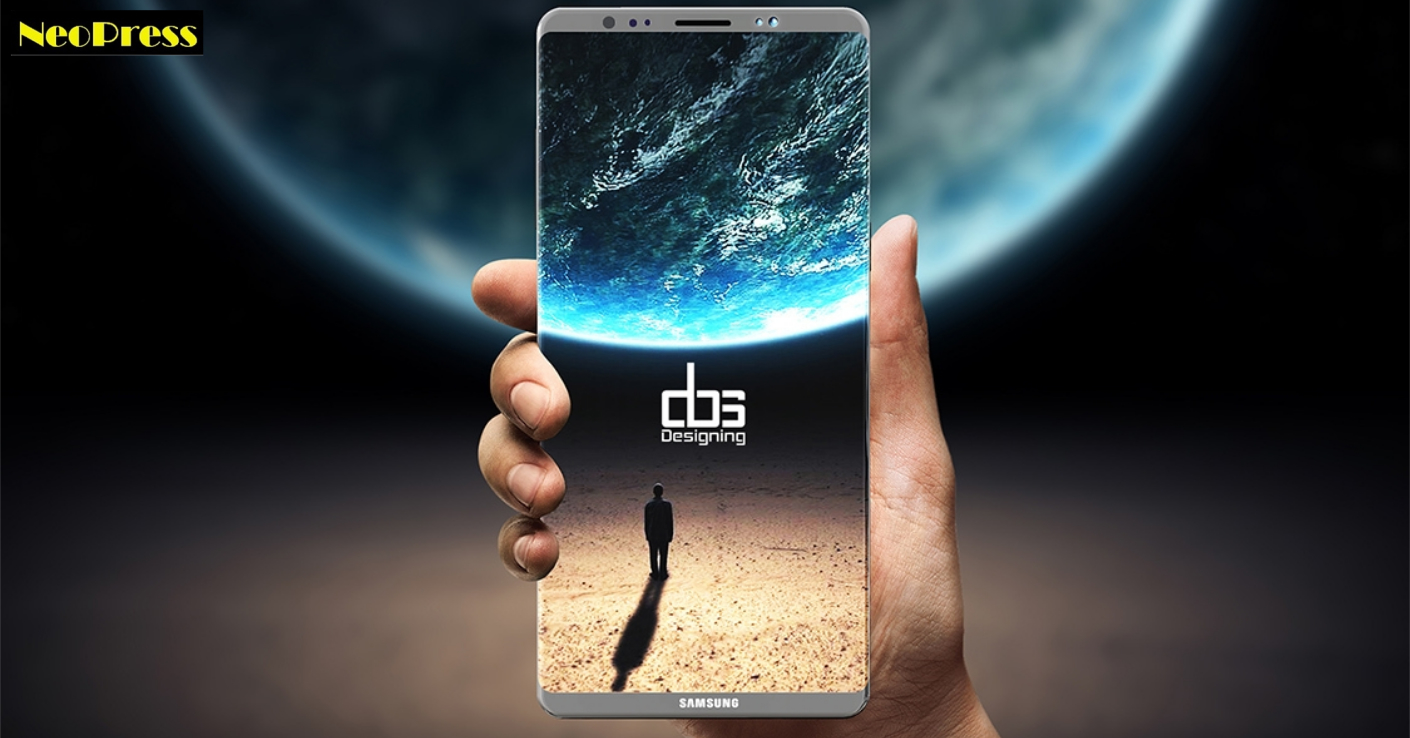
Samsung set to unveil Galaxy ‘Note 8’

After sailing through the debacle over Galaxy Note 7 last year, Samsung is set to launch its flagship Note 8 on Wednesday, thus ending rumours of halting the further release of the Note series.

The device is expected to be launched online on August 23 at 8:30 p.m.

To regain the customers’ trust, the company is believed to have enhanced safety checklist by using in-house ‘8-point battery test’.

Samsung ‘Note 8’ may have a separate physical button for its ‘Bixby’ voice assistant, much like Galaxy S8 and S8 Plus flagship devices.

The device may also come with a digital pen called the “S Pen” that may have a speaker within it, doubling it as a voice recorder.

According to a report in CNET, ‘Note 8’ will have a dual-camera setup — likely a 12MP optical and 13MP telephoto sensor and it may also have rounded edges on all sides.

“The Note 8 could top the Galaxy S8 Plus’ 6.2-inch display with a 6.4-inch screen on a body not much larger than the S8 Plus,” Apple Insider reported on Tuesday.

If reports are to be believed, Samsung is developing a novel “gas sensor” that works as breathalyser. This sensor is expected to be present in Note 8 also which would tell a person if he is drunk.

The fiasco over Samsung’s Note 7 caused the firm operating losses of some $5 billion.

As a technology lover you may like our daily important technology news series. It’s a playlist and you can retrieve the total day-wise videos. Please consider subscribing our YouTube channel:

Author: Technology Vista
Tagged : /

Micromax unveils ‘Canvas Infinity’ with 18:9 aspect ratio

Micromax on Tuesday launched its first bezel-less smartphone “Canvas Infinity” at Rs 9,999 that comes with a display aspect ratio of 18:9 — a first in this price segment.

The 18:9 format offers more viewing space and a better immersive experience while streaming videos and playing games.

‘Canvas Infinity’ is available on Amazon.in and the registration to purchase the device began on Tuesday. The first sale of the phone would begin at noon on September 1.

The display is similar to Samsung Galaxy S8 and S8+ and LG G6 that has an aspect ratio of 18:9 for enhanced picture quality.

The company has also promised an upgrade to the Google’s new ‘Android Oreo’ operating system.

“With an 18:9 display, Canvas Infinity is the only smartphone to offer this technology at this price point. We will be expanding the Infinity range in the coming months, offering an unmatched smartphone experience to our users,” Rahul Sharma, Co-Founder of Micromax Informatics, told reporters here.

In terms of specifications, ‘Canvas Infinity’ sports 5.7-inch screen, 13MP primary camera and 16MP selfie camera with “real time bokeh” effect.

The device is powered by Qualcomm Snapdragon 425 chipset. A 2900mAh battery powers the device.

Other specifications include 3GB of RAM and 32GB internal storage that can be further expanded via a dedicated microSD card slot.

Micromax is also offering a 24-hour service promise on ‘Canvas Infinity’.

Other connectivity options like 4G LTE, dual-SIM slots, Wi-Fi, Bluetooth and GPS are also supported.

As a technology lover you may like our daily important technology news series. It’s a playlist and you can retrieve the total day-wise videos. Please consider subscribing our YouTube channel:

Author: Technology Vista

Tagged : /

Google makes ‘Oreo’ operating system tastier than ‘Nougat’

The next version of Google’s mobile operating system ‘Android Oreo’ that has been rolled out in the US is packed with never-before-seen features and improvements in its various tools.

‘Android Oreo’ features a new picture-in-picture mode, new notification dots to the Operating System (OS) and improvements to Bluetooth audio playback, Google’s Android website posted in a blog on Tuesday.

Recently-launched premium smartphones such as Samsung Galaxy S8, S8+ and HTC U11 are expected to see the software updates before the end of this year.

Around 85 per cent of Android devices used, according to the latest numbers, have not upgraded to Android Nougat that was released last year.

The new Android OS was released in conjunction with the 2017 solar eclipse.

The update is currently undergoing carrier testing for Pixel phones and the Nexus 5X and 6P.

The new OS is expected to be two times faster than ‘Nougat’ and also helps minimise background activity in the apps that are used less.

‘Android Oreo’ lets a user see two apps at once and makes multitasking convenient.

For example, if you are watching a video on YouTube and have to respond to an email simultaneously, all you need to do is press the home button and that will shrink the video tab to a corner while you write a response.

The feature is called picture-in-picture (PIP), and it’s already available in Samsung Galaxy phone and Moto Z2 Play.

‘Android Oreo’ also makes copy-paste job easier. A user would just need to long press or double-tap anywhere on the text to select it.

On the security front, Android Oreo makes the scan of apps more obvious while downloading them to ensure a user that they are safe to use. It also auto-connects a the phone to a high quality open Wi-Fi and secures the connection with a VPN back to Google.

Oreo’s accessibility button allows users to quickly access from the navigation bar accessibility features, like magnification, and functionality within accessibility services, like ‘Select to Speak’.

As a technology lover you may like our daily important technology news series. It’s a playlist and you can retrieve the total day-wise videos. Please consider subscribing our YouTube channel:

Author: Technology Vista

Tagged : /

UK scientists create world’s smallest surgical robot

British scientists have developed the worlds smallest surgical robot which could transform daily operations for tens of thousands of patients, the media reported on Sunday.

From a converted pig shed in the Cambridgeshire countryside, a team of 100 scientists and engineers have used low-cost technology originally developed for mobile phones and space industry to create the first robotic arm specifically designed to carry out keyhole surgery, reports the Guardian.

The robot, called Versius, mimics the human arm and can be used to carry out a wide range of laparoscopic procedures including hernia repairs, colorectal operations, and prostate and ear, nose and throat surgery, in which a series of small incisions are made to circumvent the need for traditional open surgery.

The robot is controlled by a surgeon at a console guided by a 3D screen in the operating theatre, according to its maker Cambridge Medical Robotics.

“Having robots in the operating theatre is not a new idea,” said the company’s chief executive, Martin Frost.

“But the problem at the moment is that they are phenomenally expensive, not only do they cost $2.5 million each to buy but every procedure costs an extra $3,800 using the robot… and they are very large.”

The Cambridge Medical Robotics said it was already working with a number of National Health Services-owned and private hospitals to introduce the robots.

The current global market for surgical robots is worth approximately $4 billion a year but this is expected to grow to $20 billion by 2024.

As a technology lover you may like our daily important technology news series. It’s a playlist and you can retrieve the total day-wise videos. Please consider subscribing our YouTube channel:

Author: Technology Vista

Tagged : /

‘Android O’ set for official launch in US

The next version of Google’s mobile operating system ‘Android O’ is set to be officially rolled out in the US on Monday.

“On August 21, a solar eclipse will sweep across the entire US for the first time since 1918. Android is helping you experience this historic natural phenomenon so you can learn more about the eclipse and countdown to the big day when you’ll meet the next release of Android and all of its super (sweet) new powers, revealed via live-stream from New York City,” said a report in 9to5Google late on Sunday.

Update to Android 8.0 version is expected to introduce a new picture-in-picture mode, new notification dots to the Operating System (OS) and improvements to Bluetooth audio playback.

Recently-launched premium smartphones such as Samsung Galaxy S8, S8+ and HTC U11 are expected to see the software updates before the end of this year.

Around 85 per cent of Android devices used, according to the latest numbers, have not upgraded to Android Nougat that was released last year.

As a technology lover you may like our daily important technology news series. It’s a playlist and you can retrieve the total day-wise videos. Please consider subscribing our YouTube channel:

Author: Technology Vista
Tagged : /

Xiaomi Mi Max 2: Affordable phablet for content consumption (Tech Review)

After launching three smartphones in India till May this year, Chinese technology giant has unveiled the upgraded version of its last year’s phablet ‘Mi Max’.

Much like its predecessor, ‘Xiaomi Mi Max 2’ has a 6.44 screen but a bigger battery. Playing its cards on the slimmer design and a massive 5,300mAh battery, Xiaomi is looking to grab a bigger pie of the affordable phablet market.

Lets see if Rs 16,999 Mi Max 2 is able to do so.

The device is slimmer and comfortable to carry. The black metal unibody makes the phone look more premium than its predecessor. Mi Max 2 is not heavy and can be easily slid into the back pocket.

On the front, it has a 2.5D curved glass screen, featuring Corning Gorilla Glass 3 protection, with a 5MP camera and light sensor on the right and left sides of the earpiece. Below the display are the backlit navigation touchpads.

The volume rocker and power button ae on the right side of the device and the hybrid SIM tray on the left.

The device sports a fingerprint sensor on the back. It has 12MP camera on the top left with a dual-LED flash and 3.5mm jack on top.

The photos came out excellent in daylight. The autofocus works fairly well and the selfie shooter does good work in well-lit conditions.

‘Mi Max 2’ has narrow bezels on its 6.44-inch Full-HD display that augments the content consumption.

Another impressive feature is the earpiece which doubles up as a loudspeaker when a user watches a video in potrait mode delivering a surround-sound effect.

The octa-core Qualcomm Snapdragon 625 processor ensures videos and audios are played smoothly and 4GB RAM gives a lag-free experience. The device has 64GB onboard memory (expandable upto 128GB).

The device runs Android 7.1.1 Nougat operating system topped with Xiaomi’s custom MIUI 8.5 and supports the split-screen feature.

The user interface is smooth and the new theme makes the navigation toucher called “Quickball” impressive.

The USP of the device is a massive battery that, the company claims, has 31 days of standby time and 57 hours of talktime. The device claims to give a day’s power (68 per cent) in just one hour of charging.

‘Mi Max 2’ can also charge other smartphones connected to its USB Type-C port placed in between the speaker grills.

The device comes with Quick Charge 3.0 technology with parallel charging which allows fast charging while controlling temperature increase.

For a user, who plays at least two hours of games, is connected to Wi-Fi throughout the day and surfs a lot on social media, the device returned over a one-and-half day of backup.

What doesn’t work?

Given the upgrade in battery — from 4,850mAh to 5,300mAh — the device is a bit heavier and thicker than its Mi Max predecessor.

The camera quality is not that excellent when it comes to low-light conditions.

Conclusion: The device is worth buying if you are looking for a phablet and gives tough competition to Lenovo ‘Phab 2 Plus’.

As a technology lover you may like our daily important technology news series. It’s a playlist and you can retrieve the total day-wise videos. Please consider subscribing our YouTube channel:

Author: Technology Vista

Tagged : /

Scientists, tech leaders want to stop ‘killer robots’

Scientists and prominent tech leaders have called for the United Nations (UN) to take action to stop the proliferation of “killer robots.”

At the International Joint Conference on Artificial Intelligence in Melbourne on Monday, technology leaders from around the world congregated at the event, first held in 1969, and requested that the development of weaponry using artificial intelligence (AI) be halted as “once this Pandora’s box is opened, it will be hard to close.”

As part of this open letter to the UN, the scientists and business leaders, including world-renowned AI expert Toby Walsh, Elon Musk of Tesla and James Chow of China’s UBTECH, called for the use of lethal autonomous weapons, or killer robots, to be outlawed much in the same way as chemical and biological weapons on the battlefield.

“Once developed, they will permit armed conflict to be fought at a scale greater than ever, and at timescales faster than humans can comprehend. These can be weapons of terror, weapons that despots and terrorists use against innocent populations,” Xinhua cited the letter as saying.

Signed by several of the world’s top AI minds, the letter was spearheaded by Walsh, a professor in AI at the University of New South Wales, who told Xinhua that he was concerned with what he felt was an “arms race” occurring around the world.

“I’m very worried about the impact that autonomy will have on the battlefields. There’s an arms race happening today, you can see the US military, the UK military, the Russian military — it’s a bit of an arms race,” Walsh was quoted as saying.

“It would be a very dangerous, destabilised world we end up in if we do allow ourselves to fight war with these sorts of weapons.”

Walsh and his cosignatories are asking the UN to step in and ban autonomous weapons, and he said that there has already been some positive movement from the UN in this regard.

“This is one where myself and thousands of my colleagues actually signed an open letter saying that the UN should take action, and the UN is starting slowly, but surely to take action in this space,” Walsh added.

One of the biggest worries shared by these technology leaders is that a rogue state, or tyrannical regime, would be able to use this these weapons in order to suppress their populace into docility, and Walsh outlined the likely path he feels will be taken in such an eventuality.

“It is certainly a worry that I have that autonomous robots will be used to suppress a whole nation, and it will be much easier than it used to be,” Walsh said.

As a technology lover you may like our daily important technology news series. It’s a playlist and you can retrieve the total day-wise videos. Please consider subscribing our YouTube channel:

Author: Technology Vista

Tagged : /

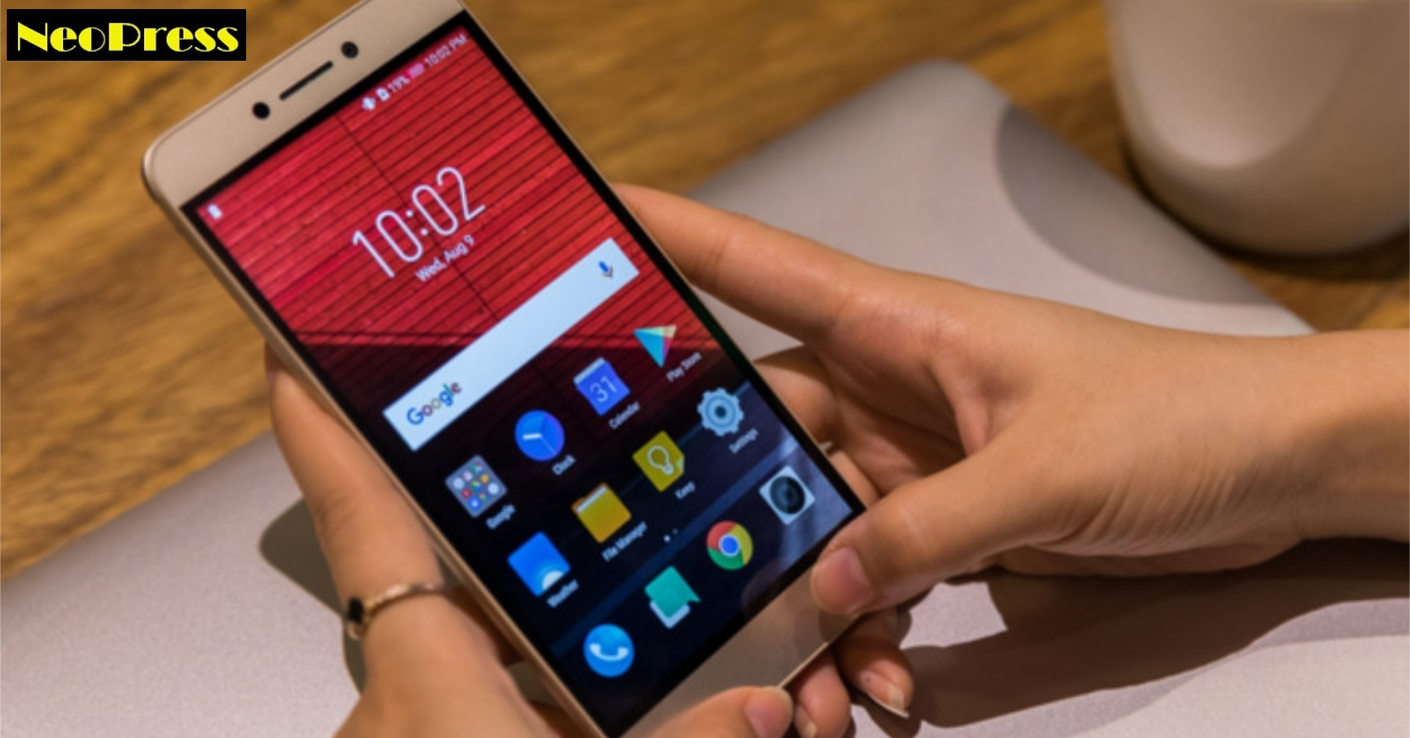
Coolpad Cool Play 6 smartphone to be available online from Sep 4

The 6GB RAM Coolpad Cool Play 6 smartphone launched for the Indian market at Rs 14,999 will be available exclusively on Amazon from September 4, the company has said.

The phone unveiled here on Sunday at an event comes in a metal body and sports a bezel display. It has a 5.5-inch Full HD display with 1080 x 1980 pixels screen resolution.

Powered by 1.95GHz Octa-core Qualcomm Snapdragon 653 processor Cool Play 6 would be the most affordable 6GB RAM smartphone in India. It also has a fingerprint sensor.

India and the US have now become two of the largest markets for Coolpad overseas.

“We have always believed in launching products that start a trend in the market and Cool Play 6 is yet another winner from Coolpad,” James Du, Global CEO, Coolpad Group, told reporters.

“We are also coming with exclusive Coolpad services centres in India with plan to have these in at least five cities in the next six months,” Du said.

The phone will be available exclusively on Amazon.in from September 4, in two colour variants — gold and black, Coolpad announced. The phone offers 64GB of internal storage and packs 13 MP + 13 MP dual primary camera and a 8 MP front shooter for selfies.

It has 4000 mAh, non-removable Li-Po battery with a standby time up to 300 hours, with support for USB Type-C reversible connector and Dual SIM (Nano), the company said.

The phone runs on Android 7.1.1. The Android 8.0 OTA update will be provided by December, Coolpad said.

“In the last couple of years Coolpad has done well and we have beaten even our own estimates. Year 2017 has been a game changer for Coolpad in India and we continue to put our resources in the country with a plan to achieve 50 per cent growth to extend our market share to six per cent of the total market in India,” Syed Tajuddin, CEO, Coolpad India, said.

“We already have offline presence in eight states with a reach in 3,000 multi-brand outlets and have plans to expand it to a total number of 18 states in the next one year,” Tajuddin said. “Coolpad smartphones have a 25 per cent market share on Amazon in the Rs 8,000 category,” he added.

As a technology lover you may like our daily important technology news series. It’s a playlist and you can retrieve the total day-wise videos. Please consider subscribing our YouTube channel:

Author: Technology Vista
Tagged : /

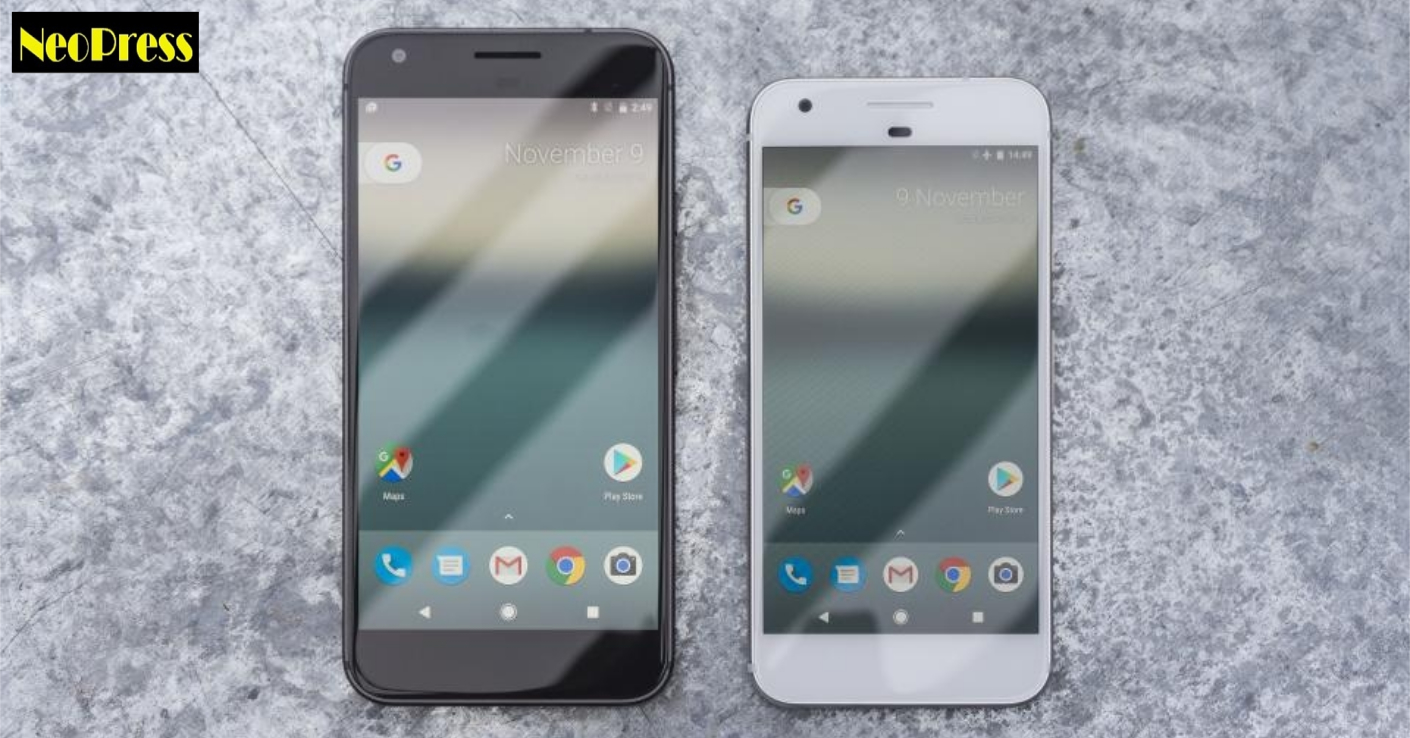
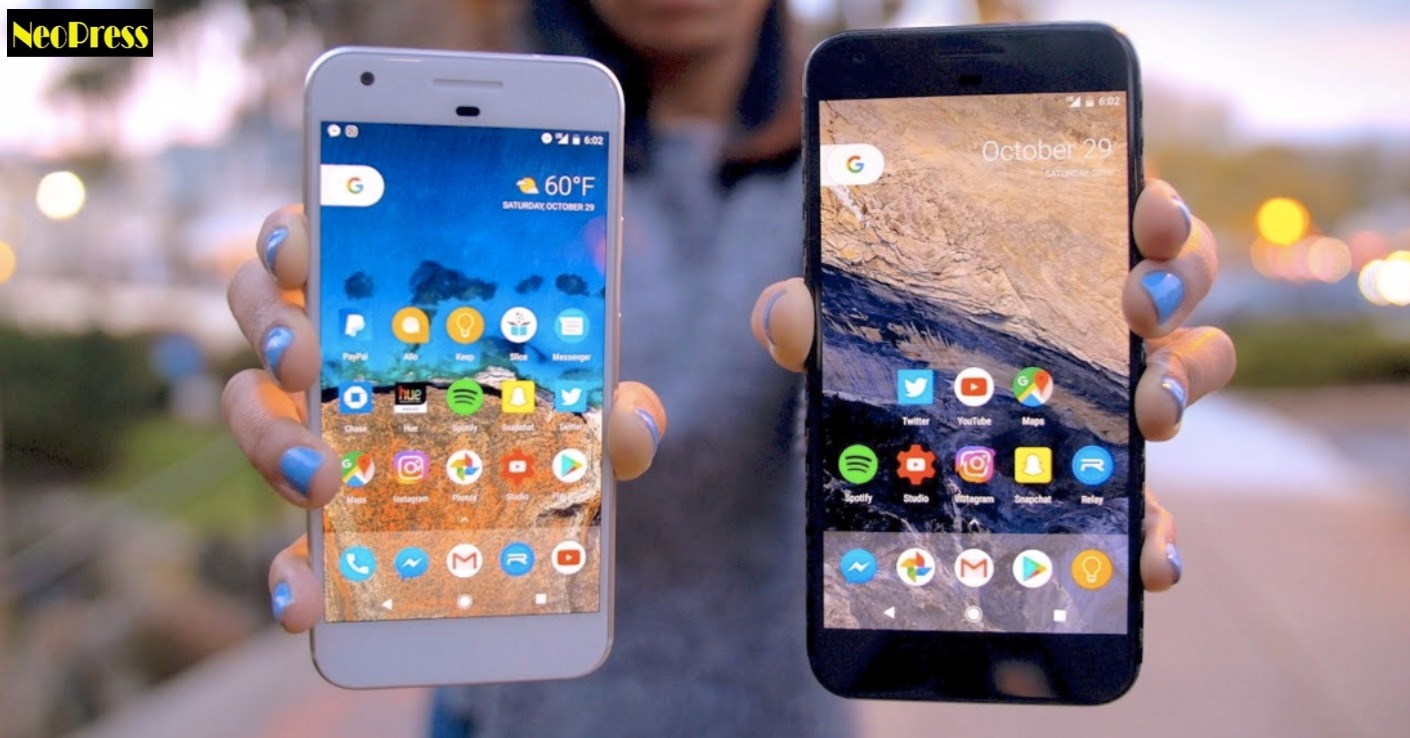
Why Google’s Pixel 2 and Pixel XL 2 Look Completely Different?

While leaks, rumors and speculations about near future releases are as common as new updates in the tech industry, we constantly struggle to sort between the fake and the credible. This time we have leaked thoughts on the Pixel 2 and Pixel XL 2, and all reports unanimously agree that they will differ in key areas.

CAD renders released a few weeks ago, along with leaked photos of the device in the wild, suggest that the Google Pixel XL 2 will feature bezels more in line with what we see on the LG G6, while the smaller Pixel 2 will sport a front panel that looks more like a Nexus 6P. So, while the bigger device will likely sport a display with rounded corners and an 18:9 aspect ratio, the Pixel 2 might not look like the future phone we were hoping for.

Compared to its larger sibling, we’re seeing a more “traditional” look in Google’s smaller flagship. But, with trends changing faster than the weather, what is considered “traditional”, might soon take a turn.

2017 has been the year of the shrinking bezel, with the previously mentioned LG G6, Galaxy S8, the upcoming Essential Phone, and maybe even the iPhone 8 sporting front panels that are mostly all screen. We know not every phone has gone that route – looking at you HTC and Motorola (and others). But while a phone that sports a substantial top and bottom bezel might not look completely dated, it’s certainly starting to look like it.

The Pixel 2 and Pixel 2 XL are siblings, which suggests that the difference between one or the other would be somewhat minimal. But design renders are suggesting that will not be the case. In addition to a more traditional/dated look, the Pixel 2 doesn’t seem to be the beneficiary of the rounded screens that other phones have introduced this year. Customers of the Pixel 2 line this year are going to have to take more than just size into consideration when making their choice. A sticky wicket, to say the least.

Getting into the mind of Google, why is it doing so? Production costs come to mind first thing. Perhaps LG’s rounded OLED screens cost more than a “standard” screen, so Google might be keeping costs down by only including the rounded screen on the larger phone.

Perhaps by keeping costs down, Google will be able to pass those savings along to the consumer. Could we be seeing a resurgence of the Nexus 6P/5X dynamic? It’s also possible that the production of LG’s rounded screens wasn’t capable of keeping up with LG G6, LG V30, Pixel 2, and Pixel XL 2 demand. It’s anybody’s guess at this point.

If that’s the case, then in terms of style and usability, it seems like Google is making the right call here. The larger phone should probably be the one with smaller bezels to aid in one-handed use and the like.

Sure, we knew from the start that there would be a small vs. large difference, but now we’re talking about major design elements being different in two phones from the same product line. Will the larger bezels of the smaller phone be more attractive to consumers, or will the smaller bezels of the large phone take the blue ribbon?

As a technology lover you may like our daily important technology news series. It’s a playlist and you can retrieve the total day-wise videos. Please consider subscribing our YouTube channel:

Author: Technology Vista
Tagged : /
Verified by ExactMetrics