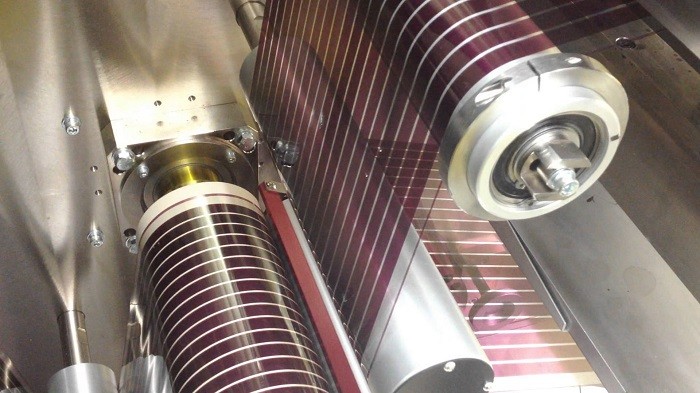
Mass-produced, printable solar cells might change the face of the solar industry!!

If we could capture the energy that earth receives from sun, we can definitely bring about a revolutionary change. A silicon solar cell is still a leading solar technology even after 50 years of entering the market. Five years ago, a material called perovskite, entered the solar market. Printed carbon-based organic solar cells, having ultra-low-cost-solar material, also entered the market around that time.
230215_solarcells_1

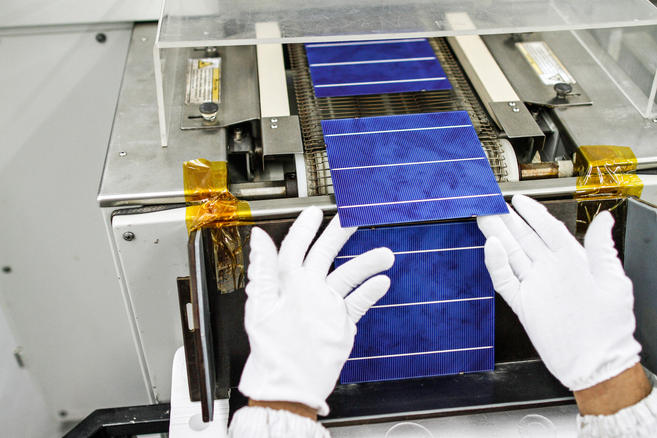
Both these contenders have the same basic mechanism, along with their own strengths and weaknesses. Silicon could be readily processed into different layers, even sixty years ago, for making of a solar cell. Silicon is non-toxic and available readily but it is expensive.

Though the look of a silicon panel, bought today, might look like that of 20 or 30 years back, its performance is far superior than what it was decades ago. By developing a surface to maximize light absorption, refining the purity of material and by improving panel’s backside electronics, the efficiency of solar cells has gone up to 25.6%.

On the other hand, market share of solar cells made from perovskites has jumped up from 3% to 20% in only five years. In all likelihood, it will soon match or supersede silicon cells in efficiency and in price. Simply printing a layer on to a plastic backing makes Perovskite cells cheap. Once printed they form small grains, like layer of rice, making it difficult for the electrons to jump between layers to reach the electrode. Perovskites are sensitive to moisture and it is one of its major weakness. Also, perovskite contains lead, which is toxic in nature. Researchers are trying to substitute lead with a less hazardous elements and way to seal the material in plastic has already been taken care by the engineers.

[adinserter block=”7″]
Next page For More

Tagged : /

Scientists discovered ways to power a battery-less device using radio waves!

Battery has always been a biggest issue no matter how fast or smart our devices are. While buying any electronic device or gadget like laptops, smartphones, or any other gadget, the first and foremost specification we look for is the battery backup instead of processor or camera quality. The problem of battery backup seems to be a big and persistent problem and it doesn’t seem to get any better.

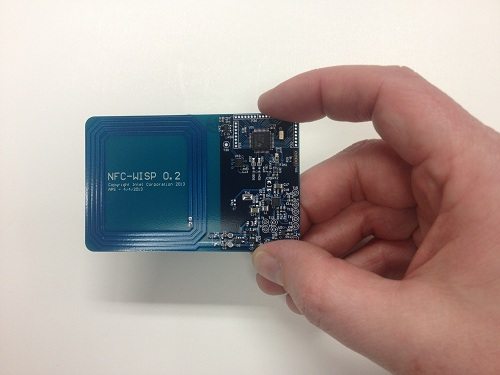
NFC-WISP 0.2 hand small

Imagine, if you could eliminate battery completely? Yes, electrical engineers from Washington University has developed a gadget that will not require any battery or any external power source to keep it working. Confused? Well those gadgets work with the help of radio waves.

You must be wondering if you have to keep your radio on the whole day to keep this device charged. Right? Well the answer to this is no. This device draws radio waves from air and converts them into electricity.

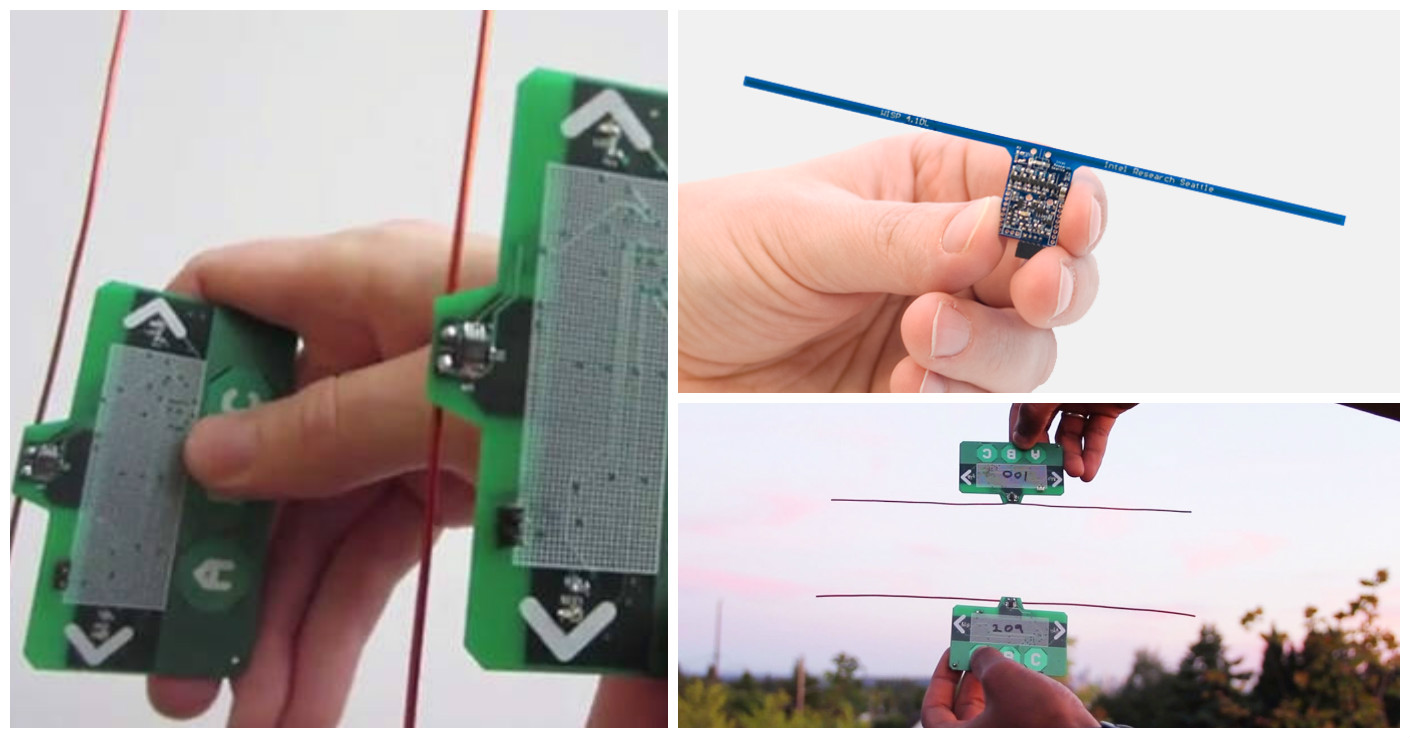
WISP (Wireless Identification and Sensing Platform) is a device that is a computing chip and combination sensor. It uses Radio Frequency Identification reader to draw radio waves and convert them to electricity.

WISP is designed to run sensors and transmit data and not to compete with chips on smartphone and computers. They need low maintenance in comparison to other chips used today.

Creation of Winsent interface would allow wireless programming of WISP making is more usable and easy. A team at Delft University of Technology is working on it.

width="560" height="314" allowfullscreen="allowfullscreen">

WISP now requires cables that nullify the advantages of not using a battery. Hence, Winsent will allow WISP to program it wirelessly. The vision is to deploy battery-less device which will host wirelessly re-programmable software interface, everywhere.

[adinserter block=”7″]

As a technology lover you may like our daily important technology news series. It’s a playlist and you can retrieve the total day-wise videos. Please consider subscribing our YouTube channel:

The cost and availability of WISP in market is yet to be announced.

Author: Technology and Beyond


Tagged : /

Futuristic SkyTran, being implemented, cuts down commuting time by more than 90%!

Travelling on a daily basis becomes a hectic and tiring affair, after 8 long hours of work. There are people who regularly spends more than two to three hours daily on account of commuting related to job. Now, there is a ray of hope for those people, as this newly invented transportation systems is supposed to cut down the overall time of travelling by moving faster and by eliminating the time wasted in traffic. This innovative system is supposed to run through the sky.

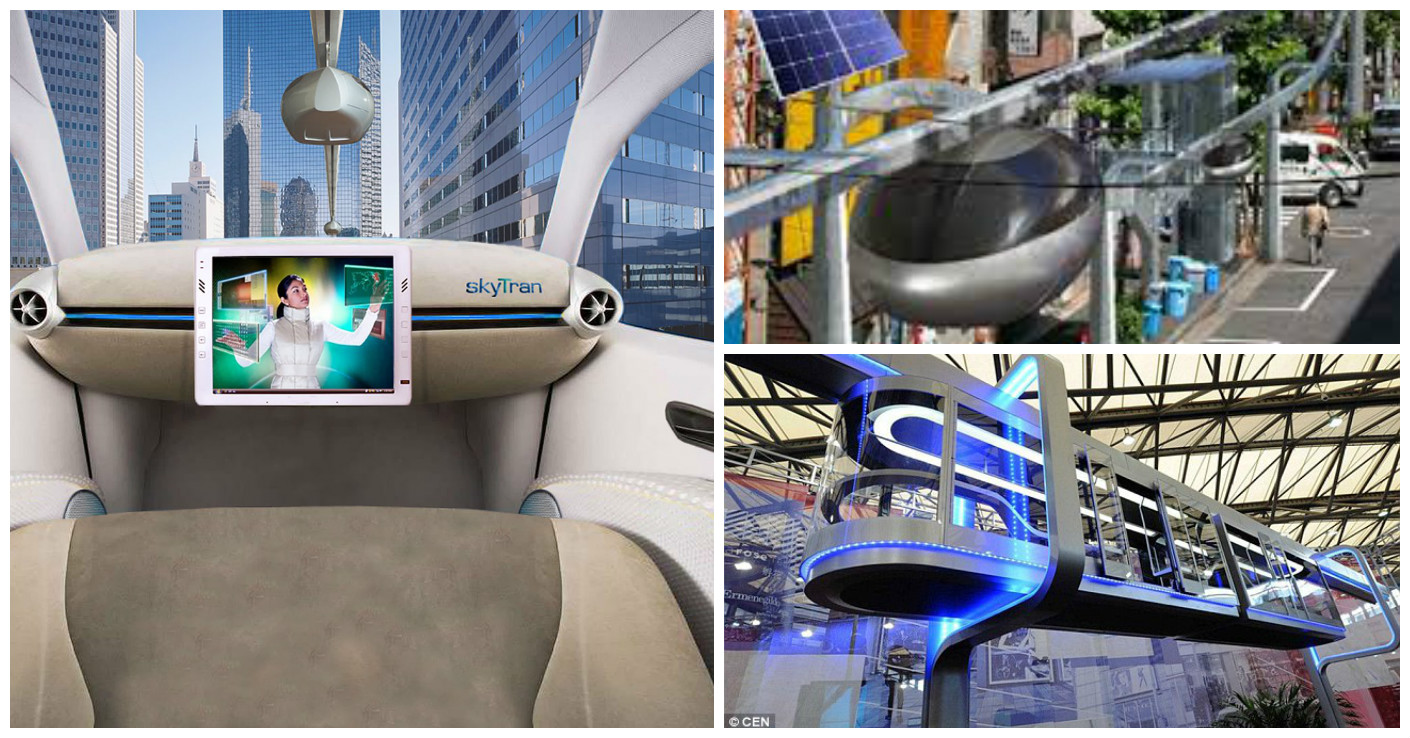
SkyTran

SkyTran is a self-driving monorail which has the capability to turn a 2-hour car travelling into a 10 min trip through the sky. The CEO of SkyTran, Jerry Sanders says that the transportation system shall hover 20ft above the road and shall travel at a speed of 155 miles per hour.

The first track will be launched in Lagos, Nigeria, by 2020. Lagos was considered for the first implementation because of its ever-growing population and worst traffic jams. Dough Malewick, an engineer at NASA Ames Research center, developed the transport system.

SkyTran is energy efficient. On reaching a threshold speed of 10mph, it can glide without any additional power. A machine will be used to learn about the requirement of pods. Pick up location and destination has to be entered by user on the SkyTran app to book a pod.

SkyTran station shall be built around the city and tracks shall run through universities and office buildings. Apartments and lobbies shall be used as the smaller stations. Cost of infrastructure is also not very high for a brilliant idea like this. The cost of pod ride shall be just slightly more than Lagos train.

width="560" height="314" allowfullscreen="allowfullscreen">

[adinserter block=”7″]

As a technology lover you may like our daily important technology news series. It’s a playlist and you can retrieve the total day-wise videos. Please consider subscribing our YouTube channel:

Author: Technology and Beyond

Tagged : /

This amazing fungus eats plastics and tackles plastic pollution

Since decades, “Plastic Pollution” is one of the biggest problems our earth is facing.

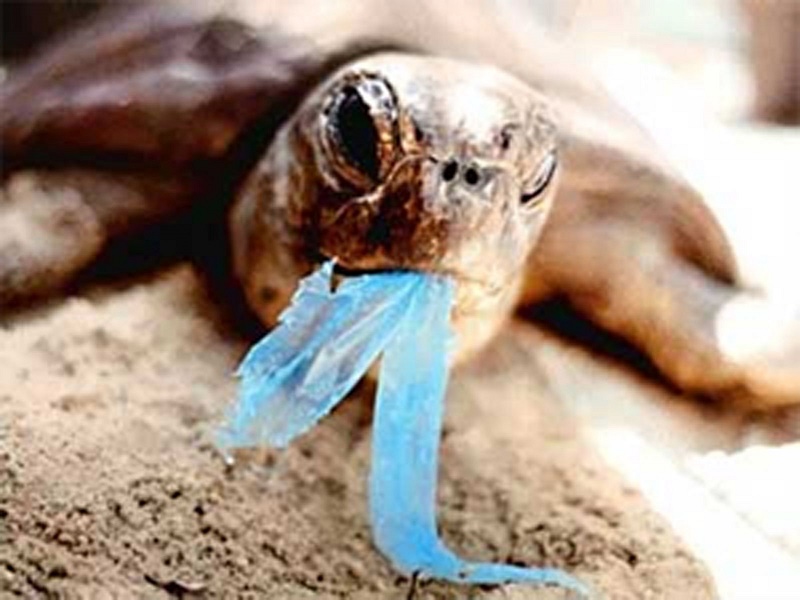
Effect of plastic pollution is visible in the form of a giant floating island of trash in the Pacific Ocean. The size of the floating trash is no less than the size of Texas. These plastics are highly detrimental to our earth as it breaks down in an extremely slow manner. In fact, according to the National centre of biotechnology Information, plastics actually don’t biodegrade at all.

18kws4eep39dfjpg

“Plastics do not biodegrade, although under the influence of UV radiations, plastics do degrade and fragment into the small particles called as micro plastics.”

This is the present human challenge to biodegrade plastics completely and that’s what is making this discovery of plastic eating fungus, so exciting.

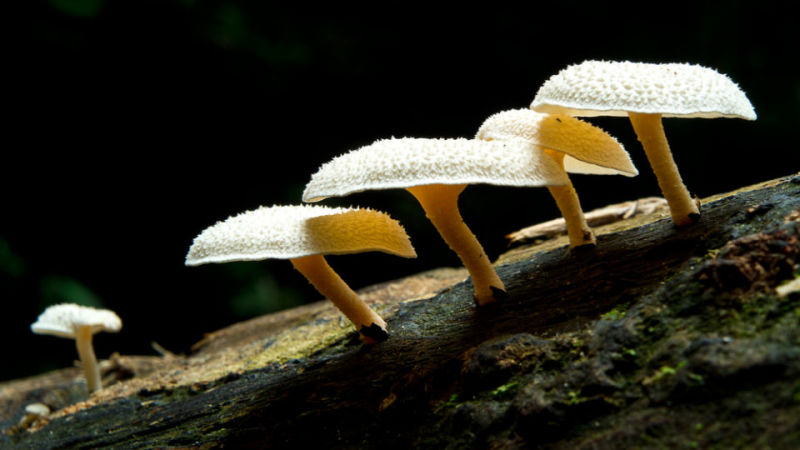
On an excursion to the rain-forest of Ecuador, students from Yale’s Department of Molecular Biophysics and biochemistry discovered a previously unknown fungus that has a special liking towards polyurethane. According to fast company, the fungus is the special because it is known to survive on polyurethane alone, and it can do so in an anaerobic environment. This suggests that it could be used at the bottom of landfills.

Researchers were even able to isolate the enzymes which are responsible for the decomposition of plastics.

The study was published in the scientific journal Applied and Environmental Microbiology. Right now, It isn’t very clear how this fungus will be used in bio-remediation. But, the news let us dream peacefully about a floating plastic island which is covered in mushrooms deployed for bio-remediation. Once the entire trash pile is eaten the residue will sink into the ocean.

Isn’t that a great thing to dream about?

[adinserter block=”7″]

As a technology lover you may like our daily important technology news series. It’s a playlist and you can retrieve the total day-wise videos. Please consider subscribing our YouTube channel:

Author: Technology and Beyond 

Tagged : /

Believe it or not, these water pipes generate electricity!

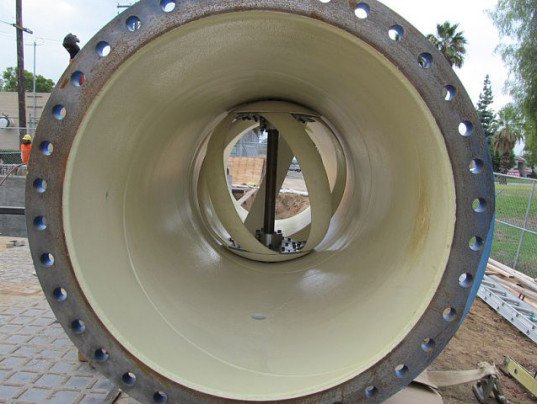
A Portland- based energy company “lucid energy” has come up with the brilliant idea of generating electricity from the pipes water flows through. Small turbines are installed into the pipe to collect the energy from the flowing water and send it to the power generator.

Portland Just Installed Water Pipes That Generate Electricity! (1)

Lucid’s new power generating pipes have recently been installed for real life operation. These have been implemented on different public area throughout the city. This is one of the most efficient renewable sources of energy and the reason is that these pipes can harness electricity 24 hours a day, 7 day in week, weather doesn’t matter.

“It’s pretty rare to find new source of energy where there’s no environmental impact. But this is inside a pipe, so no fish or endangered species are impacted. That’s what’s exciting”, said in a statement by Gregg Selmer, CEO of Lucid energy.

Sensor inside the pipes has a special feature of monitoring the quality of water to ensure that it is safe for drinking purpose.

“This technology could be even more useful in remote areas that are far away from central power grids”, said by Selmer.

“It’s a great source of remote power. So in outside places of the city that don’t have an electrical grid, you’re able to use the system to generate electricity. There’s a lot of energy in going into making sure we safe clean drinking water. Our focus is really on helping water become more sustainable,” he said.

[adinserter block=”7″]

As a technology lover you may like our daily important technology news series. It’s a playlist and you can retrieve the total daywise videos. Please consider subscribing our YouTube channel:

Author: Technology and Beyond

Tagged : /

THIS is how to use two WhatsApp accounts in a single phone!

WhatsApp is one of the most used chat platforms around the globe. It is completely free and works very well with text and voice. Each WhatsApp account is linked to a mobile number, which is used as an authentication for the program. However, WhatsApp is yet to open up the option for dual-SIM users where two mobile numbers are available for two separate authentications.

dual-two-multiple-whatsapp-account-android

So if you are using two SIM cards on your smartphone, you can only use WhatsApp on one number of your choice. To switch to another number, you will have to deactivate the first number on WhatsApp and is second number. Because of all those inconveniences, people tend to use mobile SIMs in a different phone rather than using a dual sim phone.

This is how you need to do, to use two different WhatsApp instances in your dual sim phomes:

First of all: You need to download WhatsFapp that makes it easy to use two numbers in one device.

NOTE: Other software option, OGWhatsApp isn’t working any more.

Here’s how to Use it:
Step 1: First you need to take the complete BackUp of your WhatsApp Conversations.

Step 2: Then you need to clear your WhatsApp data.

Step 3: Now you need to uninstall your WhatsApp.
Step 4: Then, download WhatsFabb and install it. Add your old mobile number in WhatsFabb and activate it. Do not forget to restore your Backup.
Step 5: Inorder to use another number, again install original Whatsapp from Google Play and add new number and activate it.
Done, you are now using two WhatsApp in your single device.

If you have liked this trick, please share it with your friends and family so that they are also benefitted from this piece of information.

[adinserter block=”7″]

As a technology lover you may like our daily important technology news series. It’s a playlist and you can retrieve the total daywise videos. Please consider subscribing our YouTube channel:

Author: Technology and Beyond

Tagged : /

Plug into the plant and charge your phone whenever required!

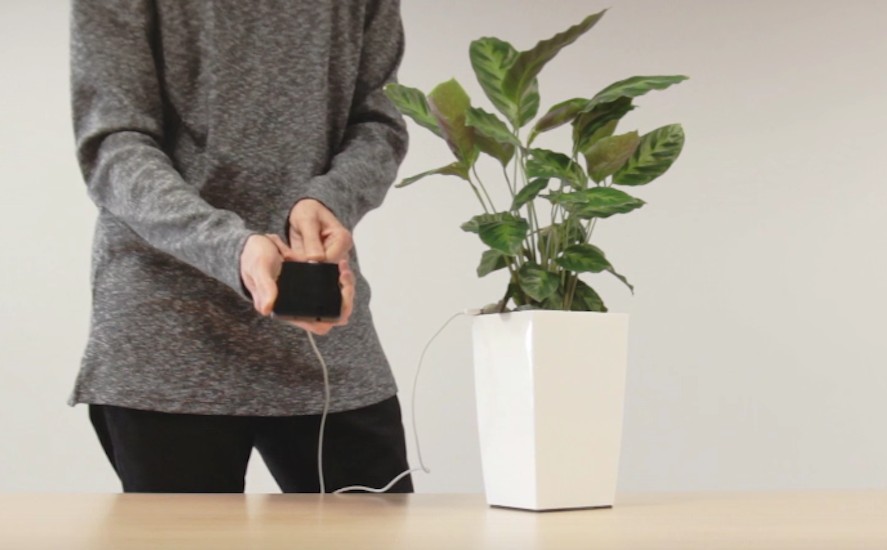
Can you imagine charging your devices with the help of a plant? Sounds irrational, right? Well, wish no more, because Bioo has arrived to change the world. Using a compact and modern technology we are able to produce electricity from photosynthesis process which provides energy to the plants for survival.

Bioo-Lite_5

Bioo provides constant electricity supply day and night, proving that plants are the best source so far as the clean renewable energy is concerned. We already use plants at home or workplace for decoration and for greener environment then why not use them to charge up your phone or tablet´s battery as well?

Arkyne Techonologies brings to you this life-changing equipment. Charging phones or tablets is now an everyday ritual for all of us. We depend on the electronics completely for this purpose. Bioo Lite comes into picture here. Use your Bioo Lite plant to charge your tablets and phones by connecting your device to its easily accessible USB socket. Crazy as it sounds, you now have a beautiful plant that also charges your device with no extra cost!

You must be wondering as to how it really works? Well, it is actually easier than you may think. This power generation process happens inside the plant pot where energy generated by photosynthesis is transferred in form of electricity. This energy will always be produced with or without the use of Bioo as it is part of photosynthesis. The process includes a chemical and biological hybrid cell. This combination is important to stabilize the system. By doing this, we do not harm the plants in any way. Hence we are actually conserving the environment.

The process is also self-regenerating. The system is able to transfer electricity using the energy produced in the soil, close to the roots of the plant, by its innovative and efficient process. Nonetheless, Bioo Lite includes natural chemical enhancers, because it is a size-reduced version of our bigger panels, to support the energy produced by photosynthesis.

width="560" height="314" allowfullscreen="allowfullscreen">

Bioo has its own sealed water tank that helps in achieving a high efficiency in water management by preserving what is added to the plant. This helps one to save up to 6-8 liters of water monthly. Once the electricity is generated we have endless options for utilizing it. We all depend on electricity and using plants will be the greenest and the eco-friendliest way to produce and consume the same.

[adinserter block=”7″]

As a technology lover you may like our daily important technology news series. It’s a playlist and you can retrieve the total daywise videos. Please consider subscribing our YouTube channel:

Author: Technology and Beyond

Tagged : /

Three new habitable planets are discovered. How to get there for search of life?

Is there life beyond our solar system? If yes, our best bet would be to search out three nearby, Earth-like exo-planets. It is for the first time that international teams of astronomers from MIT, the University of Liège in Belgium and elsewhere have spotted 3 planets orbiting an ultracool dwarf star that is just 40 light years from Earth.

The sizes and temperatures of these worlds are similar to those of Earth and Venus. They are the best targets found so far for the search for life beyond the solar system.

jupiter-like-planet

The scientists discovered the planets using TRAPPIST, a 60-centimeter telescope developed by the University of Liège, based in Chile. TRAPPIST is designed to focus on 60 nearby dwarf stars — very small and cool stars which are so faint that they are invisible to optical telescopes. Belgian scientists designed TRAPPIST to observe dwarf stars at infrared wavelengths and hunt for planets around them.

The team directed the telescope on the ultracool dwarf star, 2MASS J23062928-0502285, currently known as TRAPPIST-1, a Jupiter-sized star that is one-eighth the size of our sun and considerably cooler. Over several months starting in September 2015, the scientists observed the star’s infrared signal weakens slightly at regular intervals, suggesting that several objects were passing in front of the star. With additional observations, the team established that the objects were indeed planets, with similar sizes to Earth and Venus.

The two closest planets orbit the star in 1.5 and 2.4 days, though they receive only four and two times the amount of radiation respectively as compared to what the Earth receives from the sun. The third planet orbits the star in somewhere from four to 73 days, and may get even less radiation than Earth. Given their size and proximity to their star, all three planets may have areas with temperatures well below 400 kelvins, within a range that is appropriate for sustaining liquid water and life.

Today’s exo-planetary missions have been dedicated on finding systems around bright, sun-like stars. These stars produce radiation in the visible band most often at yellow wavelengths and can be observed with optical telescopes. However, since these stars are very bright, their light can subdue any signal coming from a planet.

Cold dwarf stars, in contrast, are dim stars that emit radiation in the infrared band. Because they are so dim, these tiny red stars would not suppress a planetary signal, giving scientists a better chance of detecting orbiting planets. However, most missions today are not optimized to observe such stars.

[adinserter block=”7″]

Next page For More

Tagged : /

3D underwater farms developed by a fisherman protect shores and restores the ocean health!

The increasingly steady demise of biodiversity in the ocean is a huge problem.

Collapse of the marine food chain due to acidification, overfishing and ocean warming shall continue to be a threat.

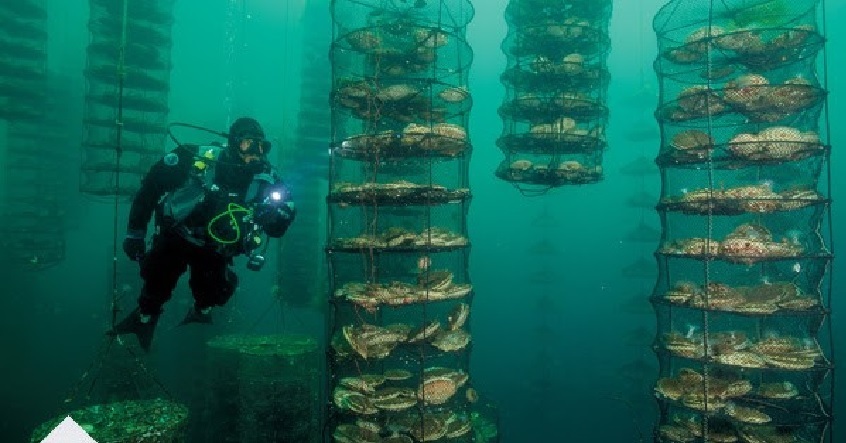
Bren Smith was a career fisherman before huge die-offs and climate change. These disasters have made him design a model for oceanic farms that use seaweed and shellfish to create hanging ecosystems that restore the ocean and its life forms while creating farmable “crops” without the threat of overfishing.

Bren Smith’s 3D farms are engineered with every step of the ecosystem in mind. The hanging farms use the full “ocean column” to grow seaweed and mussels as well as cages of oysters and clams.

These are “restorative species” that clean the water and provide a place for all kinds of other sea life to flourish. An acre of 3D farm can filter millions of gallons of ocean water every day, while kelp alone will sequester five times more carbon than any of our foliage here on dry land might. The design doesn’t require fresh water too. The 3D farms also function as artificial reefs and hence, reduce the impacts of storm on local communities.

width="560" height="314" allowfullscreen="allowfullscreen">

The key is to get the research of GreenWave (an organization founded by Bren Smith) into the hands of more fishers, so that, they keep enhancing the technology behind the idea. Hundreds of millions of years ago Mother Nature created these technologies that mitigate the harm in terms of climate change, in terms of overfishing, in terms of nitrogen pollution, with this current technology, GreenWave is just trying to assist the mother nature in her effort!

width="560" height="314" allowfullscreen="allowfullscreen">

As a technology lover you may like our daily important technology news series. It’s a playlist and you can retrieve the total daywise videos. Please consider subscribing our YouTube channel:

[adinserter block=”7″]

Author: Technology and Beyond

Tagged : /

THIS is how Scientists are trying to resurrect the dead!!

Brain stem death is when a person no longer has any brain stem functions, and has permanently lost the potential for consciousness and the capacity to breathe.

A person is confirmed as being dead when their brain stem function is permanently lost. However, although brain dead humans are technically no longer alive, their bodies can often still circulate blood, digest food, excrete waste, balance hormones, grow, sexually mature, heal wounds, spike a fever, and gestate and deliver a baby.

MRI_scan_2938831b-large_trans++pJliwavx4coWFCaEkEsb3kvxIt-lGGWCWqwLa_RXJU8

And while human beings lack substantial regenerative capabilities in the central nervous system, many non-human species, such as amphibians and certain fish, can repair, regenerate and remodel substantial portions of their brain and brain stem even after critical life-threatening trauma. A biotech company in the US has been granted ethical permission to recruit 20 patients who have been declared clinically dead from a traumatic brain injury to test whether parts of their central nervous systems can be brought back to life.

Scientists will use a combination of therapies as well as deploying lasers and nerve stimulation techniques that have been known to bring patients out of comas. The participants who have been certified dead and only kept alive through life support, will be monitored for several months using brain-imaging equipment to look for signs of regeneration, particularly in the upper spinal cord.

dead-gif-mos_050416024514

The team believes that the brain stem cells might be able to erase their history and restart life, based on their surrounding tissue – a process seen in the animal kingdom in creatures like salamanders, which can regrow entire limbs.

The process is new and untested so the chances of controversies arising are high.

As a technology lover you may like our daily important technology news series. It’s a playlist and you can retrieve the total daywise videos. Please consider subscribing our YouTube channel:

[adinserter block=”7″]

Author: Technology and Beyond

Tagged : /

THIS dream super sustainable town is equipped with solar power and driverless cars

With all the hoopla around climate change, sustainability has become a keyword, but to be frank and honest, how many of us actually give a heed to it? How many of us actually try to do our bit to save our Mother Earth? Whether it is a small habit like switching off the lights when leaving a room or whether it is something as progressive as rain harvesting or using solar heaters and cookers, every bit is needed to save our beloved planet.

2-town

But do we really do it? Well some people believe in doing rather than talking about it. Babcock Ranch is one such place people are actually doing things to make this world a better place. This is a plnned community approved as part of a public-private partnership strategy with the State of Florida and local governments.

Bought and developed by Kitson and Partners, the Babcock Ranch in Sunny Florida is an example in itself. Kitson and Partners developed it after they presented their plans to preserve the land and make it sustainable as well. Their goal is for Babcock Ranch to be the ‘world’s most sustainable city’. It took almost a decade to plan the town and the construction has now finally begun.

The Ranch will house 50,000 residents and Local Utility Florida Power & Light is currently building a huge solar farm made up of 350,000 solar panels to provide power for the community of 50,000 people. This will be the largest photovoltaic power station in the world occupying rooftops throughout the city plus 400 acres of land. Residents and businesses will utilize smart grid technology to monitor and control their energy consumption.

Next Page For More

Tagged : /

You will love these ten hidden features of Android 6.0 Marshmallow

Though Android N is standing at the edge of the centre stage to make a grand entry, Android 6.0 Marshmallow is here to stay. And if you do not know the amazing hidden features of it till now, do not miss this article.  Marshmallow is an amazing operating system of Google and if you haven’t yet tried then do try now these supercool ten features of it.

htc-one-m9-vs-htc-one-m8-5-840x473

Lock Screen Message

This feature may come in real handy in case you lose your phone. Though you have the liberty to display any message in the Lock screen, it would be good to have your contact information on your phone’s lock screen. By adding your contact number or email id or address you will increase its chances of getting back to you. To add this message go to Settings>Security>Lock Screen>Message and then type in your message. The message will appear as scrolling text.

Google Now on Tap

This is just another name of Google search in your apps. When you are within an app, you just have to press and hold the home button and Now on Top will ‘scan’ it for related information.  But beware, since Now on Tap is still work-in-progress, it may or may not give results as per your satisfaction.

Use its Battery Saver

Due to its built-in Doze feature, Marshmallow is far better than its predecessors when it comes to battery efficiency. By turning on the Battery Saver feature by going to Settings> Battery>Battery Saver, you can further stretch the battery life. It may cause a reduction in location services, performance and background data though.

Say OK Google

In Marshmallow, the Google search bar is on every home screen. So if your phone screen is active, you just have to say “OK Google..” and ask for a question or search for anything.

[adinserter block=”7″]

Next Page For More

Tagged : /

Scientists have drawn the most detailed map of our side of the universe and it is awe-inspiring

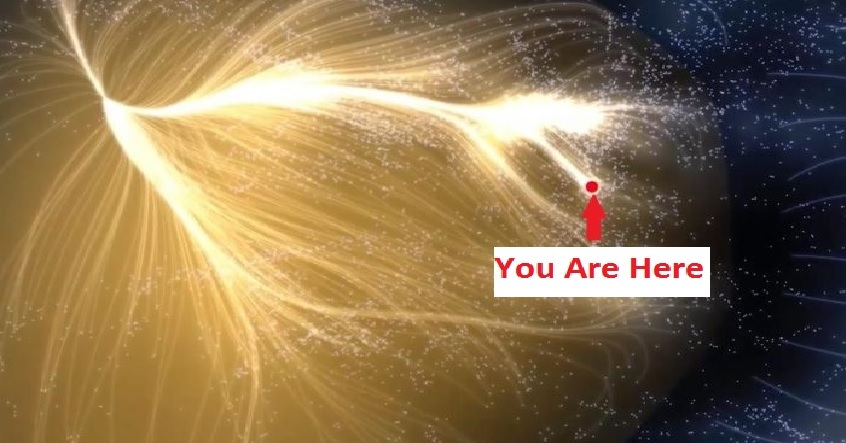
Using our current knowledge of the universe and available imagery scientists have managed to simulate our side of the universe. With the resultant computer generated imagery and simulated results scientists managed to create the most detailed map of the universe and our place in that.

Study was headed by R. Brent Tully of the University of Hawaii. The research team managed to create a beautiful and colourful map showing space-time in all its glorious abstraction.

The video highlights where we are placed in a supercluster of galaxies called Laniakea.  This superstructure spans “more than 500 million light-years and contains more than 100,000 galaxies.”  There are countless bright lights in these images and each and every light dot represents a galaxy. Each galaxy is a home of million, billions, or even trillions of stars.

The scale of Laniakea is beyond imagination and just mind boggling.  The scale is so huge that we cannot just fathom it with our kind of references. Laniakea is just one of many superclusters we know about.  After reading this, we invariably get the feeling of being very small and inconsequential. What do you think?

width="560" height="314" allowfullscreen="allowfullscreen">

As a technology lover you may like our daily important technology news series. It’s a playlist and you can retrieve the total daywise videos. Please consider subscribing our YouTube channel:

Author: Technology Vista

Tagged : /

Boxes to beds: THIS out of the box idea comforts earthquake victims in Japan

April 14 2016 was devastating for Japan’s Kyushu Island which was badly shaken by a magnitude 7 earthquake. The earth quake took nine lives and caused a widespread damage to the whole region. Lots of people lost their homes and their belongings as these were totally destroyed. These innovative box beds are at least providing a comfortable place for them to sleep in their temporary shelters.

cardboard-box-bed-earthquake-japan-kumamoto-5

cardboard-box-bed-earthquake-japan-kumamoto-1

These beds are invented by J Pack who is an intelligent paper manufacturer. These beds were first used for the survivors of Japan’s Tohuku earthquake, way back in 2011. After it was highly successful over there, they’re again being used for the displaced people of Kumamoto. They are shipped like flattened cardboard boxes but, once assembled, they are converted into nice beds.

cardboard-box-bed-earthquake-japan-kumamoto-6

These beds not only serve the purpose of sleeping, they are also provided with privacy partitions and under bed storage boxes. Occupants can stow their belongings neatly in those boxes.

Nobody should underestimate the power of these boxes as they can withstand the weight of upto 20 people! Now, that is something, which demonstrates the power of thinking out of the box!!

[adinserter block=”7″]

Author: Technology and Beyond

Tagged : /

The floating forest of Rotterdam, the dreams come true…

It all started with a small model installation of floating miniature forest in a small aquarium. Jeroen Everaert, who is the owner of an art production company, Mothership, based in Rotterdam, Netherlands, saw this installation few years back and got impressed:

“This is too beautiful to keep it this small size,” Everaert exclaimed. “We must make it bigger. There must be a real forest bobbing here on the harbour in Rotterdam.”

floating-trees-bobbing-mothership-rotterdam-jeroen-everaert-2
The project inspiration: An art piece named “In Search Of Habitus,” by artist Jorge Bakker

He wanted to make his dream a reality and to achieve that, he needed harbour space and the buoys. Both were donated by the city authority and the harbour authority respectively. The much needed tress were also donated by the local tree authorities. He gathered a team of artists, designers and tree experts to accomplish this task. The team spent three years in building a working prototype. Planting test trees in old buoys were part of prototype testing.

The first species was a field maple and it could not withstand the rough movement and the waves. Finally, they zeroed on to Dutch elm which is hardy and good in withstanding salt water and waves.

floating-trees-bobbing-mothership-rotterdam-jeroen-everaert-4

Initially, placing extra weight on the buoys in the form of soil was a problem as they were unable to stay afloat. The winning solution was the appropriate mixture of soil and ultralight lava rocks. It helped regulating moisture and temperature.
Watering the plant was a problem as seawater doesn’t serve the purpose. They managed to slip in a 500 litre fresh water tank at the bottom of the buoy. However, this is needed to be replenished four times a year.

floating-trees-bobbing-mothership-rotterdam-jeroen-everaert-3

The sea environment also posed problems. “We have a problem here with the rising of the water levels — a serious problem,” he informed. Rotterdam is protected by dikes. He seriously hopes that his installations will be a food for thought for the people regarding the city’s future and how city would look like without intervention.

“The Bobbing Forest will be made mostly from pre-existing materials,” states the project webpage. “The trees will be donated by the Bomendepot. Each time a part of the city is renovated, trees have to be moved. In the past, these trees would have been destroyed; nowadays, however, the city’s Public Works Department stores them at the Bomendepot. Twenty old sea buoys from the North Sea will be provided by Rijkswaterstaa…”

As a technology lover you may like our daily important technology news series. It’s a playlist and you can retrieve the total day-wise videos. Please consider subscribing our YouTube channel:

Author: Technology and Beyond

Tagged : /
Verified by ExactMetrics