Get Rid of your Old Sluggish PC and Upgrade to a Faster Computer for Free

A New York City startup brings CloudReady for students to work on, instead of Macs and Windows PCs. This software is completely free for individual users. The machine will eventually be called a chrome laptop or chromium book but not chromebooks, as that name is trademark for laptops created by Google and its partners. This operating system is created to provide an amazing experience of working with all google apps and services without any interruption.

What is cloudReady?

CloudReady is an operating system developed by Neverware. It can make your computer function like a chromebook. It currently runs on basic ARM based chipset hardware. Since PC’s hardware is more powerful, one can easily experience this for free on a PC. It also has bunch of apps from Google like Google doc, sheets etc. There are a few drawbacks like, it doesn’t allow automatic updates on PCs and Mac manufactured since 2007. Also it cannot be dual booted with any other operating system. So, you need to make sure that you have a backup of all your important data.

Pre-Requirement

  1. A 8GB/ 16GB USB Drive which is the optimum size suggested by CloudReady.
  2. Chromebook Recovery Utility : This tool is required to create a USB based installation drive using the CloudReady software. It can be downloaded from here.
  3. CloudReady .bin file will be required during installation. The same can be downloaded from here.

cloudready-install1

Installation process

Once, you have fulfilled the requirement described above, you are ready to proceed with the installation. It has two distinct parts:

Next page For More

Tagged : /

This is how to hack Wi-Fi password!!

Internet is now a necessity in life. Having enough money to pay for high Internet cost is still a problem. 3G connections are too costly for a common man. Hence, people generally look for Wi-Fi connections which can be used for free. Though free Wi-Fi is easily available these days, they mostly need your personal details to gain access and they are mostly time restricted.

But, there are ways out and with some guidance, free tools and with some luck you may be able to hack the Wi-Fi password and gain access to Wi-Fi hotspot, wherever you go.

First you need to search for Wi-Fi cracker software program and you can find many. You need to opt for free version and download the same in your computer.

Wifi-Password-Hack-Proof-1

Here is how you can try to get free Wi-Fi:

You must be aware of the terms WEP (wired equivalent privacy), WAP (Wi-Fi protected access), and WAP2, because, these are security algorithm that protect Wi-Fi. Once you are aware of these terms follow the steps mentioned below.

  1. Download Wi-Fi password hack and extract the zip files.
  2. Select the network you want to hack.
  3. Figure out the algorithm encryption used by them to protect the network.
  4. Click on Hack button
  5. Enter the activation key mentioned in the zip file.
  6. Click Activate.

Once you press the activate button the software is activated and searches for the network. A success message in green is displayed once the process is finished.

This is how the automated Wi-Fi security hacker works

The program scans for all available wireless networks and the contact them. During that process, it receives data packets from the network. Program decrypts the data packets by figuring out the password. While simple passwords are easier to hack, the complex passwords including capital and small letters, numbers and special characters are harder to crack. Password with only alphabets or numerals are very easy to crack. The base rate of success is around 70%.

If you have liked the article, please share it with your friends and family.

As a technology lover you may like our daily important technology news series. It’s a playlist and you can retrieve the total day-wise videos. Please consider subscribing our YouTube channel:

Author: Technology Vista

Tagged : /

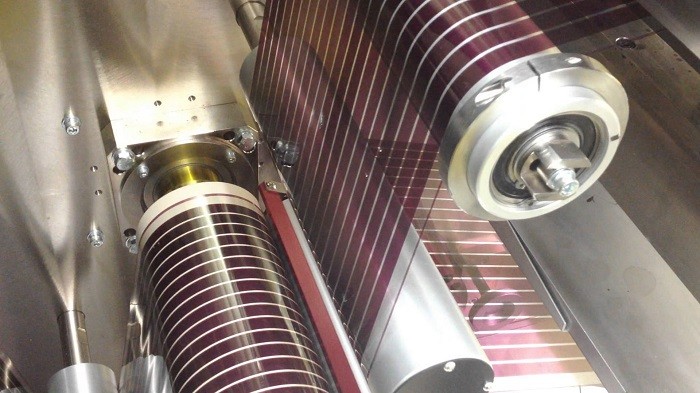
Mass-produced, printable solar cells might change the face of the solar industry!!

If we could capture the energy that earth receives from sun, we can definitely bring about a revolutionary change. A silicon solar cell is still a leading solar technology even after 50 years of entering the market. Five years ago, a material called perovskite, entered the solar market. Printed carbon-based organic solar cells, having ultra-low-cost-solar material, also entered the market around that time.

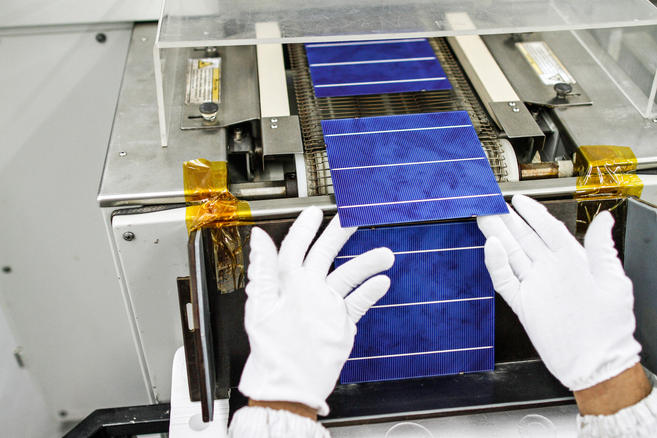
230215_solarcells_1

Both these contenders have the same basic mechanism, along with their own strengths and weaknesses. Silicon could be readily processed into different layers, even sixty years ago, for making of a solar cell. Silicon is non-toxic and available readily but it is expensive.

Though the look of a silicon panel, bought today, might look like that of 20 or 30 years back, its performance is far superior than what it was decades ago. By developing a surface to maximize light absorption, refining the purity of material and by improving panel’s backside electronics, the efficiency of solar cells has gone up to 25.6%.

On the other hand, market share of solar cells made from perovskites has jumped up from 3% to 20% in only five years. In all likelihood, it will soon match or supersede silicon cells in efficiency and in price. Simply printing a layer on to a plastic backing makes Perovskite cells cheap. Once printed they form small grains, like layer of rice, making it difficult for the electrons to jump between layers to reach the electrode. Perovskites are sensitive to moisture and it is one of its major weakness. Also, perovskite contains lead, which is toxic in nature. Researchers are trying to substitute lead with a less hazardous elements and way to seal the material in plastic has already been taken care by the engineers.

[adinserter block=”7″]

Next page For More

Tagged : /

Scientists discovered ways to power a battery-less device using radio waves!

Battery has always been a biggest issue no matter how fast or smart our devices are. While buying any electronic device or gadget like laptops, smartphones, or any other gadget, the first and foremost specification we look for is the battery backup instead of processor or camera quality. The problem of battery backup seems to be a big and persistent problem and it doesn’t seem to get any better.

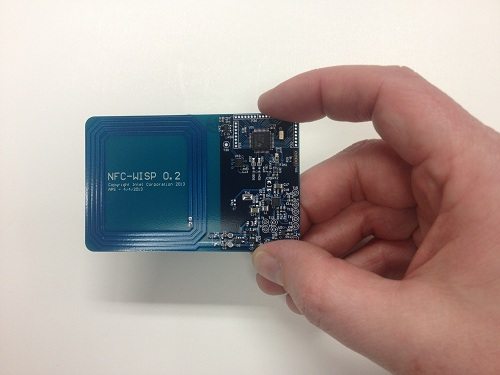
NFC-WISP 0.2 hand small

Imagine, if you could eliminate battery completely? Yes, electrical engineers from Washington University has developed a gadget that will not require any battery or any external power source to keep it working. Confused? Well those gadgets work with the help of radio waves.

You must be wondering if you have to keep your radio on the whole day to keep this device charged. Right? Well the answer to this is no. This device draws radio waves from air and converts them into electricity.

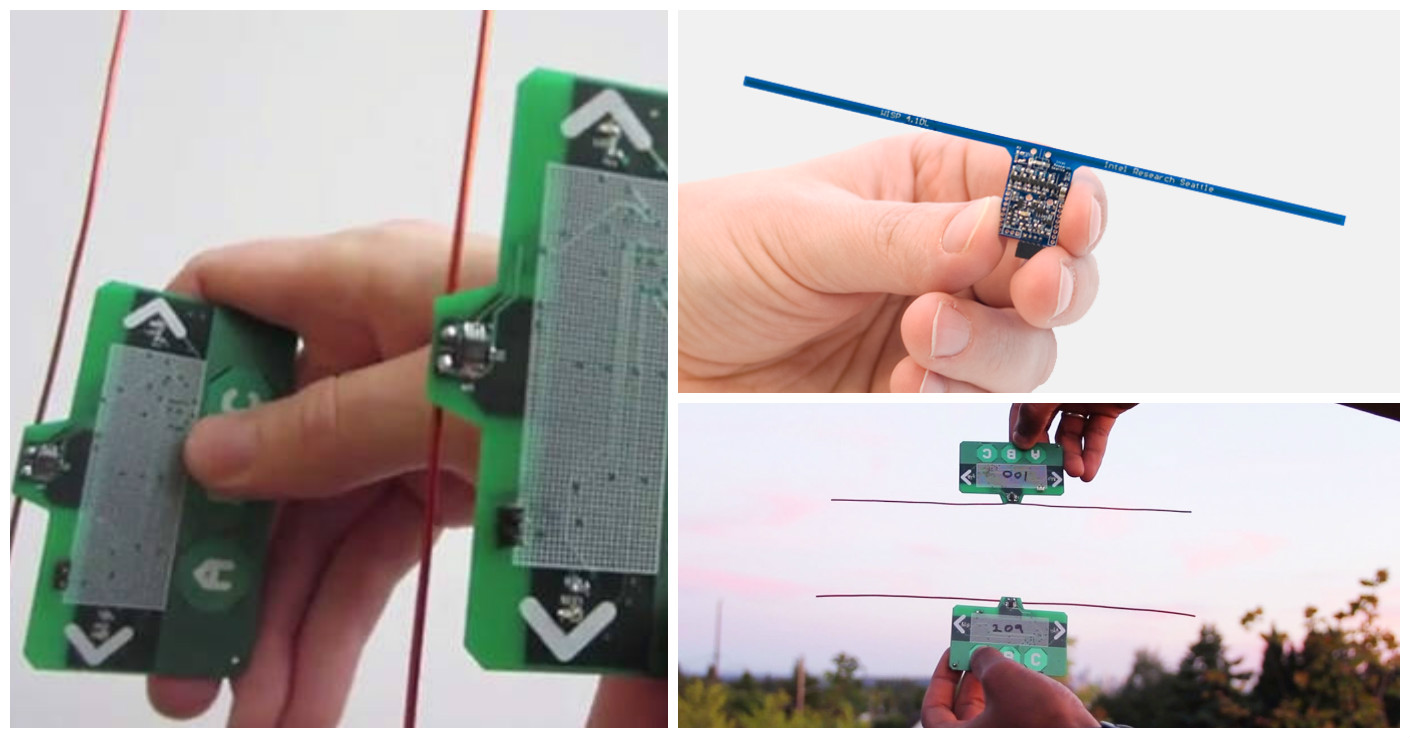
WISP (Wireless Identification and Sensing Platform) is a device that is a computing chip and combination sensor. It uses Radio Frequency Identification reader to draw radio waves and convert them to electricity.

WISP is designed to run sensors and transmit data and not to compete with chips on smartphone and computers. They need low maintenance in comparison to other chips used today.

Creation of Winsent interface would allow wireless programming of WISP making is more usable and easy. A team at Delft University of Technology is working on it.

width="560" height="314" allowfullscreen="allowfullscreen">

WISP now requires cables that nullify the advantages of not using a battery. Hence, Winsent will allow WISP to program it wirelessly. The vision is to deploy battery-less device which will host wirelessly re-programmable software interface, everywhere.

[adinserter block=”7″]

As a technology lover you may like our daily important technology news series. It’s a playlist and you can retrieve the total day-wise videos. Please consider subscribing our YouTube channel:

The cost and availability of WISP in market is yet to be announced.

Author: Technology and Beyond


Tagged : /

Futuristic SkyTran, being implemented, cuts down commuting time by more than 90%!

Travelling on a daily basis becomes a hectic and tiring affair, after 8 long hours of work. There are people who regularly spends more than two to three hours daily on account of commuting related to job. Now, there is a ray of hope for those people, as this newly invented transportation systems is supposed to cut down the overall time of travelling by moving faster and by eliminating the time wasted in traffic. This innovative system is supposed to run through the sky.

SkyTran

SkyTran is a self-driving monorail which has the capability to turn a 2-hour car travelling into a 10 min trip through the sky. The CEO of SkyTran, Jerry Sanders says that the transportation system shall hover 20ft above the road and shall travel at a speed of 155 miles per hour.

The first track will be launched in Lagos, Nigeria, by 2020. Lagos was considered for the first implementation because of its ever-growing population and worst traffic jams. Dough Malewick, an engineer at NASA Ames Research center, developed the transport system.

SkyTran is energy efficient. On reaching a threshold speed of 10mph, it can glide without any additional power. A machine will be used to learn about the requirement of pods. Pick up location and destination has to be entered by user on the SkyTran app to book a pod.

SkyTran station shall be built around the city and tracks shall run through universities and office buildings. Apartments and lobbies shall be used as the smaller stations. Cost of infrastructure is also not very high for a brilliant idea like this. The cost of pod ride shall be just slightly more than Lagos train.

width="560" height="314" allowfullscreen="allowfullscreen">

[adinserter block=”7″]

As a technology lover you may like our daily important technology news series. It’s a playlist and you can retrieve the total day-wise videos. Please consider subscribing our YouTube channel:

Author: Technology and Beyond

Tagged : /
Verified by ExactMetrics