Forgete self-driving Cars: Tridika, the self-driving living room is here to amaze you!

There was a time when we heard about self driving robotic cars and we were astonished and surprised just by the idea of its running on the road .How are we going to react when we will witness self driving living rooms? It’s not going to take too long when you will be able to live in an apartment with the facility of movable living room. A Canadian mechanical engineer, Charles Bombardier joined hands with Indian Vehicle designer Ashish Thulkar and developed the concept of Tridika. Tridika will be self driving vehicle travelling on the maglev track.

Bombardier’s Tridika is inspired from willy wonke esque elevator, designed by Thyssenkrupp, that can travel sideways as well as go up and down. Tridika will give the answer to the question –what else can we do with our vehicles other than transportation? Tridika will be living pod as well as a vehicle. When tridika is not in use as vehicle, it can be parked next to the apartment and can be used as additional living space.

As per Bombardier, Tridika can also be used as additional office space in the future that could fit six people at a time. So, whenever you have clients or other important people coming to your office, you always have an option of additional meeting room.

If we start to judge the feasibility of Tridika then we see that it can be brought on practical grounds easily. Since maglev technology, on which it is supposed to run, is not new and already in use, and designing the pod is not a difficult task in terms of technology. The only road block here would be to find the builders willing to include the maglev tracks in their structure and also to convince the future residents to invest in something like this. The concept of Tridika will help in adding more space to the overcrowded urban setups and also will solve the problem of limited parking space.

width="560" height="314" allowfullscreen="allowfullscreen">

As a technology lover you may like our daily important technology news series. It’s a playlist and you can retrieve the total day-wise videos. Please consider subscribing our YouTube channel:

Author: Technology and Beyond

Tagged : /

Beware of this USB! It can destroy your computer in seconds!!!

Today, we cannot imagine our world without computers and laptops. Be it our bank details, electricity bills , memories of some exciting holiday trip, details of our insurance plan, each and every thing is stored in our computers .And it will be a nightmare if we lose all this data. In this age when we are so much dependent on our computers one should always be aware of all the possibilities that could harm our computers or data stored in it.

Here it will be beneficial to know that a destructive device called as “USB Killer” is been launched. It is said that it can fry almost any computer in seconds beyond redemption. The whole process only takes few seconds. It first destroys the inner circuitry by using its capacitor to store charge. Once the capacitor is fully charged, it constantly discharge 240v into host device till it is completely burned. It was originally manufactured with the aim to be a proof of concept for security researchers, to make them cautious of high voltage attacks.

The makers of this device are a Hong Kong based company specializing in security and audit hardware. And as per them in a recent test almost all consumer level hardware (laptops, tv, telephone etc) failed when tested against the USB Kill. The only exceptions were the products made by Apple.

Since now the USB killer has become commercially available product, it is raising concerns about the security risk, as it can become a potential point of misuse for malicious people.

In a big self-contradictory move the company who has made USB killer is now selling Test Shields that neutralizes the risk of USB killer. The company has given it the name “USB condoms”. It forbids the USB killer to access data lines within a USB port.

To avoid the attack of this dangerous USB, the best thing you can do is to be careful all the time!!!

As a technology lover you may like our daily important technology news series. It’s a playlist and you can retrieve the total day-wise videos. Please consider subscribing our YouTube channel:

Author: Technology and Beyond

Tagged : /

Now, your Smartphone can tell you about your blood cell count !!! This is how…

Smartphone have revolutionized our society and it has changed the world we live in. These smart phones are impacting our day to day lives in a surprising way. They are doing a lot for present generation. They save time, they bring all types of information, and they are helping people cope up with illness and disabilities. And the list still goes on. And now you can detect a low blood cell count using your smart phone and an APP.

Blood test plays very important roles in diagnosing various diseases like hepatitis, diabetes, anemia etc. But there are still various places in the world where getting a simple blood test done is not an easy task. Like some remote villages in India do not have the facilities required for this purpose. And in some cases like severe fatigue or heart problems timely diagnosis is very important. Keeping this problem in mind university of Washington has made a very useful tool using Smartphone and its back camera. They have devised a versatile and multipurpose application which uses a non invasive, screening tool to measure the level of hemoglobin, and thus the Red blood cells in a person’s blood.

Edward Wang along with his team at University of Washington, created an app called “HemaApp” which uses Smartphone’s flash to blast the patient’s finger with a light of changing frequencies and wavelengths. The Camera of Smartphone then captures the colour of the glowing fingertip, and the pictures are then matched with the database to judge the level of hemoglobin in the blood. On trial basis this app was used on 31 patients and it was found to have a 69 percent correlation to the patient’s blood test. As per researchers this app is not ready to be used as substitute of blood test but it can reliably be used as an early screening tool for anemia.

As per Doug Hawkins, pediatric specialist at Seattle Children hospital “Anemia is one of the most common problems affecting adults and children worldwide. The ability to screen quickly with a smartphone-based test could be a huge improvement to delivering care in limited-resource environments.”

As a technology lover you may like our daily important technology news series. It’s a playlist and you can retrieve the total day-wise videos. Please consider subscribing our YouTube channel:

Author: Technology and Beyond

Tagged : /

This man from Panama is establishing an entire village using waste plastic bottles!

Be it railway station, bus station or any other public place, we can see used plastic bottles lying around. People buy bottled water, cold drinks etc and after consuming the content just throw them without bothering much about the mess they create or the amount of pollution they make. These empty plastic bottles can be used in many ways. Sometimes they are just washed and reused. Some people make useful things like pen stands, flower pots, fish traps or lampshades. But mostly these are collected and sent for recycling. In India some factories use these plastic bottles to make polyester cloth, fleece and fiber used to fill cushions and pillows.

But a man from Panama has done something astonishingly different with these used plastic bottles. Robert Bezeau is building a whole village out of these bottles. In this village houses are being made with plastic bottles as main building material. Bezeau used simple cages made of wire in which bottles are stuffed. These cages are then layered over with concrete. A large house takes around 20000 plastic bottles. Bezeau accepts that his idea is a little bit weird but he is confident about his plan.

Bezeau elaborated various advantages of this bottle house. Plastic bottles are very good insulators and hence temperature inside the house will remain 20-30 degrees less as compared to the outside. Also it is quite cheap to build a house with used plastic bottles. Using bottles to erect house save electricity as otherwise if these bottles are recycled then a lot of electricity is requires in that process. Also the house build with plastic bottles is very safe if the earthquake hits the area. And in case of flood the bottle frames can act as flotation platform.

Beazeau is planning to establish a training center where people from around the world can come to learn how to build house with plastic bottles. His main motive is just to make this planet a cleaner and greener place to live.

As a technology lover you may like our daily important technology news series. It’s a playlist and you can retrieve the total day-wise videos. Please consider subscribing our YouTube channel:

Author: Technology and Beyond

Tagged : /

Scientists created space fuel, Plutonium-238 after 30-Year wait making deep space exploration a reality!

Scientists have produced a powder of plutonium-238 for after nearly 30 years in the United States, a milestone that they say sets them on a path toward powering NASA’s deep-space exploration and other missions.

Plutonium-238 (Pu-238) is a radioactive element, which on decaying, or breaking down into uranium-234, releases heat. That heat then is used as a power source; for instance, some 30 space missions, including the Voyager spacecraft, that explored the solar system’s outer planets in the 1970s, relied on the oxide form of the plutonium isotope. (An isotope is atom of an element with a different number of neutrons.)

During the Cold War, the Savannah River Plant in South Carolina was pumping out Pu-238. “Those reactors were shut down in 1988, and the U.S. has not had the capability to make new material since then,” said Bob Wham, who leads the project for the Nuclear Security and Isotope Technology Division at the Department of Energy’s Oak Ridge National Laboratory (ORNL). [8 Rare Elements That You’ve Never Heard Of]

After U.S. production of the isotope stopped, Russia supplied the Pu-238 needed for space missions. However, Russia has also stopped producing the material. Two years ago, NASA began funding a new effort to produce plutonium-238, giving about $15 million a year to the DOE Office of Nuclear Energy.

Plutonium-238 is an ideal power source for space missions for several reasons, including the element’s so-called half-life of about 88 years. Half-life is the time it takes for half of the atoms of an element to decay. That means the isotope’s heat output won’t be reduced to half for 88 years. Plutonium-239, which has a half-life of 24,110 years, is the isotope most commonly formed from uranium in nuclear reactors, according to the World Nuclear Association.

In addition, “it’s stable at high temperatures, can generate substantial heat in small amounts and emits relatively low levels of radiation that is easily shielded, so mission-critical instruments and equipment are not affected,” Wham said.

In the new achievement, Wham and his colleagues created 50 grams (1.8 ounces) of Pu-238 — about one-eighth of a cup (30 milliliters) — or enough to characterize the substance, he said.

Because the scientists were using existing infrastructure at the Department of Energy, they needed to adapt the plutonium-making process. “For example, the current DOE operating research reactors are smaller than those used at Savannah River,” Wham said. “Therefore, we need to modify the technology to work within the existing operating reactors.”

Next, the scientists will test the purity of the sample and work on scaling up the manufacturing process.

“Once we automate and scale up the process, the nation will have a long-range capability to produce radioisotope power systems such as those used by NASA for deep-space exploration,” Wham said.

As a technology lover you may like our daily important technology news series. It’s a playlist and you can retrieve the total day-wise videos. Please consider subscribing our YouTube channel:


Author: Technology and Beyond

Tagged : /

Scientists solved the mystery : New Alzheimer’s treatment fully restores memory function!

Australian researchers have have discovered a non-invasive ultrasound technology that helps in clearing the brain of neurotoxic amyloid plaques – structures that are the main cause of memory loss and a decline in cognitive function that is apparent in Alzheimer’s patients.

Alzheimer’s is usually the result of a build-up of two types of lesions – amyloid plaques, and neurofibrillary tangles. Amyloid plaques that house between the neurons, end up forming dense clusters of beta-amyloid molecules which is a sticky kind of protein which clumps together and forms plaques. 

Neurofibrillary tangles are seen inside the neurons of the brain. They are caused by defective tau proteins that clump up into a thick, insoluble mass. This causes tiny filaments that are known as microtubules that get all twisted, and this disrupts the transportation of essential materials like nutrients and organelles along them.

As we don’t possess any kind of vaccine or preventative measure against Alzheimer’s – a disease that affects more than 340,000 people in Australia, and 50 million people worldwide – it’s been a contest to figure out how to treat it the best, beginning with how to clear the dangerous build-up of defective beta-amyloid and tau proteins from a patient’s brain. There is a team from the Queensland Brain Institute (QBI) at the University of Queensland that has come up with a pretty promising solution to remove the former.

Publishing in Science Translational Medicine, the team explains the technique using a particular type of ultrasound called a focused therapeutic ultrasound, which non-invasively beams sound waves into the brain tissue. By oscillating super-fast, these sound waves enable the blood brain barriers to open, which is a layer that protects the brain against bacteria, and stimulate the brain’s microglial cells to activate. Microglila cells are basically waste-removal cells, so they’re able to clear out the toxic beta-amyloid clumps that are responsible for the worst symptoms of Alzheimer’s.

Next Page For More

Tagged : /

Russia developed world’s first death-ray weapon which will send a chill down the spine!

Russia is flexing its military muscles as tensions in Syria continue to increase, causing many to fear the very imminent threat of World War Three. It has released footage of what is claims is the world’s first weapon to use microwave energy ‘death-rays’ to target military drones. The prototype was revealed during the Arms High-tech military exhibition in Armenia.

According to Russia’s United Instrument Manufacturing Company (OPK), the weapon has undergone successful prototype testing and is ready to be rolled out. Instead of using rounds of bullets or shells to destroy enemy targets, this new weapon will use directed microwave energy.

The constant threat of war makes Russia’s advancements in military technology even more threatening for the US. Major General William Hix, of the US Army, predicted that American could be led into war and that conflict between the two powerful countries is “almost guaranteed” and would be “extremely lethal and fast”.

russias-worlds-first-death-ray-weapon-1

It is believed that Vladimir Putin has denied claims that hackers from his country have interfered with the US presidential election. It is thought that Putin is seeking to support Trump’s presidential bid after the Republican nominee pledged closer links between US and Russia – but the billionaire entrepreneur has denied any knowledge of the country’s actions.

Ex-US Navy scientific adviser Theodore Postol said such an escalation is “unjustified” and “highly dangerous” after emails from the Democratic National Committee and Hillary Clinton’s campaign were posted on WikiLeaks.

Igor Korotchenko, a chief officer in the National Defence , said: “We are talking about a prototype.”

He said that the weapon can aim “microwave pulses at powerful enemy targets with the aim of disabling their electronic equipment, which leads to a complete loss of functionality.

“This weapon is apparently capable of hitting targets at a distance of over one kilometre.”

Korotchenko said the next step was to ensure the new prototype complied with Defence Ministry protocol. Once it has been modified and meets specific requirements, it is thought that it can then be subsequently adopted by the Defence Ministry for use. But others have warned about Russia’s advancements in military technology. Worryingly, while the US have some power in electronic warfare, they are not able to compete with the likes of Russia.

russias-worlds-first-death-ray-weapon-4

As a technology lover you may like our daily important technology news series. It’s a playlist and you can retrieve the total day-wise videos. Please consider subscribing our YouTube channel:

Author: Technology and Beyond

Tagged : /

Nokia is back! This time with an Android Nougat phone named DC1

Nokia is one of the most awaited for to make a comeback in the smartphone space. Now, a mysterious Nokia-branded smartphone popped up on Geekbench listing. This time around and, the specifications and features look on par with the current offering, compared to the two Nokia-branded smartphones that had surfaced on benchmarking site previously, revealing some outdated specifications.

The Nokia smartphone in question carries a model number D1C and was put through paces on Geekbench five times on September 30. Spotted by PhoneArena, the smartphone had logged a peak score of 667 in single-core test and 3,229 in multi-core tests. The benchmark listing also reveals Qualcomm’s 64-bit Snapdragon 430 octa-core processor (MSM8937) clocked at 1.4GHz paired with Adreno 505 GPU and 3GB of RAM. On the software front, it was spotted running on Android 7.0 Nougat.

More recently, rumors pointed at two Nokia smartphones sporting high-resolution QHD panels – one with 5.2-inch and other with 5.5-inch screen. They were also rumored to pack 22.6-megapixel rear cameras with LED flash and support for 4K video recording. Powered by Qualcomm’s Snapdragon 820 SoC under the hood, prices for the smartphones are expected to start at Rs 30,000. The D1C could be the third smartphone that Nokia could offer, carrying a less expensive, mid-range price tag.

Things went south with Nokia when Google’s Android and Apple’s iOS started gaining ground. Even Microsoft buying Nokia’s handset division and focusing on Windows Phone smartphones didn’t help revive its fortunes. We have our fingers crossed this time!

As a technology lover you may like our daily important technology news series. It’s a playlist and you can retrieve the total day-wise videos. Please consider subscribing our YouTube channel:

Author: Technology and Beyond

Tagged : /

Nokia passed ultimate strength test: Stops bullet to save the owner!

Last week, a Nokia 301 got the ultimate strength test — being hit by a bullet. And guess what? It survived! Not only that, it may have saved the person’s life. As it turns out, Nokia phones have a history of saving lives. Two years ago, a Lumia 520 stopped a bullet from lethally wounding a Brazilian police officer. 

The following picture was shared on Twitter by Peter Skillman, a Microsoft employee that used to be on the team that worked on the phone. It shows how the bullet got stuck in the middle of the phone’s body, demolishing it completely but keeping its user out of danger.

nokia

It’s an impressive display of the phone’s structural strength, and it might have even saved someone’s life. The accompanying text says it helped an Afghan man’s life, which is something we’re still trying to confirm.

As a technology lover you may like our daily important technology news series. It’s a playlist and you can retrieve the total day-wise videos. Please consider subscribing our YouTube channel:

Author: Technology Vista

Tagged : /

This is why rail side tracks are kept covered with crushed stones

Ever wonder why railway tracks are covered with so many stones. These stones are called ballast and are used to hold the wooden cross ties that help the rails to be in place. The rail tracks that are laid for the train to pass are affected by a number of factors like expansion and contraction, due to high heat vibration, movement of ground, plants growth and also poor climate changes. Although these tracks are not always used but when they are used to support a weight of up to 1 million pounds.

When the engineers got to know about all the problems that they are going to face around 200 years ago they came up with a solution that has been used ever since.

The very first thing is to build foundations to raise the railway track at the height to avoid flooding. Ballast is put on this Foundation and then a row of 8.5 ft long and 9inches wide and 7 inches thick wooden beams are laid. The ties are usually made of Hickory or Oak and are coated using creosote to protect from change of weather. The latest railway tracks experiment with alternative of wood such as plastic, concrete and steel.

Around 3249 wooden beams are laid per mile. The ballast is put around the bend to keep the beams locked at a certain position. Usage of pebbles would make the beams to slide over.

David S. Rose further explained the use and significance of crushed stone as:

“The ballast distributes the load of the ties (which, in turn, bear the load of the train on the track, held by clips) across the foundation, allows for ground movement, thermal expansion and weight variance, allows rain and snow to drain through the track, and inhibit the growth of weeds and vegetation that would quickly take over the track.”

later on the hot rolled Steel tracks are put above the cross ties and fishplate is used to weld its ends. The modern railways may ditch the fishplate and weld the tracks instead.

You may have a question as to why these tracks or not bolted to the wooden cross ties? The expansion and contraction can heat the bolts and they can end up broken or melted. And thus, this is how it is done.

As a technology lover you may like our daily important technology news series. It’s a playlist and you can retrieve the total day-wise videos. Please consider subscribing our YouTube channel:

Author: Technology Vista

Tagged : /

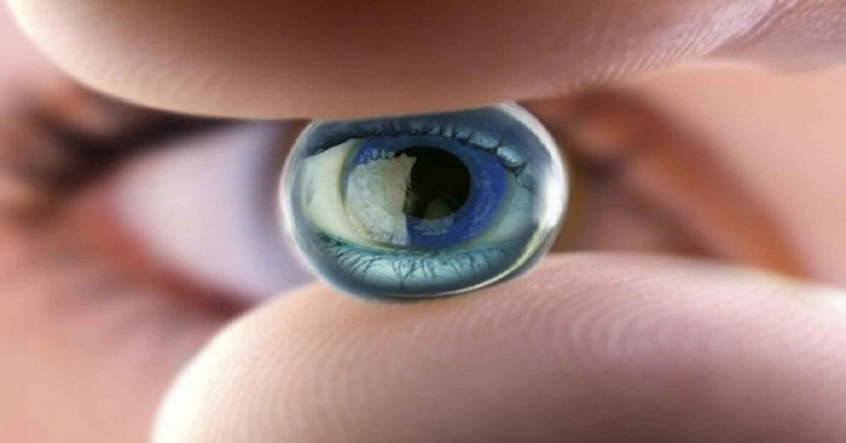
This bionic eye doesn’t need an eyeball to visualise things and people

The world seems beautiful because God has given us eyes to see the beauty in it. But what about those who can’t see or had their vision impaired because of some trauma or accident? Sight is one of the greatest gifts that a human being can give and receive. Arthur Lowery at Monash University in Clayton, Victoria is trying to do the same…. giving the gift of sight to the vision- impaired by developing a bionic eye and according to Lowery, one doesn’t need an eyeball for his eye.

bionic-2

A normal eye produces 1 to 2 million pixel image. To create a bionic eye, 11 small tiles each loaded with 43 electrodes will be implanted in those areas of the brain that deal with vision. When these areas are stimulated, seeing flashes of light is the most common phenomena reported by people. Lowery explains that each electrode would be capable of creating a dot of light which will be like seeing a pixel. So, all the tiles together would provide around 500 pixels.

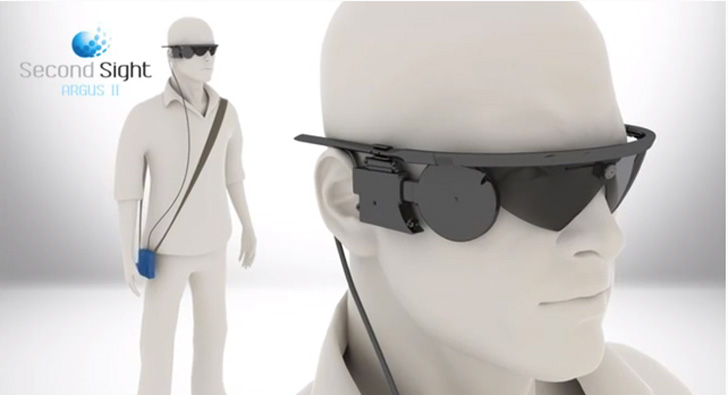
Though this number is far smaller than the one produced by a normal eye, it is still enough to create a simple image. There will be a camera mounted on a pair of glasses to be worn by the user. This camera will pick up the images and send those to a pocket-sized processor worn by the user. This processor in turn would identify and pull pout the relevant parts of an image and send it to the tiles.

bionic-3

The first blind person using this bionic eye will be a person from Australia. Apart from this person there are many volunteers: that is people who will have recently lost their eyesight due to injury. It is to be noted that this eye may not work for people who are blind since birth. But for others who have lost their vision because of an accident may soon have a reason to smile.

As a technology lover you may like our daily important technology news series. It’s a playlist and you can retrieve the total day-wise videos. Please consider subscribing our YouTube channel:

Author: Technology and Beyond

Tagged : /

5 concept planes that vroom past the speed of sound

At first, man travelled on foot, then, with the discovery of the wheel, he started innovating new modes of conveyance. When he was done with the ones on land, he looked up towards the sky and wanted to fly. When he came to know and designed things that could make him fly, he wanted to fly at a greater speed. Human beings always want more! That’s their nature. So no one would be surprised if it comes to their knowledge that research into supersonic and hypersonic is going on since many years.

Supersonic planes have been one of the most favourite subjects of the researchers but these planes still need to figure out how to minimize sonic booms. According to Chris Goyne, a professor of mechanical and aerospace engineering at the University of Virginia in Charlottesville, there is huge enthusiasm in scientist and researcher community regarding developing a hypersonic jet, but the economic feasibility is the prime factor affecting it and the issue may haunt the project probably for the next 25 years! In addition to this, current computer simulations aren’t accurate enough to predict performance, not to mention what effects it would have on humans when travelling at that speed. But nothing can stop of us from dreaming … isn’t it? So let’s discuss five such concept planes having hypersonic dreams:

Lockheed Martin N+2 Supersonic Jet

9bf875fe-f9c0-48b3-a692-ee7bb91d621a-1020x612

The goal of this supersonic jet developed by Lockheed Martin and NASA is to make it possible to travel from New York to Los Angeles in 2.5 hours. One of the major hurdles of commercial supersonic air travel is the noise associated with it. At speeds greater than Mach 1, disturbances of air pressure around the airplane merge to form enormous shock waves resulting in sonic booms and these booms are uncomfortably loud. Lockheed Martin has been working on this problem since a decade. Michael Buonanno, Lockheed Martin manager of the NASA N+2 Programme explains: “To achieve revolutionary reductions in supersonic transportation airport noise, a totally new kind of propulsion system is being developed. We’ve developed a vehicle conceptual design and built a sub scale wind tunnel model to test the sonic boom characteristics that we predict will validate our ability to shape the airplane to generate much lower sonic boom levels.”

Lockheed Martin’s design would accommodate 80 passengers and has the ability to travel more than 5,000 nautical miles with sonic boom levels one hundred times quieter than the now-retired Concorde supersonic passenger airline. The technology is expected to be ready by 2025.

Lockheed Martin SR-72 Hypersonic Aircraft

maxresdefault

In 1976, U.S. Air Force SR-71 Blackbird crews flew from New York to London in less than two hours, reaching speeds exceeding Mach 3 and setting a world record that has remained unbroken for nearly four decades. But that may change in the near future. This is because; Lockheed Martin’s engineers are developing a hypersonic aircraft that will go twice the speed of the SR-71. The plane will be known as SR-72.

The aircraft has been envisioned as an unmanned one that would fly at speeds up to Mach 6. At such an unbelievable speed, the aircraft would fly so fast that the adversary would have no time to react or hide. Brad Leland, Lockheed Martin program manager, Hypersonics said: “Hypersonic aircraft, coupled with hypersonic missiles, could penetrate denied airspace and strike at nearly any location across a continent in less than an hour.” Backed by NASA, the SR-72 would use turbine-based combined cycle propulsion technology. The aircraft could be operational by 2030.

Next Page For More

Tagged : /

Underwater farms may be our future one day…know why it is important!

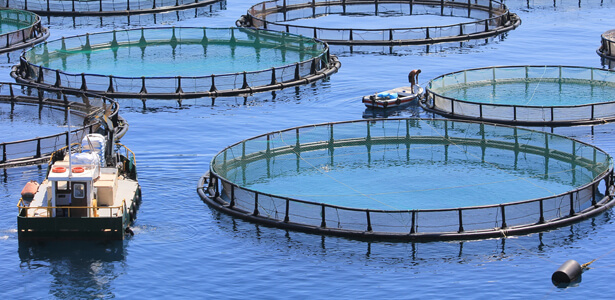
Every other day, a new research comes out and informs the world about how the oceans and the marine life across the world are dying. Most of the people read about it and then forget it but there are a few who do something about it. Bren Smith was a career fisherman before climate change started tightening its claws and before there were huge die-offs. These phenomena made him reconsider the economic model behind his job. Now he has come up with a model for underwater oceanic farms that use seaweed and shellfish to create hanging ecosystems that restore the ocean and its life forms while creating farmable “crops” without the threat of overfishing.

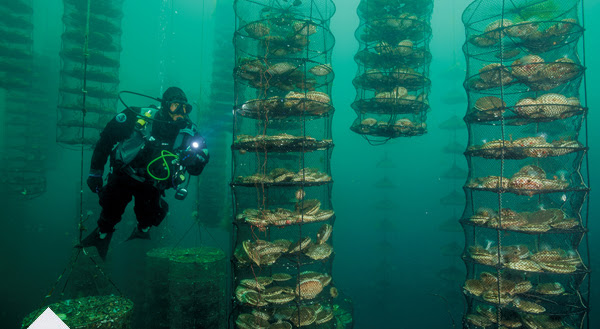
Pacific or Japanese Scallops being grown by a company called the Sea Vision Group based Courtney, BC, Canada. This company, founded and owned by scientist Steve Cross, uses a method of aquaculture called IMTA (Integrated Multi-Trophic Aquaculture) in which several species are grown near each other, each contributing to the other or working to help the ecosystem. The scallops here are grown next to kelp and oysters.

Developed off the coast of Long Island and known as the ‘Thimble Island Ocean Farm’ stresses on sustainable ocean farming methods that can clean the water and give sea life a safe haven. The farm was created by an organization called Green Wave – the flagship for an idea called “3D ocean farm”. Green Wave was again in headlines a few days ago when the ‘Buckminster Fuller Institute’ named it the winner of its annual award of $100,000 to fund the further development of this winning project on sustainable ocean farms.

According to reports, it is feared that until unless some dramatic steps are not taken, a large-scale collapse of the marine food chain is in order by 2050. Inspired by the works of scientists like Charles Yarish who studies seaweed, Smith’s farms are engineered with every step of the ecosystem in mind. The hanging farms use the full “ocean column” to grow seaweed and mussels as well as cages of oysters and clams. These are basically ‘restorative species’ that clean the water, provide a place for other kinds of sea-life to flourish and in addition to all this also provide income for farmers (Smith even works with some chefs who develop new recipes with kelp as a constituent)

What are the cleansing effects? According to GreenWave a mere acre of 3D farm can filter millions of gallons of ocean water every day while kelp alone will seize more carbon than any of the foliage found on ground. And the most advantageous thing is that the design requires zero-inputs and there is no need of fresh water.

Water-2

But now the aim should be to make this research of GreenWave reach as many fishermen as it can and to keep improving the science behind it. If Mother Nature is brought into some technology to help Mother Nature…. the results are obviously going to be positive.

As a technology lover you may like our daily important technology news series. It’s a playlist and you can retrieve the total day-wise videos. Please consider subscribing our YouTube channel:

Author: Technology and Beyond

Tagged : /

Apple developing military-grade wearable technology for soldiers

With the ever changing scenario of technology, defending one’s nation is becoming more and more critical. Innovations are needed in the area of military and other defence forces to keep abreast with the rest of the world. In order to enhance the capabilities of its soldiers, Pentagon is investing in the development of a stretchable electronic sensor that can be worn by soldiers.

edge-of-apple_1024

Apple will be among those 162 companies, universities and other groups in the FlexTech Alliance, who are working with the U.S. Department of Defence on developing high-end printing technologies such as 3-D printing.

The budget of research and development is a staggering $171 million. Defense Secretary Ash Carter says that he has been encouraging Pentagon to invest in innovative ideas in Silicon Valley and technology communities across the country.

power-packed-images-250-us-soldiers-test-their-skills

But what is to be noted is that this wearable sensor won’t be a stylish Apple Watch. This tech is going to be a flexible, wearable one that would be used on ships and warplanes for real-time monitoring of their structural integrity.

As a technology lover you may like our daily important technology news series. It’s a playlist and you can retrieve the total day-wise videos. Please consider subscribing our YouTube channel:

Author: Technology and Beyond

Tagged : /

Bionic eye Implant to fight absolute blindness

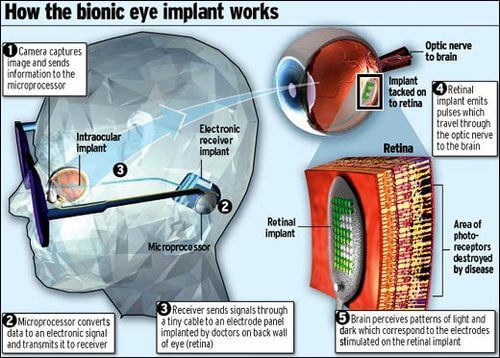
Carmen Torres is one of the few 100 people who have undergone is surgery to install bionic eye implants that help them see partially. Carmen had been completely blind for 13 years from a hereditary eye disease called retinitis pigmentosa. This disease had started to take over her eyes when she was 18. By the age of 45, she had become completely blind.

bionic_eye_2

“When you lose your vision, you feel like something has been stolen from you. You are in darkness all the time,” Torres said. “But now I have an additional tool that gives me more confidence in my daily life.”She went in for this surgery November last year to get the Argus II Retinal Prosthesis System. This system consists of several components including, sensor array inside the eye, and special glasses to be worn 24/7. These glasses function by capturing the light falling of the subject, or in their surrounding, and feed it to the eyes over wifi after converting to electrical impulses.

video-undefined-2609081600000578-634_636x358

“You have to know what light is there. It is very hard to identify the kind of light for every object that you see,” Torres said. “It’s like learning a new language.”

As a technology lover you may like our daily important technology news series. It’s a playlist and you can retrieve the total day-wise videos. Please consider subscribing our YouTube channel:

Author: Technology and Beyond

Tagged : /
Verified by ExactMetrics