Every other day, a new research comes out and informs the world about how the oceans and the marine life across the world are dying. Most of the people read about it and then forget it but there are a few who do something about it. Bren Smith was a career fisherman before climate change started tightening its claws and before there were huge die-offs. These phenomena made him reconsider the economic model behind his job. Now he has come up with a model for underwater oceanic farms that use seaweed and shellfish to create hanging ecosystems that restore the ocean and its life forms while creating farmable “crops” without the threat of overfishing.
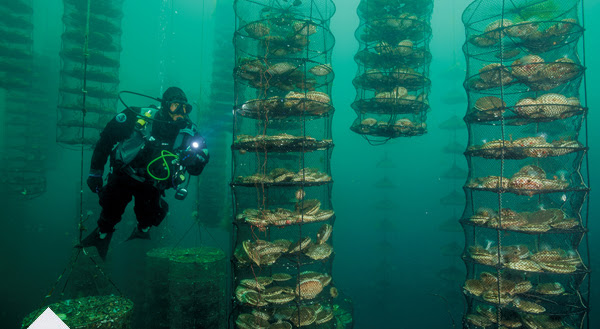
Developed off the coast of Long Island and known as the ‘Thimble Island Ocean Farm’ stresses on sustainable ocean farming methods that can clean the water and give sea life a safe haven. The farm was created by an organization called Green Wave – the flagship for an idea called “3D ocean farm”. Green Wave was again in headlines a few days ago when the ‘Buckminster Fuller Institute’ named it the winner of its annual award of $100,000 to fund the further development of this winning project on sustainable ocean farms.
According to reports, it is feared that until unless some dramatic steps are not taken, a large-scale collapse of the marine food chain is in order by 2050. Inspired by the works of scientists like Charles Yarish who studies seaweed, Smith’s farms are engineered with every step of the ecosystem in mind. The hanging farms use the full “ocean column” to grow seaweed and mussels as well as cages of oysters and clams. These are basically ‘restorative species’ that clean the water, provide a place for other kinds of sea-life to flourish and in addition to all this also provide income for farmers (Smith even works with some chefs who develop new recipes with kelp as a constituent)
What are the cleansing effects? According to GreenWave a mere acre of 3D farm can filter millions of gallons of ocean water every day while kelp alone will seize more carbon than any of the foliage found on ground. And the most advantageous thing is that the design requires zero-inputs and there is no need of fresh water.
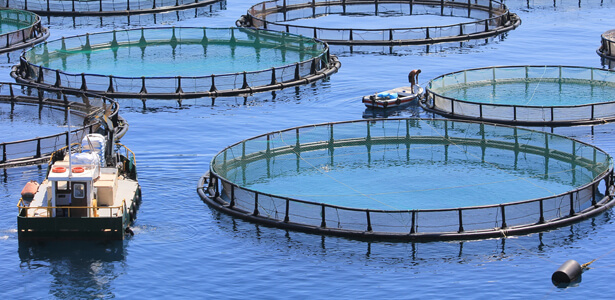
But now the aim should be to make this research of GreenWave reach as many fishermen as it can and to keep improving the science behind it. If Mother Nature is brought into some technology to help Mother Nature…. the results are obviously going to be positive.
As a technology lover you may like our daily important technology news series. It’s a playlist and you can retrieve the total day-wise videos. Please consider subscribing our YouTube channel:
Author: Technology and Beyond