Nokia is back! This time with an Android Nougat phone named DC1

Nokia is one of the most awaited for to make a comeback in the smartphone space. Now, a mysterious Nokia-branded smartphone popped up on Geekbench listing. This time around and, the specifications and features look on par with the current offering, compared to the two Nokia-branded smartphones that had surfaced on benchmarking site previously, revealing some outdated specifications.

The Nokia smartphone in question carries a model number D1C and was put through paces on Geekbench five times on September 30. Spotted by PhoneArena, the smartphone had logged a peak score of 667 in single-core test and 3,229 in multi-core tests. The benchmark listing also reveals Qualcomm’s 64-bit Snapdragon 430 octa-core processor (MSM8937) clocked at 1.4GHz paired with Adreno 505 GPU and 3GB of RAM. On the software front, it was spotted running on Android 7.0 Nougat.

More recently, rumors pointed at two Nokia smartphones sporting high-resolution QHD panels – one with 5.2-inch and other with 5.5-inch screen. They were also rumored to pack 22.6-megapixel rear cameras with LED flash and support for 4K video recording. Powered by Qualcomm’s Snapdragon 820 SoC under the hood, prices for the smartphones are expected to start at Rs 30,000. The D1C could be the third smartphone that Nokia could offer, carrying a less expensive, mid-range price tag.

Things went south with Nokia when Google’s Android and Apple’s iOS started gaining ground. Even Microsoft buying Nokia’s handset division and focusing on Windows Phone smartphones didn’t help revive its fortunes. We have our fingers crossed this time!

As a technology lover you may like our daily important technology news series. It’s a playlist and you can retrieve the total day-wise videos. Please consider subscribing our YouTube channel:

Author: Technology and Beyond

Tagged : /

Nokia passed ultimate strength test: Stops bullet to save the owner!

Last week, a Nokia 301 got the ultimate strength test — being hit by a bullet. And guess what? It survived! Not only that, it may have saved the person’s life. As it turns out, Nokia phones have a history of saving lives. Two years ago, a Lumia 520 stopped a bullet from lethally wounding a Brazilian police officer. 

The following picture was shared on Twitter by Peter Skillman, a Microsoft employee that used to be on the team that worked on the phone. It shows how the bullet got stuck in the middle of the phone’s body, demolishing it completely but keeping its user out of danger.

nokia

It’s an impressive display of the phone’s structural strength, and it might have even saved someone’s life. The accompanying text says it helped an Afghan man’s life, which is something we’re still trying to confirm.

As a technology lover you may like our daily important technology news series. It’s a playlist and you can retrieve the total day-wise videos. Please consider subscribing our YouTube channel:

Author: Technology Vista

Tagged : /

Love making in zero gravity! Scientists came out with the pros and cons!

Elon Musk is not planning to send humans to Mars. While SpaceX CEO wants an ‘Interplanetary Species” on Mars. Which means that at some point sex and pregnancy has to take place in space and/or in Mars. But how will it work? And is it possible?

Until now no human has reached mars so data on how sex will work there is not available. But believe me, sex in space will be a real hassle. Having intimate relations without gravity is impossible. It will be physically complicated to have sex in zero-G. Even if you try in such a conditions, there is the possibility of space sickness and frankly speaking, it will definitely not be romantic. Microgravity makes it difficult to hold on to each other because you keep floating. You can try by anchoring yourself to something but it can also create blood flow problems that will make it difficult to sustain an erection. Also, in zero-G, the bodily fluids will float like a small droplets and will make it complicated. 

According to the estimation by Elon Musk, one can reach to Mars in as little as 80 days and realistically 6 months. So sexual frustration will be a serious problem. Also, according to Sheryl Bishop, a researcher in extreme environments says that sending married couples will complicate the things.

space-sex-1

“THE ONLY ETHICAL THING IS THAT EVERY SINGLE PERSON ON BOARD WOULD HAVE TO AGREE TO BE STERILIZED”

Beside space sex, other obstacles also exist. Like Radiation. Musk dismissed the possibility of radiation making humans infertile but it can have disastrous consequences on the genome. Which means the possibility of babies with severe birth defects for the astronauts who are exposed to radiation. So self-sustaining civilization will be difficult.

Next Page For More

Tagged : /

This is why rail side tracks are kept covered with crushed stones

Ever wonder why railway tracks are covered with so many stones. These stones are called ballast and are used to hold the wooden cross ties that help the rails to be in place. The rail tracks that are laid for the train to pass are affected by a number of factors like expansion and contraction, due to high heat vibration, movement of ground, plants growth and also poor climate changes. Although these tracks are not always used but when they are used to support a weight of up to 1 million pounds.

When the engineers got to know about all the problems that they are going to face around 200 years ago they came up with a solution that has been used ever since.

The very first thing is to build foundations to raise the railway track at the height to avoid flooding. Ballast is put on this Foundation and then a row of 8.5 ft long and 9inches wide and 7 inches thick wooden beams are laid. The ties are usually made of Hickory or Oak and are coated using creosote to protect from change of weather. The latest railway tracks experiment with alternative of wood such as plastic, concrete and steel.

Around 3249 wooden beams are laid per mile. The ballast is put around the bend to keep the beams locked at a certain position. Usage of pebbles would make the beams to slide over.

David S. Rose further explained the use and significance of crushed stone as:

“The ballast distributes the load of the ties (which, in turn, bear the load of the train on the track, held by clips) across the foundation, allows for ground movement, thermal expansion and weight variance, allows rain and snow to drain through the track, and inhibit the growth of weeds and vegetation that would quickly take over the track.”

later on the hot rolled Steel tracks are put above the cross ties and fishplate is used to weld its ends. The modern railways may ditch the fishplate and weld the tracks instead.

You may have a question as to why these tracks or not bolted to the wooden cross ties? The expansion and contraction can heat the bolts and they can end up broken or melted. And thus, this is how it is done.

As a technology lover you may like our daily important technology news series. It’s a playlist and you can retrieve the total day-wise videos. Please consider subscribing our YouTube channel:

Author: Technology Vista

Tagged : /

This bionic eye doesn’t need an eyeball to visualise things and people

The world seems beautiful because God has given us eyes to see the beauty in it. But what about those who can’t see or had their vision impaired because of some trauma or accident? Sight is one of the greatest gifts that a human being can give and receive. Arthur Lowery at Monash University in Clayton, Victoria is trying to do the same…. giving the gift of sight to the vision- impaired by developing a bionic eye and according to Lowery, one doesn’t need an eyeball for his eye.

bionic-2

A normal eye produces 1 to 2 million pixel image. To create a bionic eye, 11 small tiles each loaded with 43 electrodes will be implanted in those areas of the brain that deal with vision. When these areas are stimulated, seeing flashes of light is the most common phenomena reported by people. Lowery explains that each electrode would be capable of creating a dot of light which will be like seeing a pixel. So, all the tiles together would provide around 500 pixels.

Though this number is far smaller than the one produced by a normal eye, it is still enough to create a simple image. There will be a camera mounted on a pair of glasses to be worn by the user. This camera will pick up the images and send those to a pocket-sized processor worn by the user. This processor in turn would identify and pull pout the relevant parts of an image and send it to the tiles.

bionic-3

The first blind person using this bionic eye will be a person from Australia. Apart from this person there are many volunteers: that is people who will have recently lost their eyesight due to injury. It is to be noted that this eye may not work for people who are blind since birth. But for others who have lost their vision because of an accident may soon have a reason to smile.

As a technology lover you may like our daily important technology news series. It’s a playlist and you can retrieve the total day-wise videos. Please consider subscribing our YouTube channel:

Author: Technology and Beyond

Tagged : /

5 concept planes that vroom past the speed of sound

At first, man travelled on foot, then, with the discovery of the wheel, he started innovating new modes of conveyance. When he was done with the ones on land, he looked up towards the sky and wanted to fly. When he came to know and designed things that could make him fly, he wanted to fly at a greater speed. Human beings always want more! That’s their nature. So no one would be surprised if it comes to their knowledge that research into supersonic and hypersonic is going on since many years.

Supersonic planes have been one of the most favourite subjects of the researchers but these planes still need to figure out how to minimize sonic booms. According to Chris Goyne, a professor of mechanical and aerospace engineering at the University of Virginia in Charlottesville, there is huge enthusiasm in scientist and researcher community regarding developing a hypersonic jet, but the economic feasibility is the prime factor affecting it and the issue may haunt the project probably for the next 25 years! In addition to this, current computer simulations aren’t accurate enough to predict performance, not to mention what effects it would have on humans when travelling at that speed. But nothing can stop of us from dreaming … isn’t it? So let’s discuss five such concept planes having hypersonic dreams:

Lockheed Martin N+2 Supersonic Jet

9bf875fe-f9c0-48b3-a692-ee7bb91d621a-1020x612

The goal of this supersonic jet developed by Lockheed Martin and NASA is to make it possible to travel from New York to Los Angeles in 2.5 hours. One of the major hurdles of commercial supersonic air travel is the noise associated with it. At speeds greater than Mach 1, disturbances of air pressure around the airplane merge to form enormous shock waves resulting in sonic booms and these booms are uncomfortably loud. Lockheed Martin has been working on this problem since a decade. Michael Buonanno, Lockheed Martin manager of the NASA N+2 Programme explains: “To achieve revolutionary reductions in supersonic transportation airport noise, a totally new kind of propulsion system is being developed. We’ve developed a vehicle conceptual design and built a sub scale wind tunnel model to test the sonic boom characteristics that we predict will validate our ability to shape the airplane to generate much lower sonic boom levels.”

Lockheed Martin’s design would accommodate 80 passengers and has the ability to travel more than 5,000 nautical miles with sonic boom levels one hundred times quieter than the now-retired Concorde supersonic passenger airline. The technology is expected to be ready by 2025.

Lockheed Martin SR-72 Hypersonic Aircraft

maxresdefault

In 1976, U.S. Air Force SR-71 Blackbird crews flew from New York to London in less than two hours, reaching speeds exceeding Mach 3 and setting a world record that has remained unbroken for nearly four decades. But that may change in the near future. This is because; Lockheed Martin’s engineers are developing a hypersonic aircraft that will go twice the speed of the SR-71. The plane will be known as SR-72.

The aircraft has been envisioned as an unmanned one that would fly at speeds up to Mach 6. At such an unbelievable speed, the aircraft would fly so fast that the adversary would have no time to react or hide. Brad Leland, Lockheed Martin program manager, Hypersonics said: “Hypersonic aircraft, coupled with hypersonic missiles, could penetrate denied airspace and strike at nearly any location across a continent in less than an hour.” Backed by NASA, the SR-72 would use turbine-based combined cycle propulsion technology. The aircraft could be operational by 2030.

Next Page For More

Tagged : /

Underwater farms may be our future one day…know why it is important!

Every other day, a new research comes out and informs the world about how the oceans and the marine life across the world are dying. Most of the people read about it and then forget it but there are a few who do something about it. Bren Smith was a career fisherman before climate change started tightening its claws and before there were huge die-offs. These phenomena made him reconsider the economic model behind his job. Now he has come up with a model for underwater oceanic farms that use seaweed and shellfish to create hanging ecosystems that restore the ocean and its life forms while creating farmable “crops” without the threat of overfishing.

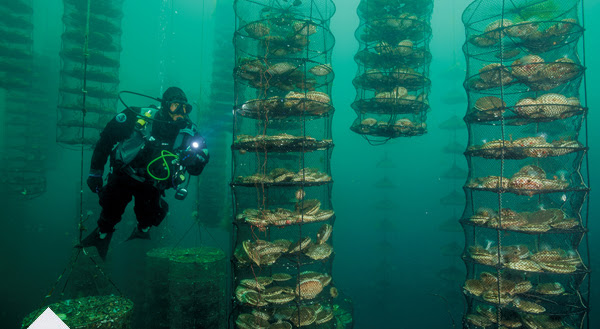
Pacific or Japanese Scallops being grown by a company called the Sea Vision Group based Courtney, BC, Canada. This company, founded and owned by scientist Steve Cross, uses a method of aquaculture called IMTA (Integrated Multi-Trophic Aquaculture) in which several species are grown near each other, each contributing to the other or working to help the ecosystem. The scallops here are grown next to kelp and oysters.

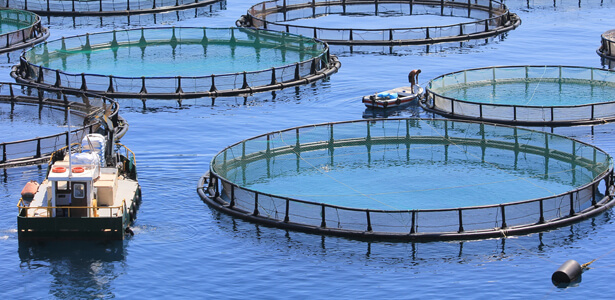
Developed off the coast of Long Island and known as the ‘Thimble Island Ocean Farm’ stresses on sustainable ocean farming methods that can clean the water and give sea life a safe haven. The farm was created by an organization called Green Wave – the flagship for an idea called “3D ocean farm”. Green Wave was again in headlines a few days ago when the ‘Buckminster Fuller Institute’ named it the winner of its annual award of $100,000 to fund the further development of this winning project on sustainable ocean farms.

According to reports, it is feared that until unless some dramatic steps are not taken, a large-scale collapse of the marine food chain is in order by 2050. Inspired by the works of scientists like Charles Yarish who studies seaweed, Smith’s farms are engineered with every step of the ecosystem in mind. The hanging farms use the full “ocean column” to grow seaweed and mussels as well as cages of oysters and clams. These are basically ‘restorative species’ that clean the water, provide a place for other kinds of sea-life to flourish and in addition to all this also provide income for farmers (Smith even works with some chefs who develop new recipes with kelp as a constituent)

What are the cleansing effects? According to GreenWave a mere acre of 3D farm can filter millions of gallons of ocean water every day while kelp alone will seize more carbon than any of the foliage found on ground. And the most advantageous thing is that the design requires zero-inputs and there is no need of fresh water.

Water-2

But now the aim should be to make this research of GreenWave reach as many fishermen as it can and to keep improving the science behind it. If Mother Nature is brought into some technology to help Mother Nature…. the results are obviously going to be positive.

As a technology lover you may like our daily important technology news series. It’s a playlist and you can retrieve the total day-wise videos. Please consider subscribing our YouTube channel:

Author: Technology and Beyond

Tagged : /

Apple developing military-grade wearable technology for soldiers

With the ever changing scenario of technology, defending one’s nation is becoming more and more critical. Innovations are needed in the area of military and other defence forces to keep abreast with the rest of the world. In order to enhance the capabilities of its soldiers, Pentagon is investing in the development of a stretchable electronic sensor that can be worn by soldiers.

edge-of-apple_1024

Apple will be among those 162 companies, universities and other groups in the FlexTech Alliance, who are working with the U.S. Department of Defence on developing high-end printing technologies such as 3-D printing.

The budget of research and development is a staggering $171 million. Defense Secretary Ash Carter says that he has been encouraging Pentagon to invest in innovative ideas in Silicon Valley and technology communities across the country.

power-packed-images-250-us-soldiers-test-their-skills

But what is to be noted is that this wearable sensor won’t be a stylish Apple Watch. This tech is going to be a flexible, wearable one that would be used on ships and warplanes for real-time monitoring of their structural integrity.

As a technology lover you may like our daily important technology news series. It’s a playlist and you can retrieve the total day-wise videos. Please consider subscribing our YouTube channel:

Author: Technology and Beyond

Tagged : /

Bionic eye Implant to fight absolute blindness

Carmen Torres is one of the few 100 people who have undergone is surgery to install bionic eye implants that help them see partially. Carmen had been completely blind for 13 years from a hereditary eye disease called retinitis pigmentosa. This disease had started to take over her eyes when she was 18. By the age of 45, she had become completely blind.

bionic_eye_2

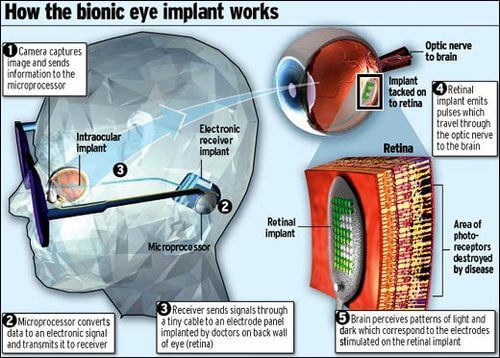
“When you lose your vision, you feel like something has been stolen from you. You are in darkness all the time,” Torres said. “But now I have an additional tool that gives me more confidence in my daily life.”She went in for this surgery November last year to get the Argus II Retinal Prosthesis System. This system consists of several components including, sensor array inside the eye, and special glasses to be worn 24/7. These glasses function by capturing the light falling of the subject, or in their surrounding, and feed it to the eyes over wifi after converting to electrical impulses.

video-undefined-2609081600000578-634_636x358

“You have to know what light is there. It is very hard to identify the kind of light for every object that you see,” Torres said. “It’s like learning a new language.”

As a technology lover you may like our daily important technology news series. It’s a playlist and you can retrieve the total day-wise videos. Please consider subscribing our YouTube channel:

Author: Technology and Beyond

Tagged : /

Geothermal Houses on Mountains

Japan has once again proved to be the most efficient by utilizing their limited space in terms of construction, by building homes into the mountains. Other than this saving them the pains of tricky landscaping, the houses are able to derive heat from the mountains they stand on.

1341942764299074849

The insulating facility is similar to the arrangement used in thermal bottles, and would be immensely comfortable for the people living in the added cold climates of the mountains.

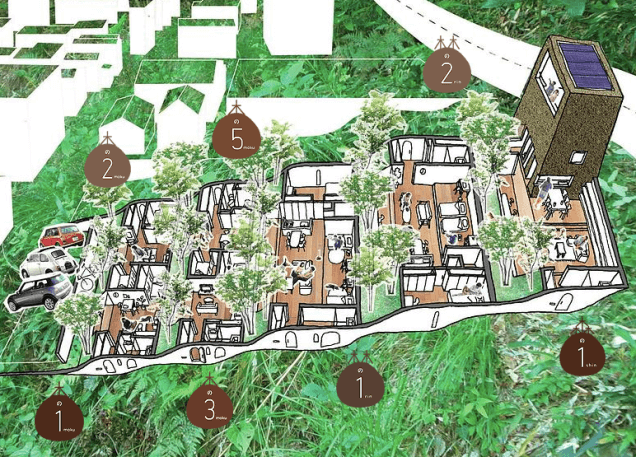
These building created is a seven-unit residential complex at the foot of Mineyama Mountain, in southern Japan. This unique architecture, called Miyawaki Gurindo, is the work of architect Keita Nagata. This model’s compactness is enhanced by the fitting of the garden of each house on the roof of the house in front of it, taking advantage of the staircase like pattern the mountain provides.

1341942763973395233

Safety always comes first, and the construction follows this ideology by using steel-reinforced concrete, described by Real Estate Japan to be generally considered as the safest material for minimizing earthquake damage.

As a technology lover you may like our daily important technology news series. It’s a playlist and you can retrieve the total day-wise videos. Please consider subscribing our YouTube channel:

Author: Technology and Beyond

Tagged : /

Water geysers on Jupiter’s moon Europa may indicate alien presence. NASA plans new mission in 2020

With the use of the Hubble Space Telescope in the last five years, NASA astronomers have observed water vapor plumes that erupted from the surface Europa which is of Jupiter’s moon. Out of 10 observation sessions, they spotted these water vapor emissions 3 times. The information was publicly released last September 26th 2016.

Scientists estimated the volume of these plumes to be 5,000 to 7,000 kg of water mass per second. That’s almost like spouting out an Olympic-sized swimming pool every minute!

William Sparks, the leading astronomer for this research endeavor with the Space Telescope Science Institute in Baltimore, says that “The chances of this occurring due to randomness is very low. The problem is that there may be something we don’t understand about the instrument or what Europa looks like in ultraviolet light. These are difficult wavelengths for Hubble. I’m not aware of any natural explanation for this besides water plumes.”

The scientists expect to collect better data about these plumes using James Webb Space Telescope, that will launch in 2018.

This matters because, it would enable scientists to study the oceans beneath the moon’s surface. In addition, this news comes in tandem with NASA taking steps to launch a pair of missions to Europa in the 2020s.

The same engineers who spearheaded Curiosity’s landing on Mars will start working on a plan to land a probe on Europa’s icy surface. Naturally, it is no easy feat as Jupiter’s gravity pushes and pulls the icy surface of Europa by several meters every few days. Gathering information on these underground oceans would be like drilling through kilometers of rock hard ice. On top of that, the radiation from nearby Jupiter could kill a human in a matter of hours.

width="560" height="314" allowfullscreen="allowfullscreen">

Author: Technology and Beyond

Tagged : /

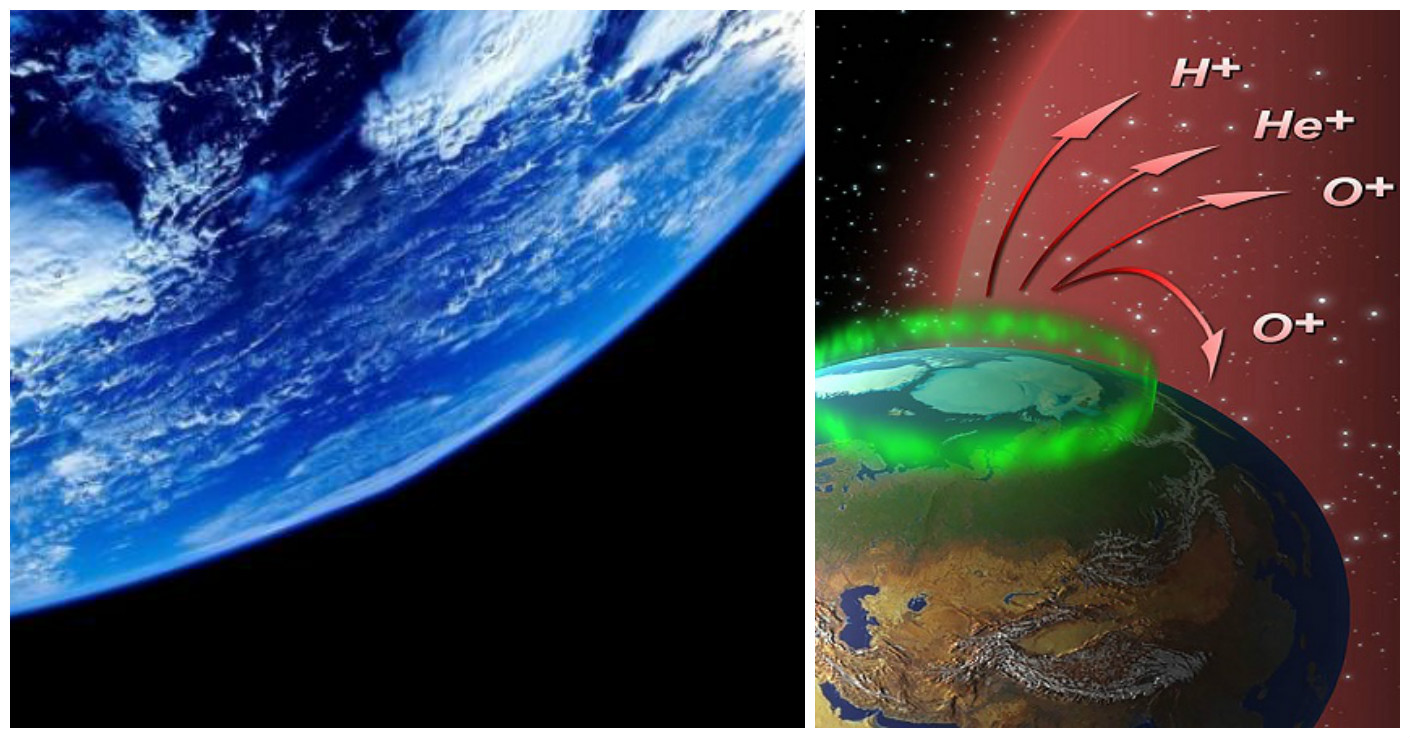
Worrying Scenario? Scientists don’t know why Earth’s atmosphere is leaking oxygen out!

Researchers discovered that for some reason, oxygen has started to slowly leak out of Earth’s atmosphere, but they don’t seem to get to the bottom of it so quickly.

A team Princeton University found that oxygen levels have shockingly dropped by 0.7 percent in the last 800,000 year. They analysed air bubbles trapped inside ice cores from Greenland and Antarctica.

For now, they have failed to the point out the reason of leakage. To get to the answer is difficult as oxygen is constantly being recycled and reused by humans, animals, plants, and even silicate rocks. So using ice cores for oxygen level determination is the only way at the moment.

Researcher Daniel Stolper told in an interview,

“We did this analysis more out of interest than any expectation. We didn’t know whether oxygen would be going up, down, or flat. It turns out there is a very clear trend.”

The fall is very nominal and is not even dangerous for the living beings, but getting to the bottom of it can actually reveal many secrets of our wondrous planet.

The researchers believe that one reason can be an increased erosion rates, exposing and oxidising more fresh sediment while reducing atmospheric oxygen levels.

Other possible cause can be pinned on to long-term climate change. Over the last few million years, the global temperature have been slightly dropping, but post the industrial revolution, Earth has started to rapidly heat in the past fifty years. This could have set off an ecological chain reaction, which probably caused sucking up of more oxygen out of the atmosphere.

All these are just speculations and till now have no data that can be used to back it up.

While the declination is not as detrimental as carbon dioxide’s rising, it may hinder the amount of sunlight that reaching the ground. And there also has been evidence of changing oxygen levels adversely affecting Earth’s climate in the past.

Stolper added,

“We are consuming O2 at a rate a factor of a thousand times faster than before. Humankind has completely short-circuited the cycle by burning tonnes of carbon… it’s yet another indication of our collective ability to do what happens [naturally] on the Earth, yet so much faster.”

As a technology lover you may like our daily important technology news series. It’s a playlist and you can retrieve the total day-wise videos. Please consider subscribing our YouTube channel:

Author: Technology and Beyond

Tagged : /

Want night vision? This technology by IBM will add night vision to your glasses!

It takes us some time to adjust our eyesight on entering a dark room. This is because our eye consists of two kinds of photoreceptors namely, the rods and the cones. The rod cells are responsible for our ability to see in the dark. However, for the rods to completely adjust to darkness it takes nearly 30 minutes.

Although the idea of night vision involves a lot of biological processes, there are studies that say an effort can really help tweak and enhance the entire process. And this can be done without any kind of genetic manipulation. All we may need is glasses, for that matter.

The rod cells send higher vibes and contrasting images on seeing the red light, hence making it easy to make out the object. This is the reason behind keeping the red lights in places that are required to be kept dark (eg. Photography Labs) so as to make the objects visible to humans.

Lately, a technology that relies on this principle is patented by IBM. This will now be used in the Google Glass.

A projector that beams with red light is incorporated in the eyeglass lens. So that when the wearer of Google Glass enters into a dark environment, the projectors by itself projects red light into each eye so as to make the objects visible. This process guiles the rods to send higher contrast images to the brain, giving the glasses night-vision characteristics.

If you want to dig in deeper into this discovery you may also get more information on night vision and the chemicals behind it here.

As a technology lover you may like our daily important technology news series. It’s a playlist and you can retrieve the total day-wise videos. Please consider subscribing our YouTube channel:

Author: Technology and Beyond

Tagged : /

This Russian Scientist injected himself with Prehistoric Bacteria to gain eternal life. The result is shocking!

If there is anything that scientists are unable to do is discover a potion to become immortal. If there has ever been a Madagascar in test ride out of Marvel comic book then it is him – Anatoli Broushkov. The Russian scientist who is controversial experiments are going wild on the Internet. His experiments for so bizarre that the world is now astonished looking at him conduct all of these experiments on himself. Of late the scientist injected himself with Prehistoric bacteria that was more than 3.5 million years old which was derived from the Siberian permafrost. His reasons will shock you beyond order because according to him it is an elixir to immortality.

Prehistoric bacteria influenced immunity and vitality

After the experiment he says that the bacteria cell found in the permafrost have actually have him develop a heightened state of immunity two diseases and other negative factors of environment and bad health. He also claims that it has revitalized him to a really great extent.
The scientist earlier conducted a similar experiment on animals and observed almost the same result that is an increasing immunity and in the sense of power physically.

3.5 million year old Jurassic bacteria discovered in Siberian permafrost

It is talking to long path he is actually the head of Geo cryology department at State University Moscow. Since this time he has started to conduct the experiment of injecting prehistoric bacteria into the system, 2 years ago, he has never fallen ill.
The bacteria in focus is described as bacillus F dating back to almost 3.5 million years discovered in Siberian permafrost and it is also regarded as a vital ingredient that promotes longevity in humans. Russian scientist sequenced is DNA for further experiments on animal studies but Broushkov played a guinea pig where he injector himself with this bacteria. He claims to feel Stronger and more healthy than ever.

Next Page For More

Tagged : /

This Fabric Can Charge Your Smartphone using solar and wind power!!!

Have you ever imagined that your handkerchief can be used to charge you’re mobile as well?  Or just think that you will never have to stop at any motel during your journey just to charge your laptop or tab. How great that would be!!! Thanks to the scientist who have developed a new fabric that can harvest energy from sun and wind.

It is basically combination of two types of electricity generation modes knitted into a textile for developing garments that can provide their own source of energy to charge electronic devices like Smartphone.

As per professor  Zhong Lin Wang of Georgia Tech school of material science and engineering “This hybrid power textile presents a novel solution to charging devices in the field from something as simple as the wind blowing on a sunny day”.

For making this fabric, commercial textile machine was used to weave together solar cells which were constructed from light weight polymer fibers with triboelectric nanogenerators, which were also fiber based.

How these triboelectric  nanogenerators work? These use a combination of the triboelectric effect and electrostatic induction to produce small amount of electric power from mechanical motion like sliding, rotation or vibration.

As per professor wang the fabric is very flexible, breathable, light weight and can be adapted for various uses. It is 320micrometer thick, woven together with the strands of wool, and, it can be used and made into curtains, tents or wearable garments.

The manner in which these fibers based triboelectric nanogenerators work is that, they capture any energy produced when certain materials become electrically charged once they come into moving contact with different material. And for the sunlight harvesting photo anodes made in a wire shaped fashion was used that could be woven together with other fibers. The backbone of the fiber was made with inexpensive, environment friendly commonly used polymer fiber. The electrodes used in the fiber were also made through a low cost process aiming the possibility of large scale manufacturing.

Wang’s team did a primary experiment. In this they used the fabric in the size of the office sheet. It was then attached to a rod. It looked like a small flag. In a fast moving car they let it blow in the wind through windows. The fiber was able to generate significant power from a moving car and that too on a cloudy day. The output measured on a 4 by 5 centimeter piece -it could charge 2mF commercial capacitor to 2 volts in one minute.

Early test on this fabric indicated that it has a capability of working even in harsh environment and it can withstand repeated and rigorous use. And next they are focusing on its industrial use.

As a technology lover you may like our daily important technology news series. It’s a playlist and you can retrieve the total day-wise videos. Please consider subscribing our YouTube channel:

Author: Technology and Beyond

Tagged : /
Verified by ExactMetrics