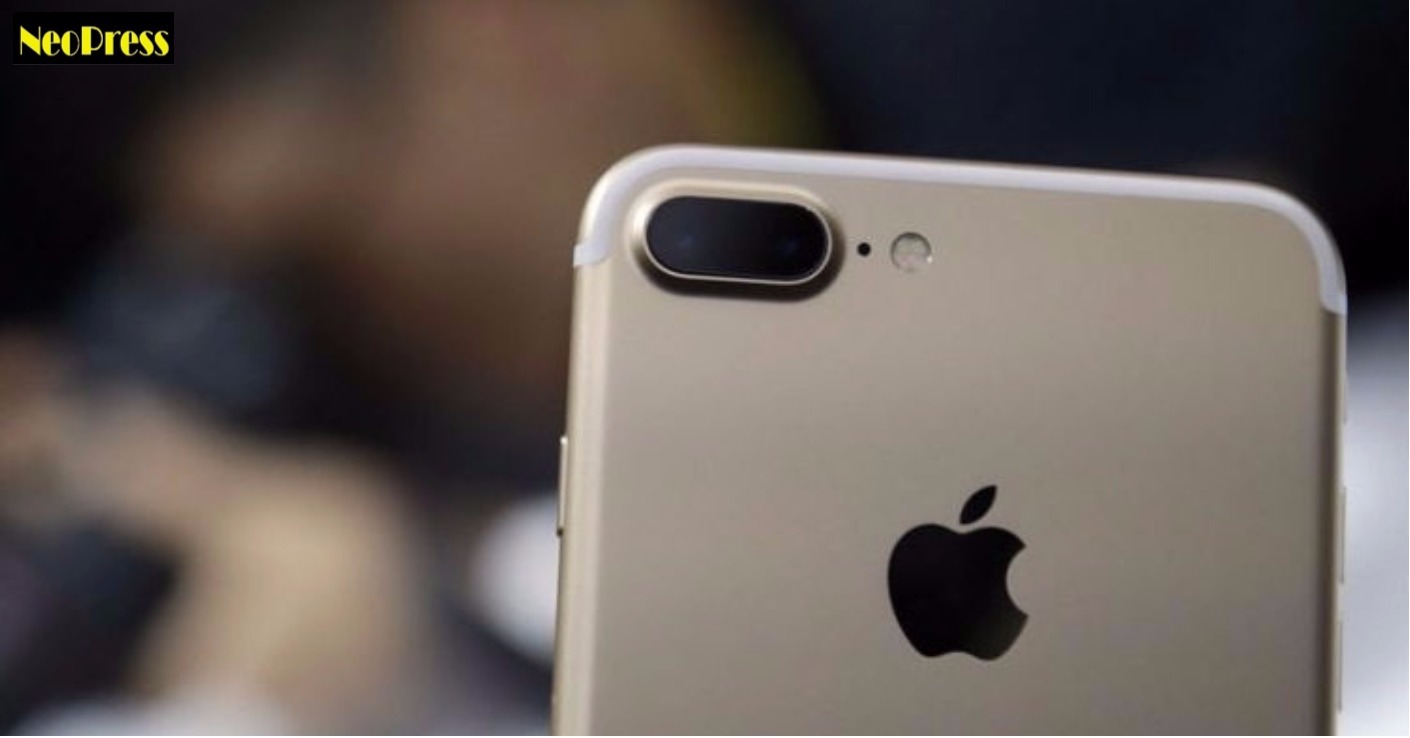
Retail major Brightstar India on Wednesday said iPhone 8 and iPhone 8 Plus would be available for pre-orders starting September 17 at its authorised stores in north and east India.
The new iPhone models would start retailing at stores starting September 29, it added.
Another retail major Redington will also offer pre-order of iPhone 8 and iPhone 8 Plus from September 22 at its 3,000 stores across the country.
Apple’s high-end iPhone X (starting price of Rs 89,000) with facial recognition, would be available for pre-orders at Brightstar starting October 27 and would be available at stores from November 3, the company said in a statement.
Apple on Tuesday unveiled iPhone X with facial recognition system, iPhone 8 and iPhone 8 Plus, the new Apple Watch Series 3 and Apple TV 4K.
Hosting the event for the first time at the opulent Steve Jobs Theatre on the new Apple Park campus in Cupertino, California, the tech giant introduced iPhone X — an ultra-premium model.
iPhone X sports a unique “FaceID” facial recognition system to unlock the device. Just look at your phone to unlock it. The feature is enabled by a ‘True Depth’ camera system in the A11 neural engine.
iPhone 8 64GB costs Rs 64,000 while the 256GB variant will be available for Rs 77,000.
iPhone 8 Plus starts at Rs 73,000 for 64GB. The 256GB variant will cost Indian users Rs 86,000.
As a technology lover you may like our daily important technology news series. It’s a playlist and you can retrieve the total day-wise videos. Please consider subscribing our YouTube channel:
Marking the tenth anniversary of the iPhone, Apple on Tuesday announced iPhone X in a gorgeous all-glass design that delivers an innovative and secure new way for customers to unlock, authenticate and pay using Face ID, enabled by the new TrueDepth camera.
The device comes with a 5.8-inch Super Retina display, A11 Bionic chip, wireless charging and an improved rear camera with dual optical image stabilisation.
iPhone X will be available in silver and space grey in 64GB and 256GB models starting at Rs 89,000 from November 3 in India. The pre-order of the device will begin from October 27.
“For more than a decade, our intention has been to create an iPhone that is all display. The iPhone X is the realisation of that vision,” Jony Ive, Apple’s Chief Design Officer, said in a statement.
“iPhone X enables fluid new user experiences — from unlocking your iPhone with Face ID, to playing immersive AR games, to sharing Animoji in Messages — it is the beginning of the next ten years for iPhone,” Philip Schiller, Apple’s Senior Vice President of Worldwide Marketing, added.
iPhone X all-screen display design follows the curve of the device. The all-glass front and back feature the most durable glass ever in a smartphone, while a highly polished, surgical-grade stainless steel band seamlessly wraps around and reinforces iPhone X.
The 5.8-inch Super Retina display is the first OLED panel. The HDR display supports Dolby Vision and HDR10. The addition of True Tone dynamically adjusts the white balance of the display to match the surrounding light for a more natural, paper-like viewing experience.
iOS 11 is redesigned to take full advantage of the Super Retina display and replaces the Home button with fast and fluid gestures, allowing customers to naturally and intuitively navigate iPhone X.
Face ID — that uses TrueDepth camera system made up of a dot projector, infrared camera and flood illuminator, to unlock the phone — is powered by A11 Bionic to accurately map and recognise a face.
Face ID projects more than 30,000 invisible IR dots. The IR image and dot pattern are pushed through neural networks to create a mathematical model of your face and send the data to the secure enclave to confirm a match, while adapting to physical changes in appearance over time.
All saved facial information is protected by the secure enclave to keep data extremely secure, while all of the processing is done on-device and not in the cloud to protect user privacy.
The TrueDepth camera captures and analyses over 50 different facial muscle movements, then animates those expressions in a dozen different Animoji, including a panda, unicorn and robot.
Available as an iMessage app pre-installed on iPhone X, customers can record and send Animoji messages with their voice that can smile, frown and more.
iPhone X features a redesigned dual 12MP rear camera system with dual optical image stabilisation. The /1.8 aperture on the wide-angle camera and an improved /2.4 aperture on the telephoto camera for better photos and videos.
The cameras on iPhone X are custom tuned for the ultimate AR experience. Each camera is individually calibrated, with new gyroscopes and accelerometers for accurate motion tracking.
Similar to iPhone 8, the new camera delivers the high quality video with better video stabilisation, 4K video up to 60fps and 1080p slo-mo up to 240fps.
A11 Bionic, the most powerful and smartest chip ever in a smartphone, features a six-core CPU design with two performance cores that are 25 per cent faster and four efficiency cores that are 70 per cent faster than the A10 Fusion.
As a technology lover you may like our daily important technology news series. It’s a playlist and you can retrieve the total day-wise videos. Please consider subscribing our YouTube channel:
Smartphones with an 18:9 aspect ratio are becoming a rage in the Indian market and South Korean tech major LG is the latest to join the bandwagon with its “Q6”, a mid-price segment device.
The 18:9 format offers more viewing space and a better immersive experience while streaming videos and playing games.
The company has introduced three versions of the Q6 and the variant with 3GB RAM is now available in India.
LG “G6” was the company’s first smartphone to house an 18:9 display, that it calls the “FullVision” display. The phone, however, did not achieve good sales figures despite being a capable flagship device.
The South Korean company is now hoping to turn the tables with Q6 that has been cautiously priced at Rs 14,990.
Is LG Q6 all about the display or is there more to it?
LG has managed to house 5.5-inch full-HD (1080×2004 pixels) IPS display into a compact smartphone — and how! The phone can be easily operated with one hand and does not feel any bigger than a 5-inch handset.
Having said that, the edge-to-edge display and a compact form make Q6 look quite similar to the flagship G6.
The front side of the phone is all about the display surrounded by slim bezels.
The build of the smartphone is impressive, given that the company has used 7,000-series (aerospace grade) aluminum frame on the sides.
The LG logo lies below the edge-to-edge display. The ear piece, selfie camera and the proximity sensor are placed above it.
The power key sits on the right side while the volume buttons and separate slots for a micro-SD card and two Nano-SIM cards are on the left.
Interestingly, the first slot is for accommodating a Nano-SIM and a microSD card while the second slot is for a second SIM. A 3.5-mm standard headphone jack and a Micro-USB 2.0 port lie on the bottom.
The rear side of the phone is ergonomic and fits perfectly in the palm. It also has a mono speaker.
The 13MP primary camera sits flush with the back. It is capable of capturing decent images in daylight with enough details in close-up and landscape shots. The colours do not look over-saturated.
LG has loaded the camera viewfinder with DSLR-like green squares to represent auto-focus points.
LG’s own “Mobile Switch” app is useful and helps one copy data from an old device to the Q6 with ease.
A modest Snapdragon 435 chipset (which also runs Xiaomi Redmi Note 4) from Qualcomm powers Q6. The Snapdragon 435 chip enables the phone to handle day-to-day tasks but do not expect it to be a performance powerhouse.
What does not work?
We were disappointed to see a phone in the Rs 15,000-segment without a notification light and a fingerprint sensor as the latter has become a common feature now.
The plastic rear is prone to scratches and mars the smartphone’s otherwise impressive looks.
The 5MP selfie camera produced average photos. The 3,000mAh battery without the fast-charging support is also not that great.
Conclusion: LG has ticked the right boxes with Q6 in the mid-segment. The affordable phone has an impressive “FullVision” display and a decent camera. The company has taken a right step towards innovation and we expect the Chinese handset makers take a cue from it.
As a technology lover you may like our daily important technology news series. It’s a playlist and you can retrieve the total day-wise videos. Please consider subscribing our YouTube channel:
Xiaomi on Tuesday launched ‘Mi A1’ smartphone in India with dual-rear cameras at Rs 14,999. Mi A1 is an ‘Android One’ smartphone and unlike other Xiaomi phones, A1 would come with stock Android operating system.
Google had announced ‘Android One’ phones in 2014 which were entry-level smartphones.
“Android One runs pure interface, a small number of preloads, keeping the phone simple for users with different choices,” Jon Gold, Global Director for Android Partner Programs, told reporters here.
“The phone would get the Android ‘O’ update by the end of 2017 and would be one of the first to get Android P”, he added.
A major highlight of the phone is the camera setup that comprises a 12MP + 12MP primary camera with a telephoto lens and a wide-angle lens, 1.25 um and 2x digital zoom and 10x optical zoom.
“This is similar to what we find on iPhone 7 Plus,” said Donovan Sung, Director of Product Management and Marketing, Xiaomi Global.
Like other dual-rear camera smartphones, Mi A1 also supports ‘Bokeh’ style imaging.
The smartphone is powered by a Qualcomm Snapdragon 625 processor coupled with 4GB RAM and 64GB internal storage.
The Snapdragon 625 Octa-core processor comes with 14nm FinFET technology.
“Starting from India, all MiA1 devices will come with dual pyrolytic graphite sheets which will help diffuse and radiate heat quickly”, the company said.
A 3080mAh battery powers the phone and a 380v charger is also included. However, it is only available for the Indian market. A Flipkart exclusive, the device would also be available on Mi.com.
As a technology lover you may like our daily important technology news series. It’s a playlist and you can retrieve the total day-wise videos. Please consider subscribing our YouTube channel:
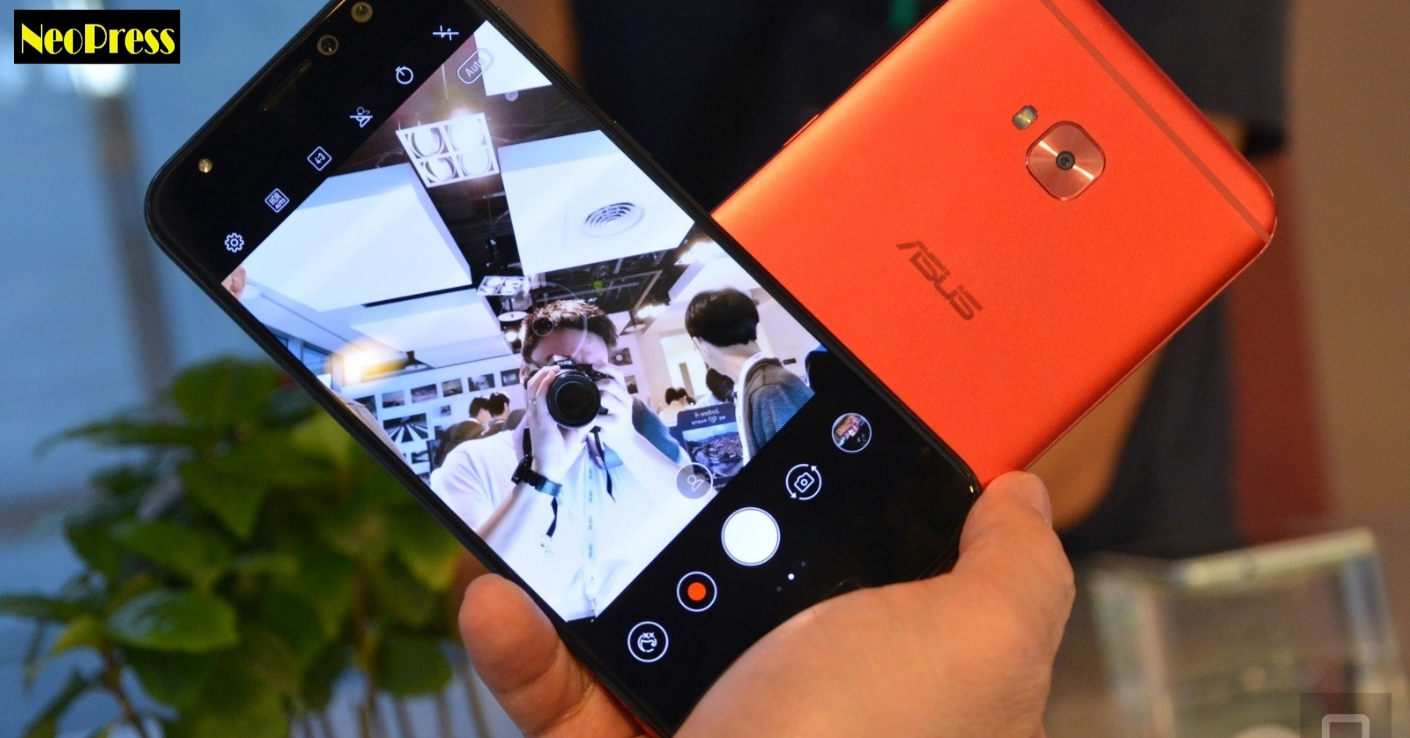
After the successful launch of ASUS Zenfone 4 series in Taiwan last month, the company is expected to bring the camera-centric series to India on September 14.
It is not clear whether all the six variants will be rolled out in India like in Taiwan and Philippines, industry sources told IANS on Tuesday.
The Zenfone 4 series, which is an upgrade over the Zenfone 3 series, may include variants like Zenfone 4 Pro, Zenfone 4, Zenfone Selfie Pro, Zenfone 4 Selfie and Zenfone 4 Max.Zenfone 4 Pro comes with 16MP dual rear camera, 6GB RAM and 128GB of storage space and 3600mAh battery.
Zenfone 4 sports 12MP dual rear camera and packs 6GB RAM, 64GB of storage space and 3300mAh battery.
With 24MP dual front-facing selfie camera, Zenfone 4 Selfie Pro features 4GB RAM, 64GB of storage space and 3000mAh battery, while Zenfone 4 Selfie features 20MP with 4GB RAM, 64GB of storage space and 3000mAh battery.
Zenfone 4 Max comes with 13MP dual rear camera, 8MP front camera and is equipped with 3GB RAM, 32GB of storage space and 5000mAh battery, which is said to last 46 days of standby time.
The entire line-up of smartphones features either dual rear or dual front cameras. The Zenfone 4 series is likely to be an extension of ASUS’ lineage of augmented photography experience with super-wide dual lenses.
Last month, the Taiwanese electronics giant had launched 5.5-inch ZenFone Zoom S smartphone with dual-camera at Rs 26,999 in India.
As a technology lover you may like our daily important technology news series. It’s a playlist and you can retrieve the total day-wise videos. Please consider subscribing our YouTube channel:
Founder and CEO of Tesla and SpaceX Elon Musk predicted a Third World War due to an increase in “competition for artificial intelligence (AI) superiority”, the media reported.
“North Korea should be low on our list of concerns for civilisational existential risk… Competition for AI superiority at national level most likely cause of a Third World War (in my opinion),” Musk said in a series of tweets on Monday.
The billionaire’s prediction was in response to a comment from Russian President Vladimir Putin who said: “Artificial intelligence is the future not only of Russia but of all of mankind.”
“Whoever becomes the leader in this sphere will become the ruler of the world.”
At the moment, the US, China and India are the three countries leading the AI race, reports CNN.
But Musk believes others will try to catch up by any means possible.
“Governments don’t need to follow normal laws… They will obtain AI developed by companies at gunpoint, if necessary,” he tweeted.
Musk speculated that an AI system could choose to start a war “if it decides that a pre-emptive strike is most probable path to victory”.
The CEO has repeatedly issued warnings about the perils of AI, calling for new regulation to keep the public safe.
In response, Facebook CEO Mark Zuckerberg termed Musk’s prediction “pretty irresponsible”, reports CNN.
Musk responded by calling Zuckerberg’s understanding of the issue “limited”.
As a technology lover you may like our daily important technology news series. It’s a playlist and you can retrieve the total day-wise videos. Please consider subscribing our YouTube channel:
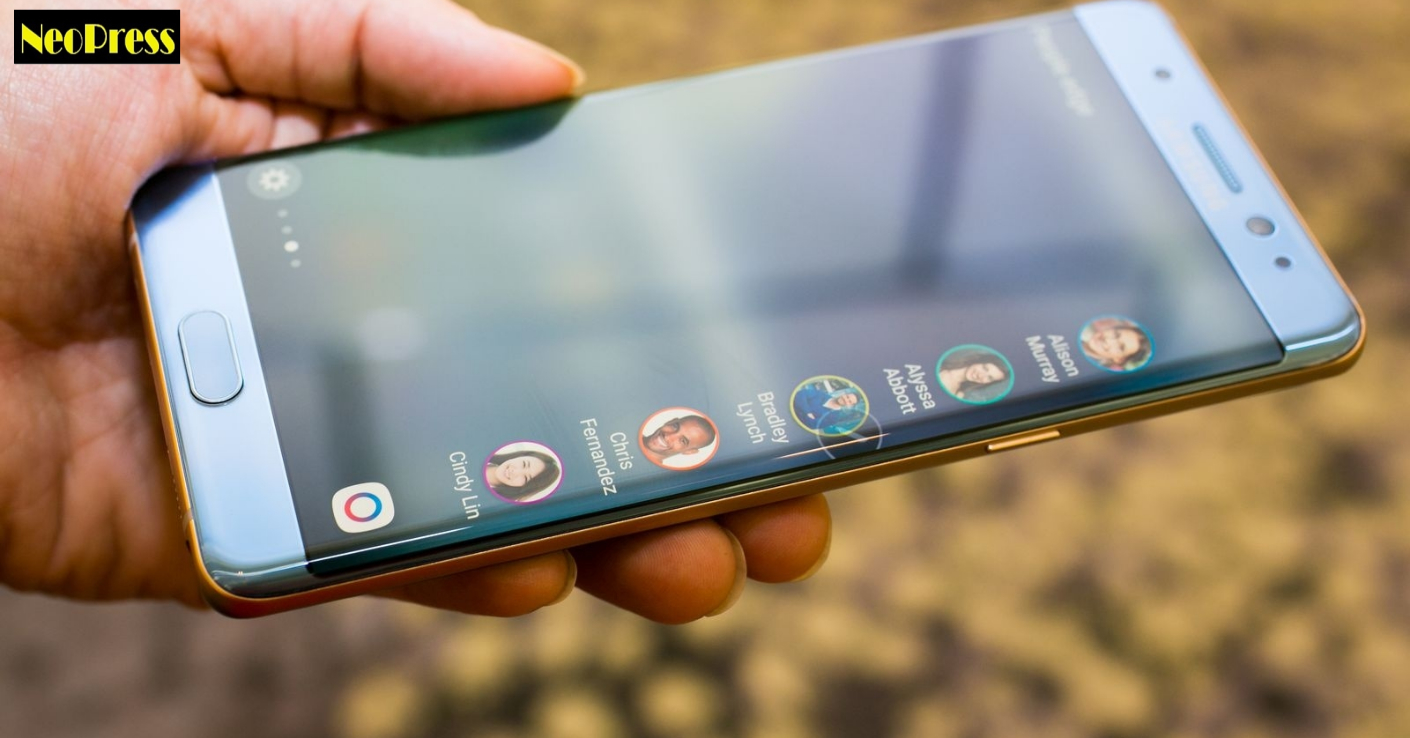
While tech lovers eagerly wait for Apple to unveil its next flagship smartphone on September 12, Samsung India will launch its Galaxy Note 8 in India on the same day.
Taking Apple head on, Samsung would launch the Galaxy Note 8 in New Delhi as Apple unfurls its next big device — which may be an iPhone 8 — at Steve Jobs theatre in Cupertino, California.
According to dealer sources, Samsung has also sent invites to outstation media, without naming the event, and speculation is rife that the invitation is for Samsung’s latest flagship device.
Samsung was aware of the iPhone launch but was confident enough to launch on the same day owing to its strong leadership position in India, the sources told IANS.
According to the market research firm GFK, Samsung is the top brand in India with 43 per cent market share in the smartphone segment.
Samsung launched Galaxy Note 8 in South Korea in August. The device comes with the “Bixby” intelligent assistant, is water and dust resistant and houses an iris scanner.
Similar to the Galaxy S8 and the Galaxy S8+, Note 8 also sports “Infinity Display” with an aspect ratio of 18.5:9.
The 6.3-inch screen is Super AMOLED with a resolution of 1440 x 2960 pixels.
Note 8 sports top-notch features such as 64-bit Exynos 8895 octa-core processor chipset with 6GB RAM and 64GB internal storage.
This is Samsung’s first smartphone to feature dual camera set-up at the rear with portrait mode and dual optical image stabilisation (OIS).
The 8MP front camera also comes with optical image stabilisation. The “S Pen” stylus with Galaxy Note 8 comes with a latency of less than 50 milliseconds.
As a technology lover you may like our daily important technology news series. It’s a playlist and you can retrieve the total day-wise videos. Please consider subscribing our YouTube channel:
Scientists have found why rubbing two materials, such as a balloon on hair causes static electricity to charge the materials and makes it stick.
Tiny holes and cracks in a material — changes in the microstructure — can control how the material becomes electrically charged through friction, showed the findings published in the journal Physical Review Materials.
“Electrostatic charging can be seen everywhere, but we noticed some cases where materials appeared to charge more — like a balloon rubbed on your head, or packing peanuts sticking to your arm when you reach into a package,” said one of the study’s lead authors Dan Lacks from Case Western Reserve University in Cleveland, Ohio, US.
“Our idea was that a strain on the materials was causing a higher propensity for the materials to become charged,” Lacks said.
For centuries, scientists have tried to understand triboelectric charging, commonly known as static electricity.
Triboelectric charging causes toner from a photocopier or laser printer to stick to paper, and likely facilitated the formation of planets from space dust and the origin of life on earth.
But the charges can also be destructive, sparking deadly explosions of coal dust in mines and of sugar and flour dust at food-processing plants.
The new research, according to the researchers, is a step toward understanding and, ultimately, managing the charging process for specific uses and to increase safety.
To test the theory that strain affects charging, the researchers stretched a film of polytetrafluoroethlyne (PTFE) and rubbed it against a film of unstrained PTFE.
They repeatedly found a systematic charge transfer in one direction, as if the materials were made of two different chemical compositions.
After rubbing, unstrained films clearly tended to carry a negative charge and the strained film a positive charge.
In contrast, unstrained films rubbed together and strained films rubbed together appeared to charge at random.
Researchers used X-ray diffraction and Raman spectroscopy to analyze samples of strained and unstrained films and found at the atomic level, they looked nearly the same.
The only detectable difference in the strained film from the unstrained film was the presence of voids in the material – holes and fractures created by stretching, which changed the microstructure.
The findings indicated that change in microstructure was the likely cause of the systematic charge transfer.
As a technology lover you may like our daily important technology news series. It’s a playlist and you can retrieve the total day-wise videos. Please consider subscribing our YouTube channel:
Ever wondered why even if we are not tired, we yawn if someone else does?
It is because the human propensity for contagious yawning is triggered automatically by primitive reflexes in a brain area responsible for motor function, a research suggests.
Contagious yawning is triggered involuntarily when we observe another person yawn — it is a common form of echophenomena — the automatic imitation of another’s words (echolalia) or actions (echopraxia).
The findings showed that our urge to yawn is increased if we are instructed to resist yawning. And no matter how hard we try to stifle a yawn, it might change how we yawn but it won’t alter our propensity to yawn.
“This research has shown that the ‘urge’ is increased by trying to stop yourself. Using electrical stimulation we were able to increase excitability and in doing so increase the propensity for contagious yawning,” said Georgina Jackson, a Professor at the University of Nottingham.
“The findings may be important in understanding association between motor excitability and the occurrence of echophenomena in a wide range of conditions linked to increased cortical excitability and/or decreased physiological inhibition such as epilepsy, dementia, autism, and Tourette syndrome,” added Stephen Jackson, a Professor at the varsity.
For the study, published in the journal Current Biology, the team used transcranial magnetic stimulation (TMS) to analyse volunteers who viewed video clips showing someone else yawning and were instructed to either resist yawning or to allow themselves to yawn.
“If we can understand how alterations in cortical excitability give rise to neural disorders we can potentially reverse them. We are looking for potential non-drug, personalised treatments, using TMS that might be affective in modulating imbalances in the brain networks,” Jackson said.
Echophenomena isn’t just a human trait, it is found in chimpanzees and dogs too.
As a technology lover you may like our daily important technology news series. It’s a playlist and you can retrieve the total day-wise videos. Please consider subscribing our YouTube channel:
Chinese tech major Huawei has introduced its flagship ‘Kirin 970’ chipset which can perform artificial intelligence (AI) computing tasks faster using far less power.
‘Kirin 970’ chipset has its own AI processor built-in.
“Huawei is committed to developing smart devices into intelligent devices by building end-to-end capabilities that support coordinated development of chips, devices and the Cloud,” said Richard Yu, CEO of Huawei Consumer Business Group, in a statement on Monday.
“Kirin 970 is the first in a series of new advances that will bring powerful AI features to our devices and take them beyond the competition,” he added.
‘Kirin 970’ is powered by an eight-core CPU and a new generation 12-core GPU.
The ‘Kirin 970’s new heterogeneous computing architecture delivers up to 25x the performance with 50x greater efficiency, the company claimed.
In a benchmark image recognition test, ‘Kirin 970’ processed 2,000 images per minute which was way faster than other chips on the market.
According to media reports, Huawei’s upcoming flagship smartphones ‘Mate 10’ and ‘Mate 10 Pro’ would house ‘Kirin 970’ chipset.
In terms of specifications, the phones are expected to feature 6GB RAM and 64GB internal memory configuration.
The devices could be powered by 4,000mAh battery and would run Android Nougat OS out-of-the-box.
As a technology lover you may like our daily important technology news series. It’s a playlist and you can retrieve the total day-wise videos. Please consider subscribing our YouTube channel:
Scientists in Britain have developed a camera that can help doctors see through the human body.
Designed to help doctors track medical tools known as endoscopes that are used to investigate a range of internal conditions, the new device can detect sources of light inside the body, such as the illuminated tip of the endoscope’s long flexible tube, according to a study published in the journal Biomedical Optics Express.
“This is an enabling technology that allows us to see through the human body. It has immense potential for diverse applications such as the one described in this work,” said Kev Dhaliwal, Professor at University of Edinburgh in Scotland.
“The ability to see a device’s location is crucial for many applications in healthcare, as we move forwards with minimally invasive approaches to treating disease,” Dhaliwal added.
Until now, it has not been possible to track where an endoscope is located in the body in order to guide it to the right place without using X-rays or other expensive methods
Light from the endoscope can pass through the body, but it usually scatters or bounces off tissues and organs rather than travelling straight through.
This makes it nearly impossible to get a clear picture of where the endoscope is.
The new camera takes advantage of advanced technology that can detect individual particles of light, called photons.
Experts have integrated thousands of single photon detectors onto a silicon chip, similar to that found in a digital camera.
The technology is so sensitive that it can detect the tiny traces of light that pass through the body’s tissue from the light of the endoscope.
It can also record the time taken for light to pass through the body, allowing the device to also detect the scattered light.
By taking into account both the scattered light and the light that travels straight to the camera, the device can work out exactly where the endoscope is located in the body.
As a technology lover you may like our daily important technology news series. It’s a playlist and you can retrieve the total day-wise videos. Please consider subscribing our YouTube channel:
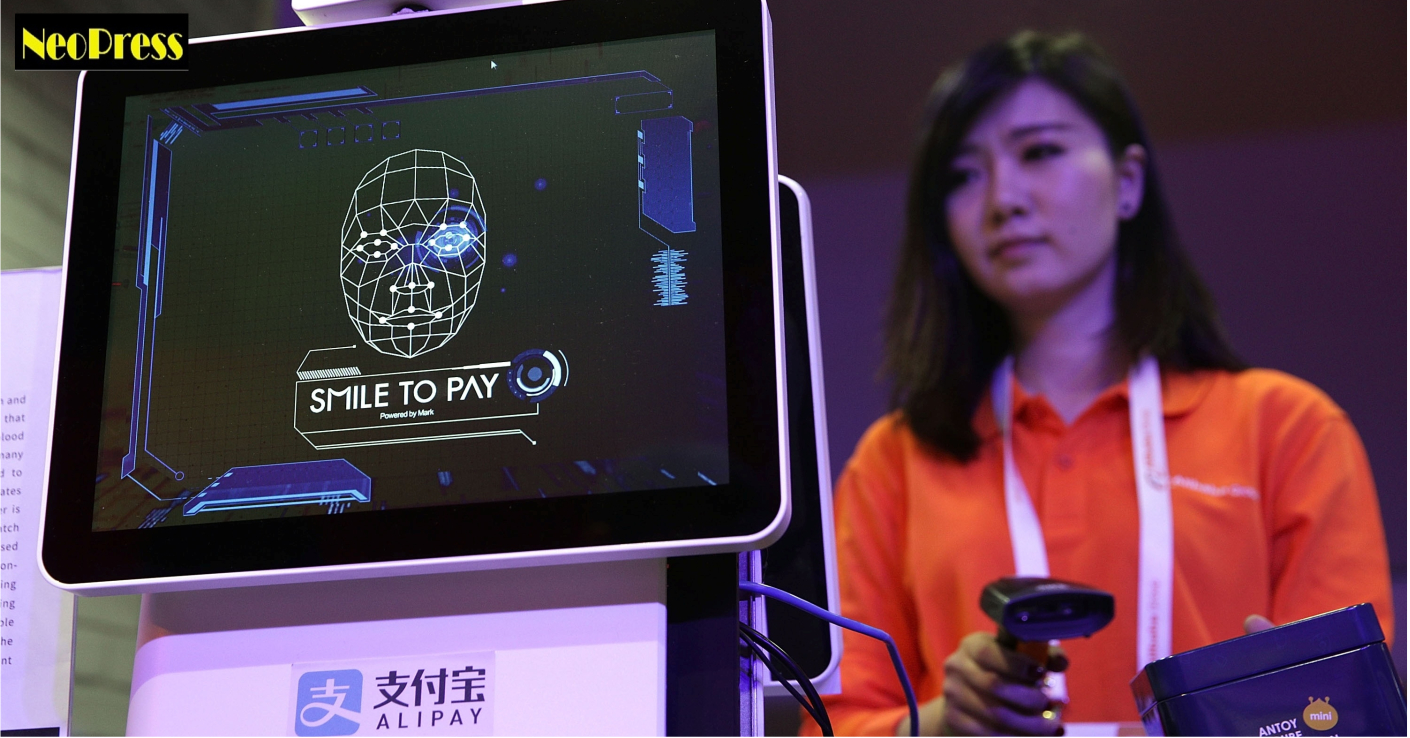
E-commerce giant Alibaba has introduced a facial recognition service called “Smile to Pay” in Hangzhou district in China that is aligned for use with Alipay online payment and Alipay Wallet like Apple Pay.
“Alibaba’s ‘Ant Financial’ affiliate launched the ‘Smile to Pay’ service where the company’s global HQ are located and is being trialled with KFC,” Tech Crunch reported on Monday.
The company’s Founder and CEO Jack Ma in March had first alerted about the new face recognition tool for mobile payments.
According to Ma, “Smile to Pay” would first be rolled out in China and then in other countries.
“As the video from ‘Ant’ shows, the payment process doesn’t require a smartphone, assuming that the customer has already signed up for the Alipay app and enabled facial recognition,” the report added.
With the aim to revolutionise offline retail spaces through a new technology, the Alibaba Group had launched a cashless store earlier this year.
The new retail concept is being introduced through Alibaba’s experimental cashless store called Tao Cafe at its 2017 Taobao Maker Festival in Hangzhou.
As a technology lover you may like our daily important technology news series. It’s a playlist and you can retrieve the total day-wise videos. Please consider subscribing our YouTube channel:
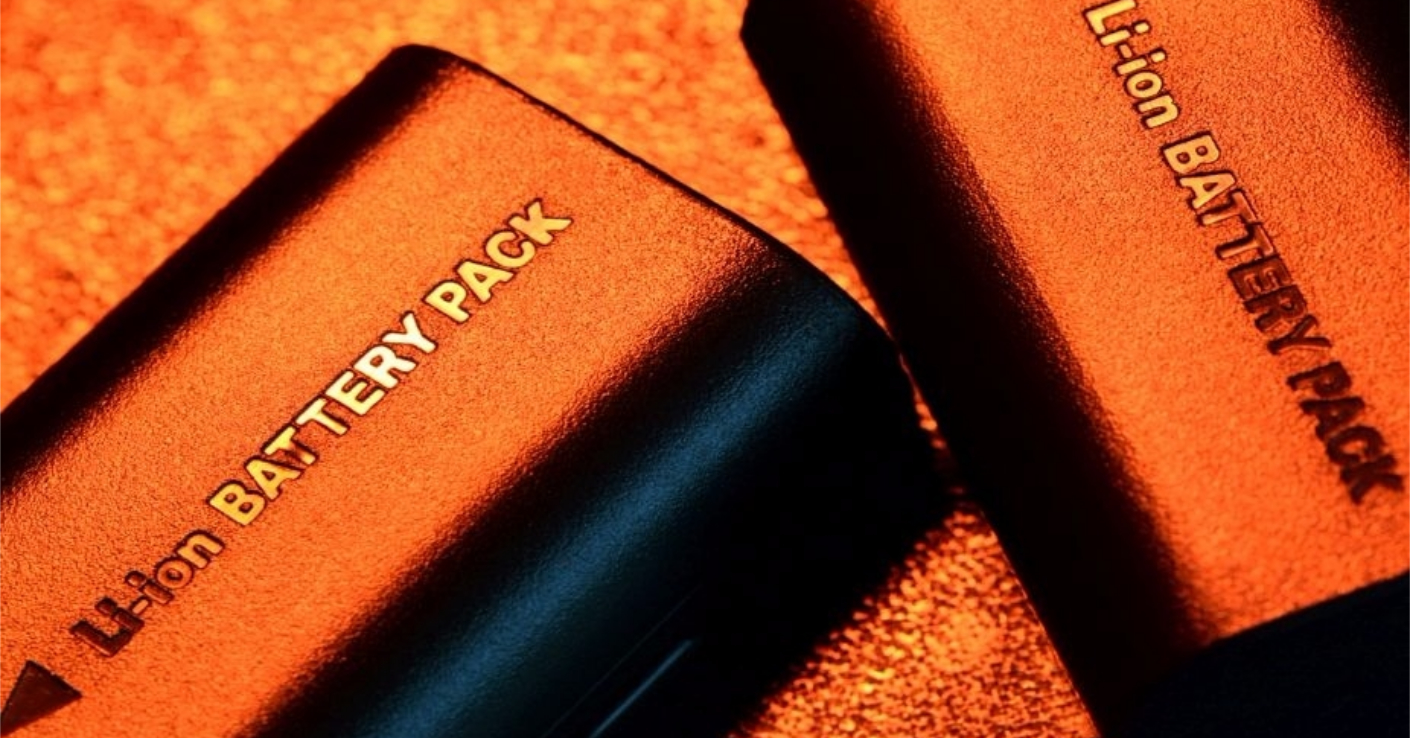
Researchers have found that nanodiamonds — tiny diamond particles 10,000 times smaller than the diameter of a hair – can prevent short-circuits and fires in lithium batteries widely used in mobile devices from cell phones to laptops.
The new process can turn electrolyte solution — a key component of most batteries — into a safeguard against the chemical process that leads to battery-related disasters.
In the study, published in the journal Nature Communications, the researchers described a process by which nanodiamonds curtail the electrochemical deposition, called plating, that can lead to hazardous short-circuiting of lithium ion batteries.
“We anticipate the first use of our proposed technology will be in less critical applications — not in cell phones or car batteries,” said Yury Gogotsi, Professor at Drexel University in Philadelphia, Pennsylvania, US.
“To ensure safety, additives to electrolytes, such as nanodiamonds, need to be combined with other precautions, such as using non-flammable electrolytes, safer electrode materials and stronger separators,” Gogotsi added.
As batteries are used and charged, the electrochemical reaction results in the movement of ions between the two electrodes of a battery, which is the essence of an electrical current.
Over time, this repositioning of ions can create tendril-like buildups — almost like stalactites forming inside a cave.
These battery buildups, called dendrites, are one of the main causes of lithium battery malfunction.
As dendrites form inside the battery over time, they can reach the point where they push through the separator, a porous polymer film that prevents the positively charged part of a battery from touching the negatively charged part.
When the separator is breached, a short-circuit can occur, which can also lead to a fire since the electrolyte solution in most lithium-ion batteries is highly flammable.
To avoid dendrite formation and minimise the probability of fire, current battery designs include one electrode made of graphite filled with lithium instead of pure lithium.
The use of graphite as the host for lithium prevents the formation of dendrites. But lithium intercalated graphite also stores about 10 times less energy than pure lithium.
The new study showed that mixing nanodiamonds into the electrolyte solution of a lithium ion battery slows dendrite formation to nil through 100 charge-discharge cycles.
The finding means that a great increase in energy storage is possible because dendrite formation can be eliminated in pure lithium electrodes.
The discovery is just the beginning of a process that could eventually see electrolyte additives, like nanodiamonds, widely used to produce safe lithium batteries with a high energy density, Gogotsi noted.
As a technology lover you may like our daily important technology news series. It’s a playlist and you can retrieve the total day-wise videos. Please consider subscribing our YouTube channel:
Homegrown handset manufacturer Micromax has become the first company to launch a bezel-less smartphone at Rs 9,999 with a display aspect ratio of 18:9, instead of the usual 16:9.
Bezel-less smartphones have begun gaining popularity but the ones that are offered belong to the premium segment such as Samsung Galaxy S8 and S8+, LG G6 and the recently-launched Galaxy Note 8.
Is the Canvas Infinity worth your time and money? Let us find out.
Micromax has used minimal bezels to accommodate a 5.7-inch HD IPS display topped with 2.5D curved glass in a frame that is slightly taller than wider.
The screen has been stretched from all sides to give more screen space to the user. This is a good over 80 per cent screen-to-body ratio, similar to what Galaxy S8 offers.
That being said, a first glance at the front of the Canvas Infinity is sure to remind you of the Samsung Galaxy S8.
The metal frame around the phone makes it quite sturdy.
Users with small hands would feel comfortable using the device. In fact, the phone is ergonomic enough for single-handed use.
The rear side houses a single-lens primary camera with 13MP sensor, 81.5-degree field of view, 5P lens and LED flash and an aperture of f/2.0.
Another highlight of Canvas Infinity is 16-MP front camera that comes with soft “selfie” flash and an aperture of f/2.0.
The company says that the device sports “Super Pixel” that can shoot multiple images at the same time and combine them to give you a higher-resolution image with more details.
The camera interface is pretty simple and offers options such as time-lapse, panorama, video, beauty, and portrait mode.
The imaging capability of the primary camera is decent with good colour reproduction. We think the front camera does a better job at clicking images with sharp details.
At a time when unibody smartphones are a rage, the company has opted for a removable plastic back with metal finish for Canvas Infinity.
Similar to the Moto G5, Canvas Infinity’s back can be removed to reveal two SIM card slots and a dedicated microSD card slot to expand memory up to 128GB.
“Smart Action” is a handy feature that lets the user call a contact by placing the phone close to the ear, wake and lock screen by double tap, flip the phone to mute or snooze alarm and more.
The phone supports smart gestures such as draw O to open the camera, M to launch music app and C for the phone.
Users can also also choose from handy options such as Android Nougat’s split-screen feature.
“Canvas Infinity” is powered by a Snapdragon 425 chipset which is capable of handling day-to-day tasks.
There was no noticeable lag while browsing videos or running multiple applications during our review.
Canvas Infinity runs Android 7.1.2 Nougat OS that would update to the just-launched Android 8 Oreo OS, the company said during the launch.
The customised UI looks like it has been “borrowed” from iOS. The phone’s recent apps have a card-based view which is quite like what we see on the iPhone.
What does not work?
The primary camera struggled while taking images in low light conditions. The photographs taken at night had noticeable noise.
The battery lasted less than a day when we used it rigorously to play videos, play games and browse the internet.
The 5.7-inch display loses some of its sharpness due to 720p HD only resolution.
Conclusion.
It would be unfair to compare Canvas Infinity to Samsung Galaxy S8 and S8+ phones because the former falls in the Rs 10,000 segment and the company’s strength has been catering to the masses.
In fact, LG Q6 with 18:9 aspect ratio is the real competitor albeit, it costs almost Rs 5,000 more.
The company has taken a step towards innovating and it is not something that we have seen the Chinese handset makers do.
As a technology lover you may like our daily important technology news series. It’s a playlist and you can retrieve the total day-wise videos. Please consider subscribing our YouTube channel:
Researchers at the University of Washington have developed an app that could allow people to easily screen for pancreatic cancer simply by snapping a smartphone selfie.
The app named ‘BiliScreen’ uses a smartphone camera, computer vision algorithms and machine learning tools to detect increased bilirubin levels in a person’s sclera, or the white part of the eye.
One of the earliest symptoms of pancreatic cancer, as well as other diseases, is jaundice, a yellow discoloration of the skin and eyes caused by a buildup of bilirubin in the blood.
In adults, the whites of the eyes are more sensitive than skin to changes in bilirubin levels, which can be an early warning sign for pancreatic cancer or hepatitis.
The ability to detect signs of jaundice when bilirubin levels are minimally elevated could enable an entirely new screening programme for at-risk individuals.
“The problem with pancreatic cancer is that by the time you’re symptomatic, it’s frequently too late,” said lead author Alex Mariakakis.
“The hope is that if people can do this simple test once a month — in the privacy of their own homes — some might catch the disease early enough to undergo treatment that could save their lives,” Mariakakis said in a statement released by the university.
In an initial clinical study of 70 people, the app — used in conjunction with a 3D printed box that controls the eye’s exposure to light — correctly identified cases of concern 89.7 per cent of the time, compared to the blood test currently used.
The new app has been described in a paper to be presented at Ubicomp 2017, the Association for Computing Machinery’s international joint conference on pervasive and ubiquitous computing to be held at Maui, Hawaii from September 11-15.
The blood test that doctors currently use to measure bilirubin levels — which is typically not administered to adults unless there is reason for concern — requires access to a health care professional and is inconvenient for frequent screening.
BiliScreen is designed to be an easy-to-use, non-invasive tool that could help determine whether someone ought to consult a doctor for further testing.
The researchers believe that beyond diagnosis, BiliScreen could also potentially ease the burden on patients with pancreatic cancer who require frequent bilirubin monitoring.
As a technology lover you may like our daily important technology news series. It’s a playlist and you can retrieve the total day-wise videos. Please consider subscribing our YouTube channel: