So, How Do SIM Cards Work?

We can barely function without these bad boys, but what do we really know about them? When it comes to SIM cards, all we really know is that when we plug it into the device, it allows us to use our selected carrier’s data network. And when we take it out, we can’t use that cellular network anymore. Well yeah, true. But, that’s just the basics.

What is a SIM card really? A SIM card is a small, tiny little chip (called a card, for lack of a better term), that you can insert into some smartphones. This card holds personal data with your selected carrier, basically allowing the carrier to identify your device and then turn on/off select services based on the plan you have setup with your carrier. If removed from the smartphone, your plan — and data — cannot be accessed (and therefore the phone can only be used, limitedly, on a WiFi network) until it’s put into another phone.

Now, the neat thing about SIM cards: that they give you some freedom when it comes to your phone. f you end up buying a new phone every now and then, and the SIM slot is the same size as on your original phone, then you’ll be able to simply insert your SIM card and use that as your primary phone, without having to get a new phone number, new data plan, and so on.

If SIM cards are so important for the phone companies to identify you, why do some use them and the others don’t?

GSM stands for “Global System for Mobile Communications,” while CDMA stands for “Code Division Multiple Access.” The difference between the two, in the simplest of terms, is the SIM card (for GSM networks) and the lack of a SIM card (for CDMA networks, although that’s changing). It’s worth noting that while Sprint and Verizon are considered CDMA carriers, they do offer SIMs in a limited sense on a newer LTE phones that will work just fine on any GSM network.

For GSM phones (or phones provided by AT&T and T-Mobile), you have to keep your SIM card inserted at all times in order to use your data, as your plan is tied to your SIM card. If you want to receive calls, the SIM card must be inserted. If you want to use your available data from your chosen plan while out and about, the SIM card must be inserted. However, you can use the smartphone for apps and internet when connected to a Wi-Fi network.

Next Page For More

Tagged : /

How do the Five Big Companies of the Tech Industry Make Money?

Smartphones, laptops, app distribution, voice assistants and AI, streaming music and video, cloud computing, online shopping, advertising – whatever it is, chances are it runs through the oligopoly of at least one of the five companies: Alphabet, Apple, Facebook, Amazon, and Microsoft.

Each of the five make great products, to be clear, but it’s hard to deny that they control how tech money flows. How each of those companies make their revenues, though, varies wildly. The list of startups that have bought by the big five, meanwhile, is almost too long to count.

As this recent chart from Visual Capitalist shows , each of the big five hold their empires on the back of different industries. Google’s parent company Alphabet, for all the dabbling it does, is an online advertising company first and foremost. Facebook is, too. Apple is a hardware company through and through, while everything about Amazon flows from its e-commerce business.

Microsoft’s is the most unique and tricky case of all. It stands out as the only tech giant with diversified sources of revenue. It has Windows, of course, but with the PC market in decline, it’s also getting significant gains from Office, the Azure cloud business, Xbox, Ads, and various other businesses. Though it’s still the dominant player in PCs.

As a technology lover you may like our daily important technology news series. It’s a playlist and you can retrieve the total day-wise videos. Please consider subscribing our YouTube channel:

Author: Technology Vista

OnePlus 5- What Do We Expect?

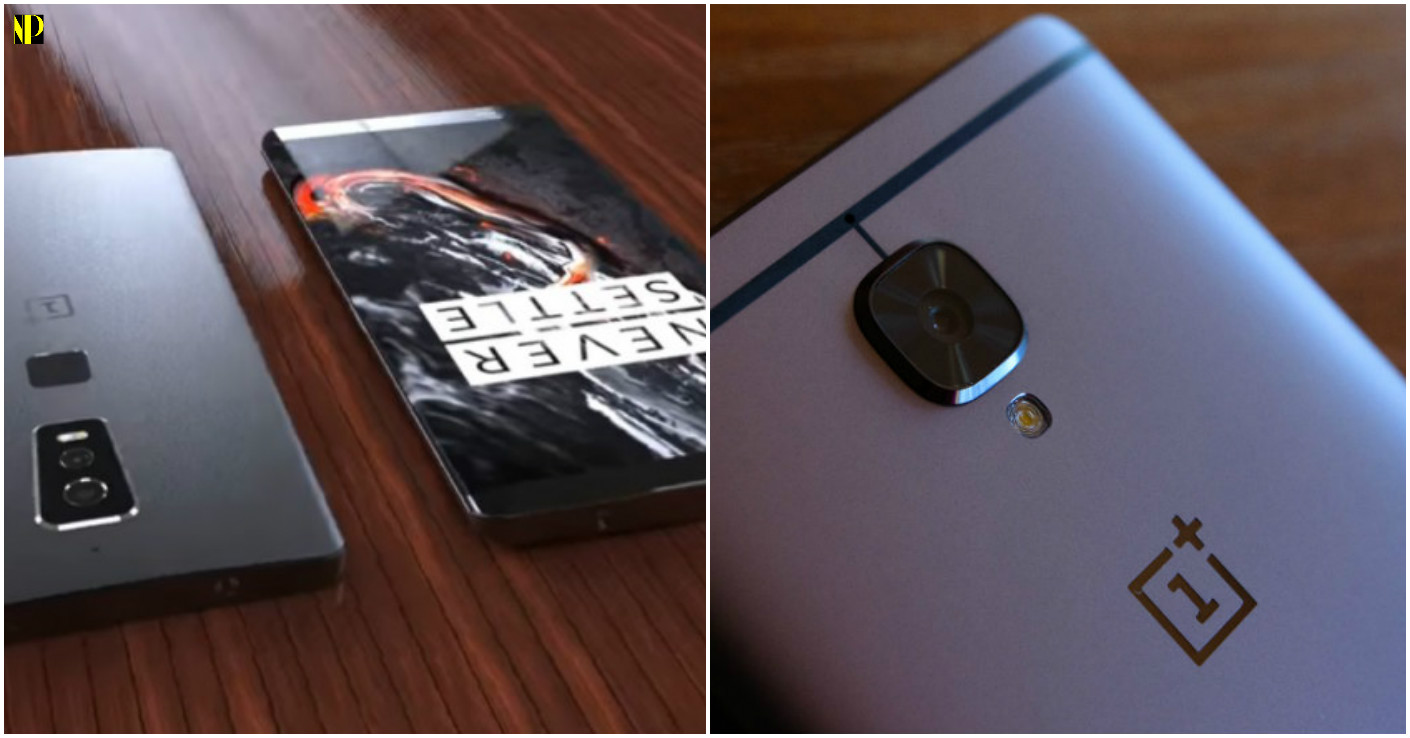
The flagship OnePlus 5 is set to launch soon powered by Qualcomm’s Snapdragon 835 SoC and partnered with DxO for better camera technology. What else are we looking forward to from this much awaited gadget?

Similar to iPhone, OnePlus, does not provide MicroSD card support for its smartphones. But, the biggest storage variant available is 128GB for the OnePlus 3T, and considering the power-backed hardware OnePlus provides on its flagships, an option to expand storage would be advantageous for consumers. Moreover, the OnePlus 5 will be powered with Snapdragon 835 SoC and could come with 8GB of RAM. This would mean more space required to test the smartphone’s performance to the maximum, may be even beyond 128GB.

Google’s Daydream VR for Android 7.0 Nougat has dedicated VR modes for popular Google apps like YouTube, Street View, Play Movies, Google Photos and Arts and Culture. There a host of VR games and apps available as well. The Galaxy S8 and Asus ZenFone AR are the latest to receive Daydream VR support this summer, and the OnePlus 5 is expected to be the next. The OnePlus may not launch with Daydream VR and would probably receive it at a later stage.

OnePlus hasn’t launched any flagship as yet with water resistance. Seeing how many smartphones, particularly flagships, are joining the trend of water resistance, the same is expected from OnePlus 5 as well. OnePlus 5 is expected to be IP68-certified for both water and dust resistance. With this rating, OnePlus 5 will be completely protected against dust, and can be immersed underwater up to 1.5m for 30 minutes.

The OnePlus 5 is currently rumored to feature QHD display, but with 2K resolution. What would be great is a 4K HDR display on the OnePlus 5. Currently, the Sony Xperia XZ Premium is the first and only smartphone with 4K HDR display. However, the Xperia XZ Premium is priced at £649 in the UK which rounds off to approximately Rs 54,000. OnePlus, known for its reasonable pricing of flagship devices, would put the OnePlus 5 as another ‘flagship killer’.

Lastly, a bezel-less display means no visible fingerprint sensor on the front panel. OnePlus CEO Pete Lau had confirmed on Weibo that the OnePlus 5 will feature a fingerprint sensor on the front. However, he did not specify on whether it would be embedded underneath the display or on the Home button. There were reports suggesting a dual-edge curved display on the OnePlus 5 like the Galaxy S7-edge. With the fingerprint sensor on the front, it may seem unlikely for a bezel-less display, but it would be great if OnePlus does opt for it.

As a technology lover you may like our daily important technology news series. It’s a playlist and you can retrieve the total day-wise videos. Please consider subscribing our YouTube channel:

Author: Technology Vista

Tagged : /
Verified by ExactMetrics