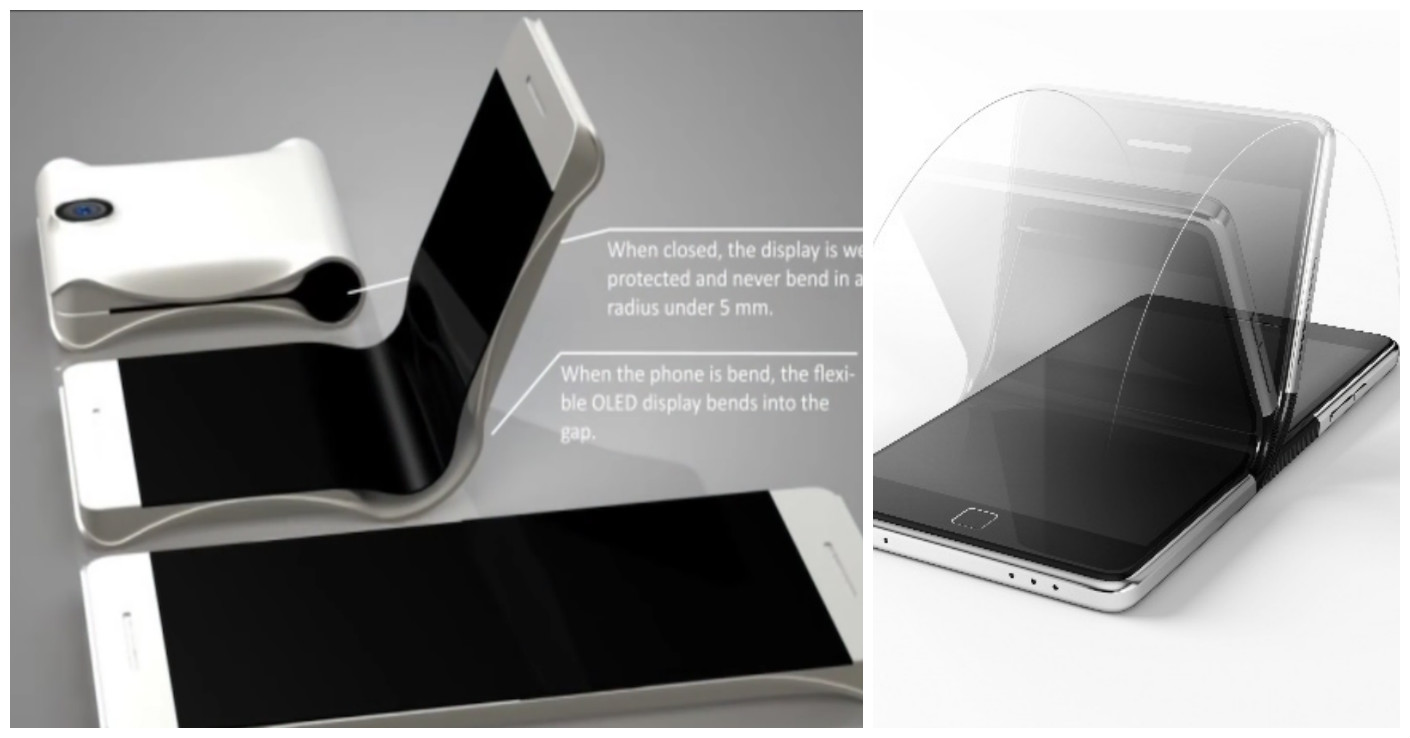
Nokia has made its comeback in the smartphone market under HMD Global and its eyeing the global dominance with the release of the Nokia 6 which is currently exclusive to China. But this is just the beginning. PhoneArena reveals that Nokia has been granted a patent for a flexible smartphone by the US Patent and Trademark Office (USPTO).
The patent for a “Foldable device” – which was filed in 2013 – features a device that resembles a pocket mirror. Now, a patent filing doesn’t not mean anything and Nokia may never release a foldable smartphone, but there’s certainly an interest in the form factor.
The picture in patent shows a Nokia device to have two identical sides connected by a hinge with a single screen that fold in half. The patent reads: “[i]n this way it is possible to provide a pocket size device with a relatively large display (for example, a 6, 7 or 8 inch display or larger).”
Nearly all other manufacturers seem to be aiming and racing to release the first functional foldable smartphones out in the market.
In November 2016, Apple was granted a patent for a flexible iPhone that can fold in half. The patent for “flexible display devices” was filed in July 2014 and features a touchscreen smartphone – one that opened and closed like a notebook. Then, we have Samsung which might be ready to launch its first foldable device this year, which has been dubbed the Galaxy X as of now. According to a report in the Korean Herald, Samsung may roll out more than “100,000 units of fold-out devices” later on this year. The device can be reportedly be used as a 7-inch tablet when unfolded. It is unclear whether it will be a phone or a tablet.
Similarly, LG is also considering a foldable device and is expected to roll-out 100,000 units in the fourth quarter of the year. . The Herald reported that LG’s technology is more advanced than Samsung, with a two- to three-year head start on development. LG may offer the foldable technology to outside companies like Apple and Huawei.
As a technology lover you may like our daily important technology news series. It’s a playlist and you can retrieve the total day-wise videos. Please consider subscribing our YouTube channel:
Author: Technology Vista