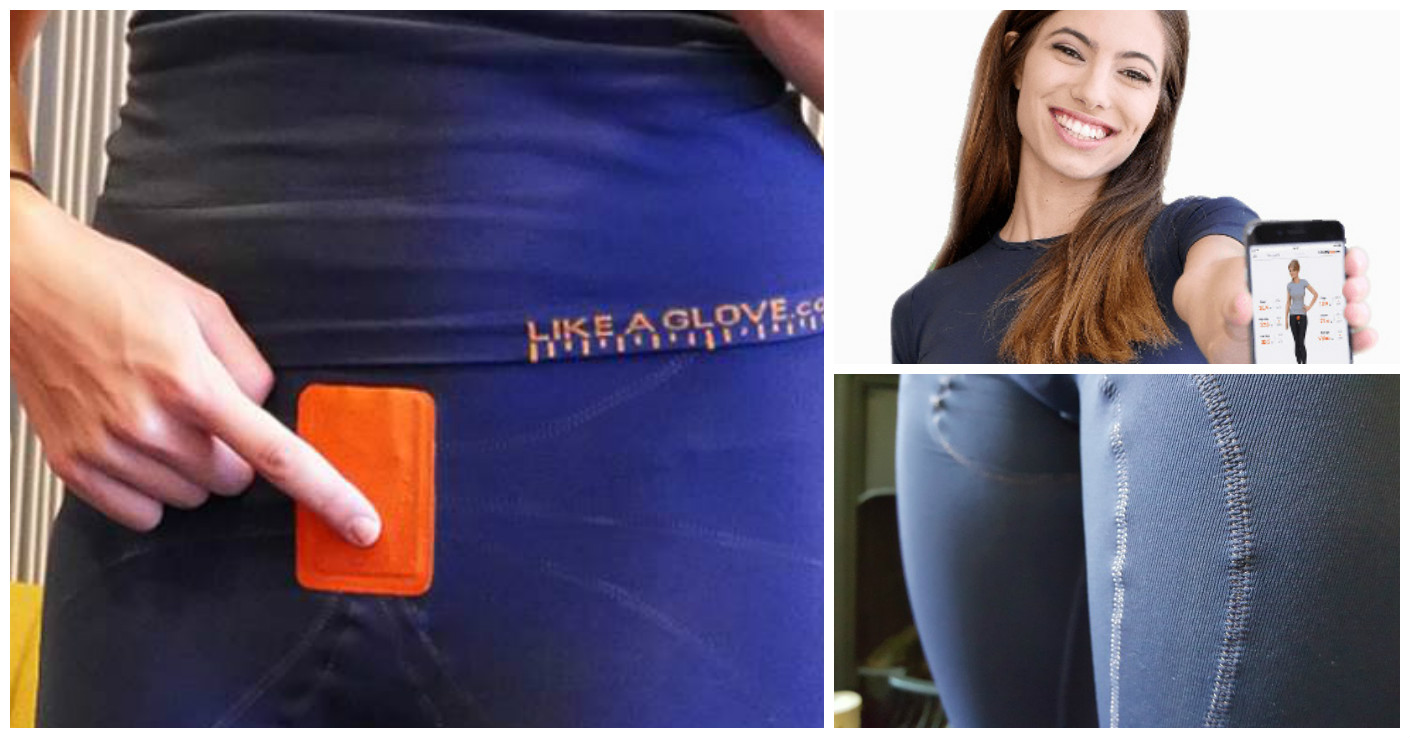
What’s going on with the orange button? It is needed when you are…..

If anything that bothers women the most is the size of their waist. They keep looking at their inch-tapes wrapped around their waists if they have lost a cm or gained one. This is important because after all, size decides what kind of clothes you can wear and fit in well. For all those women out there, LikeAGlove is here.

7190-08b044381c119143e3f08bdb84d66157

LikeAGLove are actually a smart piece of leggings that have built-in sensors and conductive fibres to measure a woman’s figure. You just have to slip them on, press the button on the front part of the leggings and use an accompanying iOS or Android app to calculate your hip, waist, inseams and other measurements. The app has a cross reference of more than 2,000 jeans in its database. The app then processes your measurements and gives you a list of different brands of jeans that are a perfect for your body type.

The company isn’t disclosing the names of its brand partners as it is still uncertain if the company receives any commission for referring sales to certain retailers. The promo does show brands like 7 For All Mankind, Hudson, citizen of Humanity etc. The company is also trying to make this technology feasible with other types of clothing as well (dresses and tops).

20151001_142010-750x422

This smart clothing is one size fits all and hence quite economical if a group of ladies use this. Its pre-order cost is $39.99 which will jump in a week to $99.99. So go fetch your smart leggings if you really want them.

You may be interested to watch the video below:

width="552" height="552" allowfullscreen="allowfullscreen">

As a technology lover you may like our daily important technology news series. It’s a playlist and you can retrieve the total day-wise videos. Please consider subscribing our YouTube channel:

Author: Technology and Beyond
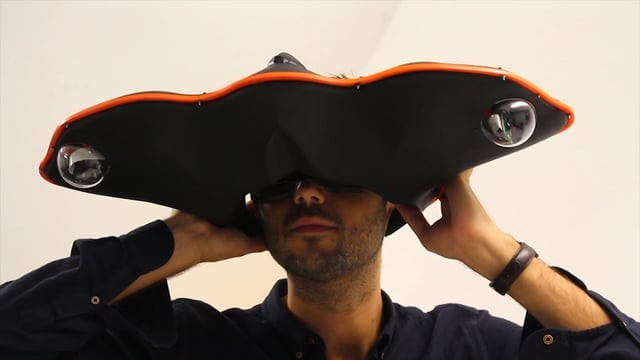
If you see somebody wearing this kind of headgear, it means THIS….

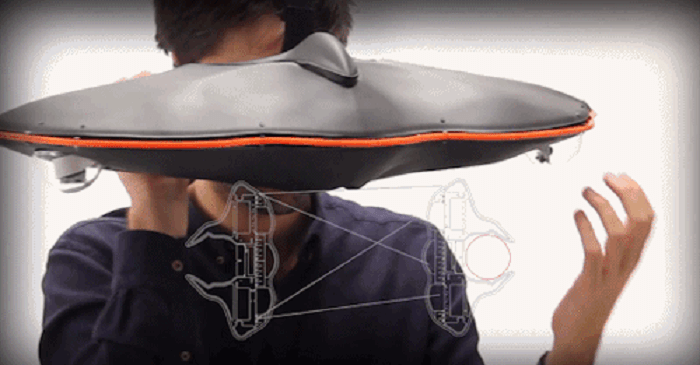
Chameleons are pretty flexible creatures with limber limbs to grip sticks, skin changing colour by the second, a speedy flicking tongue and two amazing eyes for 180 degree vision. PolyEyes 2.0, by the Interactive Architecture Lab, is looking to take advantage of this fact and derive a concept so that we humans can have an all-round 180 degree vision too.

polyeyes-2-0

The wide headset uses two Raspberry Pi Camera Modules, which pivot in little clear domes. This revolution captures the surrounding and transmits it on the big viewing screen by a Raspberry Pi computer module. The viewing screen is split down the middle so each eye has its own range of vision.

PolyEyes 2.0 takes not only from the idea of chameleon eyes, but also from the concepts of exoskeleton and limbs, which the Interactive Architecture Lab bills as “part of a continuing process of upgrading the human entity.”

firsta_1024-980x407

[adinserter block=”7″]

You may be interested to watch this video:

Author: Technology Blog

5 technologies being developed by NASA for Mars mission will blow your mind!

NASA has its eyes set on 2030s with respect to its Mission to Mars and it is certainly moving ahead with great sincerity and persistence. Owing to this, the space agency, released a report about its progress and plans for the Mars mission. Apart from other long term goals, the agency gave a peek into some amazing technologies, which it plans to develop in coming years, to make the Mars Mission a reality as soon as possible. Here are our favourite five:

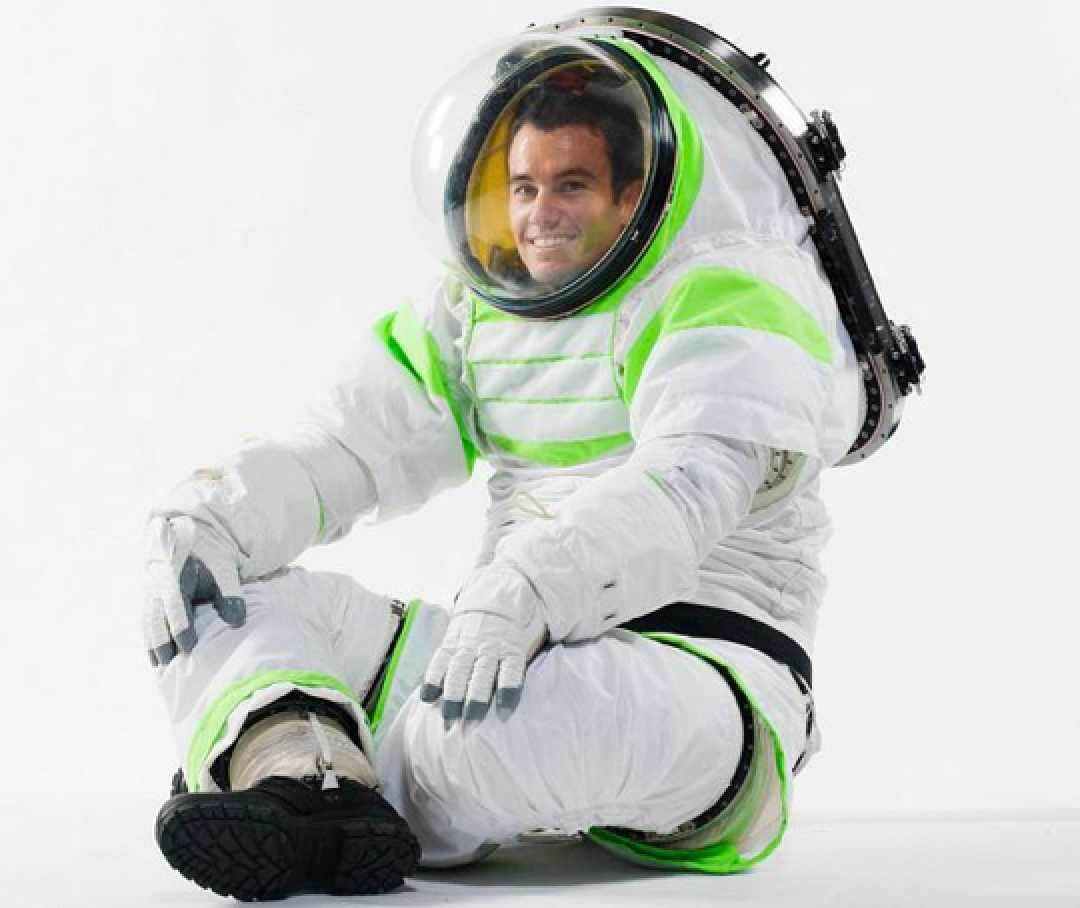
  1. New spacesuits: The very first thing that comes to mind when talking about a space mission is the spacesuit itself. Today’s spacesuits look more like inflated balloons than proper body hugging smart suits. Considering, astronauts going to Mars will have to spend nearly a year or more on the planet involving moving and roaming around, exploring and collecting data, the suit they wear should be such that it protects them from the damaging radiations of Mars and its cold thin atmosphere while still allowing them to move around freely in order to complete their work. The researchers want to make spacesuits that are easier to get around in. They may also incorporate augmented reality, self-healing materials, and interwoven bio-monitors. NASA plans to test a next-gen spacesuit when it sends astronauts to rendezvous with a boulder during the Asteroid Redirect Mission.
  1. ScreenSnapz011Deep Space Habitats: If we look at the mission we really can’t expect the astronauts to go to the Mars in a rocket and cram them in an Orion capsule for three years. So NASA wants a deep space habitat that attaches to the Orion capsule to provide more living space (and a bathroom) for the astronauts on board, as well as a habitat for them to live in on Mars. Such a habitat would need to provide life support, fire prevention, and radiation protection, in addition to giving the astronauts room to exercise and do their work.

667194main_hab1

  1. Huge rockets: The successor to the famous Space Shuttle is currently in making and is expected to be ready for lift off by 2018. This Space Launch System (SLS) will have the capability of carrying 70 metric tons of supplies into orbit. Later, it could send payloads of up to 130 metric tons into a trajectory towards Mars. At 382 feet tall, the SLS will eventually be the largest launch vehicle ever built, and even more powerful than the Saturn V rockets that carried the Apollo astronauts to the Moon. “This payload capacity far exceeds the capability of current and planned commercial launch vehicles,” says the report. Along with the Orion crew capsule (also in development at NASA), the SLS could eventually carry astronauts to Mars and other deep space destinations.

Orion_docked_to_Mars_Transfer_Vehicle

Next Page For More

Matrix Reloaded…this one is in real life….

According to a research published in Frontiers in Neuroscience, a new type of flexible electrode has been developed by a team from Lund University in Sweden. The problem with electrodes being used currently for brain monitoring is that they are made from solid materials and even if flexible, they still contain solid chips that make them stiff at some places.

fnsys-05-00034-g003

Such devices when inserted into the brain can rub against the super soft tissues of the brain and gradually damage them. In such a scenario, long term monitoring is not possible using such devices.

Taking into account all these points, the University team developed the electrode which is made from gold and measures just 10 microns in thickness. These electrodes are laser cut to shape and then insulated using a polymer called parylene C. To make it stiff enough to insert into the brain, the whole thing is coated in gelatine. Once it reaches its designated place, the layer dissolves itself without harming the brain and leaves the miniscule electrode in place.

The team expressed: “the new electrodecreates entirely new conditions for our understanding of what happens inside the brain and for the development of more effective treatments for diseases such as Parkinson’s disease and chronic pain conditions than can be achieved using today’s techniques.”

brain-electrodes-technology-wired-1

Brain is a complicated mesh of nerves and whatever helps us to understand it better is embraced happily by the science community.

[adinserter block=”7″]

Author: Technology Blog

When you see somebody wearing this type of bikini…it means THIS

Taking a swim in the ocean, or surfing on those huge waves is a delightful experience for one and all. But what if apart from having fun in the ocean you could contribute to the cause of decreasing pollution in the oceans? Wouldn’t it be great? Doing something good and that too while having a good time? Well UC Riverside is giving you the chance to do just that. An electrical engineer professor Mihri Ozkan along with her husband and fellow electrical engineering professor Cengiz Ozkan, with Ph.D. students Daisy Patino and Hamed Bay have designed ‘The Sponge Suit bikini’ which absorbs pollutants from the ocean as its wearer swims around in the sea.

Sunnyfair-2015-Fashion-New-Cute-Women-Swimsuit-In-One-Pieces-Sexy-Bathing-Suit-Sheath-Women-Swimwear

The material used for the purpose is called Sponge. It is designed for cleaning up oil and chemical spills and desalinating water. It is a water-repelling and highly porous carbon material that is light and flexible. It absorbs everything except water, and can absorb up to 25 times its own weight, depending on the density of the material absorbed.

The team disclosed in a written statement: “The form of the Sponge Suit is inspired by the super-porous, mesh-like structure of the Sponge material. The final form of the 3D print shell was obtained through the various iterations of the same undulating form. The filler amount and the allocation were identified by creating several design alternatives, considering the form and the ergonomics of the human body, while pushing the limits in translucent swimwear design.”

[adinserter block=”7″]

Next Page For More

Not a simple home with a vehicle. Look closely and you will be speechless !!

In present times, everywhere there is talk of finding sustainable ways of powering our houses and vehicles. Everywhere people are trying to reduce waste and pollution and hence carbon footprint. Searching for sustainable ways of powering homes, a research team from the Department of Energy’s Oak Ridge National Laboratory (ONRL) has created a new model for how we can connect the way we power our homes and vehicles. The model known as AMIE (Additive Manufacturing Integrated Energy), features a special technology. This technology allows a bi-directional flow of energy between a dwelling place and a vehicle. ONRL in order to test this new system completely used 3-D technique to build the home as well as the vehicle.

ORNL-3D-Printed-House-Vehicle-Sept-24-2015

Researchers claim that this is the first ever bi-directional power system in the world of working level 2(6.6kW). The building is fitted with a flexible 3.2 kW solar photovoltaic system, which is then paired with electric vehicle batteries, providing renewable power generation and storage. Energy can flow in either direction between the house and the vehicle via a wireless transfer system. This also means the vehicle can power the house when the sun has gone down or during cloudy periods. The efficiency of this bi-directional power system (BWPT) has come out to be 85 percent as BWPT uses a resonant technology that allows higher efficiencies through larger gaps.

In order to build the 210 sq ft. dwelling, ORNL worked alongside architectural studio Skidmore, Owings & Merrill. The single-room structure was built using 3D-printed parts and features curved lines and cost effective vacuum insulated panels. The home is equipped with a micro-kitchen concept, developed by GE FirstBuild, and the rooftop photovoltaic system is paired with batteries from a previously used Fiat 500e. Carbon fiber-reinforced ABS plastic composite material was used to print approximately 80 percent of the house components and 30 percent of the vehicle’s. ORNL’s Roderick Jackson, who led the AMIE demonstration project, informed: “”One of the interesting energy saving features is novel modified atmosphere insulation (MAI) panels developed by NanoPore that are about seven times more energy efficient than traditional wall insulation.”

[adinserter block=”7″]

Next Page For More

This engine-less airplane by Airbus reaches the edge of space. This is how…

What would you say if we told you that a plane that doesn’t fly very fast, isn’t quite large, barely accommodates two people, isn’t equipped with a propulsion system so can’t get airborne without being towed by another plane is rearing to fly to the edge of the space without an engine….. you would surely rubbish any such thing and walk away thinking that we are kidding! But we aren’t! The Perlan 2 glider plane is actually trying to create history by breaking the current altitude record of 90,000 feet set by any winged aircraft. Here it is to be noted that most commercial airliners fly at an altitude of 39,000 feet and that too with the help of jet engines.

glider-4

What can take an engineless plane to the edge of space?

Actually, the Perlan 2 pilots aim to surf on to massive air currents called stratospheric mountain waves. These mountain waves are extremely complex phenomena. Basically, when strong winds cross over a mountain range and the atmosphere above them is stable, massive waves of air will form on the lee side of the mountain. The wind rushing down the back side of the mountain causes an atmospheric disturbance, and then a couple miles downwind there’s a rebound area, where the air is rising. With the right conditions and a skilled pilot, it’s possible to ride these updrafts high into the upper atmosphere. Perlan Project Chief Pilot Jim Payne said: “Unless you’ve flown in a wave, it’s hard to understand the energy that’s available in the atmosphere.” The catch is, you can’t just ride on any mountain wave to reach the stratosphere as the common ones don’t go that high. But over the past couple decades, the Perlan team has succeeded in finding out that the really big mountain waves that you want to ride on are in Argentina as Argentina’s low latitude and high mountain ranges make it an ideal location for stratospheric waves to form. Basically a union of different atmospheric events take place over the country’s mountain ranges during the winter months, which together allow some mountain waves to propagate much higher into the atmosphere than they normally would.

In 2006, Perlan Project founder Einar Enevoldson and adventurer Steve Fosset had succeeded in taking Perlan 1 glider up to a height of 50,722 feet riding one such wave. They could have gone higher had their jumpsuits not inflated because of the high altitude. So they decided to build a glider with a pressurized cabin and hence the Perlan 2 Project was born.

Next Page For More

You will be shocked to know why Apple is planning to kill headphone jack

Strong rumours have been doing the rounds about Apple completely eliminating the 3.5 mm headphone jack from its soon to be launched iPhone 7. Apple being the notorious ‘secret Apple’ isn’t giving out any details about this, but a few reports suggest the reason behind eliminating this audio jack:

Because if Apple wants it, it wants it!

Apple knows its craze among iPhone lovers and fans. So it is infact in a very comfortable position to do whatever it wants. If it has decided to remove the audio jack, it will! It is a matter of choice for a company this huge that whatever it may decide to do with its products, millions still wait eagerly just to catch hold of the next in series.

For a thinner phone

Among the more reasonable reasons is the company’s need to make the phone thinner. The 3.5 mm audio jack acts as a hindrance in achieving this, so the solution…. get rid of it! Instead of using this jack, if Apple uses a lightning port, it will save them an entire 1 mm to be shaved off the thickness. Getting rid of the 3.5mm socket would also mean Apple can stretch the screen further down the device, with some even suggesting it could extend right to the phone’s base.

For a new wrap-around screen

If reports are to be believed, then the tech giant Apple filed a patent to change its screen design. The reports claim that the company is now considering a 4.9 inch wrap-around screen that leaves no space for the Home button, volume controls and the headphone jack. There is a possibility that iPhone 7 may have that wrap-around screen which is currently been exploited by the likes of Samsung and it may be a yet another step by Apple to compete with the rivals. Or in the worst case scenario, it may still be a rumour!

[adinserter block=”7″]

Next Page For More

Verified by ExactMetrics