In the apparent quest to introduce a touch of robotics into every aspect of our lives, new research out of the University of Illinois at Chicago has done this to the ultimate aspect- our minds.
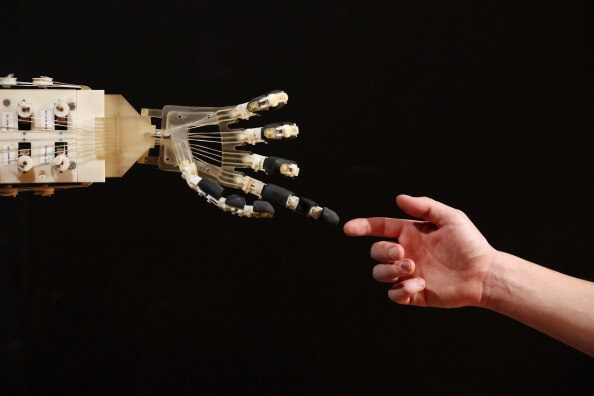
Bioengineers there have developed a computer algorithm that can predict your intended actions, even if you accidentally change course. “We call it a psychic robot,” Justin Horowitz, a UIC graduate student research assistant and first author of a study appearing online in the journal PLOS One, said in a statement.
This robot does have certain undeniable allures, it could prevent car accidents, industrial tragedies and even counteract movements that might sabotage a stroke victim’s intended movement.
The process of development of the same is it a bit complicated at best. The team built a semi-transparent mirror and a virtual desk. This mirror created the illusion of the objects on top of the display, being on the virtual desk instead, i.e., on the same level as the subject’s arm. This way, while reaching for the objects, the subject’s arm would actually be gripping the robot, which measured the grip, movements and force applied.
After the nudge, the robotic arm continued measuring the subject’s hand movement but didn’t otherwise interfere, Horowitz told CNET’s Crave blog.
By comparing the nudged and undisturbed paths, the researchers were able to arrive at an algorithm and design a computer model that could effectively predict the intent of the test subjects.

“Say you’re reaching for a piece of paper and your hand is bumped mid-reach, your eyes take time to adjust, your nerves take time to process what has happened, your brain takes time to process what has happened and even more time to get a new signal to your hand,” said Horowitz, who worked with James Patton, UIC associate professor of bioengineering, on the study. This meaning that the human brain took on an average one-tenth of a second to settle back after a collision, while the computer took much less time.
[adinserter block=”7″]
Author: Technology Blog