Moth Drone to Fight Plant Pests with a New Twist

Plant diseases and insect infesting them have for long been tackled by a quick and speedy supply of pesticides and herbicides using planes, but this time the USDA is aiming for something a bit more unexpected.

1462597923783445424

Pink bollworm cotton pest is not very widespread, but when it infests the crop, entire plants are spoilt. The USDA has come up with moth drones to disperse the solution instead of planes, first of all. And second, the solutions are more pink bollworms!

Yes, the drones will let out moths- pink bollworms- who are sterile. This way, the moth complete their two week cycles and die out without reproducing. Meanwhile, no other bollworms infest the crops.

1462597923591085488

[adinserter block=”7″]

Author: Technology Blog

Qubits made from silicon to take the computing world by storm

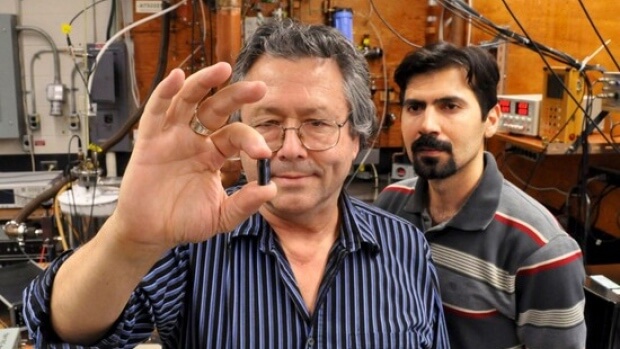
In a never before event, researchers from the University of New South Wales (UNSW) in Australia, have succeeded in creating for the very first time: the fundamental blocks of a quantum computer in silicon. Using standard manufacturing techniques and modifying current-generation silicon transistors, the device was created. It was also found that the device could scale up to include thousands, even millions of entangled quantum bits on a single chip.

silicon-quantum-computer-3

Why do we need quantum computers?

The machines that we have been building since the 1950’s have been made with an objective of making them as deterministic and reliable as possible, so that a certain input will always give the same output. In a Qunatum Computer, this predictability is sacrificed and incredible speeds take their place. A quantum bit or qubit has two properties. First, it can set itself to both 0 and 1 at the same time. And second, it can commune (or entangle) with other qubits to compound this ability. This means five entangled qubits can store and process as much information as 32 (two to the power of five) classical bits; 10 qubits can do as much as 1,000 classical bits; and 300 fully entangled qubits can manipulate as many classical bits of information as there are atoms in the Universe. Based on these facts you would think that this will dramatically increase the speed as compared to a regular computer, but this will be just half the truth. A quantum computer can perform any operation a classical computer can, but its exponential speedups only take effect when a quantum algorithm can process data in a massively parallel fashion. However, if the bulk of operations have to be performed in a sequential order, flowchart-style, and no real quantum speedups are possible.

There is also a downside to these significant speed ups and that is: the results given by this quantum algorithm are not deterministic. So to say, even in the best of cases, a quantum computer is never guaranteed to return the correct result. So in order to confirm that a certain result is correct, the quantum algorithm will have to be run several times in succession. So quantum computers can make themselves useful only where massive parallelism is involved.

quantum-computing

[adinserter block=”7″]

Next Page For More

Want to have a robot as your smartphone?

What if you had a cute baby-faced, walking, talking, net- connected robot as your smartphone? It even hitches ride in your pocket… so let the world look what you are carrying. This robo smartphone is a creation of Tomotaka Takahashi, renowned engineer who sent the first talking robot into space. This robot has been christened as RoBoHoN (a portmanteau of the Japanese words for “robot” and “smartphone,” pronounced “robo-hoan”), and is a collaboration with Japanese electronics giant Sharp.
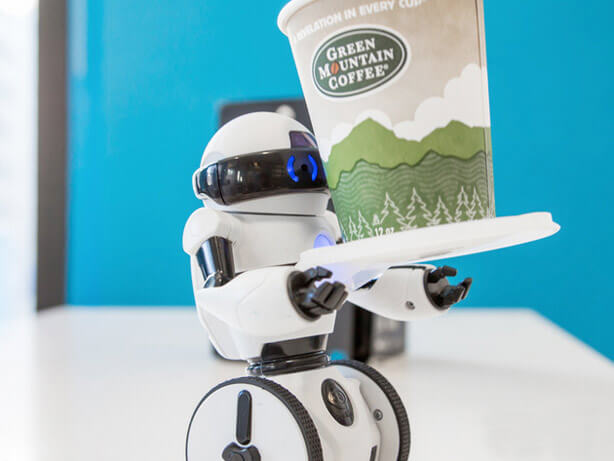
mip_robotIf you ask what this phone can do, then hold your breath. RoBoHoN is 7.5 inches tall, weighs 13.5 ounces, and also recognizes your face. It connects to wifi, 3G, and LTE. It acts as a phone, alarm clock, email and text message secretary, camera, movie and image projector, personal assistant, taxi hailer, and a lot more. The present agenda is however to modify the robot according to the American market as cultural differences drive how a robot or in fact anything is marketed in different countries.

The other important point is explaining to people how useful this thing actually is. Though Takahashi thinks that personable, fun and engaging gadgets are more favourable to human beings in term of engaging themselves with them, what if the customers find it too gimmicky or way too cute or childish to carry with them? And does it provide all essential features of a smartphone so that a person actually replaces his/her smartphone with this robot?

RoboHon-robot-smartphone-from

RoBoHoN will hit the shelves in the first half of 2016. So till then, we will have to wait and watch to get the answers of all our questions.

[adinserter block=”7″]

Author: Technology Blog

Verified by ExactMetrics