Project RAM Helps People with Traumatic Brain Injuries Function Normally

The project, called Restoring Active Memory (RAM), could help people suffering from traumatic brain injury with the help of sophisticated mind-controlled robot limbs. This is an incredible breakthrough as previously paralyzed individuals had successfully moved limbs with their mind, but had not been able to feel back with those limbs.

ROBOCOP-640x360

In one study, a 28-year-old man who was paralyzed more than a decade ago became the first person to “feel” physical touch through a prosthetic hand. In another breakthrough, volunteers who got electrical arrays implanted in their brains are seeing improvements in their memory, DARPA said.

In another study, DARPA engineers and scientists at Johns Hopkins University’s Applied Physics Laboratory inserted electrodes into the patient’s motor cortex which allowed him to control the hand with mere thoughts. The working of the arm uses sensors that detect pressure being applied to its fingers, and converts this pressure into electric signals which tell the brain implant how the device has to act.

In a series of tests, the team touched each of the prosthetic hand’s fingers while the patient was blindfolded to measure the accuracy to the arm. The subject was able to respond with 100% accuracy most times. “At one point, instead of pressing one finger, the team decided to press two without telling him,” Justin Sanchez, the  program manager said in a statement. “He responded asking whether somebody was trying to play a trick on him. That is when we knew that the feelings he was perceiving through the robotic hand were near-natural.”

In yet another study, the spatial memory of the subjects undergoing brain surgery, saw significant improvements with the insertion of electrode implants. The small electrode arrays placed in brain regions were involved in the formation of declarative memory, according to DARPA.

shutterstock_128575292

The goal is to improve memory by using targeted electrical stimulation, which could help people with memory problems — including those with traumatic brain injuries, Sanchez said.

[adinserter block=”7″]

Author: Technology Blog
Low cost, semi transparent, high-efficiency perovskite /grapheme solar cells created

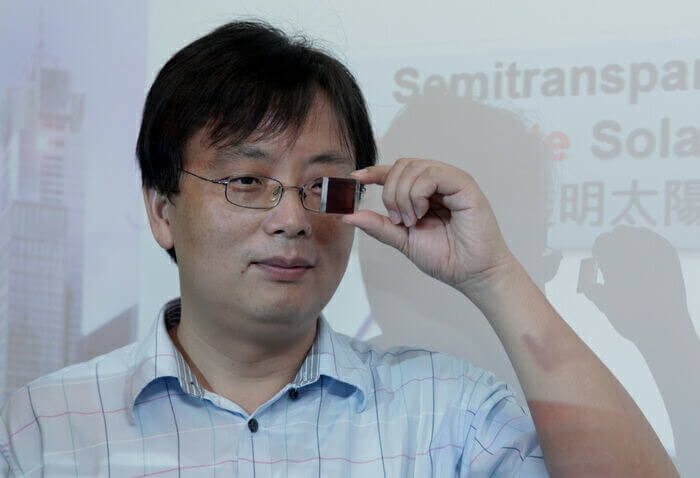
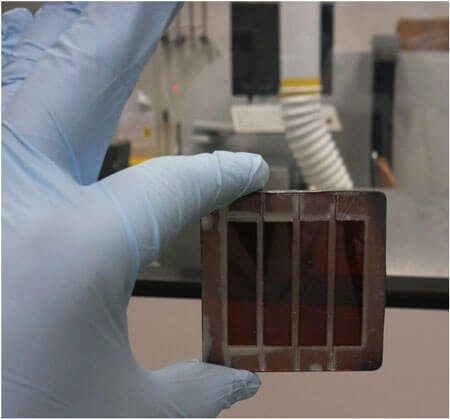
Solar energy has firmly set its foot in the market of energy production but the problem is the high cost associated with it. People have become more open to imbibing the power of solar energy and are ready to incorporate this in buildings and vehicles. But the opaque solar cells that are the most prevalent ones have high costs and poor efficiencies. In order to find a solution to these problems, researchers of Hong Kong Polytechnic University have created semi-transparent, efficient, low cost perovskite solar cells that have graphene electrodes.

image1

Graphene has the qualities of being exceptionally thin, high conductivity and low cost associated with it. So it becomes an obvious choice for semitransparent solar cells as it allows light to be absorbed from both the sides. According to researchers, these semi transparent devices can easily be used in windows, louvers and building roof surfaces, thereby increasing the surface area for collecting solar energy. The PolyU researchers while using graphene, enhanced its conductivity by coating it with a patina of PEDOT: PSS conductive polymer (poly (3,4-ethylenedioxythiophene) polystyrene sulfonate). It also acted as an adhesion layer to the perovskite during the process of lamination.

To promote power conversion efficiency, the researchers found that if they multi-layered graphene through chemical vapour deposition to create transparent electrodes, the sheet resistance of the electrodes was additionally reduced while the exceptional transparency of the electrodes was retained. Finally, the performance of the device was further improved by increasing the degree of contact between the top graphene electrodes and the hole transport layer on the perovskite film.

perovskite-solar-2

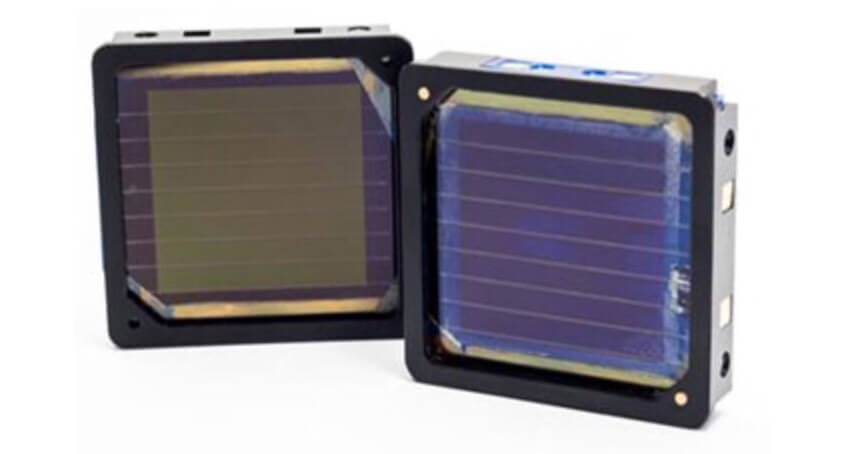
It is to be noted that silicon solar cells were the first generation solar cells for photovoltaic energy conversion. But their opacity and high costs associated with them led to the second generation solar cells which are thin film photovoltaics: light in weight and flexible but still expensive as they were created from rare materials using high-temperature production processes. The perovskite graphene solar cells are actually the third generation solar cells in this line, which are flexible as well as low cost unlike their predecessors. Hopefully these third generation solar cells will increase the reach of solar energy to areas where it was not possible earlier because of cost and flexibility issues.

[adinserter block=”7″]

Author: Technology Blog
Verified by ExactMetrics