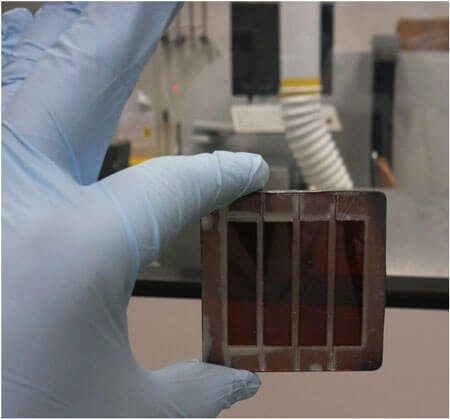
Solar energy has firmly set its foot in the market of energy production but the problem is the high cost associated with it. People have become more open to imbibing the power of solar energy and are ready to incorporate this in buildings and vehicles. But the opaque solar cells that are the most prevalent ones have high costs and poor efficiencies. In order to find a solution to these problems, researchers of Hong Kong Polytechnic University have created semi-transparent, efficient, low cost perovskite solar cells that have graphene electrodes.
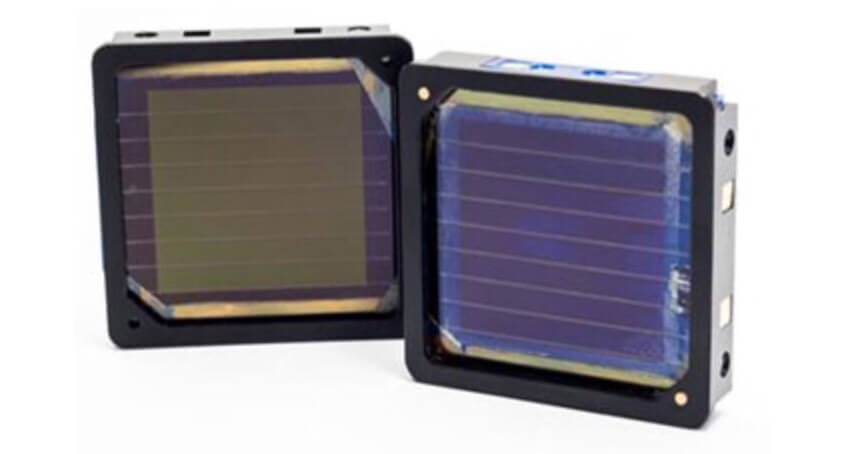
Graphene has the qualities of being exceptionally thin, high conductivity and low cost associated with it. So it becomes an obvious choice for semitransparent solar cells as it allows light to be absorbed from both the sides. According to researchers, these semi transparent devices can easily be used in windows, louvers and building roof surfaces, thereby increasing the surface area for collecting solar energy. The PolyU researchers while using graphene, enhanced its conductivity by coating it with a patina of PEDOT: PSS conductive polymer (poly (3,4-ethylenedioxythiophene) polystyrene sulfonate). It also acted as an adhesion layer to the perovskite during the process of lamination.
To promote power conversion efficiency, the researchers found that if they multi-layered graphene through chemical vapour deposition to create transparent electrodes, the sheet resistance of the electrodes was additionally reduced while the exceptional transparency of the electrodes was retained. Finally, the performance of the device was further improved by increasing the degree of contact between the top graphene electrodes and the hole transport layer on the perovskite film.
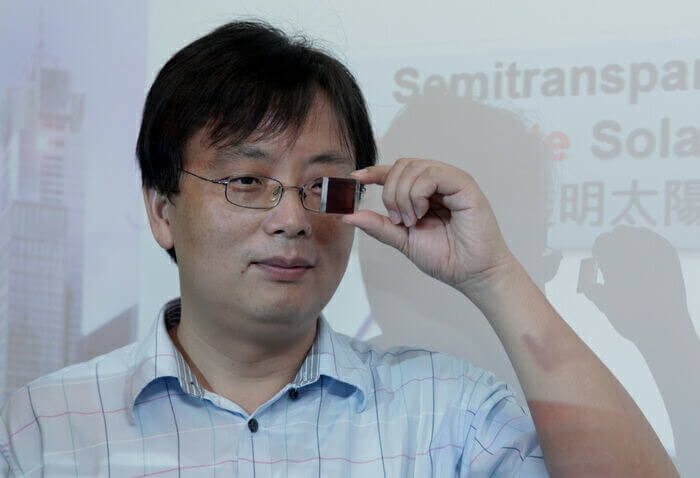
It is to be noted that silicon solar cells were the first generation solar cells for photovoltaic energy conversion. But their opacity and high costs associated with them led to the second generation solar cells which are thin film photovoltaics: light in weight and flexible but still expensive as they were created from rare materials using high-temperature production processes. The perovskite graphene solar cells are actually the third generation solar cells in this line, which are flexible as well as low cost unlike their predecessors. Hopefully these third generation solar cells will increase the reach of solar energy to areas where it was not possible earlier because of cost and flexibility issues.
[adinserter block=”7″]
Author: Technology Blog

