Japanese paper-art Kirigami inspires twisting solar panels

Solar energy has come out as a wonderful renewable energy source with the help of solar panels. But the technology is still not fool proof. The problem with flat solar panels is that they have to keep facing the sun in order to produce electricity at an optimum rate but the glitch here is: the sun doesn’t remain fixed at one point and moves across the sky.
kirigami-sun-tracking-solar-cells-2@2x

So in order to give maximum possible output, the panels have to pan themselves in such a way that they always keep facing the sun. Though there are motorized assemblies to achieve that but these assemblies increase the weight, complexity and expenditure of this system as a whole.

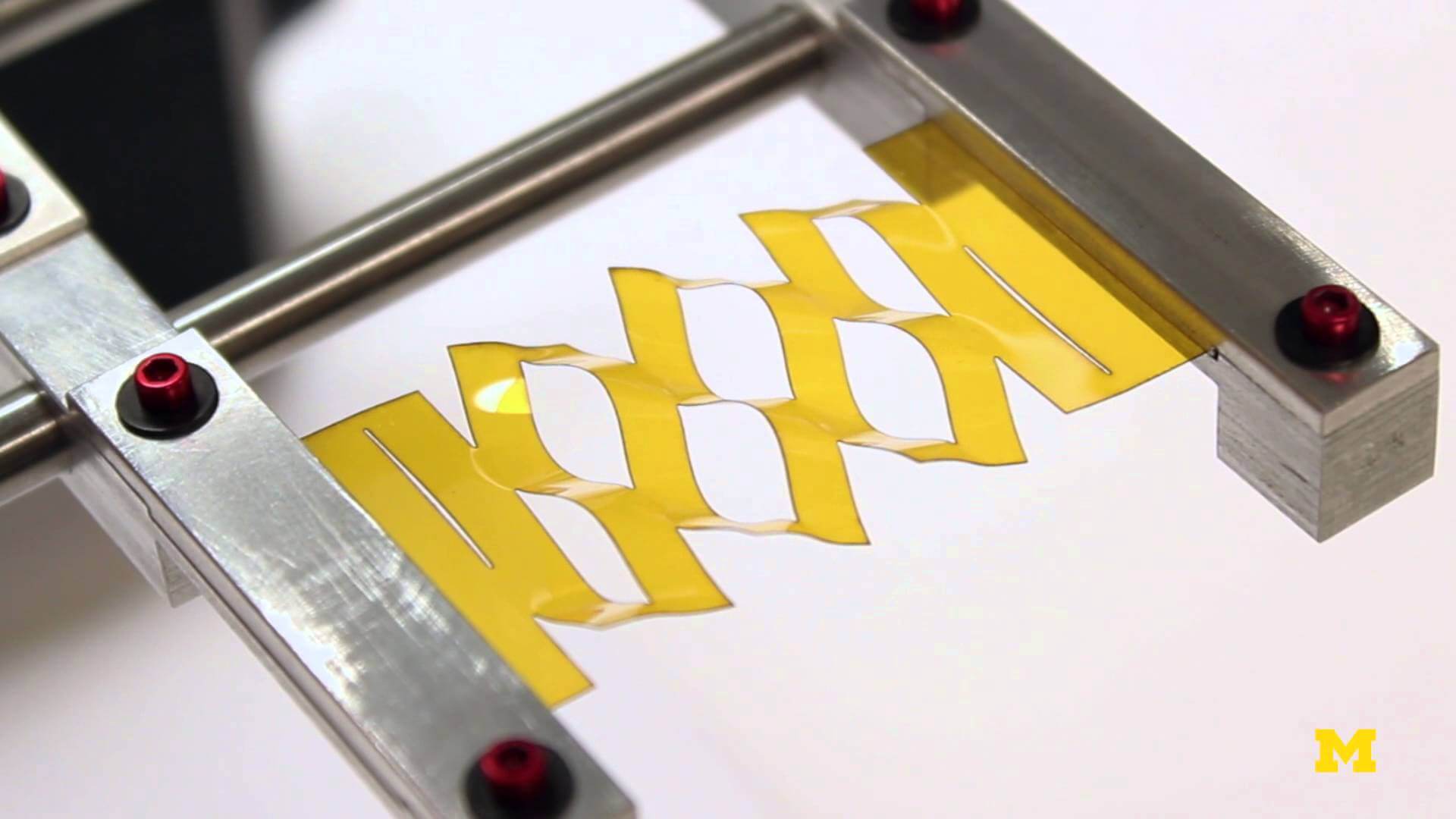
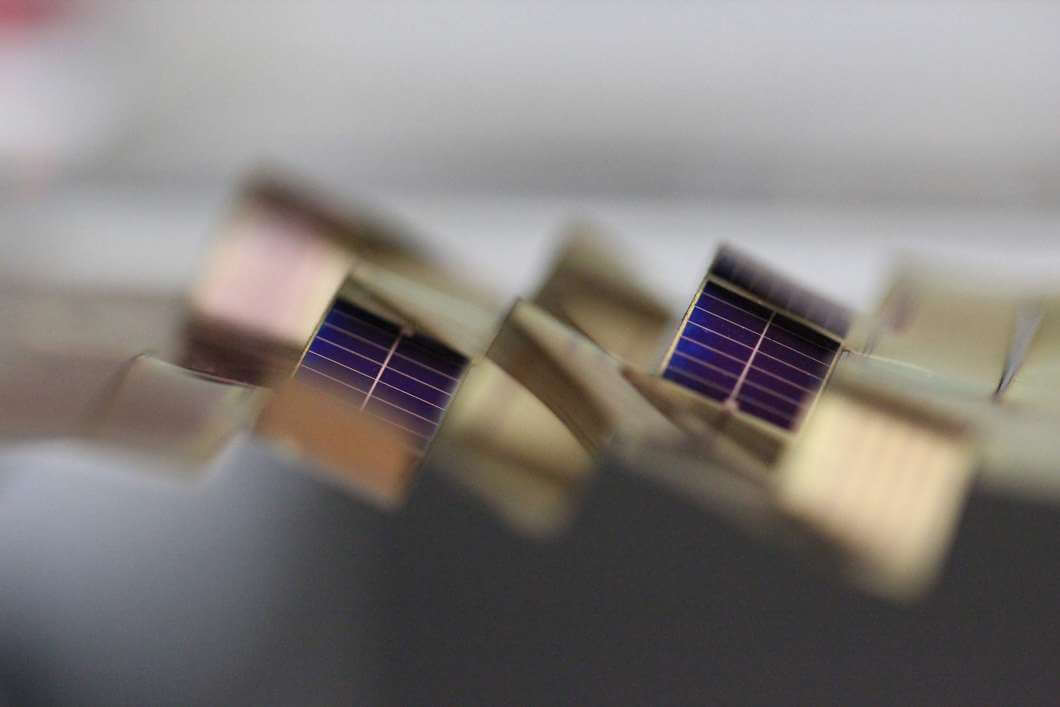
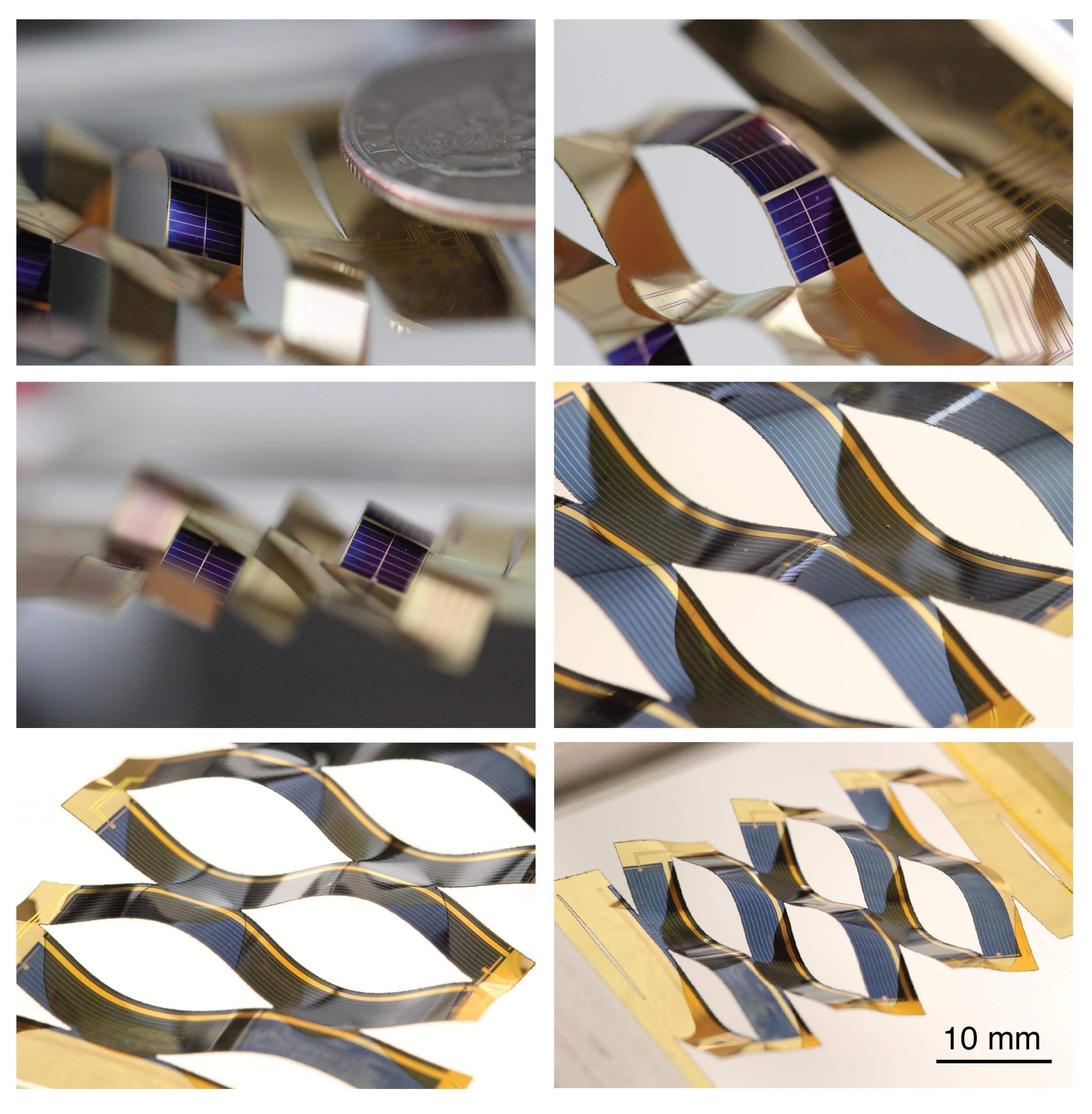
In order to find a solution to this problem, the scientists of University of Michigan stumbled upon the idea of using Japanese art Kirigami to develop a simpler alternative of these flat solar panels. The engineers of University of Michigan consulted with a paper artist Matthew Shlian who showed them a Kirigami pattern to suit their need. This pattern essentially consisted of stacked lines of dashes cut into a piece of paper. Doctoral student Aaron Lamoureux and associate professor Max Shtein reproduced an advanced version of that pattern on a sheet of Kapton plastic. This sheet of Kapton already had individual solar cells adhered to it.

When no external force is applied, the sheet remains flat, but as soon as the sheet is stretched, the strips of plastic between the cuts along with the solar cells adhered to them twist to one side. It is to be noted that the angle of twist can be controlled by modulating the degree to which the sheet is stretched. If the cells can be mounted under glass in a flat photovoltaic panel, the cells would turn to face the sun all the time without needing to move the whole panel.
Kirgami-1441744914036

This new Kirigami inspired cell arrangement when tested in a setup simulating the summer solstice in Arizona, was able to produce 36 percent more energy than the traditional setup. Associate professor Max Shtein said: “We think it has significant potential, and we’re actively pursuing realistic applications. It could ultimately reduce the cost of solar electricity.”

[adinserter block=”7″]

Author: Technology Blog
Electronic Noses Can Sniff out Stinky Water

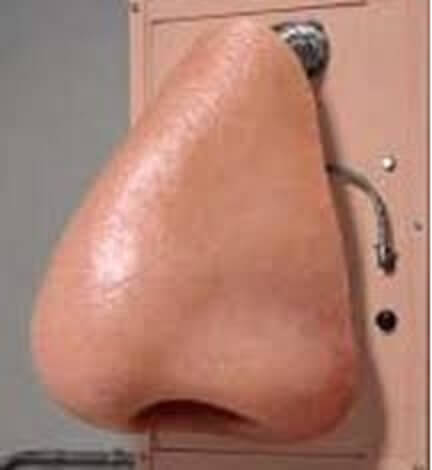
While Electronic noses or biosensor, have been prepared for detecting bugs, disease and explosives, scientists are trying to extend this technology to the terrain of drinking water testing.

optical-dog-nose@2x

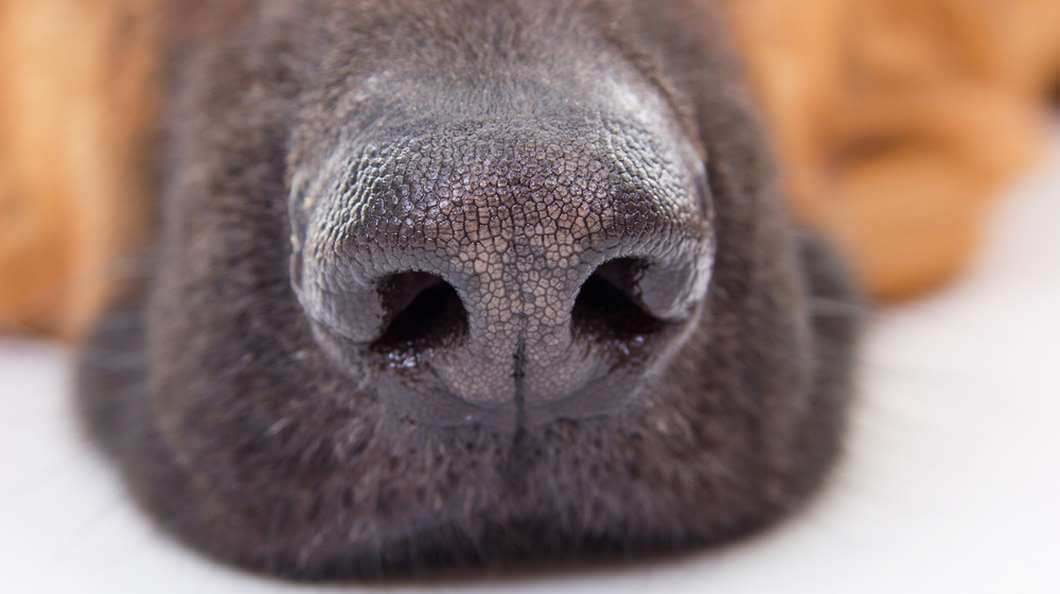
Most of us in developing countries are privileged to have water pass through many tests and purification procedures before coming to us as drinking water. But the water is hardly ever pure. The human nose can be pretty sensitive to some chemicals found in contaminated water such as, geosmin (GSM) and 2-methylisoborneol (MIB). These molecules often slip past the purification techniques. Even though they are not harmful per se, but leave a kind of earthy and musty smell respectively on top of making the water taste bad.
Testing in laboratories for these chemicals are expensive and time consuming. Thus, these biosensors based on the human nose, and be a faster way to sniff this water out. A device like this one would help water quality technicians detect contaminants quickly and on site, preventing the delay caused by lab testing.
A team of South Korean researchers has developed sensors which is coated with olfactory receptors that bind to the molecules when they are present. The very same olfactory receptor associated with the human nose in hunting these chemicals down were isolated and bound in carbon nanotubes, which light up when the molecules are present.

5trxlj.hm74up.im.lg
Tests show that the sensor is sensitive to 10 nanograms per liter of water, or 10,000 parts per trillion, less than the human nose which can detect GSM at just 5 parts per trillion, but it’s a good start.

[adinserter block=”7″]

Author: Technology Blog
The CST Starliner Will Shuttle Astronauts and Paid Enthusiasts into Space

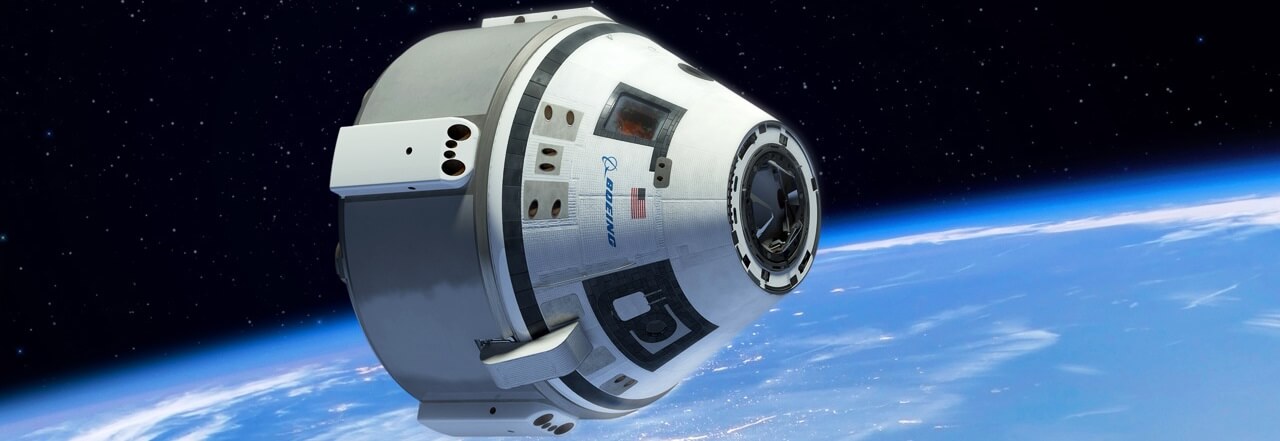
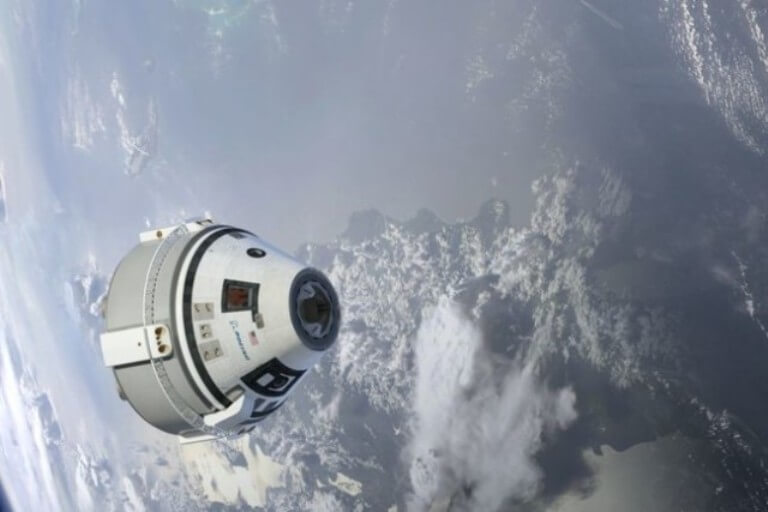
The new CST Starliner by Boeing is a commercial crew transport spacecraft for astronauts and paid customers. It serves the dual purpose of shuttling astronauts to the space station and transporting paid customers to low-Earth orbit. The Starliner is funded partly by NASA, which awarded contracts to both Boeing and SpaceX for a launch system and shuttle craft for their astronauts from the United States to the International Space Station.

650_12002-640x427The extra 80 hours research time that would be possible if more astronauts were brought to the space station, would be useful in wake of the preparation for deep space journey to Mars. NASA has imposed a program that requires two phases to be completed before the spacecraft is put to use, both the Boeing Starliner and the SpaceX Crew Dragon have to complete an orbital mission without a crew and a second test mission with astronauts and a manned flight. The manned flight phase will allow the spacecraft an opportunity to display its skills.

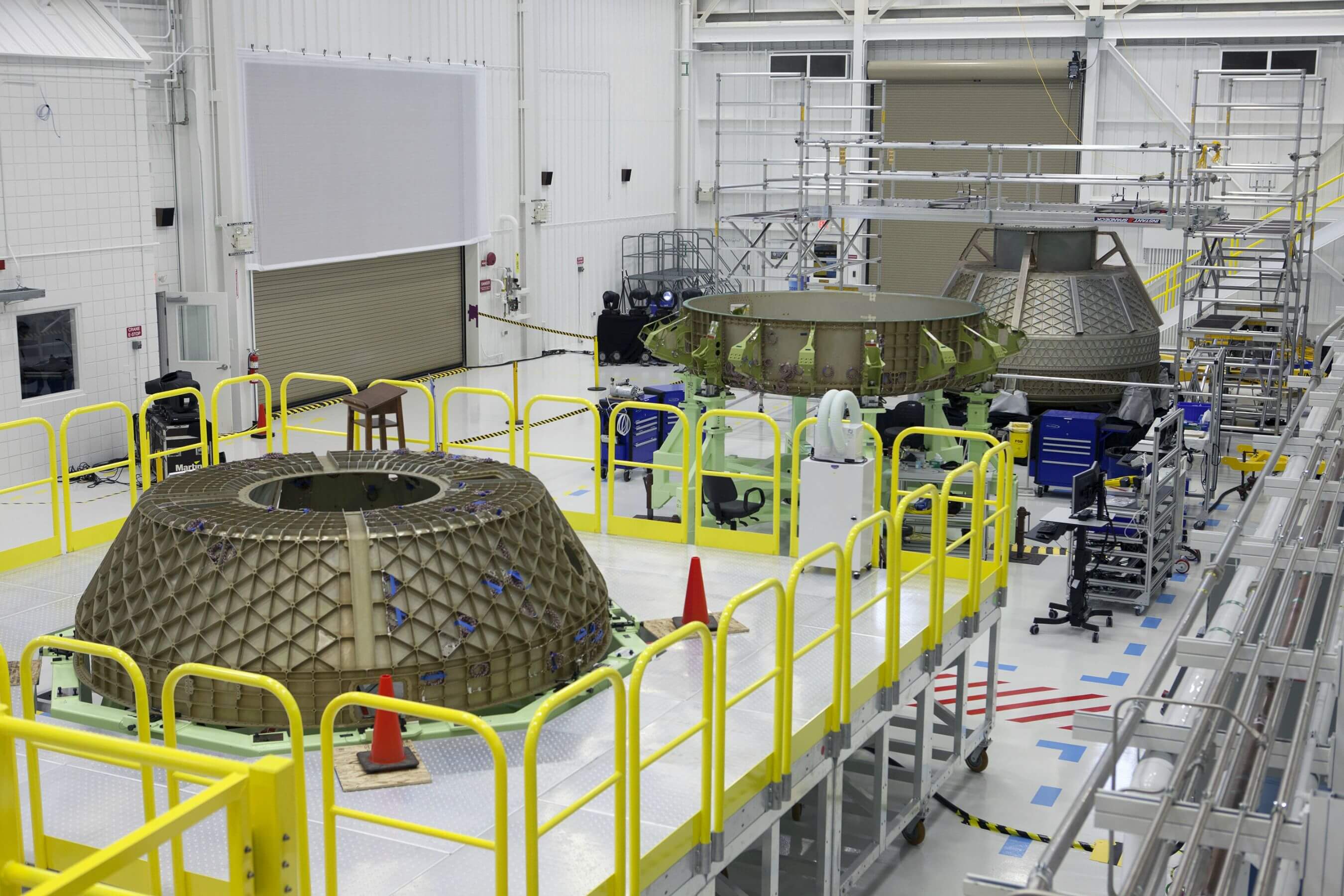
Boeing is starting to assemble its first CST-100 module and will begin a series of tests that’ll end in a 2017 with a pad abort test. These are the current test planned to test the pre-launch capabilities of the spacecraft.

jnlR6zv

Most of the processing and testing is being conducted at NASA’s Kennedy Space Center in Florida, making use of facilities previously set aside for the now inoperative shuttle program. One all the formalities are completed and the precautions are taken, NASA can start transporting four astronauts to the space station on a regular basis. Florida’s Space Coast will see a return in astronauts and manned flights. Upcoming future launches will be conducted at Cape Canaveral, Florida using an Atlas V rocket to carry the spacecraft into orbit.

[adinserter block=”7″]

Author: Technology Blog

Verified by ExactMetrics