Top 5 Technical Innovations in the War against Terrorism

Technology in the War against Terrorism

More than conventional war and deadly battles among nations our time is more concerned with terrorist attacks and the wide ranging casualties and mass panic caused by them. Naturally for most part of the world fighting terrorism is an immediacy and priority that no longer can be taken lightly. In the past 2 decades or so the world has seen a variety of most sophisticated and lethal terrorist attacks taking thousands of lives and dismantling normal livelihood for many people. With the rise of terrorism as a bigger force, technical sophistication in weaponry and maneuvers for counter w terrorism efforts is in great demand. Here, we have picked top 5 technical innovations in the war against terrorism.

Real time surveillance through aerial drones

drone

Unmanned aerial vehicles (UAV) or drones are widely being used by security agencies worldwide and in the recent years they became more important for surveillance in areas prone to terrorist activities. Security drones offer real time surveillance images of a vast area with scrupulous details. With real time sharing of surveillance images traffic and police it becomes much easier for the traffic petrol and counter terrorism forces to track and nab any potential threat.

article-2221872-15A1B477000005DC-451_634x384

Backscatter X-Ray

tsa-x-ray-backscatter-machine-800x455

Backscatter X-Ray scans are more like normal X-Ray scans but they just scan penetrating slightly past the skin surface. In detecting all types of dangerous organic and inorganic materials hidden by the carrier can be easily detected by this technology. Normally metal detectors fail to scan dangerous elements that are organic in nature and this scanning technology helps to prevent such situation with additional scan in security intensive zones. In the post September 11 scenario every major US airports embraced this security scanning technology to protect itself from any potential security threats for its crew and passengers on board. It’s a handy tool to fight the war against Terrorism.


lovely3

Next Page For More

Tagged : /

Say Hello to Advanced Li-Fi

Li-Fi

Li-Fi

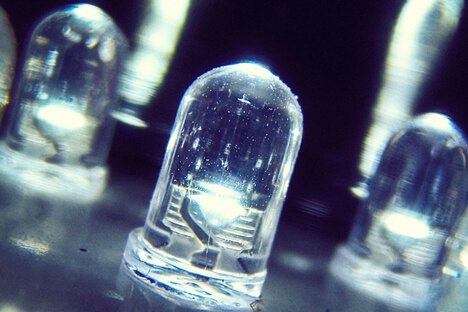
Ways to transmit information via LED fittings have already been developed, but the engineers at the University of Virginia (U.Va) have taken Li-Fi to the whole new level. An algorithm has supposedly been formulated which can establish communication between any two devices fitted with the same type of LEDs. Exercise your imagination to the fullest in wake of the endless possibilities.

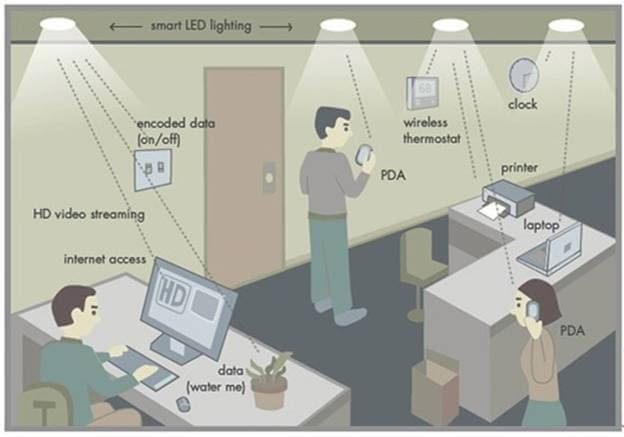
Prof. Maite Brandt-Pearce and Mohammad Noshad, the latter a postdoctoral fellow at Harvard University, were the brains behind this technique that would enable light from LED to transmit signals to wirelessly, streaming data at approximately 300 Mbps per source. The best part is that, the usual limitations of RF Wi-Fi would be eliminated and there will be no restriction on access points. This form of Li-Fi communication could also be freely exercised in areas where RF waves are prohibited, both for health and safety concerns such as near medical equipment and EM sensitive environment.

LiFiLEDs

“We developed a modulation algorithm that increases the throughput of data in [visible light communications],” says Brandt-Pearce. “We can transmit more data without using any additional energy. As more light fixtures get replaced with LED lights, you can have different access points to the same network.”

“The idea in this technology is to transmit the data using the lighting systems that are already used for the illumination of indoor environments. [Visible light communications] offer a compact, dual-use, energy-saving solution and can provide a high-speed secure network connection for a large number of users,” says Noshad.

“You can use it any place that has lighting,” adds Professor Brandt-Pearce. “In a stadium, in a parking lot, or from vehicle to vehicle if using LED headlights and taillights.” This is the point of difference of the U.Va system.

clip_image0023

Even though this form of communication transmission is not the fastest out there. SiSoft Li-Fi is undeniably much quicker. But the benefits and advantages associated with such portability and cheapness weighs out this drawback.

“[Visible light communications] has the potential to significantly increase the speed of internet connection in multiuser indoor environments due to the broad bandwidth of the visible light,” says Noshad. “It will offer a huge energy saving for the nation since energy is already used for lighting, and thus does not need to be expended for communications.”

Several patents have already been granted and researchers are working on a Li-Fi fitted lamp to demonstrate, while exploring ways to expand the current user base.

[adinserter block=”7″]

Author: Technology Blog

Tagged : /

Chip based Human organs simulator: Will it be the end of animal testing?

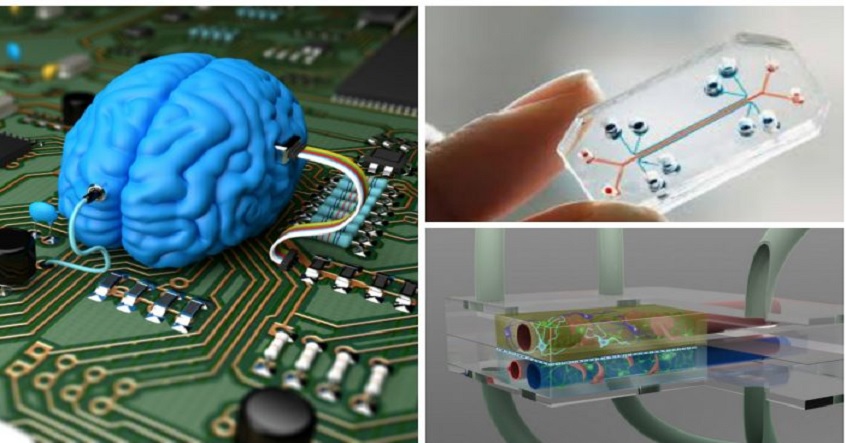
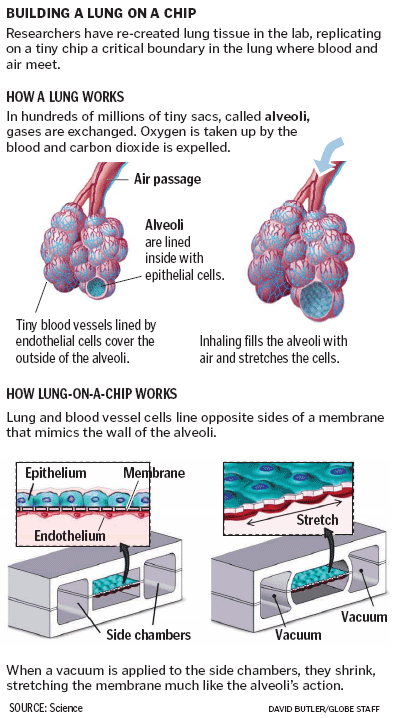
‘Lung-on-a-chip’ crowned as this year’s ‘Design of the Year’ by London’s Design Museum is on the verge of creating a revolutionary change in the pharmaceutical industry. The design, developed by the Wyass Institute for Biologically Inspired Engineering at Harvard University, is a simulation of the biological processes going inside the human lung.

lung-on-a-chip-5

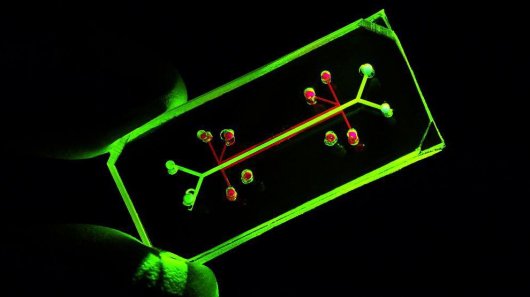
This model organ is a small chunk of see-through silicone that is lined with living human cells and mimics the mechanical motions and tissue structures of human organs which in turn could help in accelerating drug discovery, reducing the need for animal testing and decrease development costs. This all can lead consequently to a future of personalised medicines.

globegiftastic__1277459402_9855

Don Ingber, founding director of the Wyass Institute opines: “The organs-on-chips allow us to see biological mechanisms and behaviours that no one knew existed before. We now have a window on the molecular-scale activities going on in human organs, including things that happen in human cells that don’t occur in animals. Most drug companies get completely different results in dogs, cats, mice and humans, but now they will be able to test the specific effects of drugs with greater accuracy and speed.”

F1.large

Ingber along with his team has developed a number of organs-on-chips like kidney, liver and peristaltic-gut-on-chip, till date. Skin-on-a-chip is currently in its developmental phase for the cosmetics industry. And according to him, the different organs can also be joined in a network to study the journey of a blood in a simulated human body, for example, the effect of an aerosol drug dispensed through an asthma inhaler on lungs, heart, liver and kidneys and its side effects.
This is the first time that a design from the field of medicine has bagged this award. Paola Antonelli, design curator at New York’s Museum of Modern Art, who nominated the project for the award said: “This is the epitome of design innovation.”

As a technology lover you may like our daily important technology news series. It’s a playlist and you can retrieve the total day-wise videos. Please consider subscribing our YouTube channel:

Author: Technology and Beyond

Tagged : /

Imagine! there is no charging…..THIS phone charges itself when you talk!

From charging your phone through radio waves used in communication, to electromagnetic waves produced while walking, there is just one thing on your mind; where is the plug point?

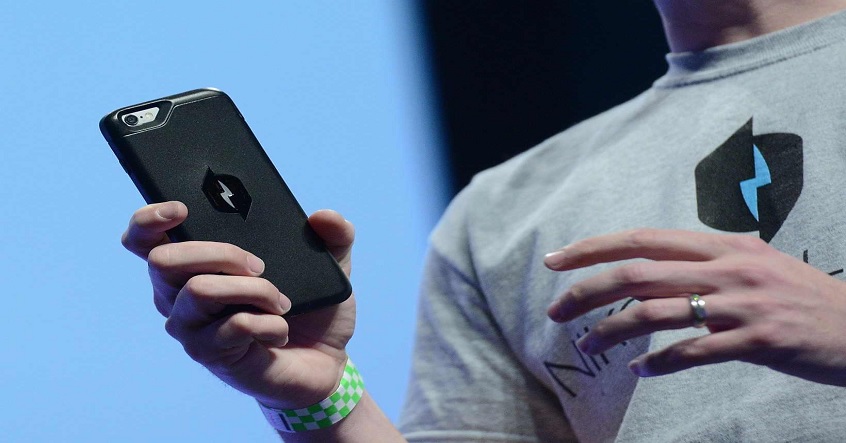
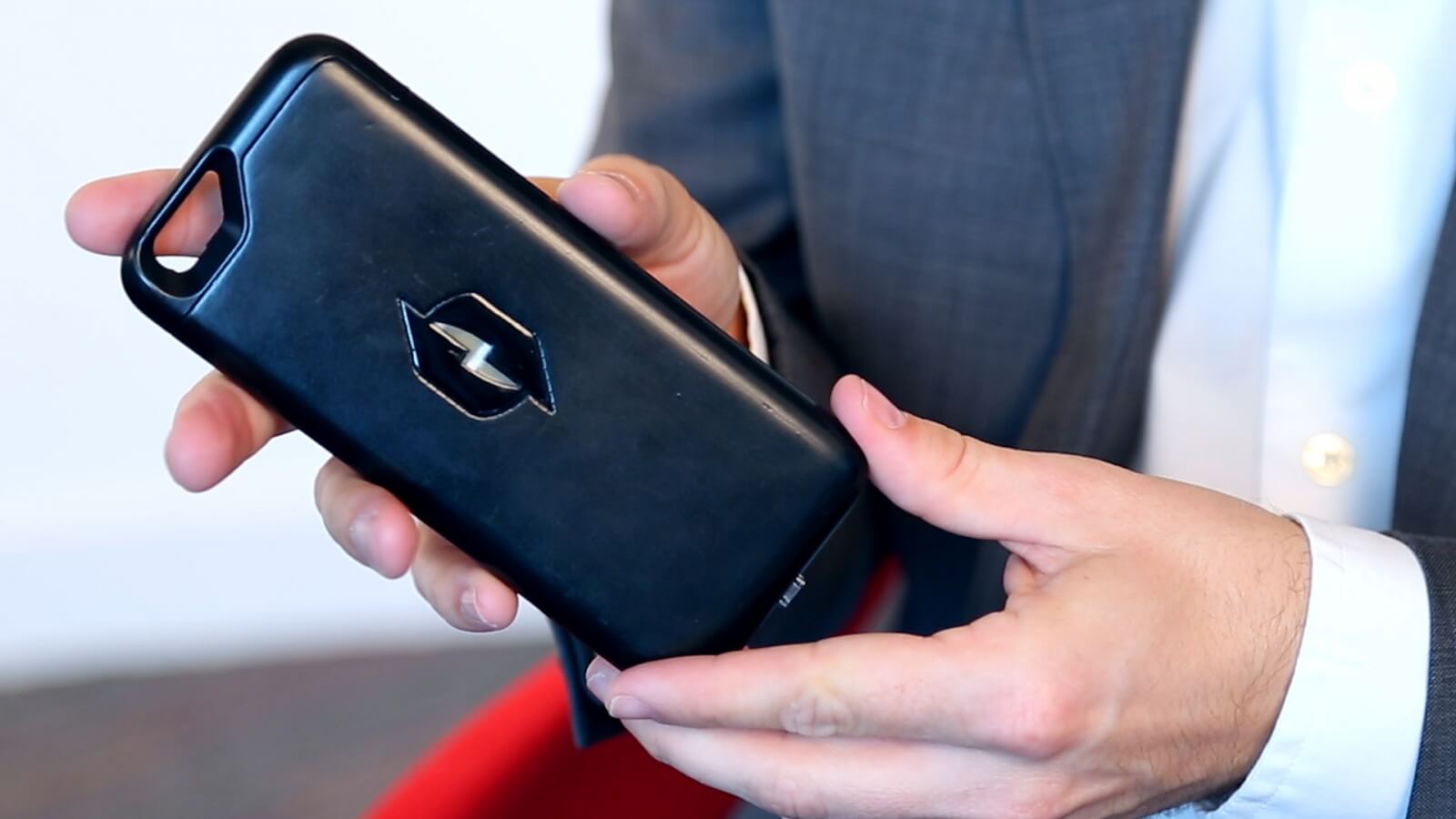
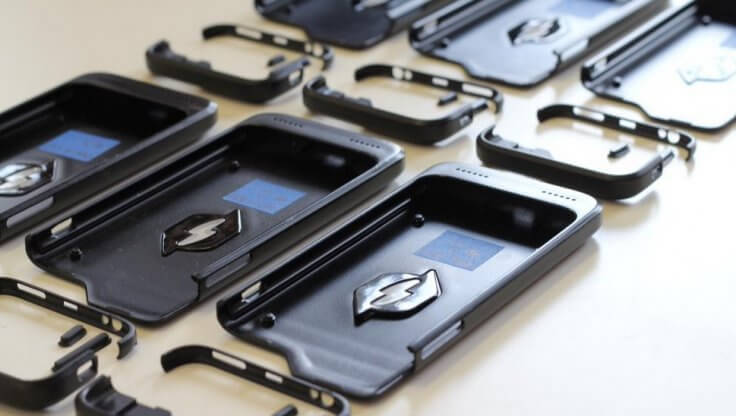
Well, we might soon be free of this dilemma of choosing between texting and streaming videos. Nikola Labs is coming up with a solution- the radio waves sent out from our mobile for communicating, will be used the power and charge up an iPhone by about 30%.

nikola

This doesn’t mean that we would never have to plug in, or power down. Radio waves just help to extend battery life. Radio wave technique can be compared to the wearable charger from Ampy, a startup based in Evanston, Illinois. The device contains a battery you fill up by moving around. Our motion from walking/cycling/jogging would send energy to the phone. An hour of exercise would produce the energy needed by an iPhone to function for an hour usage normal usage.

nikola-case-iphone-galaxy-s6

But Nikola Labs’ Zell, at least, is optimistic that this could eventually change. “Ultimately what I’d love to create is where thinking about battery life is no longer something that’s in everyone’s minds,” he says. “What if you just didn’t have to consider it?”

[adinserter block=”7″]

Author: Technology Blog

Tagged :

It’s the Sun,It’s not…China creates artificial sun in quest for limitless energy!

In a ‘never-before’ scenario, a man-made sun experiment in China has successfully produced long pulse plasma discharge at a staggeringly high temperature of more than 50 million degrees. At such high temperatures, this is the longest ever discharge produced.

The Experimental Advanced Superconducting Tokamak, an artificial sun experiment developed by Hefei Institute of Physical Science of the Chinese Academy of Science, realized an ultra-high temperature (UHT) long pulse plasma discharge for 102 seconds as of January.

It is to be noted that the light and heat of the sun come from two of the radioactive isotopes of hydrogen which are deuterium and tritium. These two isotopes while fusing into a helium atom release a huge amount of energy.

The artificial sun basically tries to imitate this same process of fusion. Xu Jiannan, from the China Academy of Engineering Physics, expresses: “An artificial sun can provide limitless clean energy through controlled thermonuclear fusion.”

Watch the video below for more information:

width="566" height="566" allowfullscreen="allowfullscreen">

Author: Technology and Beyond

Tagged :

What’s going on at Area 51? Is it hiding UFO resembling Millennium Falcon?

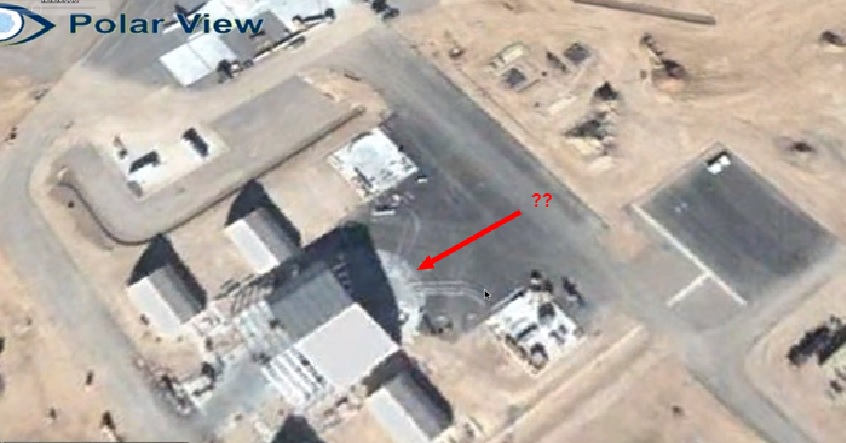
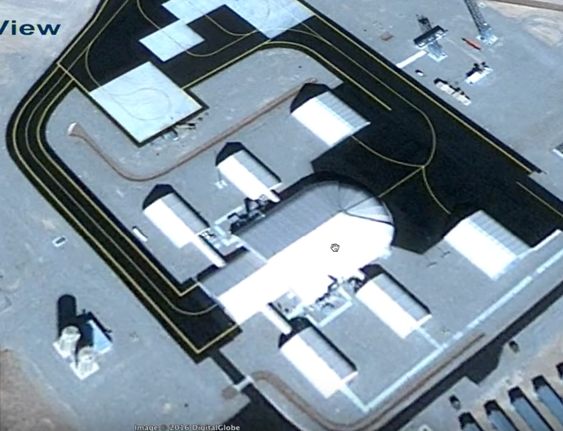
Famous UFO hunter Scott Waring has made a new claim related to US Air Force base popularly known as Area 51 in Nevada desert. He claims that the base itself is all about aliens. He also said that US government is hiding a UFO over there which looks very similar to the Millennium Falcon from Star Wars.

picture-4

Scott Waring of UFOSightingsDily.com, in his 9-minute-long video, explains how over the years, structures have been built to maintain and hide the UFO inside. With the help of Google Maps’ time travel, he video showed the initial images of the area and the s images of a finished hanger which has been specially built around a UFO. Waring first noted the under-construction structure during 2010.

By using Google Maps’ time travelling feature, Waring points out the changes that have been taken place over the span of six years, in this secret base which he termed as Area S4. According to him, there are several such sites, being built right now, in order to maintain 8 such alien aircraft.

Waring explained that the four connected buildings around the hanger are ‘air conditioning units’ which are needed to maintain the UFO at a certain temperature.

It is to be noted that US Military, so far, denied the existence of aliens and UFOs but they did admit the existence of Area 51.

Watch the video below for more information:

width="481" height="481" allowfullscreen="allowfullscreen">

As a technology lover you may like our daily important technology news series. It’s a playlist and you can retrieve the total day-wise videos. Please consider subscribing our YouTube channel:

Author: Technology and Beyond

Tagged : /

THIS medicine erases memories to cure you from addictions!

Drug addiction is a nasty thing and getting rid of this addiction is a herculean task for those who are neck deep in this addiction and in this line Methamphetamine is the nastiest one to overcome the reason being the powerful nature of memories created during a Methamphetamine high. Wouldn’t it be bliss if those memories could be erased? Then the drug developed at the University of Florida can be named bliss as it does just that…… erases the memories! To develop this drug called Blebbistatin, or Blebb, the researchers had to understand the difference between how are brain creates memories under normal conditions and under the effect of a drug.

v3v2-brain_alamyv1Memories that are normally created in our mind or “normal memories” like the first day of your school or your favourite vacation, reside in our brains as a connection of neurons supported by a protein named as ‘actin’. The actin stabilizes and the memory is stored or saved in your brain. But in the case of memories created by the drug amphetamine, the actin never stabilizes itself. The researchers wanted to take advantage of this instability and so they did by creating drug that could disrupt the actin as well as the memory. However when they considered that disrupting actin (which also makes the muscles work and heart contract) can prove to be dangerous too, they utilized another molecule called nonmuscle myocin IIB that helps actin work but doesn’t interfere with the ususal muscle and heart related functions. So what Blebb actually does is, it disrupts non muscle myocin IIB interrupting the unstable actin and erases the memory associated with the psychoactive drug. According to the researchers, with a single dose the memory associated with the drug can be disrupted for 30 days.

dreamstime_s_4188302

Right now it does seem to be a risky and dangerous concept and since it has just been tried on mice, it may not sound convincing if used in the cases of human. Years of research would be needed in this direction. But if it conquers all the negatives and comes out victorious, drug addicts struggling to go back to their normal life may finally have a great solution.

[adinserter block=”7″]

Author: Technology Blog

Tagged : /

Your new “Touch skin” phone instead of boring old ‘touch screen’ one!

What if you could play your favourite song just by touching a point on your palm or write that email using a keypad on your forearm? Absurd? Or a dream? No, to both!

150304075218_1_900x600

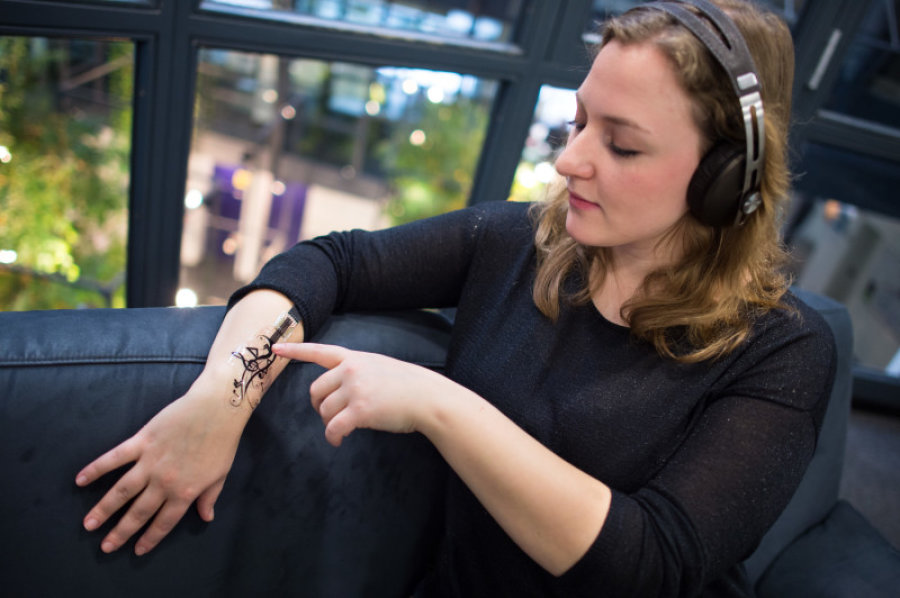
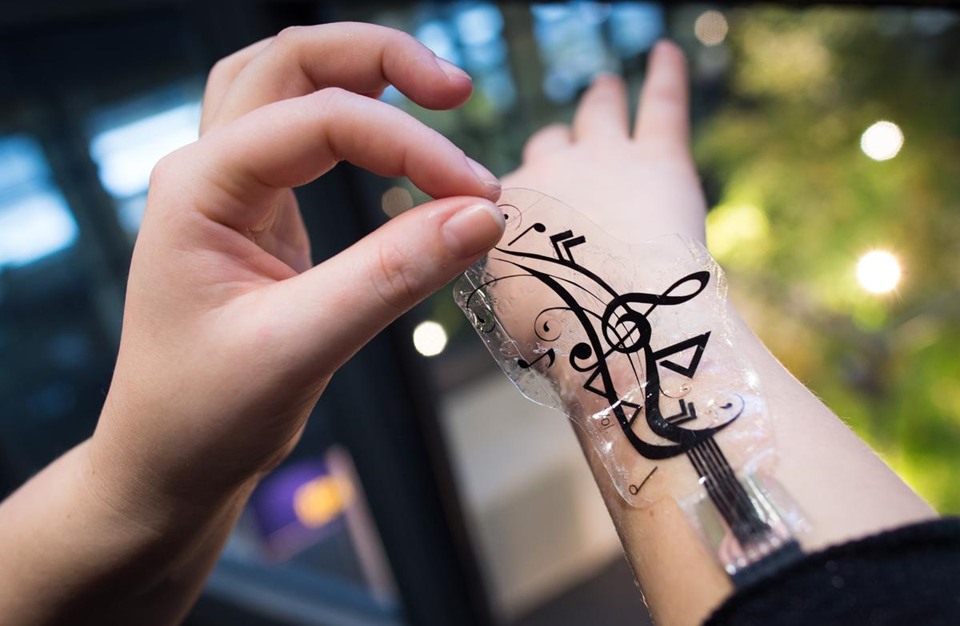
Scientists from the Max Planck Institute of Germany have come up with a revolutionary concept called iSkin that will enable you to control your phone by touching areas on your body. In this innovation, the pressure-sensitive sensors are hidden beneath a thin silicone rubber layer which can be placed over the top of your skin. These pressure sensitive sensors are made from a special silicone layer that has carbon particles running through it. This can be incorporated even as tattoo designs. According to Martin Weigl, a co-developer of the project this new technology has many advantages such as flexibility and stretch ability which will help and enable manufacturers to explore the possibility of new designs.

The sensor would find use in controlling music player and keyboards. The prototype at its nascent stage is connected to a computer using wires but it is hoped that with advancement in this technology it could start using its own integrated control system. There are also plans to let a kinetic energy system power the iSkin, paving a way to avoid battery complications.

It is a possibility that it would never have to be removed or charged up. Though the institute doesn’t plan to take this concept beyond the stage of prototype, it surely will act as a catalyst in the implementation of this concept for real.

[adinserter block=”7″]

Author: Technology Blog

How the miracle of sight is restored! Gene Therapy Cures Blindness

In case of colour blindness or total blindness, the cones and/or rods (cells responsible for catching light rays present on the surface of the retina) are damaged. This gene therapy targets the cells in the deeper parts of the retina to capture the light instead of depending on the dysfunctional cones and rods. Leber congenital amaurosis, which is a rare form of inherited blindness, has been specifically targeted by this approach.

Blindness

In this treatment, the human gene for rhodopsin (pigment used by rod cells to detect brightness) was injected into the cells of the blind mice in the study. The idea was to give the cells present on the deeper layers the ability to produce their own light detecting pigments so that they could compensate for the loss of the natural light receptor cells of the eyes. This injection was performed using vector DNA technique, where the DNA of virus was carrying the human gene coding for rhodopsin.

“The treated mice could discriminate black and white bars, but only ones that were 10 times thicker than what sighted mice could see,” says Lucas, of the University of Manchester, UK, co-leader of the team that developed and tested the treatment.

In earlier trials, the mice could only make out object shapes in very intense light. “Our mice could respond in ordinary light, the equivalent of looking at a computer monitor under ordinary office lighting,” says Lucas, presently.

The virus used as vector to inject the pigment into the mice’s cell is approved for human use too. So the possibilities of the human trial experiment is highly anticipated in the coming 3-5 years.

“This is the most effective example yet of the use of genetic therapy to treat advanced retinal degeneration,” says Robin Ali, whose team at University College London focuses on people with Leber congenital amaurosis.

article-2540276-1AB207DF00000578-470_634x449

But other scientists and Robert Ali are skeptical about the lasting effects of this treatment. There have been some speculation and observations about how the effects of gene therapy on people suffering from Leber congenital amaurosis might wane over time in the last one to three years.

[adinserter block=”7″]

Author: Technology Blog

You will be amazed to know the purposes of these tiny lab grown hearts!

article-2669350-1F1F6F5400000578-803_634x522

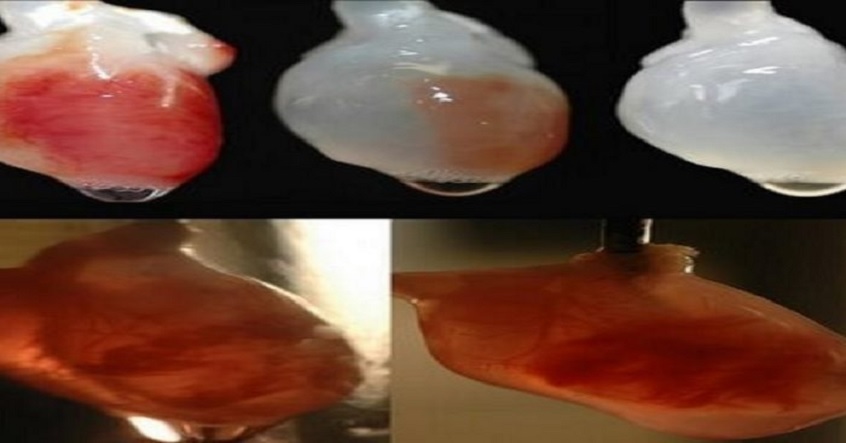
Stem cells have been used to form cardiac tissues, thanks to their versatility, on account of being totipotent (inherent tendency to form unlimited specialized cell types). Even though, the current research is using mouse heart cells, the scientists involved, hope to use human cardiac cells to study the formation of cardiac tissue, and the growth of heart in fetuses. Enhanced knowledge about fetus heart development would help to create safer drugs for pregnant women.

article-2669350-1F1F6F5000000578-155_634x576

In a growing fetus, stem cells change into heart tissue through a chain of chemical reactions, albeit some Physics also being involved.  DNA structure can be influenced by stretching and pulling the cells of the body in a certain way.

In the study, published in Nature Communications, the stem cells were in a growth medium which induced their differentiation. A special chemical layer, having areas of impression of oxygen plasma was added. This caused areas of irregularity in chemical and physical properties in the medium, which transformed the stem cells into different cardiac tissue cells. This process showed results similar to that in the making of a human heart.

video-undefined-1F1F4AC400000578-3_636x358

A drug, thalidomide, has already been tested on some of the artificially created tissue cells, which hindered the proper growth of the cells, as presumed.

As a technology lover you may like our daily important technology news series. It’s a playlist and you can retrieve the total day-wise videos. Please consider subscribing our YouTube channel:

Author: Technology Blog

Tagged : /

THIS miracle house produces more energy than it uses and it’s completely green!

Following the “Buildings as Power Stations” concept developed by the SPECIFIC Innovation and Knowledge Centre and as part of the Wales Low Carbon Research Institute’s SOLCER Project, a Welsh University has built the UK’s first smart low-carbon energy-positive house. This house was designed as a prototype to show how low-carbon targets could be achieved using some off-the shelf technologies. Energy positive status of the house means some ways were devised so that there was reduced energy demand, supply of renewable energy and storage of surplus energy for later use. In this house, electricity is also imported from the grid depending on the need and exported back in case of a surplus.

solarnewnew

Various techniques were used to make the house energy positive, like use of low carbon cement for the construction, employment of Transpired Solar Collectors (TSC) (to draw air into a cavity through perforated exterior skin of the house and warming it using sun’s rays). To reduce its demand for energy structural insulated panels (SIPS), thermal insulations and low-emissivity double-glazed aluminium-clad timber-frame windows and doors were installed.

maxresdefault

The Solcer House, built in 16 weeks generates electricity using a 4.3 kWp glazed photovoltaic panel array integrated into the south-west facing panel of the house and this electricity is then used to power the household appliances, hot water system, ventilation and heating.

As a technology lover you may like our daily important technology news series. It’s a playlist and you can retrieve the total day-wise videos. Please consider subscribing our YouTube channel:

Author: Technology Blog

Tagged : /

From plastic to pavement. This will definitely make you say “wow”

A Dutch firm VolkerWessels has put forth a concept of roads crafted from recycled plastic, PlasticRoad, and is looking for partners to help develop a prototype to test it under various conditions. Though it is just a concept as yet VolkerWessels cites various advantages of this concept if it is to turn into practical implementation. According to them PlasticRoad can withstand extreme temperatures from -40° C (-40° F) to 80° C (176° F).

3048671-poster-p-1-these-lego-like-roads-are-made-from-plastic-trash

It would be more resistant to corrosion, will have thrice the lifespan of an asphalt road and that too with minimum maintenance. The construction time of road will also reduce from months to weeks, as it would be possible to prefabricate and install sections of road on sand in single piece.

article-2627189-1DCDFF9D00000578-860_634x421

Adding to the above advantages, the biggest advantage lies in utilising used plastic trash in building roads hence lessening the reliance on carbon-intensive asphalt production. This material will also be lighter and would allow better control over factors like water drainage and road stiffness. It has been reported that the Dutch city of Rotterdam is already considering trying out a trial.

width="560" height="314" allowfullscreen="allowfullscreen">

As a technology lover you may like our daily important technology news series. It’s a playlist and you can retrieve the total day-wise videos. Please consider subscribing our YouTube channel:

Author: Technology Blog

Tagged : /

On second glance I understood what it MEANS !!

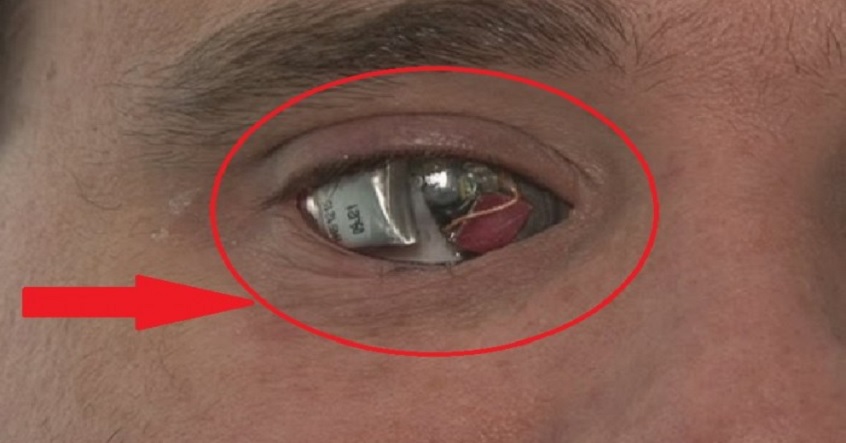
80-year old Raymond Flynn became the first person to receive the implant for AMD (age-related macular degeneration) treatment and the early results of this implant have been encouraging. The Argus II implant had received market approval from the Food and Drug Administration (FDA) in the US in 2013, for the treatment of Retinitis Pigmentosa (RP) – a degenerative disease affecting peripheral vision of patients. Continuing the journey, two years hence, the Argus II Retinal Prosthesis System is now in its testing phase, exploring its utility for patients suffering from dry AMD (which affects the central vision and not the peripheral one).

article-2138775-12E77132000005DC-935_634x284

Built by Second Sight, the Argus II Retinal Prosthesis System is designed in such a way that it stimulates a patient’s remaining retinal cells and allows them to obtain useful visual information. This visual information or images are then captured by a small, glass-mounted camera which are then converted into electrical pulses which in turn are finally transmitted too electrodes implanted onto the surface of the retina. If the implant works as per the plan, it will enable the patient to perceive patterns of light, which they can learn to interpret thus regaining some degree of sight.

article-2281661-182660E5000005DC-34_634x386

This whole procedure was carried out by Dr. Paulo Strange MD at the Manchester Royal Eye Hospital, UK. Two weeks after the implant, the device was activated and the tests indicated that Mr. Raymond Flynn was already receiving useful vision from the system. Commenting on this success, Second Sight’s Executive Officer, Dr. Robert Greenberg said: “We are very excited to begin such an important study for this patient population and to have the opportunity to help a great deal more people living with blindness. Though it is obviously still early in this clinical trial, we are very encouraged by these initial results.”

As a technology lover you may like our daily important technology news series. It’s a playlist and you can retrieve the total day-wise videos. Please consider subscribing our YouTube channel:

Author: Technology Blog

Tagged : /

If you see this creature in days to come, it means THIS…

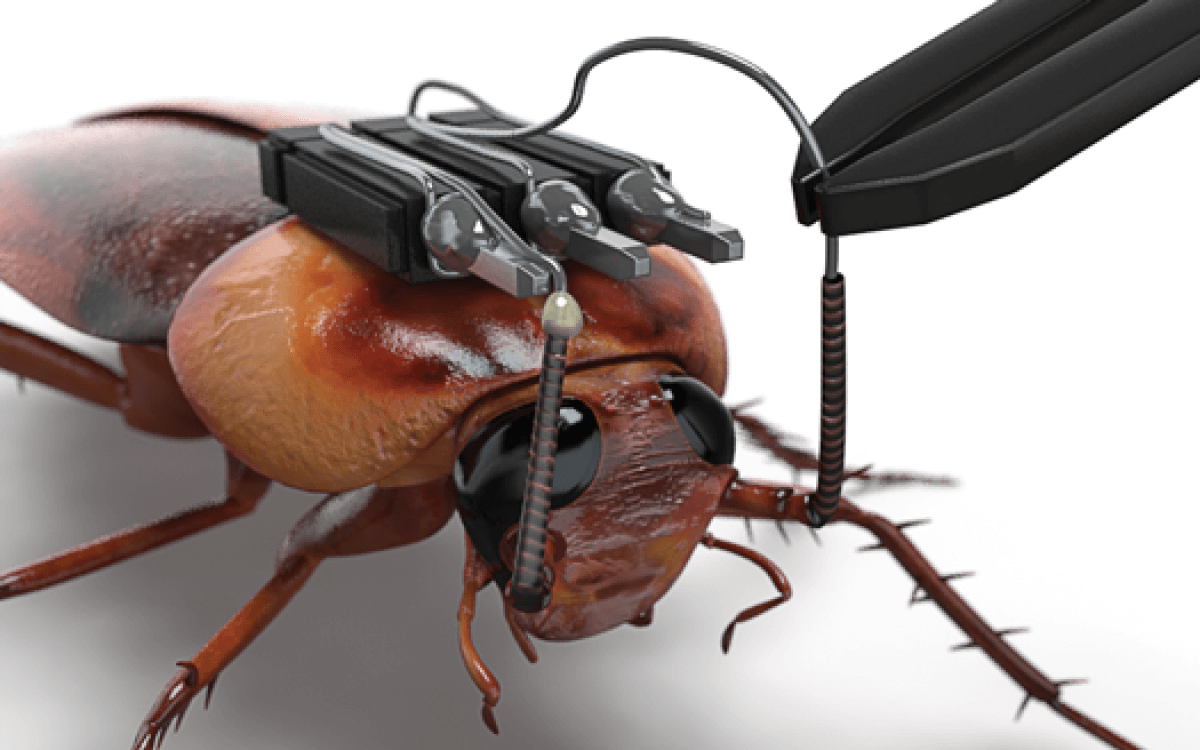
Yes… you heard it right! Who could have thought that the most irritating, yuck …response- inducing creatures called cockroaches can do a hero’s job!! Alper Bozkurt and his brainy team at North Carolina State University have put forth a revolutionary idea: to use cockroaches in finding out survivors trapped under rubble caused by a disaster and they plan to run the real-world tests pretty soon. They have christened these critters as ‘Cyborg Cockroaches’…. impressive… isn’t it?

Robo_Roach

These special cockroaches will carry a sensor backpack. In addition to this, they will be fitted with electronic bridles with a capability of picking up sounds. Each electrode will give each cockroach the directions on how to navigate a particular area (disaster struck area). The sensor backpack will help the researchers to control the critters in two ways. First, a drone will beam an invisible series of parameters called radio fences. These radio fences help in confining the cockroaches in a limited area and prevent them from venturing out. The second function of the sensor backpack is to create a tethering network that binds all the roaches together, so when one of the cockroaches catches or picks up any valuable information; it sends this information to the cockroach which is closest to the drone which in turn transmits it to the whole team.

wiring-cropped

The backpack also monitors the signal strength of each critter and ensures that none of the roaches lose contact with the team. The backpack has a low resolution microphone attached to it to detect sounds of probable survivors under the rubble. If a critter picks up such sound, the signal reaches to the other members of the critter group; particularly to those fitted with high resolution microphones. The cockroach gang then moves towards the location to pin point it. After the exact location has been found and the sound has been honed, the sensor transmits the data to the drone and the team gets an alert.

If real-world tests show positive and encouraging results then one thing is for sure… we will soon have a superhero Cockroachman… standing along with spiderman and batman!!

As a technology lover you may like our daily important technology news series. It’s a playlist and you can retrieve the total day-wise videos. Please consider subscribing our YouTube channel:

Author: Technology and Beyond

Tagged : /

No more railway crossing deaths. THIS train will generate power to close the unmanned crossings!

According to a paper published in the Journal of Rail and Rapid Transit a research was carried out by students Abolfazl (Sina) Pourghodrat , Sean Hansen and Vedvyas Kamarajugadda, along with faculty members Carl Nelson and Stephen Platt that included a series of experiments to find ways of providing electricity to railway signals in rural areas where there is always scarcity of electric power. Though photovoltaics provide a part solution the need of the hour is to search for an alternative option for consistent supply.

railroad-crossing-sign

Keeping this in mind they devised various systems that could harness power from the rails itself. In one of the systems, an inductive coil was attached to the rail, located above a permanent magnet with a radial magnetic field that’s mounted on the ground. As the rail flexed vertically under the weight of a passing train, the coil repeatedly moved up and down through the magnetic field, generating an electrical current.

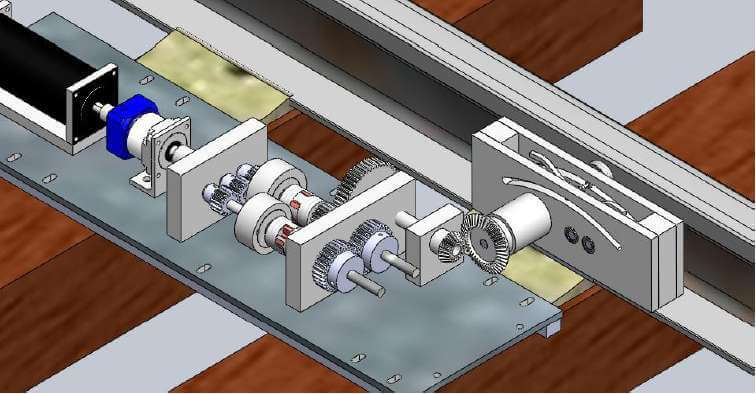
In second system, a strip of piezoelectric material was mounted on the underside of the rail. As that rail flexed under use, the material was subjected to mechanical strain, producing an electrical charge. Both these systems were good but no good enough to provide enough power to illuminate warning lights. This prompted them to move on to the third design where the vertical flexion of moved an attached ratcheting mechanism that turned a planetary gearbox which subsequently drove a generator mounted on the ties. The scientists also created a hydraulic system, in which the vertical deflection of the rail drives a hydraulic cylinder that’s wired to a motor.

railway-crossing-power-2@2x

Though all these systems generated power, the problem is that they relied on the considerable flexion of the rails which is variable particularly when cold weather makes the rails quite stiff. Keeping all these factors in mind another system was created where a spring-loaded cam mechanism that’s mounted on the rail is pushed forward by each train wheel, and then springs back to its starting position once that wheel has passed. That oscillating motion drives a generator, in turn producing enough electricity to power warning lights.

[adinserter block=”7″]

Author: Technology Blog

Tagged :
Verified by ExactMetrics