Low cost bio-foam purifies dirty water into drinkable water. A perfect solution for rural areas!

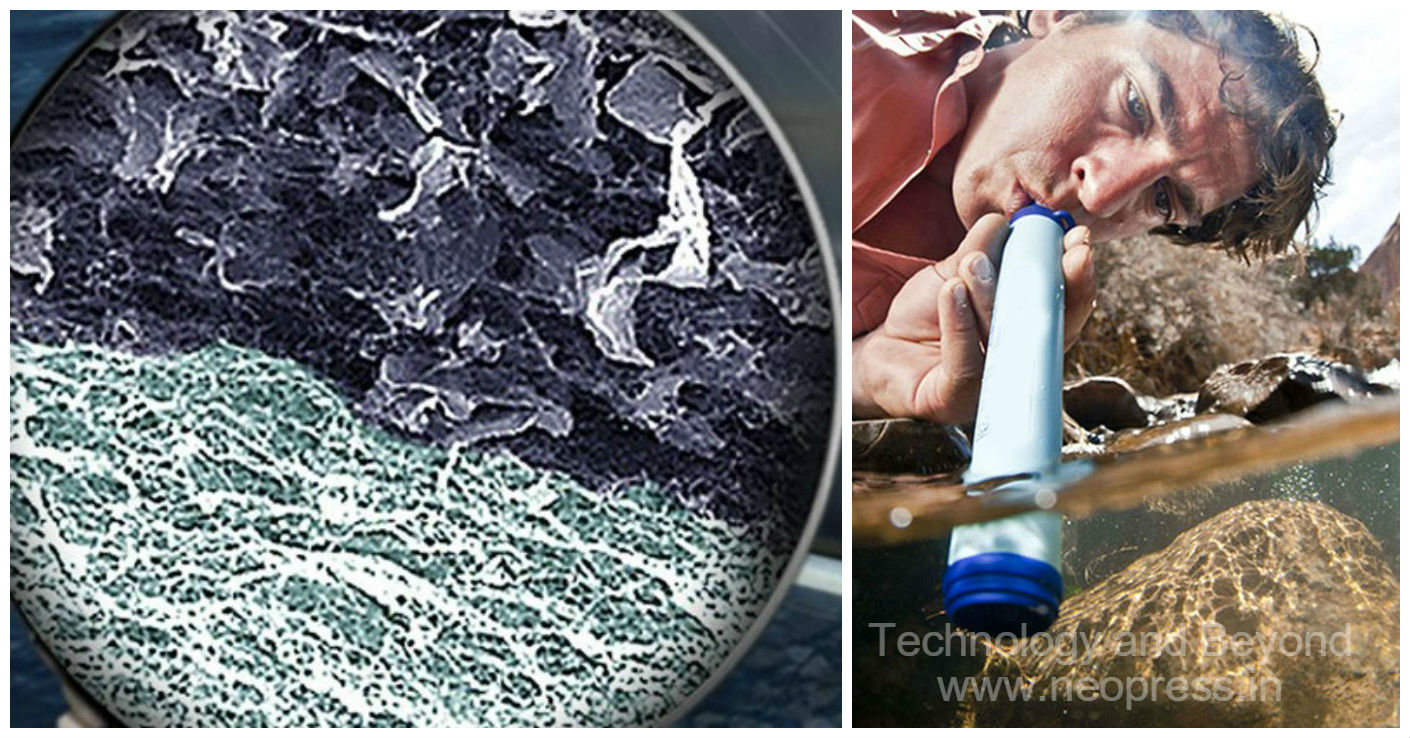
Engineers at Washington University have figured out a way to turn dirty water into drinkable water by using graphene oxide sheets.

This new approach chains graphene oxide and bacteria-produced cellulose to form one bi-layered biofoam, as detailed in their paper published in Advanced Materials.

“The process is extremely simple,” said Srikanth Singamaneni, an Associate Professor of Mechanical Engineering and material science.

 “The beauty of this is that the entire network of nanoscale cellulose fiber produced by bacteria has outstanding ability to move the water to the evaporative surface from bulk along with minimizing the heat, and the whole thing is produced in one go.”

The cellulose at the bottom of the biofoam acts like a sponge and soak water up to the graphene oxide. On rapid evaporation, the clean water is collected from the top of the sheet.

Fascinatingly, the process in which the biofoam is formed, functions in the same way as when an oyster makes a pearl. The bacteria develops layers of nanocellulose fibers, ehich is then embedded by the graphene oxide flakes.

The major benefit of this biofoam is that it’s extremely light and inexpensive to produce.

“Cellulose can be produced on a huge scale,” Singamaneni reports, “and graphene oxide is tremendously low-priced—people can produce loads, truly loads, of it. Both materials going into this are highly accessible. So one can easily produce huge sheets of the biofoam.”

Researchers have found, the properties of this synthesized foam material to have features that enhance solar energy harvesting, making it more effective at putting an end to the bacteria and contaminants in the water.

“We hope that for countries where there is abundant sunlight, such as India, you’ll be able to take some dirty water, evaporate it, and collect some fresh water, using our material,” Singamaneni states.

As a technology lover you may like our daily important technology news series. It’s a playlist and you can retrieve the total day-wise videos. Please consider subscribing our YouTube channel:

Author: Technology and Beyond

Tagged : /

IBM refines computers by creating artificial neurons inspired by human brain

Human brain is one of the most refined, complex and systematic creation by God. There are still millions of things that we need to understand about the human brain. It has intrigued scientists and engineers from a long time. The human brain is the most amazing computer that could ever be created. This is the reason why the brain is the favourite subject of study for engineers as well as scientists. It would be wonderful if they could create a machine that could replicate its processing mechanism.

IBM is one such company which has been trying in this direction, from quite a long time and is a strong proponent of cognitive computing. Their artificial intelligence programme ‘Watson’ was the first cognitive system ever created. For those who do not know, let us inform that cognitive computing refers to systems that learn at scale, reason with purpose and interact with humans naturally. So they are not explicitly programmed but learn and reason from their interactions with us and from their interaction with the environment.

IBM has been trying persistently in the direction of recreating the human brain’s cognitive computing power and recently they took a revolutionary step in this direction.  Scientists at IBM have succeeded in creating artificial neurons that successfully respond to phase changes due to electric signals while using very little power imitating the human brain. The scientists designed these neurons using phase-change materials, including germanium antimony telluride. One should note that these two materials exhibit two states , amorphous and crystalline and are the same materials that made optical disk storage possible.

These phase-change-based artificial neurons can perform complex computations and fast learning while using very little energy, much like the human brain. Also, these artificial neurons survived being subjected to billions of switching cycles which would translate to multiple years of operation at an update frequency of 100Hz. IBM scientist and author Abu Sebastian said: “This will significantly reduce the area and power consumption as it will be using tiny nanoscale devices that act as neurons.” The lines between human and machine intelligence are slowly fading!

As a technology lover you may like our daily important technology news series. It’s a playlist and you can retrieve the total day-wise videos. Please consider subscribing our YouTube channel:

Author: Technology and Beyond

Tagged : /

How Cyber War between two countries will turn their worlds upside down

We rely heavily on cyber world – to what extent; we do not have any idea and that is because everything right now is running perfectly smooth without any glitch. We haven’t yet witnessed any inconvenience which may arise due to the failure of cyber systems so we do not know the scale of chaos it can cause if something like this was to happen. With ever changing dynamics of power around the world and ever increasing and looming threat of terrorism; almost every country is under threat.

The thing to note here is that, with so much dependence on technology and the cyber world, the face of terrorism has also changed. Yes there are the usual bomb blasts and suicide attacks but if ever it came to two countries completely jeopardizing each other; then cyber-attack may just be the final assault on a nation.

attack-1
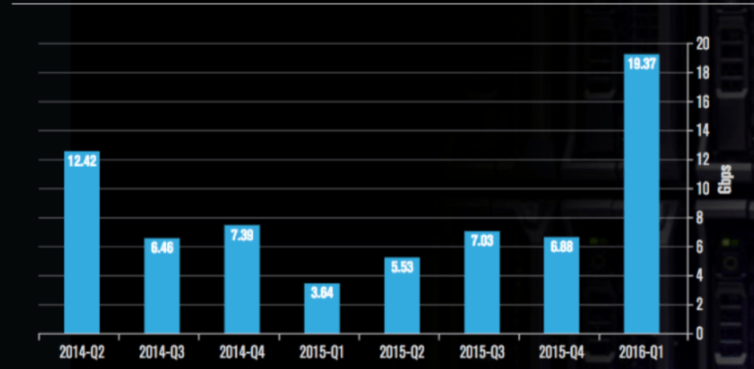
Number of attacks


attack-2
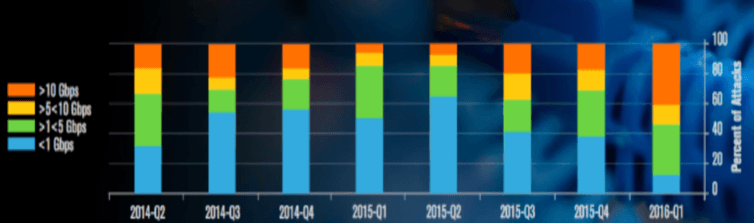
Scale of attacks

If ‘cyber-attack’ still doesn’t ring any bells then imagine a scenario in which all government data of your country has been destroyed, taking out healthcare records, birth certificates, social care records and many more things. Imagine a stalled transport system, blank traffic lights, chaotic immigration department and disappearance of all tax records. Can you actually imagine all of this happening around you in your very own city or nation? Can you imagine internet as nothing more than a blank screen with an error showing 24×7? This is the power of cyber-attack.

This surely must remind you of some movie scenario but remember truth is stranger than fiction. After all kinds of wars you have seen so far, this one can be the most damaging. Yes it won’t kill people but it can kill nations or make them kneel down just because of the click of a mouse. Internet has indeed given us the power to connect and communicate and for so many things but the same power can one day become the greatest bane for any country…. not only does it expose individuals; but whole nations to a different level of vulnerability.

Next page For More

Tagged :

Apple Under Pressure to Release Wireless Earbuds. You may expect it to be out real soon!

After the disappointing iPhone 7 missing headphone jack saga: Forbes is reporting that Apple has developed a custom Bluetooth radio chip for wireless earbuds. And as it is with Forbes not revealing dates, we are still in the dark about how they will work or when will they be out.

“The way it works at Apple is if it doesn’t work 100%, it gets cut,” Forbes’ anonymous source said.

If Apple can’t develop its own headphones, the company may use a third-party supplier like Broadcom, which they used for other wireless technologies. The developers working on the headphones are technically external recruits from an Oakland-based semiconductor startup called Passif. Apple in 2013 acquired the company, which describes its mission as making “switch-based wireless transceivers with low power consumption and a small footprint.”

In other words, they may or may not actually come out alongside the iPhone 7 in September. But pressure is high to do so, now that Samsung just announced its own Bluetooth earbuds, GearIconX.

As a technology lover you may like our daily important technology news series. It’s a playlist and you can retrieve the total day-wise videos. Please consider subscribing our YouTube channel:

Author: Technology and Beyond

Tagged : /

Samsung Pulls All the Stops With the Galaxy Note 7

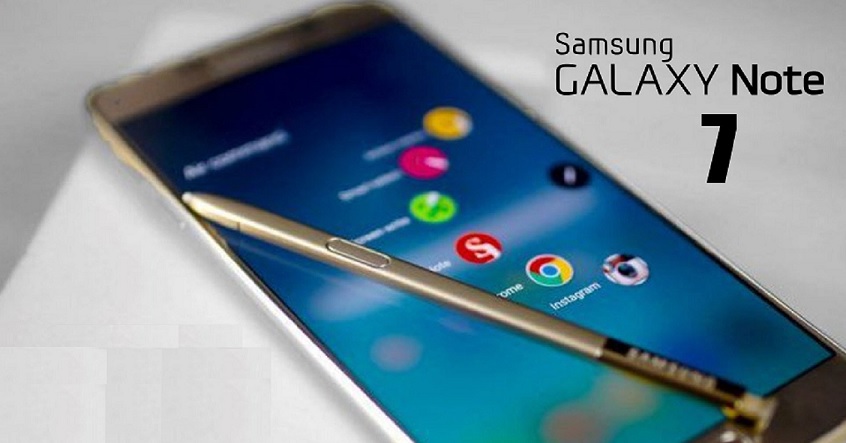
Samsung has been giving the iPhone a definite run for its money with the latest devices in its Galaxy series. Now, it looks like things are just going to keep getting better with the latest phone in the line-up, the Samsung Galaxy Note 7. The Note 7 will bring fans everything they loved about the S7 Edge while adding even more features to make you fall in love all over again. Samsung has skipped over the Note 6 entirely, jumping directly from the Note 5 to the far superior Note 7.

The Samsung Galaxy Note 7 bears many similarities to the excellent S7 Edge, including the same Qualcomm Snapdragon 820 processor, 4 gigs of RAM, charging capacities, and crystal clear 12 megapixel camera. Also, like the Galaxy S7, the new Note will still feature a MicroSD card slot meaning you’ll really have to work hard in order to run out of memory. And speaking of memory, one major change is that the internal memory is being doubled from the S7’s 32GB to a whopping 64GB. That means you’ll be able to maintain nearly 300 whopping gigs of memory. That’s a lot of high-definition pictures along with any number of hand-drawn doodles and more that you’ll be making with the improved stylus.

One particularly great feature about the new S Pen is that the pressure sensitivity is literally twice as great as that seen on earlier models (4,096 levels compared to the previous 2,048). This provides a much greater degree of control for users and budding artists. Additionally, new software will allow you to make your own GIFs on the fly from video you’re presently watching with the much more tactile S Pen.

Next page For More

Nobody would wish this ATM hack to fall in the hands of thieves

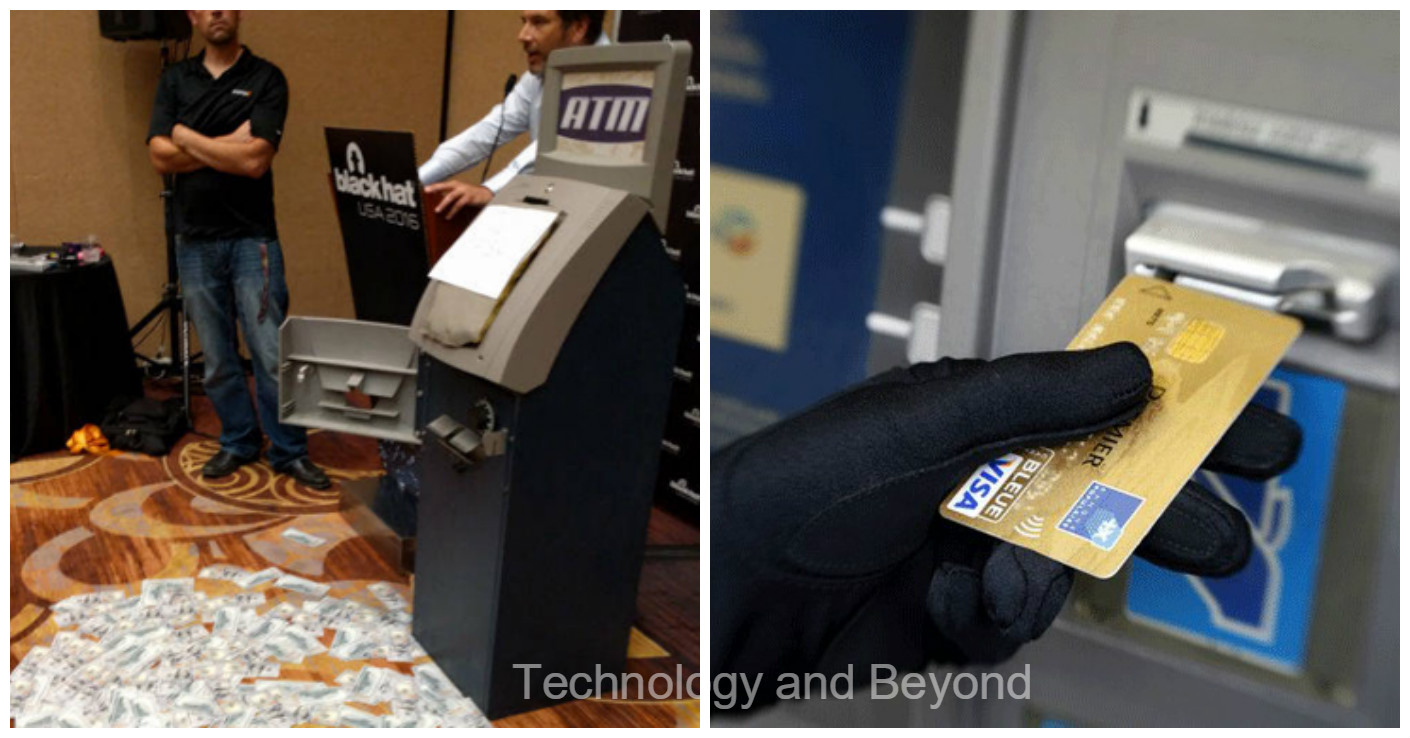
ATM frauds have become quite common nowadays. There are various ways to secure them but the hackers always seem to be a step ahead. The chip-and-pin or EMV was supposed to be a safer and more secure counterpart but a new ATM hack demonstration presented by Rapid 7 (a small team of security engineers) at the Black Hat, a hacker conference in Las Vegas, shows the vulnerability of the same.

The hack involves a ‘shimmer’, a skimming device that intercepts the signal between the ATM (or POS) machine that facilitates a MiTM (man-in the-middle-attack) once the card is inserted. This device then enables the hackers to not only retrieve data from the card but also replicate the chip and the magnetic strip in addition to the PIN as the customer enters it. After accomplishing this important step, the only thing that remains to be done by the hackers is downloading this data to recreate the victim’s card and us it in the same ATM.

The most unfortunate fact about this hack is that to pull-off this hack, no elaborate or hard-to-find tools are needed. The entire demonstration set-up as presented by the security engineers required around $2,000 and some common items like Raspberry Pi. And using this simple hack, the team was able to use a common chip-and-pin card to withdraw money from an ATM in under 15 minutes!

One thing is to be noted though that the chip-and-pin card does have a security feature that offers some help should this unfortunate thing was to happen to you. The trick is that the chip creates a unique transaction code for each new transaction. Since hackers have the resources and technology to use this card only once, it is still a bit safer than its magnetic stripe predecessor. But just to let you know and make you more attentive, even with a single trial and swipe, the hackers could you poorer by up to $50,000 in a single go.

As a technology lover you may like our daily important technology news series. It’s a playlist and you can retrieve the total day-wise videos. Please consider subscribing our YouTube channel:

Author: Technology and Beyond

Tagged : /

Apollo astronauts heard unexplained music on far side of the moon!

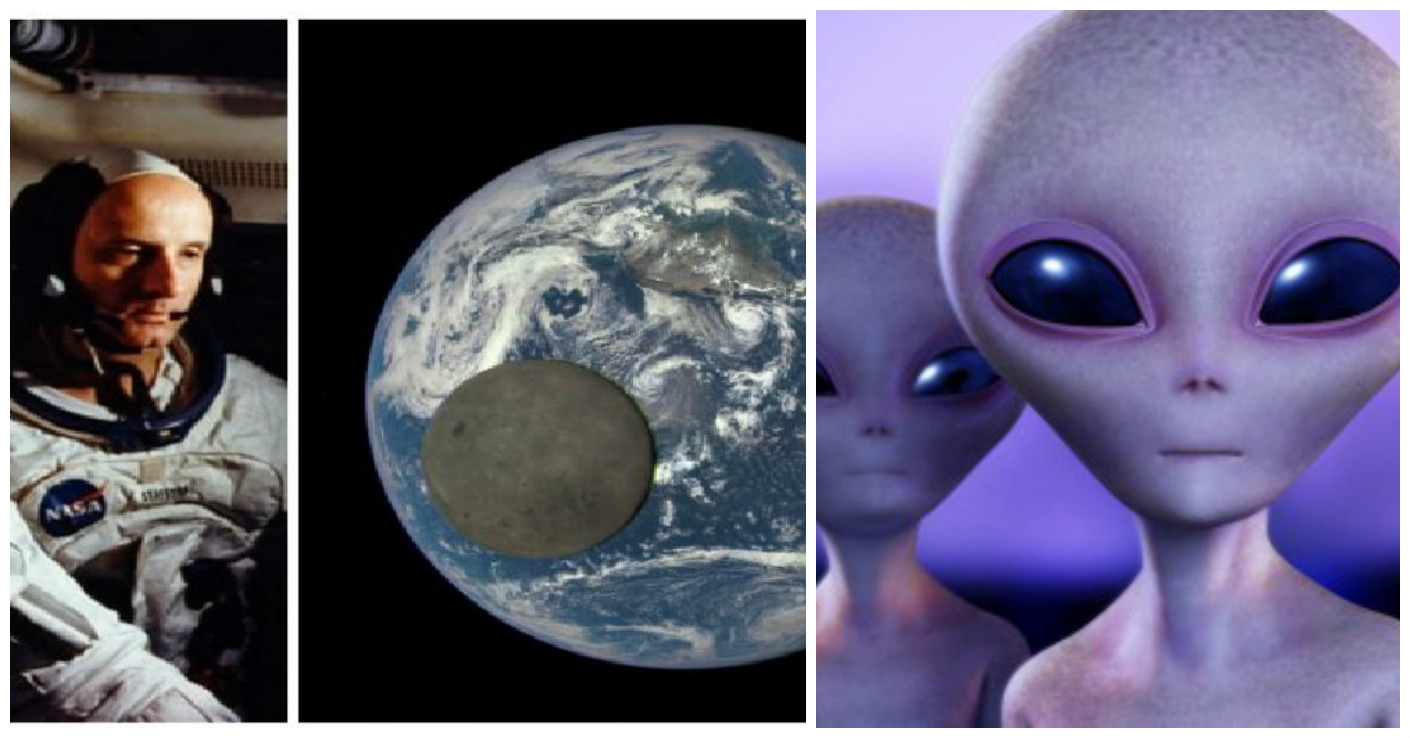
It was almost 47 years ago, two months before Apollo 11’s historic first manned landing on the moon when something weird happened. Apollo 10 had entered the lunar orbit which included traversing the far side of the moon. On this side of the moon, all spacecraft lose contact with Earth for about an hour and nobody on Earth can see or hear them. There were in total three astronauts in the Apollo at that time. It was these three astronauts who heard strange otherworldly music-like noises coming from their headsets. They were startled and couldn’t decide if this was to be reported to NASA.

For people on earth, the mission was smooth and nothing unusual took place during its course, but it was NASA’s unexplained files that discuss the overlooked recordings of the three astronauts talking of this unsettling experience while flying above the other side of the moon. The conversation between the astronauts reveals that they did hear some strange otherworldly music coming through the Apollo module’s radio.

The following is the conversation that took place between the astronauts after hearing that weird music:

“It sounds like, you know, outer space-type music.”

“You hear that? That whistling sound? Whooooooooo!”

“Well, that sure is weird music!”

“It’s unbelievable! You know?”

“Shall we tell them about it?”

“I don’t know. We ought to think about it.”

Apollo 15 astronaut Al Worden believes that the Apollo 10 crew knew very well the kind of noise they should be hearing. So logically if they heard something weird then there was something there. He said that NASA would withhold information from the public if they thought it was in the public’s best interest.

NASA also issued a statement regarding this explaining that the files have long been available to the public. The tapes were never lost. The statement says: “While listed as ‘confidential’ in 1969 at the height of the Space Race, Apollo 10 mission transcripts and audio have been publicly available since 1973. Since the Internet did not exist in the Apollo era, NASA has only recently provided digital files for some of those earlier missions.

The Apollo 10 audio clips were uploaded in 2012, but the mission’s audio recordings have been available at the National Archives since the early 1970s. As for the likely source of the sounds questioned in the television program, Apollo 10 Lunar Module Pilot Gene Cernan told NASA on Monday, ‘I don’t remember that incident exciting me enough to take it seriously. It was probably just radio interference. Had we thought it was something other than that, we would have briefed everyone after the flight.  We never gave it another thought.”

Now what do you have to say about that?

width="560" height="314" allowfullscreen="allowfullscreen">

As a technology lover you may like our daily important technology news series. It’s a playlist and you can retrieve the total day-wise videos. Please consider subscribing our YouTube channel:

Author: Technology Vista

Tagged : /

Charging Your Phone Overnight? Why You Should Never Do It!

Our world has become small… so small that we now carry it in our smartphones.  Since you can’t really stay disconnected from the world, you need to stay connected with your smartphone and you since you need to stay connected with your smartphone; you need to keep it battery full. But the problem is… you don’t actually have time to charge your phones. So the most common and feasible solution for you is charging it when you are asleep so that you don’t miss anything that happens in your so called ‘world’. But you know what? This could turn out to be your worst or maybe your last habit if things go wrong. This is what consumer affairs expert Dominic Littlewood opines.

Dominic

Dominic Littlewood explained on the recent show of Good Morning Britain that how leaving anything on charge overnight can be dangerous. He said that this habit poses a fire risk. Apart from when we are charging our phones, where we are charging it carries more weightage. Most people have the habit of putting their phones near their pillows to snooze their alarms and this is may bring about the most horrendous accidents.

This practice should be completely avoided at any cost because phone batteries can heat up and set fire to your sheets. One boy actually died because of this habit. If you have got to charge your phone then do not put it on anything inflammable, instead put a saucer under it, so that you will have that extra bit of protection against some fire accidents. Also charging your phone overnight inflicts long term damage to your phone’s battery. According to some advisors, you should never charge your phone all the way up to 100%. Constantly doing a full recharge shortens the battery life of your phone.

As a technology lover you may like our daily important technology news series. It’s a playlist and you can retrieve the total day-wise videos. Please consider subscribing our YouTube channel:

Author: Technology and Beyond

Tagged :

Apple’s iPhone 7 Plus Is Going To Be Super-Impressive Than We Thought

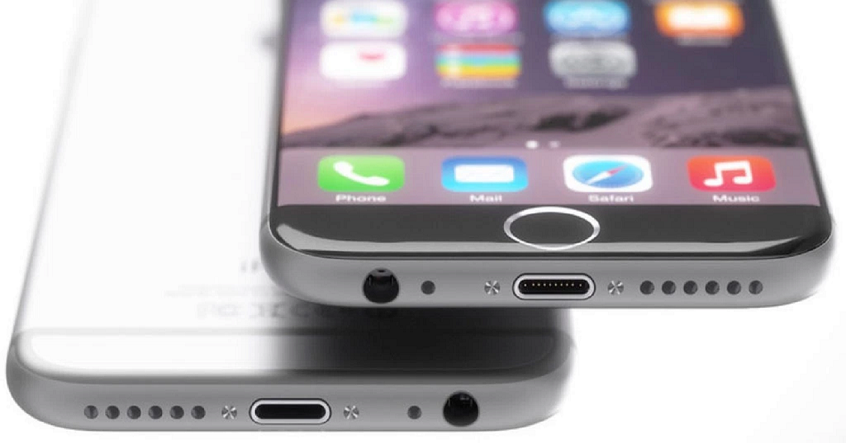
With all the anticipation around the iPhone 7 and also the speculation about its name, one fact cannot be denied and that is, you cannot ignore an iPhone, especially when it hasn’t reached the markets yet. It is a well-known fact that Apple is very stingy when it comes to components like RAM. From a long time, 16 GB has kind of stuck with it like a trademark. But a new report has claimed that Apple’s upcoming iPhone 7 will come with 3GB of RAM instead of the 2GB currently found on the iPhone 6s.

It isn’t clear though, if both iPhone 7 and iPhone 7 Plus models will get the memory boost. The probability is in the favour of the 5.5-inch iPhone 7. This is to note that it is the rumours regarding the iPhone 7 Plus’ camera that has pushed these memory-enhancing reports to the fore.

iphone

According to strong rumours doing the rounds, the iPhone 7 is going to have a new and advanced camera system so to meet its technical requirements the memory needs to be expanded. It is expected that the iPhone 7 Pro will come with an advanced dual camera system based on technology Apple picked up via its 2014 acquisition of Linx.

If the claims of Linx are to be believed (these were made before the acquisition), it was on the way of providing DSLR performance in slim handsets with a camera technology that delivered superior camera performance on many parameters like improved photo quality in low light, improved colour fidelity, decreased noise levels etc. If all this holds true, then iPhone 7 is surely going to be a ‘must have’ smartphone.

As a technology lover you may like our daily important technology news series. It’s a playlist and you can retrieve the total day-wise videos. Please consider subscribing our YouTube channel:

Author: Technology and Beyond

Tagged :

Google rolled out Android Nougat. Here is all you need to know about it!

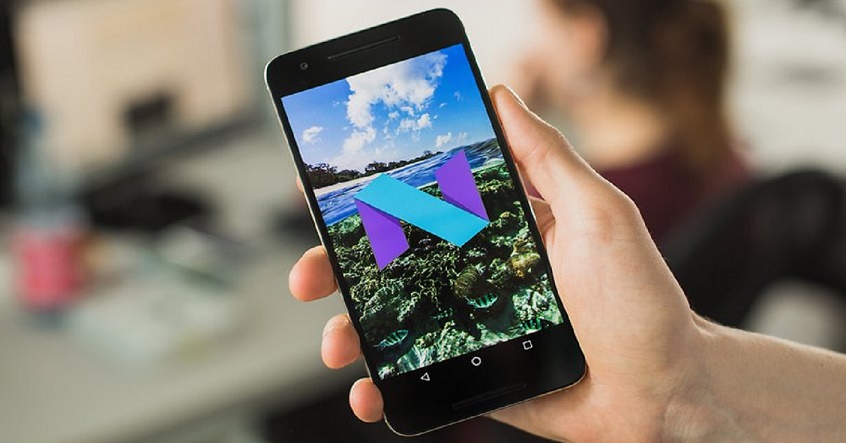
Good News for ANDROID lovers. Android version 7.0 Nougat is releasing this 5th August on Nexus devices. Evan Blass, a credible news leaker has tweeted about this news. But Nexus 5 users will feel disappointed with the news that their devices do not incorporate the support of Android 7 version Nougat. So, only Nexus 5X and the Nexus 6P will receive the updates.

Let’s see features that are expected with Nougat:

One of its latest feature of manual exposure is coming back to stock Android camera. This feature was not visible on earlier preview builds of Android Nougat. You can see this feature when you tap the screen to focus. A slide will be visible on the right hand side which will enable the settings to adjust the exposure manually.

Android Nougat1-manualExposure

Users will be able to customise the volume buttons. For example, users can instruct Android OS to set volume buttons for camera actions.

Project svelte: This project by Google will help to minimise RAM use by system and apps across the range of Android devices in the ecosystem. Its focus is on optimising the way apps run in the background.

Notifications section will be improved substantially. One can directly reply from notifications and much more information will be visible. The Direct Reply feature will help users to quickly respond to messages or update tasks from notification interface itself. Users will be able to see grouped notification because of the feature ‘Bundled Notifications’. With a button or two-finger gesture, users will be able to expand each grouped section.

Split-screen multitasking will be the highlight of all other features. Users will be able to access two different apps in the same screen simultaneously. Video apps will support picture-in-picture mode. Screen can split horizontally as well as vertically. The dividing line helps you to scale the section comfortably.

Android Nougat2-Split-Screen

Android Nougat will add the ability to record and playback content from Android TV input services via new recording APIs.

Android Nougat will be able to give sustained performance mode for Virtual Reality (VR).

Android for Work. This is an interesting feature. Android for Work has been updated with a new feature and APIs for devices running Android N. This feature will help profile owners to specify a separate security challenge for apps running in the work profile. Which means, users can set distinct password policies for the work challenge – how long the PIN needs to be, fingerprint can be used to unlock the profile etc. This feature also includes the Always on VPN feature so that work apps load from a specified VPN only.

As a technology lover you may like our daily important technology news series. It’s a playlist and you can retrieve the total day-wise videos. Please consider subscribing our YouTube channel:

Author: Technology and Beyond

Tagged : /

Will tapping a Fizzy Drink Can prevents it from foaming over?

Isn’t it one of the most amazing sounds of summer? The sound of the fizz or the one when the can pops open? But its popularity sure doesn’t stop the beer or the fizz from coming out.

The refreshing hissing sound on opening a can of an aerated drink is caused by the gas bubbles that try to escape from the bottle due to the insolubility of CO2 in it. This is caused due to the change in the pressure for bar 3 to 1 on opening the can at atmospheric pressure. Co2’s solubility in water reduces and comes down to as much as -3 form -4.5 at atmospheric pressure, the phenomenon described in Henry’s Law.

The microscopic gas bubbles attach themselves to the inside of the can (nucleation) before it is opened. On the opening of the can, these bubbles increase in number due to lack of solubility of CO2. When these bubbles reach a definite size they separate from the inside of the can and rise up to the top of it due to buoyancy. Displacing liquid on their path.

Here tapping the top of the can plays its part. This technique works or not is a debate but there are studies that state, it may. As described earlier, the bubbles in the can nucleate at the walls so tapping can dislodge the bubbles, allowing them to float on the liquid.

The bubbles expand in size when the can is opened, with those deeper in the liquid travelling to the top and those shallower on the surface, displacing more of the liquid and resulting in larger amounts of liquid being cast out. A “tapped” can will have less “deep” bubbles and so less liquid will be casted out – and possibly sprayed out – than an “untapped” can.

Bubbles can also be dislodged from the side of the can with intense shaking, this method presents more hurly-burly which increases the energy in the system, causing more bubbles in the drink and more squirting when opened. Tapping the top of beer bottle with another has a similar effect, resulting in a colossal outburst of beer foam. This is because of the “mushroom clouds” created inside the bottle that gush huge quantities of liquid as they escape.

Glass and gushing

The debate of tap on top aside, the actual material that forms the container may also reduce gushing. Studies say that the amount of foam formed when beer is poured into glasses of different “wet abilities” explaining the extent to which water wets a material.

When it comes to the level of gushing another important factor is the stabilization of the bubbles which is caused by the presence of large molecules in the drink. This is the reason why some beers have long-lived foam heads. Such foam stabilizing agents are a conversation for another day.

This summer try different ways to open your fizzy drink – and see how much of it ends up on you!

As a technology lover you may like our daily important technology news series. It’s a playlist and you can retrieve the total day-wise videos. Please consider subscribing our YouTube channel:

Author: Technology and Beyond

Tagged : /

Scientists revealed the idea of building the future Cities with Bones!

Humans often look up to nature to solve their real world problems, this is known as biomimetics – Latin for “imitating life”, it is obvious because natural selection and process has contributed profoundly with its very well adaptability as we walked through the process of evolution. Over the years, many a times scientists have relied upon the nature to draw inspiration in an attempt to build future cities keeping in mind the ever growing population and the goal to keep carbon emission low.

Cities today are built with metals and concrete which do not support the sustainability idea as the process of making them requires a lot of energy. Bio engineers, like Michelle Oyen from Cambridge University are looking for solutions that are environment friendly.

“We are trying to rethink the way we make things”, she said, in a press release. It is seen that engineers tend to throw energy at problems while nature throws information at problems, they do things differently, fundamentally.

It is in her lab that she is trying to construct small samples of artificial bones and egg shells which could eventually be taken to a level where it is used as building materials that are low carbon.

The contents of bone and eggshells are the reason for their hardness, stiffness and toughness which offers resistance.

Bones can break but it is very rare that they do and they also have the ability to selfheal. Also, the egg shells are tougher than we think they are. Scientists believe that a combination of these two will make stronger material. Even the process of making this material does not take much energy, as it is done in the room temperature using collagen which is the most abundant animal protein.

It still might take a few decades for us to live in houses made of bones and eggshells. The only problem that lies in this process is, getting collagen in abundance as it comes from animal sources and some other artificial collagen or synthetic collagen will be required to increase the production to the point where it could be used to make buildings. The other major hurdle is the idea of constructing buildings with entirely different materials since the prevailing construction industry uses standards designed to build with iron and concrete in mind, incorporating the use of new materials now will mean re-structuring the entire industry.

She also states that, “if you want to do something really transformative and bring down carbon emission this is what is needed.” She further adds, “If we are going to make a real change a major re-think is what is required.”

As a technology lover you may like our daily important technology news series. It’s a playlist and you can retrieve the total day-wise videos. Please consider subscribing our YouTube channel:

Author: Technology and Beyond


Tagged : /

“Fossil fuel is not needed”: that’s the message these five countries are spreading!

The world is struggling with pollution, climate change and global warming. Renewable energy has been around from quite some time but are countries and their heads seriously giving heed to the hidden power of this form of energy? Yes big nations are investing in huge projects related to renewable energy but are they reaping any benefits or are these projects nearing any fruit? The news is, it is not the big and stronger nations that are taking the lead but smaller ones which are not only adopting renewable technologies but are also doing substantial work with it. We name 5 of these countries in this article.

Costa Rica

This beautiful little country known for its pristine beaches and lush jungles has gone 100% green since the start of 2015. One of its renewable efforts involves utilizing its own plentiful rainfall to power their growing hydroelectric infrastructure. You will be amazed to know that this small country has the second best electric infrastructure in Latin America. Additionally it is also generating power from geothermal sources, wind, biomass and solar energy products. This shift towards renewable energy will surely help the country preserve its natural resources and environment.

Scotland

Just a month of December 2014 was enough for Scotland to set a new personal record for itself. The country provided almost 1300 MWh to its national grid using only wind power. If you cannot guess how huge this is, then you should know that this amount of energy can supply almost 4 million homes with electricity. Scotland is now using wind power to produce and supply almost 100% of the country’s household needs, but it has not stopped there. During the summer months, Aberdeen, Edinburgh, Glasgow, and Inverness harvested enough solar energy to power 100% or more of the electric demands for the average home.

Denmark

Denmark is the leading country when it comes to wind power. They have had wind turbines since the 1970s and have always utilized wind power. In the year 2014, Denmark set a world record for windmill production. It will amaze you that the country now enjoys around 40% of its total electricity from this one clean energy source alone. The good thing is, the story doesn’t end here and the country is on its way to meeting its self-set goal of being 50% powered by renewable energy by 2020 and 100% by 2050. This will make it the first advanced country to make itself 100% renewable energy reliant.

Sweden

Sweden’s approach of doubling down on green with a limited-coal approach has been so successful that the International Energy Agency has commended the country for its new energy policies. The country is also developing advanced biomass systems and has been quite successful so far because by 2010, it was already producing more energy from biomass than from fossil fuels.

Finland

Wind is the way to go for this country. They have started concentrating on wind energy which has dramatically reduced the country’s green-house gas emissions. Though it is not yet at par with Sweden and Denmark, still it has found the right path and moving steadily on it. By 2012, the country was already producing enough energy to cover almost 34.3% of the energy needs with a hope to increase it to 40% by 2020.

When we have all these beacons of hope amongst us, we may feel a little positive about the future, but the thing is drastic change will only occur when the bigger countries start adopting the renewable way.

As a technology lover you may like our daily important technology news series. It’s a playlist and you can retrieve the total day-wise videos. Please consider subscribing our YouTube channel:

Author: Technology and Beyond

Tagged : /

It’s official: The US is soon going back to the Moon!!

When all the discussion nowadays centre around Mars and the mission related to it and when everybody talks about landing on the Mars and understanding it, it comes as a surprise that someone is planning to go to moon. Yes our very own dear Moon- our natural satellite. Moon has already been conquered by the US, Chinese and USSR federal space agencies. And now a private company called Moon Express wants to hoist its flag on the lunar surface. It just became the first ever private organisation ever to get approval from the US federal government to land a spacecraft on the Moon. If all goes well, then next year we all may be watching the news of Moon Express conquering the Moon.

The company has been founded by billionaire entrepreneur Naveen Jain, computer scientist Barney Pell and space futurist Bob Richards. If it finally succeeds in achieving what it has set out to do, the company will only be the fourth entity to scale these new summits of success and honour after US, China and USSR. The company is on cloud nine currently but this permission which has been granted to it has started a new debate. This has made things difficult for the regulatory bodies which are in charge of handing out such permissions.

This is to note that the Moon Express has been granted a one-time exception to launch a commercial space mission beyond Earth. But the big question is what if someone else comes up with a similar request? At present there are no pre-set laws or regulations. May be this was the major reason that not only the Moon Express got permission to land its spacecraft on Moon but also ended up getting legal approval to mine and profit off Moon minerals.

It wasn’t until April this year that the US State Department, the National Security Agency (NSA), and the Federal Aviation Administration (FAA), among other bodies, were actually ready to receive Moon Express’s application to explore beyond Earth’s orbit, and approval has now been granted. The permission has taken care of only one fact that the US can guarantee that any future mission won’t violate the international ‘Outer Space Treaty’.

This has put a restriction on the Moon Express that it would be entirely transparent with the government about its movements to and on the Moon and it won’t interfere with other space missions, space crafts or artefacts. Wow! Money does make the world go round and it surely does make you go up the Moon!

Author: Technology Vista

Tagged : /

Which type of Salmon/ Fish you should eat? A closer look at the fish will tell you the story!

A critical look into the fish industry is taken by Nicolas Daniel’s documentary “Fillet-Oh-Fish” featuring footage from fish farms and factories around the globe. Many have romanticized the idea of fishing but when it comes to production for large scale, the entire idea is rather grim.

Today, fisheries face a wide range of problems from chemical pollution, overfishing to genetic mutation due to toxic exposure. As noted by the producers of the film, “intensive farming and global pollution leads the flesh of the fish to turn into a deadly chemical cocktail.”

Despite all of this the industry is booming, due to the immense efforts made to keep the not-so-dirty underbelly of modern fisheries away from public sight.

Aquaculture endorses itself as a justifiable solution to overfishing. But in practicality, fish farms actually lay a foundation and cause more problems than they solve. There’s a very small difference, between land-based feedlots and water-based ones in terms of environmental pollution.

Farmed Salmon — One of the Most Toxic Foods in the World?

The film begins with a scene in Norway showing the chemicals used in fish farms. Kurt Oddekalv a respected Norwegian environmental activist believes that salmon farming is a catastrophe both for the environment and for human health.

The salmon farms dotted across the Norwegian fjords and a layer of waste for some 15 meters high, teeming with bacteria, pesticides and drugs are seen. Basically, the entire sea floor has been devastated and the pollution from these farms is really high since these are located in open water.

A farm can hold up to 2 million salmon in a relatively small space. The crowded conditions result in disease that spreads rapidly among the stressed salmon.

In an effort to keep away disease-causing pests, a number of dangerous pesticides are used, one of this is known to have neurotoxic effects. Fish has been considered a health food since ever, but according to Oddekalv, farmed salmon is one of the most toxic foods in the world today!

Farmed salmon is considered five times more toxic than any other food product tests say. Studies say, in animal feeding, mice fed farmed salmon grew obese, with thick layers of fat that formed around its internal organs. They were also reported to have developed diabetes.

Genetic Mutations and Other Crazy Facts

Besides keeping pests such as sea lice in control, the pesticides also affect the fish’s DNA, resulting in major genetic mutations. Disturbing samples of deformed cord were shown in the film.

According to Oddekalv, what’s even more disturbing is that, around 50 percent of farmed cord is deformed in a fashion, and female cod that escapes from the farms are known to mate with wild cod this consequently results in spreading the genetic mutations and deformities in the wild population also.

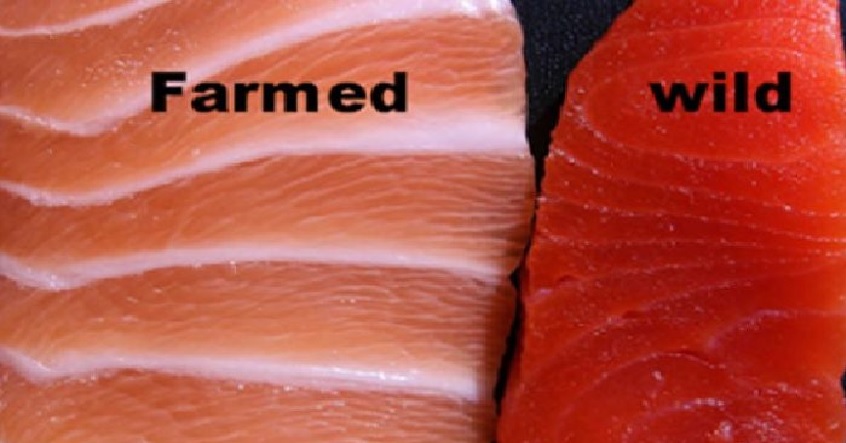
Farmed salmon suffers less visibly but equally disturbs mutations. The flesh of the farmed salmon is “brittle,” and breaks off when bent which is a highly abnormal feature.

It also contains wildly high nutrition. Wild salmon has about 5 to 7 percent fat content, whereas the farmed variety contains anywhere from 14.5 to 34 percent.

Fat accumulates major toxins most rapidly, which means when raised in similar contaminated conditions, farmed salmon will always contain higher toxins than the wild ones.

Astonishingly, research shows that the most noteworthy source of toxic exposure is not pesticides or the antibiotics, but it is the dry pellet feed! Pollutants found in the fish feed include PCBs, dioxins and a number of different chemicals and drugs.

What Makes the Fish Feed so Toxic?

In one Norwegian fish pellet plant, the main ingredient is eel which is used for their high protein and fat content. The Baltic is highly polluted some of the toxic contents from fish from there is automatically incorporated in the pellet.

In Sweden, fish mongers are required to warn patrons about the probable toxicity of Baltic fish. According to government recommendations, one should not eat herring and other fatty fish more than once a week. Pregnant women must avoid Baltic fish altogether.

Other industrialized countries, nine in number that surround the Baltic Sea also dump their toxic waste into this water body. Dioxins bind to fat and this is why eel, herring and salmon are particularly vulnerable, and they end up collecting higher amounts of it as compared to other fish.

Next Page For More

Tagged : /
Verified by ExactMetrics