It’s official: The US is soon going back to the Moon!!

When all the discussion nowadays centre around Mars and the mission related to it and when everybody talks about landing on the Mars and understanding it, it comes as a surprise that someone is planning to go to moon. Yes our very own dear Moon- our natural satellite. Moon has already been conquered by the US, Chinese and USSR federal space agencies. And now a private company called Moon Express wants to hoist its flag on the lunar surface. It just became the first ever private organisation ever to get approval from the US federal government to land a spacecraft on the Moon. If all goes well, then next year we all may be watching the news of Moon Express conquering the Moon.

The company has been founded by billionaire entrepreneur Naveen Jain, computer scientist Barney Pell and space futurist Bob Richards. If it finally succeeds in achieving what it has set out to do, the company will only be the fourth entity to scale these new summits of success and honour after US, China and USSR. The company is on cloud nine currently but this permission which has been granted to it has started a new debate. This has made things difficult for the regulatory bodies which are in charge of handing out such permissions.

This is to note that the Moon Express has been granted a one-time exception to launch a commercial space mission beyond Earth. But the big question is what if someone else comes up with a similar request? At present there are no pre-set laws or regulations. May be this was the major reason that not only the Moon Express got permission to land its spacecraft on Moon but also ended up getting legal approval to mine and profit off Moon minerals.

It wasn’t until April this year that the US State Department, the National Security Agency (NSA), and the Federal Aviation Administration (FAA), among other bodies, were actually ready to receive Moon Express’s application to explore beyond Earth’s orbit, and approval has now been granted. The permission has taken care of only one fact that the US can guarantee that any future mission won’t violate the international ‘Outer Space Treaty’.

This has put a restriction on the Moon Express that it would be entirely transparent with the government about its movements to and on the Moon and it won’t interfere with other space missions, space crafts or artefacts. Wow! Money does make the world go round and it surely does make you go up the Moon!

Author: Technology Vista
Tagged : /

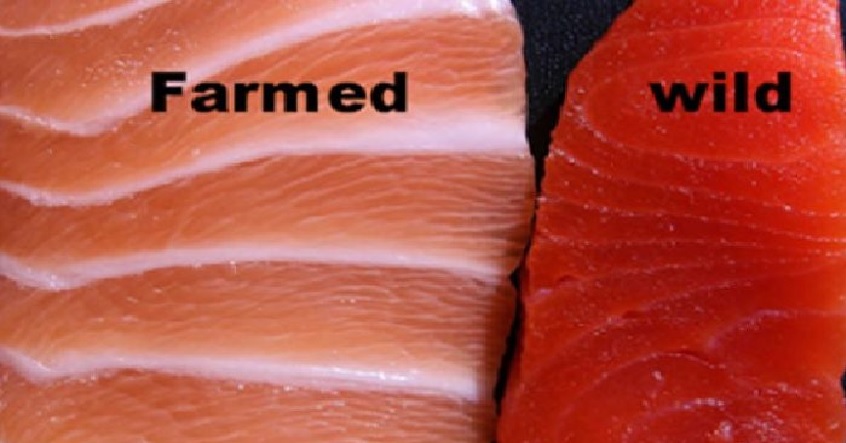
Which type of Salmon/ Fish you should eat? A closer look at the fish will tell you the story!

A critical look into the fish industry is taken by Nicolas Daniel’s documentary “Fillet-Oh-Fish” featuring footage from fish farms and factories around the globe. Many have romanticized the idea of fishing but when it comes to production for large scale, the entire idea is rather grim.

Today, fisheries face a wide range of problems from chemical pollution, overfishing to genetic mutation due to toxic exposure. As noted by the producers of the film, “intensive farming and global pollution leads the flesh of the fish to turn into a deadly chemical cocktail.”

Despite all of this the industry is booming, due to the immense efforts made to keep the not-so-dirty underbelly of modern fisheries away from public sight.

Aquaculture endorses itself as a justifiable solution to overfishing. But in practicality, fish farms actually lay a foundation and cause more problems than they solve. There’s a very small difference, between land-based feedlots and water-based ones in terms of environmental pollution.

Farmed Salmon — One of the Most Toxic Foods in the World?

The film begins with a scene in Norway showing the chemicals used in fish farms. Kurt Oddekalv a respected Norwegian environmental activist believes that salmon farming is a catastrophe both for the environment and for human health.

The salmon farms dotted across the Norwegian fjords and a layer of waste for some 15 meters high, teeming with bacteria, pesticides and drugs are seen. Basically, the entire sea floor has been devastated and the pollution from these farms is really high since these are located in open water.

A farm can hold up to 2 million salmon in a relatively small space. The crowded conditions result in disease that spreads rapidly among the stressed salmon.

In an effort to keep away disease-causing pests, a number of dangerous pesticides are used, one of this is known to have neurotoxic effects. Fish has been considered a health food since ever, but according to Oddekalv, farmed salmon is one of the most toxic foods in the world today!

Farmed salmon is considered five times more toxic than any other food product tests say. Studies say, in animal feeding, mice fed farmed salmon grew obese, with thick layers of fat that formed around its internal organs. They were also reported to have developed diabetes.

Genetic Mutations and Other Crazy Facts

Besides keeping pests such as sea lice in control, the pesticides also affect the fish’s DNA, resulting in major genetic mutations. Disturbing samples of deformed cord were shown in the film.

According to Oddekalv, what’s even more disturbing is that, around 50 percent of farmed cord is deformed in a fashion, and female cod that escapes from the farms are known to mate with wild cod this consequently results in spreading the genetic mutations and deformities in the wild population also.

Farmed salmon suffers less visibly but equally disturbs mutations. The flesh of the farmed salmon is “brittle,” and breaks off when bent which is a highly abnormal feature.

It also contains wildly high nutrition. Wild salmon has about 5 to 7 percent fat content, whereas the farmed variety contains anywhere from 14.5 to 34 percent.

Fat accumulates major toxins most rapidly, which means when raised in similar contaminated conditions, farmed salmon will always contain higher toxins than the wild ones.

Astonishingly, research shows that the most noteworthy source of toxic exposure is not pesticides or the antibiotics, but it is the dry pellet feed! Pollutants found in the fish feed include PCBs, dioxins and a number of different chemicals and drugs.

What Makes the Fish Feed so Toxic?

In one Norwegian fish pellet plant, the main ingredient is eel which is used for their high protein and fat content. The Baltic is highly polluted some of the toxic contents from fish from there is automatically incorporated in the pellet.

In Sweden, fish mongers are required to warn patrons about the probable toxicity of Baltic fish. According to government recommendations, one should not eat herring and other fatty fish more than once a week. Pregnant women must avoid Baltic fish altogether.

Other industrialized countries, nine in number that surround the Baltic Sea also dump their toxic waste into this water body. Dioxins bind to fat and this is why eel, herring and salmon are particularly vulnerable, and they end up collecting higher amounts of it as compared to other fish.

Next Page For More

Tagged : /
Verified by ExactMetrics