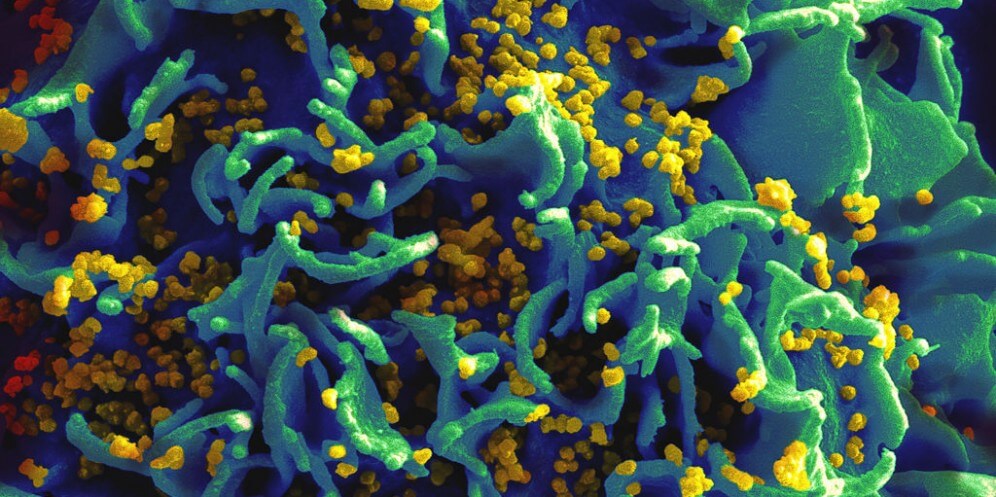
Science has come a long way in knowing HIV- how it functions, the cells it invades, its symptoms and stages. But one thing we didn’t know right up until some time ago was how they spread. Scientists had never actually been able to see the virus spread inside the body. Thus a group of researchers from Yale University are looking into the spread of HIV in mouse lymph nodes for clues for what to target in HIV cure treatments.

Our knowledge of HIV was limited to this: it enters the body and starts off by killing T cells which are key to the immunity system of the body. Via the T cells, they invade the lymph nodes of the body and drastically weaken the immune system as the time goes by.
In the study conducted, the HIV movement was tracked within the body of the mouse using fluorescent markers. They used a special imaging technique called two photon laser scanning microscopy that allowed them to see about one millimeter deep into the infected body. The researchers observed under high resolution how HIV first binds to the macrophages (white blood cell found in the lymph nodes and thought to be the immune system’s first step in launching a defensive response). After which the HIV binds of B cells, another kind of white blood cell unique to the lymph tissue.
Now B cells are involved in the transport between inner and outer parts of the lymph nodes. More importantly, they are involved in antibody production. Once the HIV bind to them, the B cells move much slower and are not able to produce T cells of fight off the HIV. The HIV now freely spreads throughout the body.
With these findings, the researchers hypothesise that the best way to stop the vicious cycle of HIV is to stop them from binding to the macrophages in the first place.
[adinserter block=”7″]
Author: Technology Blog

