NASA To Build Deep Space Habitats On Earth

NASA is all about future! They plan everything according to the future because that’s the direction we are moving in slowly. Humans have been leaving the territory of earth’s atmosphere and heading towards celestial members yet unexplored, from quite some time. The whole vast Universe keeps inviting humans and humans love that. NASA realises this and that is why it wants to stay ahead in terms of preparedness for such missions. Knowing well that the future number of space farers is bound to increase, it is planning to create a place where people can live outside our own planet.

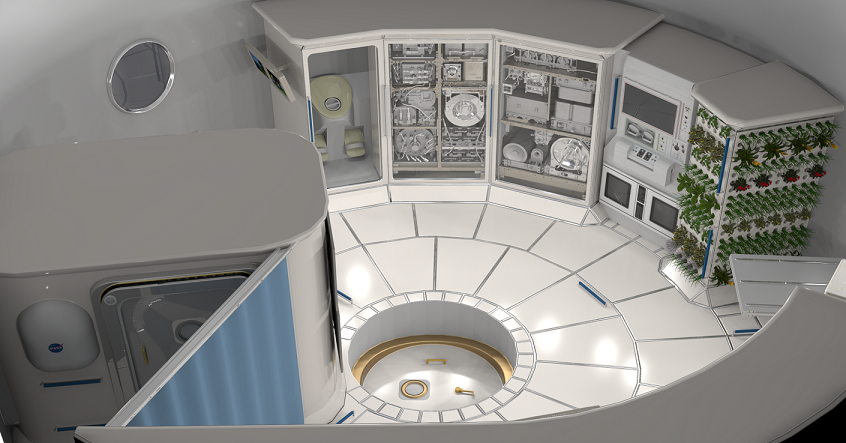
Yes! You got it right! NASA is plans to build deep space habitats for such space enthusiasts and it has teamed up with six private corporations to build full-scale ground prototypes of the habitats they have designed. The six partners are Boeing, Lockheed Martin, Orbital ATK, Sierra Nevada Corporation, NanoRacks and Bigelow Airspace.
nasa2

Boeing will try to test and a prototype of its modular habitat system while Lockheed Martin will transform one of its multi-purpose modules used to carry supplies to the ISS – into a habitat with integrated avionics and Environmental Control and Life Support System (ECLSS). Orbital ATK will continue developing its cislunar habitat (based on its own Cygnus spacecraft used in ferrying supplies to the space station). This will be a spacecraft designed to stay between the Earth and the moon). The fourth company Sierra Nevada Corporation’s prototype will combine its space shuttle-like Dream Chaser vehicle with an inflatable component with added features of an ECLSS and a propulsion system.

NanoRacks on the other hand will examine the feasibility of converting an existing launch vehicle’s upper stage into a liveable environment. The sixth and final company Bigelow Airspace will be spending its energies on building the XBASE (Expandable Bigelow Advanced Station Enhancement) prototype which is based on the 330 cubic metre ISS add-on, the company is presently developing. Which of these prototypes will finally make it to actualisation, only time can tell!

As a technology lover you may like our daily important technology news series. It’s a playlist and you can retrieve the total day-wise videos. Please consider subscribing our YouTube channel:

Author: Technology and Beyond

Tagged : /

No, it’s not limited to social media only! Ice Bucket Challenge of 2014 just helped funding a major research.

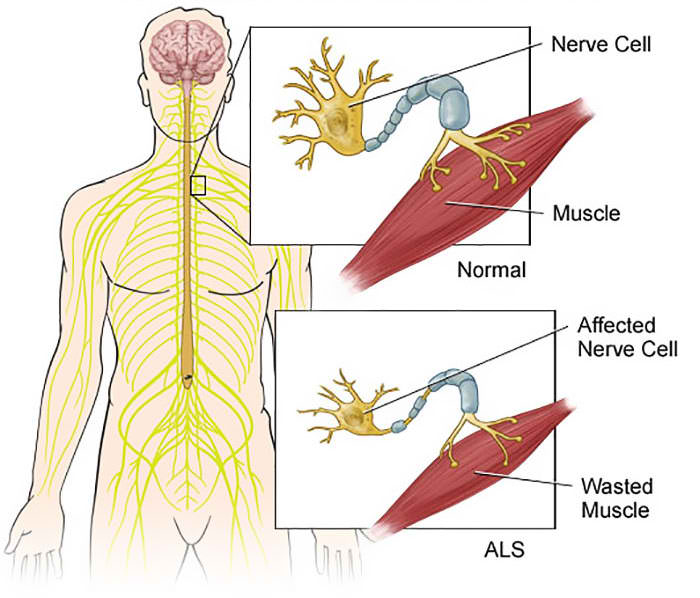
Remember the activity in 2014 that involved dumping a bucket of cold water and ice on the head by various celebrities and people 2 create awareness about amyotrophic lateral sclerosis (ALS)?  It was an attempt to create awareness and to raise funds for the treatment of this disease.

While the naysayers continue to say that this social media phenomenon was promoting slackivism, well looks like the critics are just being proven wrong as this ‘crazy’ idea just funded a major breakthrough in the research to find a cure for ALS.

Thanks to $100 million raised by by this online challenge the University of Massachusetts Medical School Private Project, the MinE reports to have identified NEK1 as the most prominent gene that causes the disease. It was also published in Nature Genetics.

According to the reports it was said that over 18℅ of people in America are diagnosed of this disease each year. Fortunately the NEK1 will lead to better treatment of ALS.

ALS-1

Bernard Muller, the founder of MinE said,

“The idea of raising funds for the project in new ways and wish really gave a boost to transact with collaborations to identify genetic disorders of ALS.”

This of course is a great step towards helping the patients. Today many people suffer from this disease and die after 2-5 years of diagnosis. Discovery of NEK1 is surely a leap towards finding a cure of this disease.

As a technology lover you may like our daily important technology news series. It’s a playlist and you can retrieve the total day-wise videos. Please consider subscribing our YouTube channel:

Author: Technology and Beyond
Tagged : /

US Military is planning tiny implants in order to actively monitor soldiers’ health in Real-Time and 24×7

One of the bravest and most adventurous professions is that of a Soldier. And in turn it becomes the Government’s duty to ensure their well-being by investing however much is needed. From the most efficient armor to the highest grade weapons and the best nutrition, soldiers must have the best of all to maintain their power in battle. The US Army Research Office as their step toward better welfare of soldiers in battlefield has funded the research and development of implantable biosensors that can observe the soldiers’ health.

The US Army Research Office gave Profusa, a biotech company $7.5 million grant in order to develop implantable biosensors that help monitor Soldier’s health status.

The Chairman and CEO of Profusa, Ben Hwang explains, “Profusa aims to change a point-in-time chemistry panel which measures multiple biomarkers, such as oxygen, lactate, glucose, urea, with a biosensor which provides a continuous stream of wireless data.”

The sensors between 2mm and 5mm of length and 200 to 500 microns in diameter, bioengineered “smart hydrogel” which is of the same material of contact lenses. They form a tissue-integrating scaffold which is porous and can fully integrate into the tissue of the body through an injection, without using any metal devices or electronics.

The hydrogel glows when exposed to light due to the concentration of chemicals like oxygen or other biomarkers. This allows health professionals to see if a soldier is suffering from a certain ailment like high uric acid, low blood sugar or a lack of oxygen in the blood. This will then allow the health professionals to  administer first aid to bring them back into top shape.

width="560" height="314" allowfullscreen="allowfullscreen">

As a technology lover you may like our daily important technology news series. It’s a playlist and you can retrieve the total day-wise videos. Please consider subscribing our YouTube channel:

Author: Technology and Beyond

Tagged : / /

The book that ALTERED Microsoft CEO Satya Nadella’s vision and let him embrace a “growth mindset”

When Satya Nadella took over Microsoft as it’s new CEO in early 2014, he made it clear that he’d shake up the company’s culture to address the challenges of the coming modern era.

Nadella has pushed the “growth mindset,” as his key principle which lays emphasis on the belief of learning from others, and learning from your own mistakes, so as to move quickly and get on the right track of moving forward.

In an interview with Bloomberg’s Dina Bass, Nadella shared that it was the 2007 book “Mindset: The New Psychology of Success,” by Carol Dweck Professor of Psychology, Stanford, that gave him the “intuition” to make “growth mindset” the philosophical core of the change he’s trying to create at Microsoft.

Nadella added:

“In the book there’s this very simple notion that Carol Dweck talks about, it is that if you take any two people, one of them will be a learn-it-all and the other one, a know-it-all, in the long run the learn-it-all will constantly trump the know-it-all, even if they start with less distinctive capability.”

The book goes profounder into that idea and presents how some people have a “fixed” mindset with a belief that their talent comes from inside and thus don’t need to work hard – while the others with “growth” mindset, and the belief that their ability can be enhanced by working hard.

“It’s not the people who start out the smartest, end up the smartest, always.” writes Dweck in “Mindset.”

Microsoft is trying to change how it thinks about output and efficiency. Nadella has been reevaluating some of Microsoft’s assumptions, including how it deliberates with their rivals like the Linux operating system, as it tackles new challenges everyday.

As Nadella tells Bloomberg: “I need to be able to walk out of here this evening and question myself, ‘Where was I too closed-minded, or where did I not show the right kind of attitude of growth in my own mind?’ If I can get it right, then we’re well on our way to having the culture we aspire to.”

Microsoft co-founder Bill Gates also believes in Dweck’s theories, a way for anyone to learn anything. This is kind of funny as he was known for disagreeing with some ideas by saying “that’s the stupidest f—ing thing I’ve ever heard.” during his tenure as CEO.

After nine years on the stands, Nadella’s recommendation has pushed “Mindset” to bestseller status on Amazon.

As a technology lover you may like our daily important technology news series. It’s a playlist and you can retrieve the total day-wise videos. Please consider subscribing our YouTube channel:

Author: Technology and Beyond

Tagged : /

Ever imagined a house completely bio-degradable and organic? This Romanian couple made an organic castle!

Whoever said life is different from movies did not see this couple living it!

Razvan and Gabriela Vasile , a couple from Transylvania, Romania has made their castle that looks nothing less than one seen in a fairytale.

They both are singers by profession, and looks like their love for art did not end there, as they have also built a castle out of 100% organic materials — straw, clay, wooden pillars, sand, and stones that looks like Perfection.

They moved out of their urban house in Bucharest and have now settled in a village 24 miles (40 km) away from the city of Sibiu.

This 10-room Classic Clay Castle’s work began in 2014. Now the interiors are being done so that it can be a place to stay for people. This eco-castle in the Valley of the Fairies will be commercially opened by the end of the year.

While it is still not operative, tourists visit the place to look at the magnificence of the Carpathian Mountains blanketed in white, close to the well-known Transfagarasan highway and medieval Sibiu.

It is an escape into tranquility from the busy city life. Perfect for those who seek solitude.

Marius-Man

1-10

2-12

13322185_1554951028139550_7923672099720384493_n

RomanianFairytaleCastle4

RomanianFairytaleCastle13

As a technology lover you may like our daily important technology news series. It’s a playlist and you can retrieve the total day-wise videos. Please consider subscribing our YouTube channel:

Author: Technology and Beyond

Tagged : / /

IBM refines computers by creating artificial neurons inspired by human brain

Human brain is one of the most refined, complex and systematic creation by God. There are still millions of things that we need to understand about the human brain. It has intrigued scientists and engineers from a long time. The human brain is the most amazing computer that could ever be created. This is the reason why the brain is the favourite subject of study for engineers as well as scientists. It would be wonderful if they could create a machine that could replicate its processing mechanism.

IBM is one such company which has been trying in this direction, from quite a long time and is a strong proponent of cognitive computing. Their artificial intelligence programme ‘Watson’ was the first cognitive system ever created. For those who do not know, let us inform that cognitive computing refers to systems that learn at scale, reason with purpose and interact with humans naturally. So they are not explicitly programmed but learn and reason from their interactions with us and from their interaction with the environment.

IBM has been trying persistently in the direction of recreating the human brain’s cognitive computing power and recently they took a revolutionary step in this direction.  Scientists at IBM have succeeded in creating artificial neurons that successfully respond to phase changes due to electric signals while using very little power imitating the human brain. The scientists designed these neurons using phase-change materials, including germanium antimony telluride. One should note that these two materials exhibit two states , amorphous and crystalline and are the same materials that made optical disk storage possible.

These phase-change-based artificial neurons can perform complex computations and fast learning while using very little energy, much like the human brain. Also, these artificial neurons survived being subjected to billions of switching cycles which would translate to multiple years of operation at an update frequency of 100Hz. IBM scientist and author Abu Sebastian said: “This will significantly reduce the area and power consumption as it will be using tiny nanoscale devices that act as neurons.” The lines between human and machine intelligence are slowly fading!

As a technology lover you may like our daily important technology news series. It’s a playlist and you can retrieve the total day-wise videos. Please consider subscribing our YouTube channel:

Author: Technology and Beyond

Tagged : /

Apple Under Pressure to Release Wireless Earbuds. You may expect it to be out real soon!

After the disappointing iPhone 7 missing headphone jack saga: Forbes is reporting that Apple has developed a custom Bluetooth radio chip for wireless earbuds. And as it is with Forbes not revealing dates, we are still in the dark about how they will work or when will they be out.

“The way it works at Apple is if it doesn’t work 100%, it gets cut,” Forbes’ anonymous source said.

If Apple can’t develop its own headphones, the company may use a third-party supplier like Broadcom, which they used for other wireless technologies. The developers working on the headphones are technically external recruits from an Oakland-based semiconductor startup called Passif. Apple in 2013 acquired the company, which describes its mission as making “switch-based wireless transceivers with low power consumption and a small footprint.”

In other words, they may or may not actually come out alongside the iPhone 7 in September. But pressure is high to do so, now that Samsung just announced its own Bluetooth earbuds, GearIconX.

As a technology lover you may like our daily important technology news series. It’s a playlist and you can retrieve the total day-wise videos. Please consider subscribing our YouTube channel:

Author: Technology and Beyond

Tagged : /

Nobody would wish this ATM hack to fall in the hands of thieves

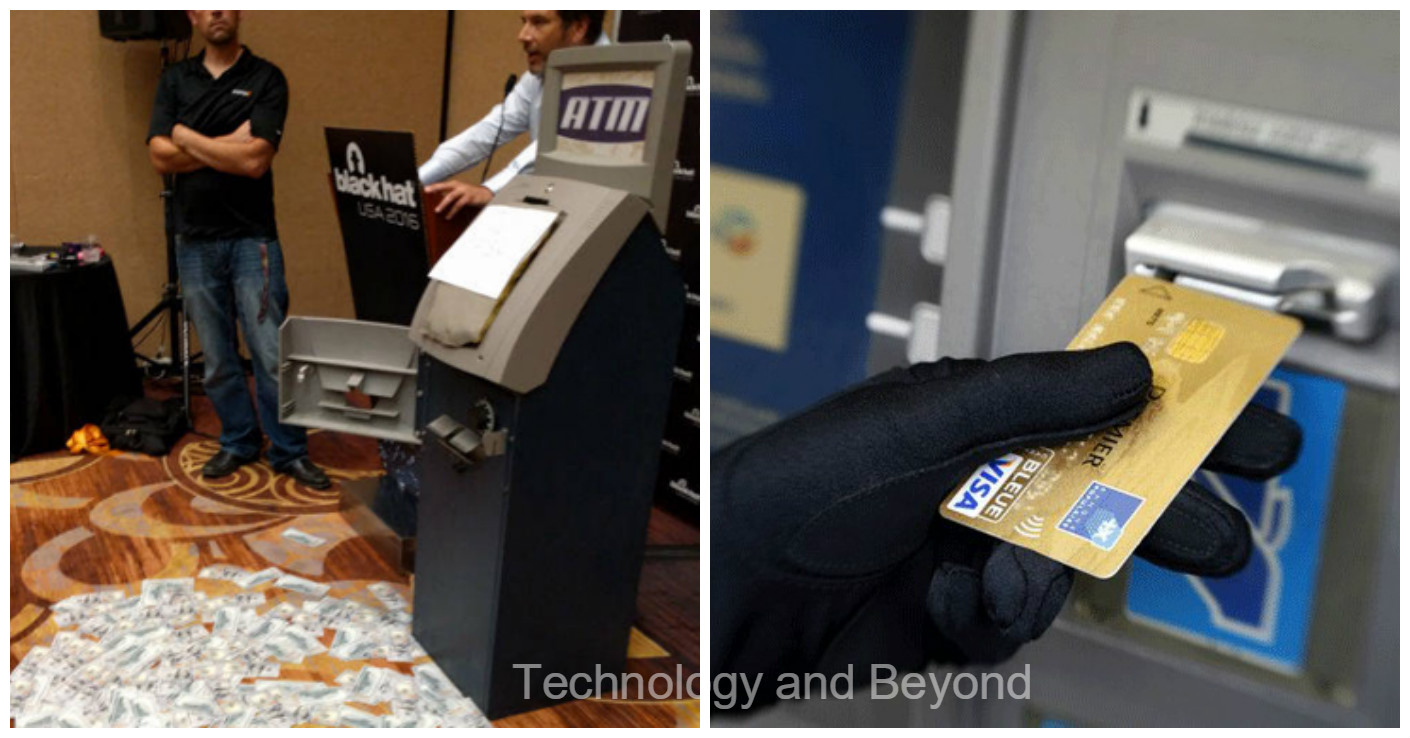
ATM frauds have become quite common nowadays. There are various ways to secure them but the hackers always seem to be a step ahead. The chip-and-pin or EMV was supposed to be a safer and more secure counterpart but a new ATM hack demonstration presented by Rapid 7 (a small team of security engineers) at the Black Hat, a hacker conference in Las Vegas, shows the vulnerability of the same.

The hack involves a ‘shimmer’, a skimming device that intercepts the signal between the ATM (or POS) machine that facilitates a MiTM (man-in the-middle-attack) once the card is inserted. This device then enables the hackers to not only retrieve data from the card but also replicate the chip and the magnetic strip in addition to the PIN as the customer enters it. After accomplishing this important step, the only thing that remains to be done by the hackers is downloading this data to recreate the victim’s card and us it in the same ATM.

The most unfortunate fact about this hack is that to pull-off this hack, no elaborate or hard-to-find tools are needed. The entire demonstration set-up as presented by the security engineers required around $2,000 and some common items like Raspberry Pi. And using this simple hack, the team was able to use a common chip-and-pin card to withdraw money from an ATM in under 15 minutes!

One thing is to be noted though that the chip-and-pin card does have a security feature that offers some help should this unfortunate thing was to happen to you. The trick is that the chip creates a unique transaction code for each new transaction. Since hackers have the resources and technology to use this card only once, it is still a bit safer than its magnetic stripe predecessor. But just to let you know and make you more attentive, even with a single trial and swipe, the hackers could you poorer by up to $50,000 in a single go.

As a technology lover you may like our daily important technology news series. It’s a playlist and you can retrieve the total day-wise videos. Please consider subscribing our YouTube channel:

Author: Technology and Beyond

Tagged : /

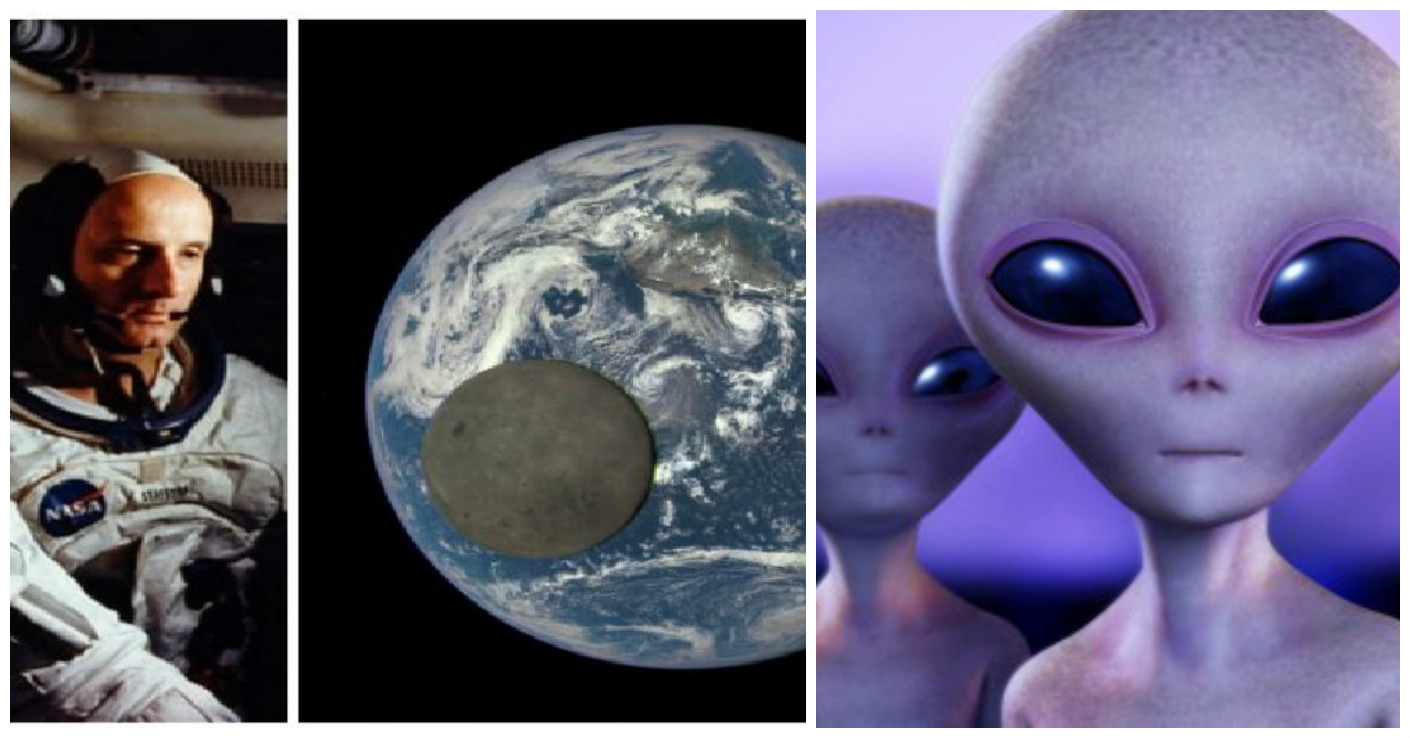
Apollo astronauts heard unexplained music on far side of the moon!

It was almost 47 years ago, two months before Apollo 11’s historic first manned landing on the moon when something weird happened. Apollo 10 had entered the lunar orbit which included traversing the far side of the moon. On this side of the moon, all spacecraft lose contact with Earth for about an hour and nobody on Earth can see or hear them. There were in total three astronauts in the Apollo at that time. It was these three astronauts who heard strange otherworldly music-like noises coming from their headsets. They were startled and couldn’t decide if this was to be reported to NASA.

For people on earth, the mission was smooth and nothing unusual took place during its course, but it was NASA’s unexplained files that discuss the overlooked recordings of the three astronauts talking of this unsettling experience while flying above the other side of the moon. The conversation between the astronauts reveals that they did hear some strange otherworldly music coming through the Apollo module’s radio.

The following is the conversation that took place between the astronauts after hearing that weird music:

“It sounds like, you know, outer space-type music.”

“You hear that? That whistling sound? Whooooooooo!”

“Well, that sure is weird music!”

“It’s unbelievable! You know?”

“Shall we tell them about it?”

“I don’t know. We ought to think about it.”

Apollo 15 astronaut Al Worden believes that the Apollo 10 crew knew very well the kind of noise they should be hearing. So logically if they heard something weird then there was something there. He said that NASA would withhold information from the public if they thought it was in the public’s best interest.

NASA also issued a statement regarding this explaining that the files have long been available to the public. The tapes were never lost. The statement says: “While listed as ‘confidential’ in 1969 at the height of the Space Race, Apollo 10 mission transcripts and audio have been publicly available since 1973. Since the Internet did not exist in the Apollo era, NASA has only recently provided digital files for some of those earlier missions.

The Apollo 10 audio clips were uploaded in 2012, but the mission’s audio recordings have been available at the National Archives since the early 1970s. As for the likely source of the sounds questioned in the television program, Apollo 10 Lunar Module Pilot Gene Cernan told NASA on Monday, ‘I don’t remember that incident exciting me enough to take it seriously. It was probably just radio interference. Had we thought it was something other than that, we would have briefed everyone after the flight.  We never gave it another thought.”

Now what do you have to say about that?

width="560" height="314" allowfullscreen="allowfullscreen">

As a technology lover you may like our daily important technology news series. It’s a playlist and you can retrieve the total day-wise videos. Please consider subscribing our YouTube channel:

Author: Technology Vista

Tagged : /

Google rolled out Android Nougat. Here is all you need to know about it!

Good News for ANDROID lovers. Android version 7.0 Nougat is releasing this 5th August on Nexus devices. Evan Blass, a credible news leaker has tweeted about this news. But Nexus 5 users will feel disappointed with the news that their devices do not incorporate the support of Android 7 version Nougat. So, only Nexus 5X and the Nexus 6P will receive the updates.

Let’s see features that are expected with Nougat:

One of its latest feature of manual exposure is coming back to stock Android camera. This feature was not visible on earlier preview builds of Android Nougat. You can see this feature when you tap the screen to focus. A slide will be visible on the right hand side which will enable the settings to adjust the exposure manually.

Android Nougat1-manualExposure

Users will be able to customise the volume buttons. For example, users can instruct Android OS to set volume buttons for camera actions.

Project svelte: This project by Google will help to minimise RAM use by system and apps across the range of Android devices in the ecosystem. Its focus is on optimising the way apps run in the background.

Notifications section will be improved substantially. One can directly reply from notifications and much more information will be visible. The Direct Reply feature will help users to quickly respond to messages or update tasks from notification interface itself. Users will be able to see grouped notification because of the feature ‘Bundled Notifications’. With a button or two-finger gesture, users will be able to expand each grouped section.

Split-screen multitasking will be the highlight of all other features. Users will be able to access two different apps in the same screen simultaneously. Video apps will support picture-in-picture mode. Screen can split horizontally as well as vertically. The dividing line helps you to scale the section comfortably.

Android Nougat2-Split-Screen

Android Nougat will add the ability to record and playback content from Android TV input services via new recording APIs.

Android Nougat will be able to give sustained performance mode for Virtual Reality (VR).

Android for Work. This is an interesting feature. Android for Work has been updated with a new feature and APIs for devices running Android N. This feature will help profile owners to specify a separate security challenge for apps running in the work profile. Which means, users can set distinct password policies for the work challenge – how long the PIN needs to be, fingerprint can be used to unlock the profile etc. This feature also includes the Always on VPN feature so that work apps load from a specified VPN only.

As a technology lover you may like our daily important technology news series. It’s a playlist and you can retrieve the total day-wise videos. Please consider subscribing our YouTube channel:

Author: Technology and Beyond

Tagged : /

Scientists revealed the idea of building the future Cities with Bones!

Humans often look up to nature to solve their real world problems, this is known as biomimetics – Latin for “imitating life”, it is obvious because natural selection and process has contributed profoundly with its very well adaptability as we walked through the process of evolution. Over the years, many a times scientists have relied upon the nature to draw inspiration in an attempt to build future cities keeping in mind the ever growing population and the goal to keep carbon emission low.

Cities today are built with metals and concrete which do not support the sustainability idea as the process of making them requires a lot of energy. Bio engineers, like Michelle Oyen from Cambridge University are looking for solutions that are environment friendly.

“We are trying to rethink the way we make things”, she said, in a press release. It is seen that engineers tend to throw energy at problems while nature throws information at problems, they do things differently, fundamentally.

It is in her lab that she is trying to construct small samples of artificial bones and egg shells which could eventually be taken to a level where it is used as building materials that are low carbon.

The contents of bone and eggshells are the reason for their hardness, stiffness and toughness which offers resistance.

Bones can break but it is very rare that they do and they also have the ability to selfheal. Also, the egg shells are tougher than we think they are. Scientists believe that a combination of these two will make stronger material. Even the process of making this material does not take much energy, as it is done in the room temperature using collagen which is the most abundant animal protein.

It still might take a few decades for us to live in houses made of bones and eggshells. The only problem that lies in this process is, getting collagen in abundance as it comes from animal sources and some other artificial collagen or synthetic collagen will be required to increase the production to the point where it could be used to make buildings. The other major hurdle is the idea of constructing buildings with entirely different materials since the prevailing construction industry uses standards designed to build with iron and concrete in mind, incorporating the use of new materials now will mean re-structuring the entire industry.

She also states that, “if you want to do something really transformative and bring down carbon emission this is what is needed.” She further adds, “If we are going to make a real change a major re-think is what is required.”

As a technology lover you may like our daily important technology news series. It’s a playlist and you can retrieve the total day-wise videos. Please consider subscribing our YouTube channel:

Author: Technology and Beyond

 

Tagged : /

“Fossil fuel is not needed”: that’s the message these five countries are spreading!

The world is struggling with pollution, climate change and global warming. Renewable energy has been around from quite some time but are countries and their heads seriously giving heed to the hidden power of this form of energy? Yes big nations are investing in huge projects related to renewable energy but are they reaping any benefits or are these projects nearing any fruit? The news is, it is not the big and stronger nations that are taking the lead but smaller ones which are not only adopting renewable technologies but are also doing substantial work with it. We name 5 of these countries in this article.

Costa Rica

This beautiful little country known for its pristine beaches and lush jungles has gone 100% green since the start of 2015. One of its renewable efforts involves utilizing its own plentiful rainfall to power their growing hydroelectric infrastructure. You will be amazed to know that this small country has the second best electric infrastructure in Latin America. Additionally it is also generating power from geothermal sources, wind, biomass and solar energy products. This shift towards renewable energy will surely help the country preserve its natural resources and environment.

Scotland

Just a month of December 2014 was enough for Scotland to set a new personal record for itself. The country provided almost 1300 MWh to its national grid using only wind power. If you cannot guess how huge this is, then you should know that this amount of energy can supply almost 4 million homes with electricity. Scotland is now using wind power to produce and supply almost 100% of the country’s household needs, but it has not stopped there. During the summer months, Aberdeen, Edinburgh, Glasgow, and Inverness harvested enough solar energy to power 100% or more of the electric demands for the average home.

Denmark

Denmark is the leading country when it comes to wind power. They have had wind turbines since the 1970s and have always utilized wind power. In the year 2014, Denmark set a world record for windmill production. It will amaze you that the country now enjoys around 40% of its total electricity from this one clean energy source alone. The good thing is, the story doesn’t end here and the country is on its way to meeting its self-set goal of being 50% powered by renewable energy by 2020 and 100% by 2050. This will make it the first advanced country to make itself 100% renewable energy reliant.

Sweden

Sweden’s approach of doubling down on green with a limited-coal approach has been so successful that the International Energy Agency has commended the country for its new energy policies. The country is also developing advanced biomass systems and has been quite successful so far because by 2010, it was already producing more energy from biomass than from fossil fuels.

Finland

Wind is the way to go for this country. They have started concentrating on wind energy which has dramatically reduced the country’s green-house gas emissions. Though it is not yet at par with Sweden and Denmark, still it has found the right path and moving steadily on it. By 2012, the country was already producing enough energy to cover almost 34.3% of the energy needs with a hope to increase it to 40% by 2020.

When we have all these beacons of hope amongst us, we may feel a little positive about the future, but the thing is drastic change will only occur when the bigger countries start adopting the renewable way.

As a technology lover you may like our daily important technology news series. It’s a playlist and you can retrieve the total day-wise videos. Please consider subscribing our YouTube channel:

Author: Technology and Beyond

Tagged : /

It’s official: The US is soon going back to the Moon!!

When all the discussion nowadays centre around Mars and the mission related to it and when everybody talks about landing on the Mars and understanding it, it comes as a surprise that someone is planning to go to moon. Yes our very own dear Moon- our natural satellite. Moon has already been conquered by the US, Chinese and USSR federal space agencies. And now a private company called Moon Express wants to hoist its flag on the lunar surface. It just became the first ever private organisation ever to get approval from the US federal government to land a spacecraft on the Moon. If all goes well, then next year we all may be watching the news of Moon Express conquering the Moon.

The company has been founded by billionaire entrepreneur Naveen Jain, computer scientist Barney Pell and space futurist Bob Richards. If it finally succeeds in achieving what it has set out to do, the company will only be the fourth entity to scale these new summits of success and honour after US, China and USSR. The company is on cloud nine currently but this permission which has been granted to it has started a new debate. This has made things difficult for the regulatory bodies which are in charge of handing out such permissions.

This is to note that the Moon Express has been granted a one-time exception to launch a commercial space mission beyond Earth. But the big question is what if someone else comes up with a similar request? At present there are no pre-set laws or regulations. May be this was the major reason that not only the Moon Express got permission to land its spacecraft on Moon but also ended up getting legal approval to mine and profit off Moon minerals.

It wasn’t until April this year that the US State Department, the National Security Agency (NSA), and the Federal Aviation Administration (FAA), among other bodies, were actually ready to receive Moon Express’s application to explore beyond Earth’s orbit, and approval has now been granted. The permission has taken care of only one fact that the US can guarantee that any future mission won’t violate the international ‘Outer Space Treaty’.

This has put a restriction on the Moon Express that it would be entirely transparent with the government about its movements to and on the Moon and it won’t interfere with other space missions, space crafts or artefacts. Wow! Money does make the world go round and it surely does make you go up the Moon!

Author: Technology Vista

Tagged : /

Which type of Salmon/ Fish you should eat? A closer look at the fish will tell you the story!

A critical look into the fish industry is taken by Nicolas Daniel’s documentary “Fillet-Oh-Fish” featuring footage from fish farms and factories around the globe. Many have romanticized the idea of fishing but when it comes to production for large scale, the entire idea is rather grim.

Today, fisheries face a wide range of problems from chemical pollution, overfishing to genetic mutation due to toxic exposure. As noted by the producers of the film, “intensive farming and global pollution leads the flesh of the fish to turn into a deadly chemical cocktail.”

Despite all of this the industry is booming, due to the immense efforts made to keep the not-so-dirty underbelly of modern fisheries away from public sight.

Aquaculture endorses itself as a justifiable solution to overfishing. But in practicality, fish farms actually lay a foundation and cause more problems than they solve. There’s a very small difference, between land-based feedlots and water-based ones in terms of environmental pollution.

Farmed Salmon — One of the Most Toxic Foods in the World?

The film begins with a scene in Norway showing the chemicals used in fish farms. Kurt Oddekalv a respected Norwegian environmental activist believes that salmon farming is a catastrophe both for the environment and for human health.

The salmon farms dotted across the Norwegian fjords and a layer of waste for some 15 meters high, teeming with bacteria, pesticides and drugs are seen. Basically, the entire sea floor has been devastated and the pollution from these farms is really high since these are located in open water.

A farm can hold up to 2 million salmon in a relatively small space. The crowded conditions result in disease that spreads rapidly among the stressed salmon.

In an effort to keep away disease-causing pests, a number of dangerous pesticides are used, one of this is known to have neurotoxic effects. Fish has been considered a health food since ever, but according to Oddekalv, farmed salmon is one of the most toxic foods in the world today!

Farmed salmon is considered five times more toxic than any other food product tests say. Studies say, in animal feeding, mice fed farmed salmon grew obese, with thick layers of fat that formed around its internal organs. They were also reported to have developed diabetes.

Genetic Mutations and Other Crazy Facts

Besides keeping pests such as sea lice in control, the pesticides also affect the fish’s DNA, resulting in major genetic mutations. Disturbing samples of deformed cord were shown in the film.

According to Oddekalv, what’s even more disturbing is that, around 50 percent of farmed cord is deformed in a fashion, and female cod that escapes from the farms are known to mate with wild cod this consequently results in spreading the genetic mutations and deformities in the wild population also.

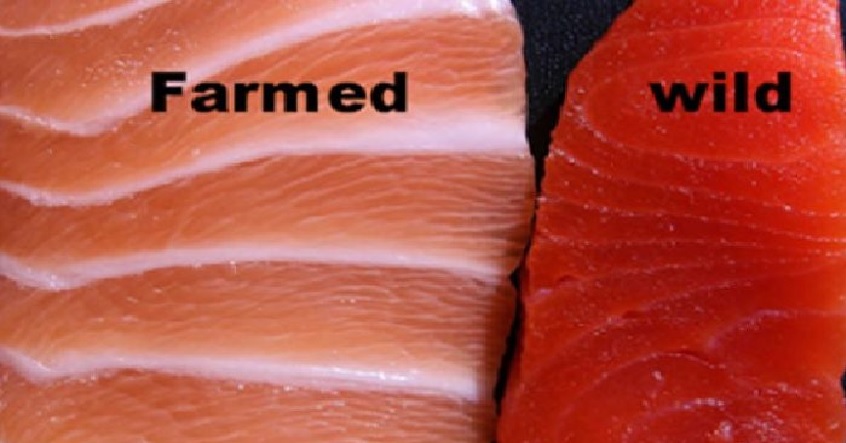
Farmed salmon suffers less visibly but equally disturbs mutations. The flesh of the farmed salmon is “brittle,” and breaks off when bent which is a highly abnormal feature.

It also contains wildly high nutrition. Wild salmon has about 5 to 7 percent fat content, whereas the farmed variety contains anywhere from 14.5 to 34 percent.

Fat accumulates major toxins most rapidly, which means when raised in similar contaminated conditions, farmed salmon will always contain higher toxins than the wild ones.

Astonishingly, research shows that the most noteworthy source of toxic exposure is not pesticides or the antibiotics, but it is the dry pellet feed! Pollutants found in the fish feed include PCBs, dioxins and a number of different chemicals and drugs.

What Makes the Fish Feed so Toxic?

In one Norwegian fish pellet plant, the main ingredient is eel which is used for their high protein and fat content. The Baltic is highly polluted some of the toxic contents from fish from there is automatically incorporated in the pellet.

In Sweden, fish mongers are required to warn patrons about the probable toxicity of Baltic fish. According to government recommendations, one should not eat herring and other fatty fish more than once a week. Pregnant women must avoid Baltic fish altogether.

Other industrialized countries, nine in number that surround the Baltic Sea also dump their toxic waste into this water body. Dioxins bind to fat and this is why eel, herring and salmon are particularly vulnerable, and they end up collecting higher amounts of it as compared to other fish.

Next Page For More

Tagged : /

This new evidence points towards the possibility of past life on Mars

The Mars mission is progressing with its speed and NASA is leaving n stones unturned to take care of every single minute detail that can prove to be of importance in the great scheme of things. Earlier, NASA had declared that they have found water on the Red planet. Now with a new announcement, the space agency is trying to consolidate the idea of a past life on the planet.

This new discovery tells that there was oxygen once on the planet which possibly made it fit to live and which also kindles the hope of an alien life in the past. This is to note that Mars rover curiosity is on the Red planet for the search of life. One of its tasks is analyzing the rocks and sending the information to the scientists on earth. The recent discovery by Curiosity is the presence of manganese in the rocks.

The scientists were expecting the discovery of basalt – a type of rock formed when lava cools down. Basalt does have a little amount of manganese in it but the level of concentration found by the rover was quite high. Highly concentrated manganese was only possible if basalt rock was dissolved in oxygenated water. This implied that the planet was once oxygen rich. When manganese was found first, the scientists thought that it was some kind of mistake so they sent the rover back to collect the samples but manganese was found again.

This made them sure about the idea of oxygen on the planet because minerals found along with oxygen clearly proves the existence of life on a planet. Encouraged by this, NASA is busy collecting other evidences as well. We should just hope for the best.

[adinserter block=”7″]

As a technology lover you may like our daily important technology news series. It’s a playlist and you can retrieve the total day-wise videos. Please consider subscribing our YouTube channel:

Author: Technology and Beyond 

Tagged : /
Verified by ExactMetrics