How Revolutionary innovation could power electric car batteries for 3,000 miles on a single charge
Electric vehicles (EVs) are becoming increasingly popular as consumers seek more sustainable and environmentally friendly transportation options. However, one of the biggest challenges facing EVs is the limited range of their batteries. Most EVs can only travel a few hundred miles on a single charge, which can be a limiting factor for long road trips or daily commutes.
However, a number of revolutionary innovations are currently in development that could dramatically increase the range of EV batteries. Some of these innovations include:
Silicon-anode batteries: Silicon has a much higher energy density than graphite, the material currently used in most EV batteries. This means that silicon-anode batteries could store more energy in the same volume, resulting in a longer range.
Solid-state batteries: Solid-state batteries use a solid electrolyte instead of the liquid electrolyte used in traditional lithium-ion batteries. This makes solid-state batteries more energy-dense and safer.
Lithium-air batteries: Lithium-air batteries have the potential to be the most energy-dense batteries ever developed. However, they are still in the early stages of development and there are a number of challenges that need to be overcome before they can be commercialized.
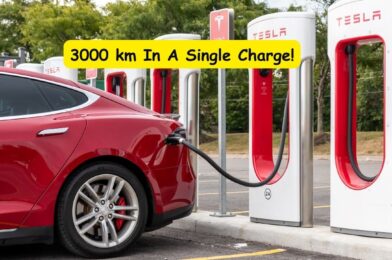
These are just a few of the innovative technologies that have the potential to revolutionize EV batteries. If these technologies are successful, it is possible that we could see EVs with ranges of 3,000 miles or more within the next decade.
Benefits of longer-range EV batteries
Longer-range EV batteries would offer a number of benefits, including:
Reduced range anxiety: Range anxiety is one of the biggest concerns for potential EV buyers. Longer-range batteries would reduce range anxiety and make EVs more practical for a wider range of consumers.
Increased convenience: EVs with longer ranges would not need to be charged as often, making them more convenient to use.
Reduced emissions: EVs with longer ranges would reduce emissions from transportation, as they would be able to travel further on a single charge.
Challenges to developing longer-range EV batteries
There are a number of challenges that need to be overcome before longer-range EV batteries can be commercialized. One challenge is the cost of developing and manufacturing these new technologies. Another challenge is the need to develop new charging infrastructure to support EVs with longer ranges.
Conclusion
The development of longer-range EV batteries is a key step in the transition to a more sustainable transportation future. A number of revolutionary innovations are currently in development that have the potential to make EVs more practical and affordable for a wider range of consumers. If these innovations are successful, it is possible that we could see EVs with ranges of 3,000 miles or more within the next decade.