
Harvard’s robo-bee project has been in news from quite some time. This robo-bee is a life-sized robotic version of a bee equipped with an antenna, an electronic nervous system, airfoil wings, and both pollinating and docking appendages. The robo-bee has an ability to hover and fly using built-in optical flow and UV targeting sensors. Now the researchers have recently added swimming functionality to this bee. This new development makes it the world’s one and only flying and swimming capable, flapping-wing, insect-like robot.
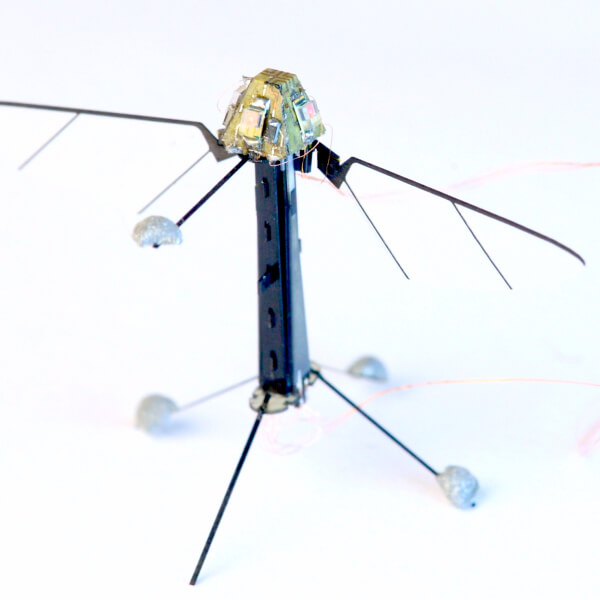
The team based their new technological development on the idea that swimming underwater is the same basic motion as flying in the air. So a change was made in how the bee flapped its wings. When flying, the bee flaps its wings at 120 Hz, but while swimming it slows down its movement to 9 Hz. The controls while swimming under the water are similar to flying in the air, allowing the bee to steer as it moves beneath the surface.
The swimming part has been an easy one for the team but what they will really have to work upon is the transition part. The bee has a lightweight frame and is very small so when it floats on the surface, it is great but when it comes to breaking through the surface tension of the water, sink down and swim, the problem starts. To enter the water, the bee has to ascend into a dive, crash land on the surface and then sink underneath the surface before it can swim.
The team has used a surfactant on the wings to help the bee sink, but it is still a challenge. The bee encounters similar problem when it exits the water. It requires an extra burst of power to propel out of the water and transition into the air. The initial flight due to wings covered in water also becomes tough as these beads of water change the flight dynamics of the robot and makes the bee unstable, especially in a hover. The water works its way off the wings eventually, but these first few moments can be dicey.
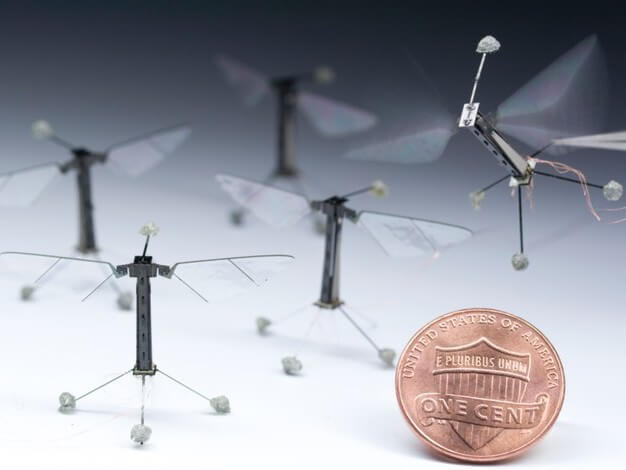
The team is working in an optimistic manner in this direction and hopes to refine its water and air locomotion. Let us see, when this robo-bee designed for agricultural, commercial and especially military applications, starts giving its services to these fields.
[adinserter block=”7″]
Author: Technology Blog

