If you mistakenly send a message to someone on WhatsApp next time, just chill because the popular messaging app’s much anticipated “unsend” feature is rolling out soon to all users.
According to WABetaInfo, a fan site that tests new WhatsApp features early, the messaging app is finally testing the “Delete for Everyone” feature.
“The server finally works and it successfully recalls the message. It will be remotely enabled later and seen that WhatsApp ‘enabled’ their servers for the Delete for Everyone feature, it may really be enabled soon,” said WABetaInfo in a tweet.
With this feature, the users will be able to recall or unsend texts, images, videos, GIFs, documents, quoted messages and even status replies within a five-minute window, The Independent reported on Tuesday.
However, messages that have already been read or sent more than five minutes ago cannot be recalled through this feature. The feature will be available for both the Android and iOS platforms.
“WhatsApp has added in beta the possibility to edit messages that you already sent. It is actually disabled by default and it’s under development,” an earlier WABetaInfo’s tweet read.
The users will be able to edit only recent messages and not the old ones.
With over 1.2 billion monthly active users, WhatsApp is available in more than 50 different languages around the world and in 10 Indian languages.
As a technology lover you may like our daily important technology news series. It’s a playlist and you can retrieve the total day-wise videos. Please consider subscribing our YouTube channel:
Using newly calibrated data taken from NASA’s Moon Mineralogy Mapper, which flew aboard India’s Chandrayaan-1 spacecraft, scientists have created the first global map of water in the Moon’s soil.
The study, published in the journal Science Advances, builds on the initial discovery in 2009 of water and a related molecule — hydroxyl, which consists of one atom each of hydrogen and oxygen — in lunar soil.
“The signature of water is present nearly everywhere on the lunar surface, not limited to the polar regions as previously reported,” said the study’s lead author Shuai Li, who performed the work while a Ph.D. student at Brown University in Providence, Rhode Island, US.
“The amount of water increases toward the poles and does not show significant difference among distinct compositional terrains,” Li, now a postdoctoral researcher at University of Hawaii, added.
The water concentration reaches a maximum average of around 500 to 750 parts per million in the higher latitudes. That is not a lot — less than is found in the sands of Earth’s driest deserts — but it is also not nothing.
“This is a roadmap to where water exists on the surface of the Moon,” study co-author Ralph Milliken, Associate Professor at Brown University said.
“Now that we have these quantitative maps showing where the water is and in what amounts, we can start thinking about whether or not it could be worthwhile to extract, either as drinking water for astronauts or to produce fuel,” Milliken said.
The way the water is distributed across the Moon gives clues about its source, the researchers said.
The distribution is largely uniform rather than splotchy, with concentrations gradually decreasing toward the equator, the study said.
That pattern is consistent with implantation via solar wind — the constant bombardment of protons from the Sun, which can form hydroxyl and molecular water once emplaced.
Although the bulk of the water mapped in this study could be attributed to solar wind, there were exceptions.
For example, the researchers found higher-than-average concentrations of water in lunar volcanic deposits near the Moon’s equator, where background water in the soil is scarce.
Rather than coming from solar wind, the water in those localised deposits likely comes from deep within the Moon’s mantle and erupted to the surface in lunar magma.
The study also found that the concentration of water changes over the course of the lunar day at latitudes lower than 60 degrees, going from wetter in the early morning and evening to nearly bone dry around lunar noon.
The fluctuation can be as much as 200 parts per million.
As useful as the new maps may be, they still leave plenty of unanswered questions about lunar water.
The Moon Mineralogy Mapper, which supplied the data for the research, measures light reflected off of the lunar surface.
That means that it can’t look for water in places that are permanently shadowed from the sun’s rays.
Many scientists think these permanently shadowed regions, such as the floors on impact craters in the Moon’s polar regions, could hold large deposits or water ice.
“Those ice deposits may indeed be there, but because they are in shadowed areas it’s not something we can easily confirm using these data,” Milliken said.
As a technology lover you may like our daily important technology news series. It’s a playlist and you can retrieve the total day-wise videos. Please consider subscribing our YouTube channel:
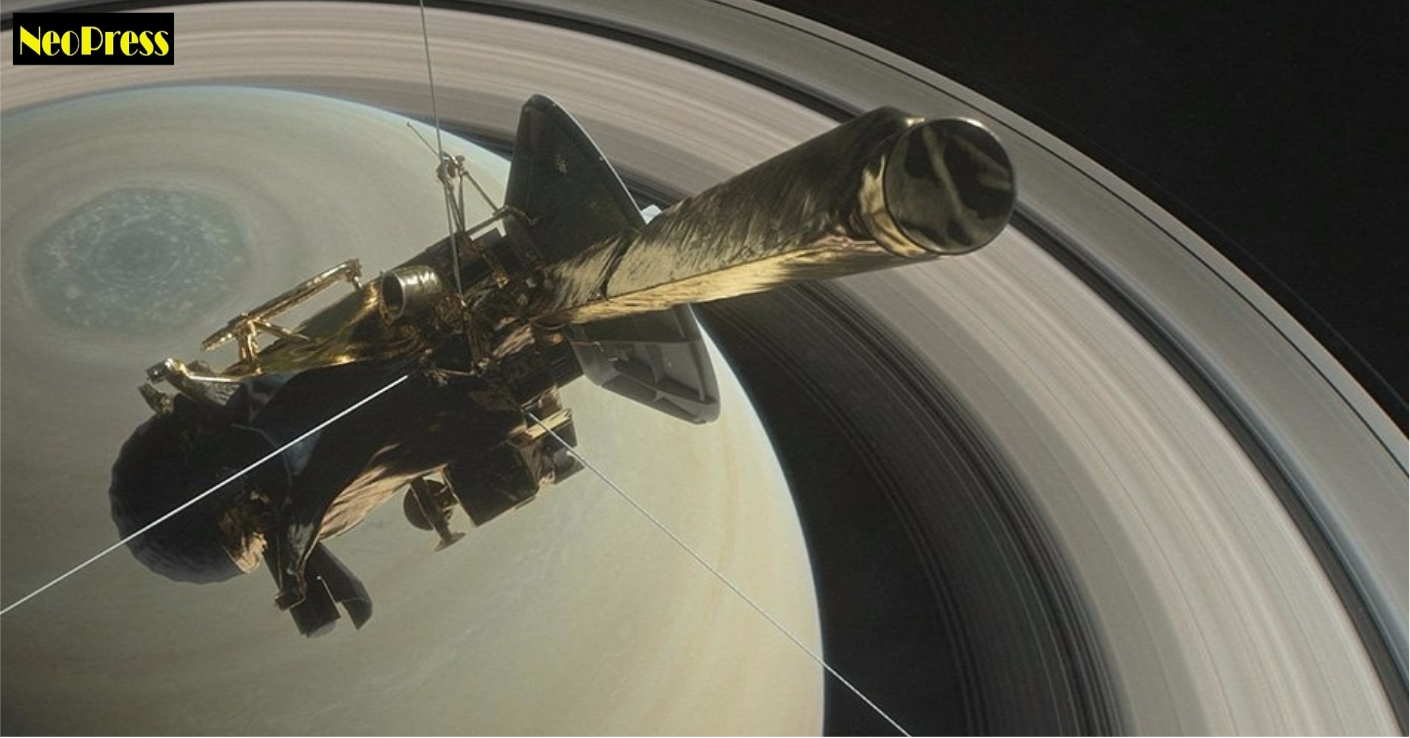
When Cassini ends its 13-year tour of the Saturn system with an intentional plunge into the planet on Friday, the spacecraft’s speed will be approximately 113,000 kms per hour, NASA has said.
The final plunge will take place on the day side of Saturn, near local noon, with the spacecraft entering the atmosphere around 10 degrees north latitude, NASA said.
The spacecraft’s fateful dive is the final beat in the mission’s Grand Finale, 22 weekly dives, which began in late April, through the gap between Saturn and its rings.
No spacecraft has ever ventured so close to the planet before.
The mission’s final calculations predict loss of contact with the Cassini spacecraft will take place on Friday at 7:55 a.m. EDT.
Cassini will enter Saturn’s atmosphere approximately one minute earlier, at an altitude of about 1,915 kilometres above the planet’s estimated cloud tops.
When Cassini first begins to encounter Saturn’s atmosphere, the spacecraft’s attitude control thrusters will begin firing in short bursts to work against the thin gas and keep Cassini’s saucer-shaped high-gain antenna pointed at Earth to relay the mission’s precious final data.
As the atmosphere thickens, the thrusters will be forced to ramp up their activity, going from 10 per cent of their capacity to 100 per cent in the span of about a minute.
Once they are firing at full capacity, the thrusters can do no more to keep Cassini stably pointed, and the spacecraft will begin to tumble.
When the antenna points just a few fractions of a degree away from Earth, communications will be severed permanently, NASA said.
The predicted altitude for loss of signal is approximately 1,500 kilometres above Saturn’s cloud tops.
From that point, the spacecraft will begin to burn up like a meteor. Within about 30 seconds following loss of signal, the spacecraft will begin to come apart. Within a couple of minutes, all remnants of the spacecraft are expected to be completely consumed in the atmosphere of Saturn, NASA said.
Due to the travel time for radio signals from Saturn, which changes as both Earth and the ringed planet travel around the Sun, events currently take place there 83 minutes before they are observed on Earth.
This means that, although the spacecraft will begin to tumble and go out of communication at 6:31 a.m. EDT at Saturn, the signal from that event will not be received at Earth until 83 minutes later.
“The spacecraft’s final signal will be like an echo. It will radiate across the solar system for nearly an hour and a half after Cassini itself has gone,” said Earl Maize, Cassini project manager at NASA’s Jet Propulsion Laboratory in Pasadena, California.
“Even though we’ll know that, at Saturn, Cassini has already met its fate, its mission isn’t truly over for us on Earth as long as we’re still receiving its signal,” Maize added.
Live mission commentary and video from Jet Propulsion Laboratory Mission Control will air on NASA TV and the agency’s website from 7 to 8:30 a.m. EDT (4.30 to 6 pm India time)on Friday.
Launched in 1997, Cassini arrived in orbit around Saturn in 2004 on a mission to study the giant planet, its rings, moons and magnetosphere.
As a technology lover you may like our daily important technology news series. It’s a playlist and you can retrieve the total day-wise videos. Please consider subscribing our YouTube channel:
Instant gratification is the key takeaway for the millennials and keeping this in mind, global PC and printing major HP Inc. on Wednesday launched “Sprocket” — a pocket-sized photo printer — in India for Rs 8,999.
The unique hand-held printer would allow you to click instant pictures (2 X 3 inch size) and share among friends — be it at a shopping mall, a restaurant or at a movie theatre.
Download “Sprocket” app from Google Play Store or Apple App Store on your smartphone, pair it with the printer, place specially-designed ‘HP ZINK’ papers in the device, switch on Bluetooth and print images from your phone in a jiffy.
HP “Sprocket” aims to make physical photo printing convenient, affordable and enjoyable for youth, said a senior company executive.
“The device is especially made for the millennial segment which is between age 10-24. But we are not restricting our target to that age group only. People who like to preserve their memories would like to own the ‘Sprocket’ which is a pretty affordable device,” Raj Kumar Rishi, Senior Director, Printing Systems, HP Inc India, told IANS.
“‘Sprocket’ printer allows users print their treasured memories instantly on-the go with just a few taps”, Rishi added.
The companion app enables users to print photographs directly from their social media accounts on Facebook and Instagram.
“While smartphones have made it very simple to store our memories digitally, the power of printing photographs cannot be undermined. The moment a digital photograph gets printed, it becomes a tangible treasure one can cherish for life” Rishi noted.
HP is taking the e-commerce route to market the ‘Sprocket’ printer in black, red and white colour variants in India.
“We are going online via Amazon to start with. As the business shapes up, we would decide the next step. We are the leading brand in the consumer printing industry with a very high market share. Our job is to increase our market and make printing more relevant,” the executive told IANS.
According to the International Data Corporation (IDC), HP Inc. regained the top position in Inkjet printer market in the second quarter of 2017 with a unit share of 45.9 per cent after posting a 7.2 per cent (YoY) growth.
The company also continues to be the market leader in the laser HCP market with 57.4 per cent market share.
Rishi credited the entire growth story to “solid innovations” happening across the market segments such as the launch of A3 printers across SMB and enterprise segment.
“There are three big use cases for consumer printing and the biggest use case is school homework. With ‘Sprocket’, we are developing the new use case in the mobile printing space. We believe that this would help the segment grow further,” Rishi noted.
“Secondly, we introduced our portfolio in the Ink Tank printers. We are continuously innovating when it comes to consumer printing. We launched the world’s smallest All-in-One printer last year,” he added.
The company has chosen to use ZINK printing technology for “Sprocket” printer. HP ZINK paper would be available for Rs 539 for a pack of 20 sheets and Rs 1,249 for a pack of 50 sheets.
The user would get a complimentary pack of 10 ZINK papers with the box at the time of purchase, the company said. The peel-and-stick backing property of ZINK paper can turn the photos into fun stickers too.
As a technology lover you may like our daily important technology news series. It’s a playlist and you can retrieve the total day-wise videos. Please consider subscribing our YouTube channel:
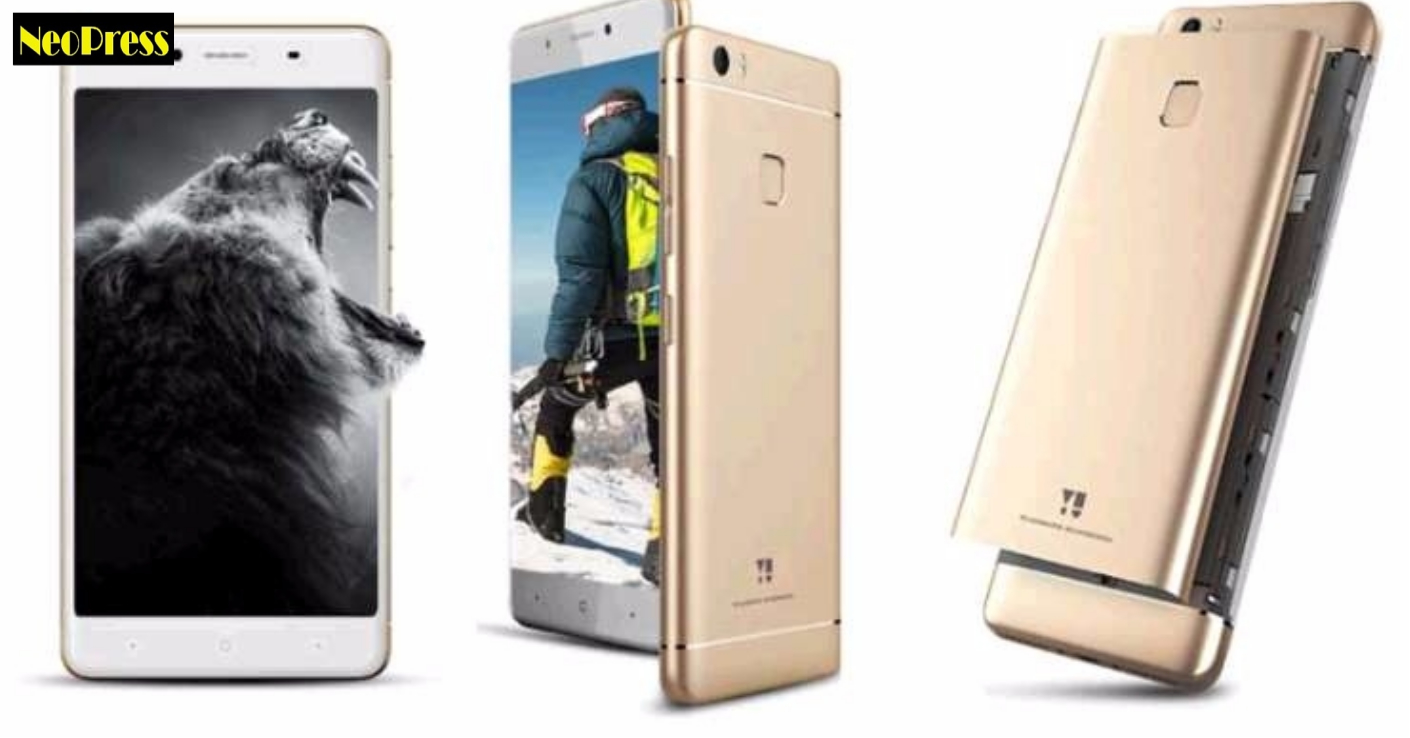
Micromax’s sub brand YU Televentures on Thursday launched “YUREKA 2” at Rs 11,999.
The device with 5.5-inch full HD screen runs on Snapdragon 625 octa core processor and sports 16MP rear and 8MP ‘selfie’ camera.
‘YUREKA 2’ is a premium smartphone that brings an immersive viewing experience. Its compact size and sturdy body creates an ergonomic grip and enables comfortable one-handed operation, the company said in a statement.
The 4GB RAM with 64GB ROM device also has quick charge 3.0 — a distinctive feature that makes the ‘Yureka 2’ best-in-class device for extended use and optimal performance. The fingerprint sensor-enabled device has 3930mAh battery.
The device will be available on Flipkart during the “Big Billion Day” on September 20.
As a technology lover you may like our daily important technology news series. It’s a playlist and you can retrieve the total day-wise videos. Please consider subscribing our YouTube channel:
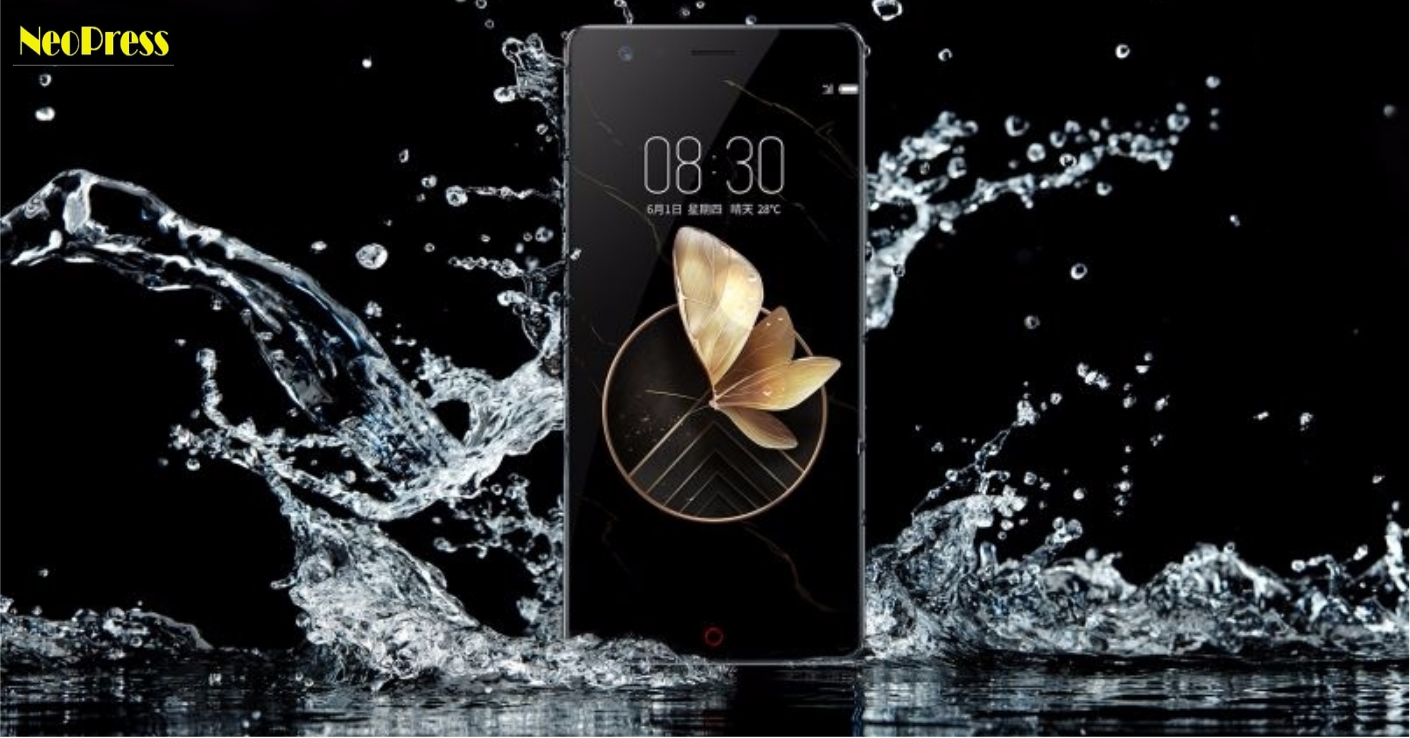
Chinese handset manufacturer nubia on Thursday introduced the limited edition “Z17Mini” at Rs 21,499 in India.
The device sports 6GB RAM and 128GB internal storage and comes in Aurora Blue colour. The limited edition device would retail exclusively on e-commerce site Amazon.in starting September 15.
The device is powered by an Octa-core Qualcomm Snapdragon 653 processor.
Other features of the phone are the same as the original “Z17Mini” that was launched in the country in June.
In terms of camera specifications, the limited edition nubia “Z17Mini” features 13MP dual primary cameras with Sony full-light “MONO” sensor and true colour RGB sensor and nubia’s proprietary “Neo-Vision 6” software package.
There is a 16MP selfie camera with an 80-degree wide angle lens.
“The ‘Z17Mini’ received tremendous response and with the limited edition nubia ‘Z17Mini’, we are taking forward the legacy of great camera, great features and UI. We are confident that this product will further strengthen nubia’s name and value proposition in Indian market,” said Eric Hu, Country Head, nubia India, in a statement.
nubia “Z17Mini’s” camera offers 16 different modes other than pro and normal modes along with a mono, 3D, times shuttle and many others allowing users to even shoot first and focus later, the company said.
“The new colour scheme of limited edition “Z17Mini” appeals to the millennial users who believe that the handset is an extension of their identity,” the company added.
Other specs of the smartphone include 5.2-inch full-HD screen. It has 442PPI retinal-grade display with a contrast ratio of 1500:1.
The phone runs custom nubia UI 4.0 based on Android Marshmallow OS.
A 2,950mAh battery powers nubia “Z17Mini”.
As a technology lover you may like our daily important technology news series. It’s a playlist and you can retrieve the total day-wise videos. Please consider subscribing our YouTube channel: