
This is how you can use smartphone to spot fake products

Indian-origin researchers have developed a new system that uses Artificial Intelligence algorithms and a smartphone app to instantly distinguish between genuine and fake versions of the same product.

The system works by deploying a dataset of three million images across various objects and materials such as fabrics, leather, pills, electronics, toys and shoes. “The classification accuracy is more than 98 per cent, and we show how our system works with a cellphone to verify the authenticity of everyday objects,” said Lakshminarayanan Subramanian, Professor at New York University.

The system is scheduled to be presented on August 14 at the annual KDD Conference on Knowledge Discovery and Data Mining in Halifax, Nova Scotia, Canada. The system described in the presentation is commercialised by Entrupy Inc., an New York University start-up founded by Ashlesh Sharma, Vidyuth Srinivasan, and Subramanian.

Detecting fake products with Entrupy is easy. One has to place the device directly on the item, open the Entrupy app on smartphone or tablet (iOS), and follow the onscreen prompts in the app to take images. The Artificial Intelligence algorithms then analyse the images to determine authenticity and provide results in real-time.

“The underlying principle of our system stems from the idea that microscopic characteristics in a genuine product or a class of products – corresponding to the same larger product line–exhibit inherent similarities that can be used to distinguish these products from their corresponding counterfeit versions,” Subramanian explained.

Counterfeit goods represent a massive worldwide problem with nearly every high-valued physical object or product directly affected by this issue, the researchers noted. While other counterfeit-detection methods exist, these are invasive and run the risk of damaging the products under examination.

The Entrupy method, by contrast, provides a non-intrusive solution to easily distinguish authentic versions of the product produced by the original manufacturer and fake versions of the product produced by counterfeiters.

As a technology lover you may like our daily important technology news series. It’s a playlist and you can retrieve the total day-wise videos. Please consider subscribing our YouTube channel:

Author: Technology Vista
Tagged : /

This Indian seismologist had predicted Aug 8 China quake!

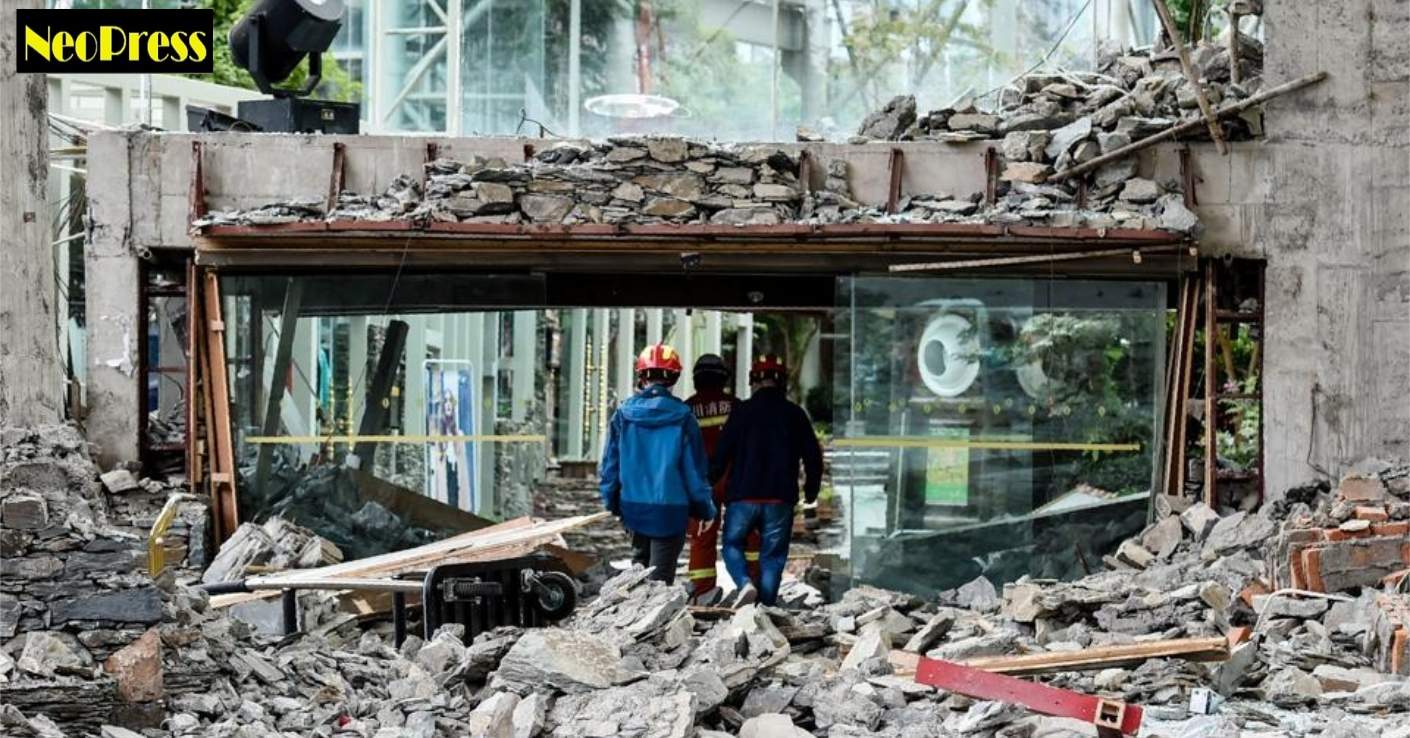
Indian seismologist Arun Bapat had warned, a day before it struck, of the the 6.5 magnitude earthquake that rocked China on August 8, killing close to 40 people and forcing the evacuation of thousands more.

“I daily visit the website of the Indian Meteorological Department (IMD) for various geological, meteorological, ionospheric and seismic parameters,” Bapat, a former chief of earthquake research at the Central Water and Power Research Station in Pune, told IANS.

“On August 7, around midnight, I saw a satellite infra-red photo showing a thermal high in the China-Japan region that was not there five hours earlier.”

Bapat — a consulting seismologist at International Earthquake and Volcano Prediction Centre headquartered in Orlando, Florida — knew this was a sign of a moderate to a large magnitude earthquake. He immediately alerted seismologists in his group in an email warning that “an earthquake should occur within the next 18 to 24 hours”.

That forecast turned out to be correct. “Predicted China earthquake happened,” Hong-Chun Wu, a Chinese seismologist, responded in an email on August 8.

“This only confirms that the science of short-term earthquake forecasting and prediction is really progressing,” said Bapat who had predicted the 7.2-magnitude Mexico earthquake of April 18, 2014, two months before the event.

Bapat’s confidence stems from the string of correct predictions he had made using satellite readings of seismological and geophysical parameters like ‘Total Electron Content’ and ‘Outgoing Long Wave Radiation’ in addition to infra-red images of the Earth.

For instance, on April 14, 2017, in an email to the Chief Secretary of Jammu and Kashmir, Bapat wrote: “During my routine check of various earthquake-related parameters it has been found that the area near Bhaderwah could perhaps be heading for an earthquake of magnitude around 5.5 within next few days.” A 5 magnitude earthquake did occur four days later, some 80 km from Kargil, as predicted.

Bapat’s prediction based on surface temperatures also turned out to be correct in the case of an earthquake in Manipur early this year.

On February 23, he alerted the North-East Disaster Management Authority in an email: “The temperatures at three locations indicate the likely occurrence of an earthquake of magnitude around 5.0 within next few days. The epicenter could be within 70 km from any of the above locations. Most vulnerable dates could be 25/26 Feb.”

An earthquake of magnitude 5.2 did occur in Churachandpur district of Manipur on February 24. “The magnitude and location were fully correct,” Bapat said. “Only the date was missed by a few hours.”

Satellite-borne data, freely available on IMD website, could be effectively used for short-term earthquake forecasting and prediction on a 24×7 basis, he said. Besides satellite data, there are seismic precursors arising from “seismo-electromagnetic effect” that are worth watching, Bapat said.

“Before the occurrence of any moderate to large magnitude earthquake, the underground location where the rupture takes place gets heated. As the temperature rises, the geomagnetic field of the earth at that location goes on decreasing which adversely affects the propagation and reception of electromagnetic waves and communication.” The impact of this, Bapat said, can be observed by anyone with a telephone or television set.

About two days before an earthquake, landline telephone communication gets disturbed; radio reception fades away about 30 to 40 hours before the event and television reception gets disturbed about 10 hours before earthquake, Bapat said.

“If all mobile telephones in a radius of 15 km or more are affected, it could be a sign of earthquake within the next 100 minutes. This was noted for the first time prior to the 1993 Latur earthquake in Maharashtra, in Bhuj before the destructive quake of January 26, 2001, and prior to the 7.5 magnitude Kathmandu earthquake on April 25, 2015.”

“I would like to say with sufficient level of confidence that using electronics and satellite-borne data would definitely give good result-oriented earthquake predictions. All State Disaster Management Authorities (DMAs) and the NDMA are requested to consider this seriously,” Bapat said.

“In view of the predicted large magnitude earthquake in the Himalayan region, it is the right time to act now,” he added.

As a technology lover you may like our daily important technology news series. It’s a playlist and you can retrieve the total day-wise videos. Please consider subscribing our YouTube channel:

Author: Technology Vista

Tagged : /

Revealed: Goldfish can survive without oxygen! Here is how!

A team of scientists has uncovered how goldfish survive the harsh winters beneath frozen lakes by producing alcohol.

Scientists at the Universities of Oslo and Liverpool said that during winters, the fish are able to convert anaerobically produced lactic acid into ethanol, which then diffuses across their gills into the surrounding water and avoids a dangerous build-up of lactic acid in the body.

This helps the fish and their wild relatives, crucian carp survive for days, even months, in oxygen-free water at the bottom of ice-covered ponds.

“During their time in oxygen-free water in ice-covered ponds, which can last for several months in their northern European habitat, blood alcohol concentrations in crucian carp can reach more than 50 mg per 100 millilitres, which is above the drink drive limit in these countries,” said Dr Michael Berenbrink from University of Liverpool in the research published in the journal Scientific Reports.

“However, this is still a much better situation than filling up with lactic acid, which is the metabolic end product for other vertebrates, including humans, when devoid of oxygen,” Berenbrink added. The muscles of goldfish and crucian carp contain two sets of the proteins normally used to channel carbohydrates towards their breakdown within a cell’s mitochondria.

The second set is activated by the absence of oxygen and shows a mutation that allows channelling of metabolic substrates to ethanol formation outside the mitochondria. “This research emphasises the role of whole genome duplications in the evolution of biological novelty and the adaptation of species to previously inhospitable environments,” added lead author Dr Cathrine Elisabeth Fagernes from the University of Oslo.

“The ethanol production allows the crucian carp to be the only fish species surviving and exploiting these harsh environments, thereby avoiding competition and escaping predation by other fish species with which they normally interact in better oxygenated waters,” Elisabeth noted.

As a technology lover you may like our daily important technology news series. It’s a playlist and you can retrieve the total day-wise videos. Please consider subscribing our YouTube channel:

Author: Technology Vista

Tagged : /
Verified by ExactMetrics