Nokia 6 has received over one million registrations on Amazon.in and customers can buy the smartphone for Rs 14,999 from August 23.
With an immersive audio experience and a 5.5-inch full-HD screen, Nokia 6 delivers a truly premium smartphone experience.
The smart audio amplifier with dual speakers allows consumers to experience a deep bass and unmatched clarity, whilst Dolby Atmos sound delivers a powerfully moving entertainment experience.
Powered by the Qualcomm Snapdragon 430 mobile platform and the Qualcomm Adreno 505 graphics processor, Nokia 6 is available in four colours — Matte Black, Silver, Tempered Blue and Copper. The new Nokia 6 comes pre-installed with the Amazon shopping app, Kindle app and a unique Daily Deals widget which gives users easy access to personalized deals, order history, shipment updates and more.
Amazon ‘Prime’ members can also access thousands of movies and TV shows through the pre-installed Amazon Prime Video app. The registrations for Nokia 6 opened on July 14. The Amazon ‘Prime’ members who purchase Nokia 6 using Amazon Pay balance can also avail a Rs 1,000 cashback offer.
As a technology lover you may like our daily important technology news series. It’s a playlist and you can retrieve the total day-wise videos. Please consider subscribing our YouTube channel:
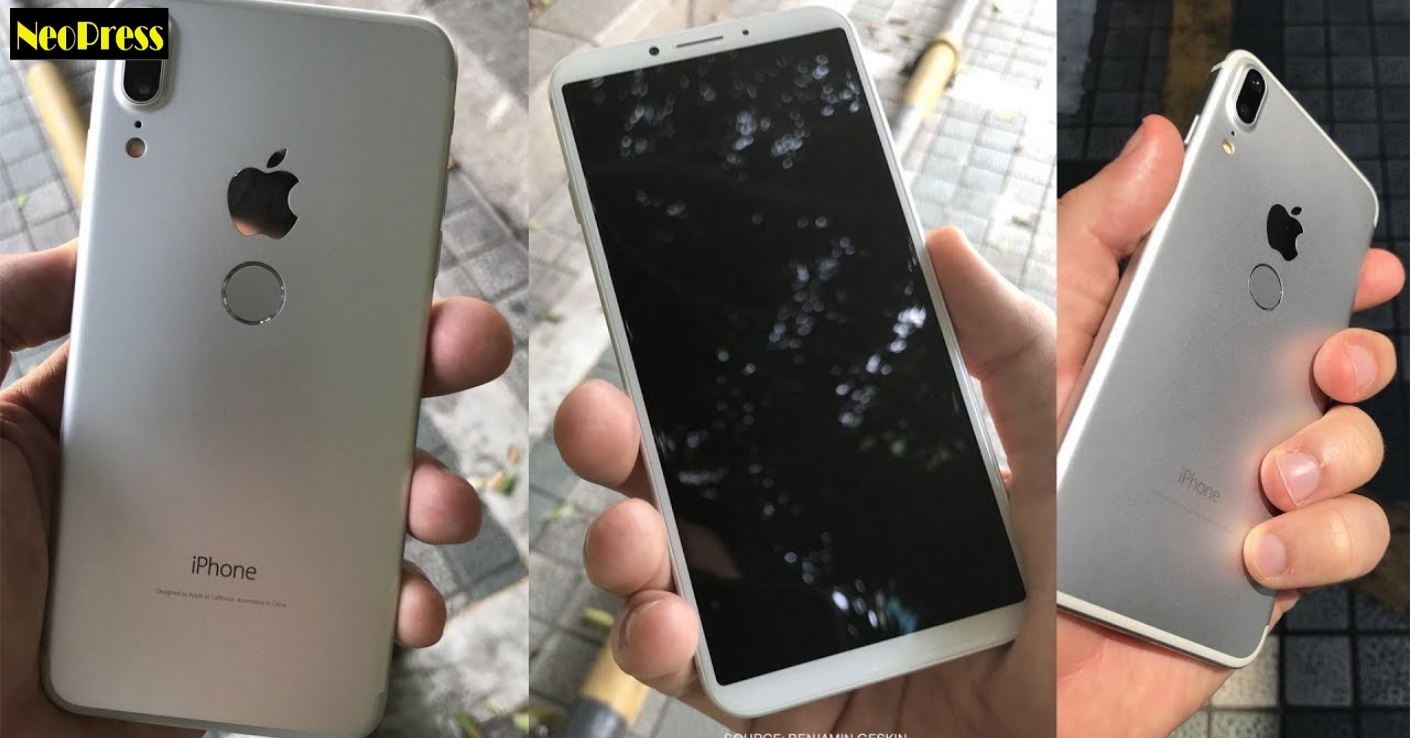
Riding on the ‘better-than-expected iPad and iPhone sales’, the upcoming flagship device iPhone 8 could make the Cupertino-based giant the first company to reach and sustain a $1 trillion market cap, analysts have predicted.
According to a report in MarketWatch late on Wednesday, since the announcement of its third quarter results, the stock momentum has added $56 billion to the company’s market cap.
Analysts from investment service company RBC Capital predicted that the stock momentum will continue as Apple will launch its flagship device iPhone 8 in mid-September.
RBC analysts said the iPhone 8 launch will create a ‘super cycle’ for the company.
“Apple has potential to achieve a $1 trillion dollar market cap and even surpass that over the next 12 to 18 months. We see upside occurring from multiple levers,” Amit Daryanani, lead analyst on the note, was quoted as saying.
Those “levers” to get to $12 per share in profit are revenue increasing from new iPhone models, including a higher-priced premium model, growing services revenue helping to expand profit margins, tighter cost control and strong stock buybacks, the analyst said.
Daryanani said that Apple’s share price would have to rise from its current level (about $160) to about $192 to $195, depending on the rate of the company’s stock buybacks, to reach the $1 trillion value.
According to reports, Apple might release three iPhones — iPhone 7S, 7S Plus and iPhone 8 — in September. With an expected price range of between $900 and $1,100, two of the three iPhones are expected to be more expensive compared with previous versions.
Apple posted a quarterly revenue of $45.4 billion — up seven per cent YoY (year-over-year) — for the third quarter of 2017. With revenue up seven per cent YoY, the company reported a third consecutive quarter of accelerating growth and an all-time quarterly record for services revenue.
The net income was up to $8.72 billion ($1.67 per share) from $7.80 billion ($1.42 per share) a year earlier. iPhone sales were up 1.6 per cent to 41.03 million in the third quarter that ended on July 1. The Cupertino-based tech giant sold 40.4 million iPhones a year earlier. Apple saw a 21.6 per cent jump in the services business – the App Store, Apple Pay and iCloud – to $7.27 billion.
We also returned $11.7 billion to investors during the quarter, bringing cumulative capital returns under our programme to almost $223 billion, the company said. According to The Verge, leading the way was Apple’s iPad sales, which were up 15 per cent from 2016. Hardware like the Apple Watch, AirPods, and Beats headphones were the highlights in the ‘Other Products’ category.
As a technology lover you may like our daily important technology news series. It’s a playlist and you can retrieve the total day-wise videos. Please consider subscribing our YouTube channel:
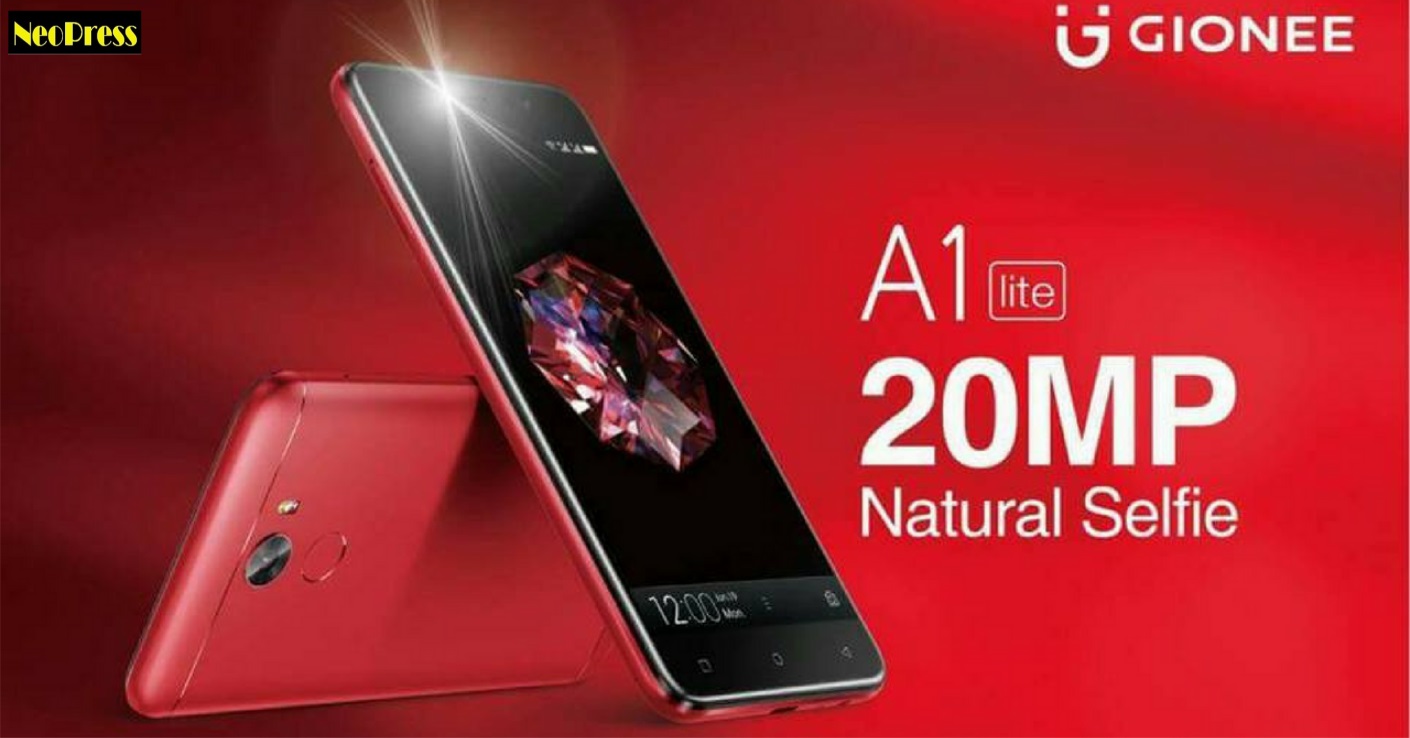
After receiving good response for ‘A1Plus’ that was launched last month, Gionee India on Wednesday launched ‘A1 Lite’ with dual-rear camera set-up for Rs 14,999.
Housing 20MP ‘selfie’ camera, a 4000mAh battery and lightning-fast fingerprint sensor, the device would be available across retail stores from August 10. Protected by Gorilla Glass, the 5.3-inch device offers split-screen experience for multi-taskers. The phone comes in two colours — gold and black.
“Keeping up with the growing demand for high-quality smartphones with superior photography capabilities, we are thrilled to launch ‘A1 Lite’. With the newest in line 13 MP dual rear camera and a trendy design, A1 Lite will surely be the next game changer,” said Alok Shrivastava, Director – Business Intelligence and Planning, Gionee India, in a statement.
The 4G VoLTE-enabled ‘A1 Lite’ runs octa-core 64-bit processor. Powered by 3GB RAM, ‘A1 Lite’ has 32GB internal storage (expandable up to 256GB). Powered by four-cell technology, the front camera captures more light than before, resulting in clearer selfies. Like its predecessor ‘A1’, ‘A1 Lite’ is equipped with fingerprint sensor that claims to unlock the phone in just 0.3 second.
The device has 2.5D curved glass, a back cover that gleams with metallic, and a sleek unibody design. Establishing its operations in India in 2012, Gionee currently has six per cent share in the domestic smartphone market. The company has presence in over 42,000 retail outlets across 2,200 cities and has invested in 555 exclusive service stations with plans to expand these to 600. This enhances its after-sales relationships with the customers.
Gionee has also partnered with Airtel and PayTm for some exciting offers on the purchase of ‘A1 Lite’.
As a technology lover you may like our daily important technology news series. It’s a playlist and you can retrieve the total day-wise videos. Please consider subscribing our YouTube channel:
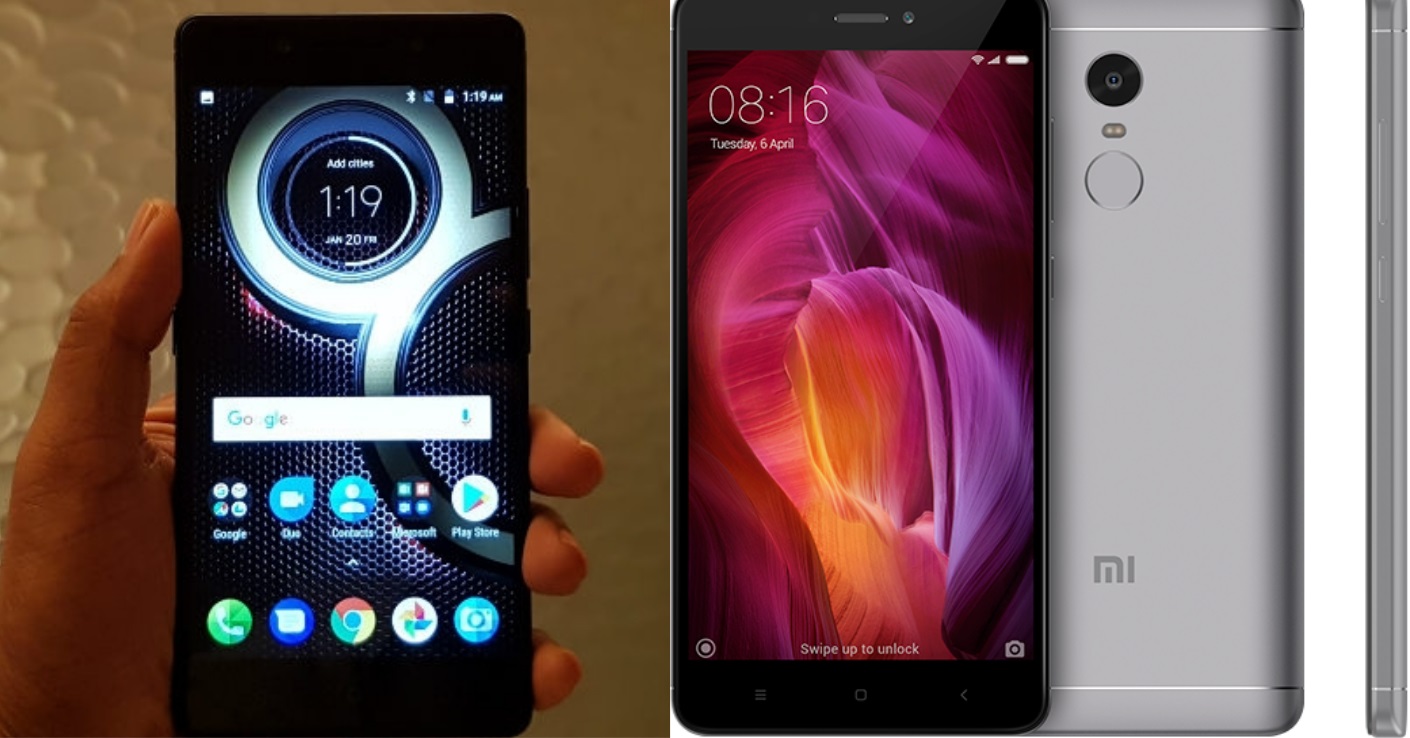
Lenovo India made a new addition to its Note line-up with ‘K8 Note’. Priced at Rs 12,999 onwards, Lenovo has placed the ‘K8 Note’ in direct competition with the immensely-popular Xiaomi ‘Redmi Note 4’.
The high points of the device are its primary dual cameras and stock Android (7.1.1) operating system (OS).
The company’s ‘Note’ series has been quite popular in India and ‘K8 Note’ has come after a brief hiatus. In the mean time, Lenovo has launched seven Motorola-branded smartphones in the past six months.
We spent some time with ‘K8 Note’ and this is our first impression of the 4GB RAM, 64 ROM device. Lenovo’s Vibe UI was heavily-bloated and made devices pretty slow. But this time, the company has ditched its custom software in favour of stock Android for good. Powerful internals make the smartphone a great performer.
Lenovo ‘K8 Note’ comes with Google Assistant and multi-window function as well. Another highlight of ‘K8 Note’ — the primary camera (with dual sensors) — is capable of taking some really cool images. The camera set-up has 13MP primary sensor and 5MP depth sensor for better pictures and enhanced depth of field.
It delivers good ‘Bokeh’ shots with good details in daylight. However, we are yet to test the camera in low light. The camera app did not show lag and we were able to clicked multiple images without any lag. In terms of looks, the smartphone has a great built but does not stand out of the crowd.
The 5.5-inch full-HD (1920×1080 pixels) display is pretty bright. ‘Note’ series is focused on battery life and ‘K8 Note’ also features a big 4000mAh battery. A 15-watt turbo charger is included that promises to charge the device quickly. There’s a dedicated music key on the device for music lovers. The smartphone also supports 4G connectivity and VoLTE.
While Lenovo has strategically placed ‘K8 Note’ in a fiercely-competitive segment, it would be interesting to see how it proves to be a stiff competition to Xiaomi ‘Redmi Note 4’.
As a technology lover you may like our daily important technology news series. It’s a playlist and you can retrieve the total day-wise videos. Please consider subscribing our YouTube channel:
Engineers at Purdue University in the US have designed and tested a micropropulsion system that uses liquid water as the propellant for orbital maneuvering of tiny satellites called CubeSats.
With rapid developments in miniaturisation of technologies CubeSats — which typically weigh about two kilograms — are poised to take over the sky in the future to carry out tasks like imaging and remote-sensing currently performed by heavier satellites which are expensive to build and launch.
However, today’s CubeSats cannot totally replace their larger counterparts as they are incapable of changing orbit or performing complex manoeuvres. For instance, none of the 101 nanosatellites that were launched aboard India’s PSLV from the Sriharikota Space Centre in February 2017 had propulsion. A propulsion system would allow such tiny satellites to correct their orbit or maintain their altitude, thereby prolonging their operating life in space before becoming space debris.
A dedicated propulsion system that is also compact and not power hungry has been the aim of CubeSat builders in several laboratories to exploit their full potential.
The system developed at Purdue uses an innovative design of small thrusters that deliver bursts of water vapor to manoeuvre the spacecraft, its developers — most of them undergraduate students — reported at a recent “Conference on Small Satellites” held at Logan, Utah, in the US.
Pure water is chosen as the propellant since it is green, safe, easy to use and free from the risk of contaminating sensitive instruments by the backflow from plumes as in the case of thrusters using chemical propellants.
Called a “Film-Evaporation MEMS Tunable Array”, or FEMTA thruster, it uses capillaries thinner than human hair through which the propellant water can flow. Small heaters located near the ends of the capillaries turn the water into vapor, which, on escape from these tiny tubes, provides the thrust. The minuscule capillaries act like valves that can be turned on and off by activating the heaters. The technology is said to be similar to the inkjet printer, which uses heaters that fire dots of ink at the paper.
CubeSats are usually made up of several units, each unit measuring 10 centimetres on a side. In the Purdue research, a single unit CubeSat prototype — integrated with four FEMTA thrusters loaded with about a teaspoon of water — was tested in a large vacuum chamber of the university’s high vacuum facility.
The prototype contained electronics and an inertial measurement unit sensor to monitor the performance of the thruster system, which rotates the satellite using short-lived bursts of water vapor.
“We demonstrated that one 180-degree rotation can be performed in less than a minute and requires less than a quarter watt, showing that FEMTA is a viable method for attitude control of CubeSats,” its developers reported in their paper.
Although the researchers used only four thrusters during the test, which allowed the satellite to rotate on a single axis, a fully functional satellite would require 12 thrusters for 3-axis rotation. The team is confident this device can be developed for a CubeSat. “What we really want to do next is to integrate our system into a satellite for an actual space mission,” the researchers said.
The NASA-funded research involved collaboration with the space agency’s Goddard Space Flight Center. A patent application for the concept has been filed.
As a technology lover you may like our daily important technology news series. It’s a playlist and you can retrieve the total day-wise videos. Please consider subscribing our YouTube channel: