Smartness all around! Smart underwear may help prevent back pain!

Engineers in the US have designed a smart, mechanised undergarment that may help prevent lower back pain by reducing muscle fatigue.

While solutions for back pain are aplenty, most of them have at least one of three problems — they are unproven, unworkable or just plain unattractive. “People are often trying to capitalise on a huge societal problem with devices that are unproven or unviable,” said co-investigator Aaron Yang from Vanderbilt University Medical Center in Nashville, Tennessee, US.

“This smart clothing concept is different. I see a lot of health care workers or other professionals with jobs that require standing or leaning for long periods. Smart clothing may help offload some of those forces and reduce muscle fatigue,” Yang said. The device, unveiled at the Congress of the International Society of Biomechanics in Brisbane, Australia, consists of two fabric sections, made of nylon canvas, Lycra, polyester and other materials, for the chest and legs.

The sections are connected by sturdy straps across the middle back, with natural rubber pieces at the lower back and glutes. The device is designed so that users engage it only when they need it. A simple double tap to the shirt engages the straps. When the task is done, another double tap releases the straps so the user can sit down, and the device feels and behaves like normal clothes. The device also can be controlled by an app that the team created – users tap their phones to engage the smart clothing wirelessly via Bluetooth.

In experiments, the participants tested the device leaning forward and lifting 11-kg and 25-kg weights while holding their position at 30, 60 and 90 degrees.

Using motion capture, force plates and electromyography, the team demonstrated that the device reduced activity in the lower back extensor muscles by an average of 15 to 45 per cent for each task. The focus of this new technology is not for treating those with existing back pain but focuses on prevention by reducing stress and fatigue on the low back muscles, Yang said.

As a technology lover you may like our daily important technology news series. It’s a playlist and you can retrieve the total day-wise videos. Please consider subscribing our YouTube channel:

Author: Technology Vista

Tagged : /

This is how Twitter can help in forecasting crime: Study

Microblogging site Twitter, which is open and accessible to anyone, can be used to help predict people engaged in criminal activity, a study has found.

Although “people don’t share with the world that they intend to or have just committed a crime…(but) they do share are things like social events or outings that could lead to criminal activity”, said Matthew Gerber, Assistant Professor at the University of Virginia in the US.

For the study, presented at the Joint Statistical Meetings in Baltimore, the team developed statistical crime prediction methods which involved collecting more than 1.5 million public tweets tagged with Chicago-area GPS coordinates spanning January to March of 2013 as well as crime records covering the same period and geographic area.

After dividing and mapping out tweets and crime records onto a grid and identifying common topics of discussion (e.g., sports, restaurants, and entertainment) appearing in tweets, Gerber combined conclusions from this analysis with older forecasting models to predict crimes over the next month.

The result of his combined method was more precise, accurately predicting 19 out of 25 crime types.

“Some cities that utilise such methods as a basis for resource allocation have seen dramatic decreases in crime,” Gerber said. The research could assist police departments in resource allocation, deciding where and when to deploy officers.

As a technology lover you may like our daily important technology news series. It’s a playlist and you can retrieve the total day-wise videos. Please consider subscribing our YouTube channel:

Author: Technology Vista
Tagged : /

Another Earth? Hot exoplanet with glowing water atmosphere found

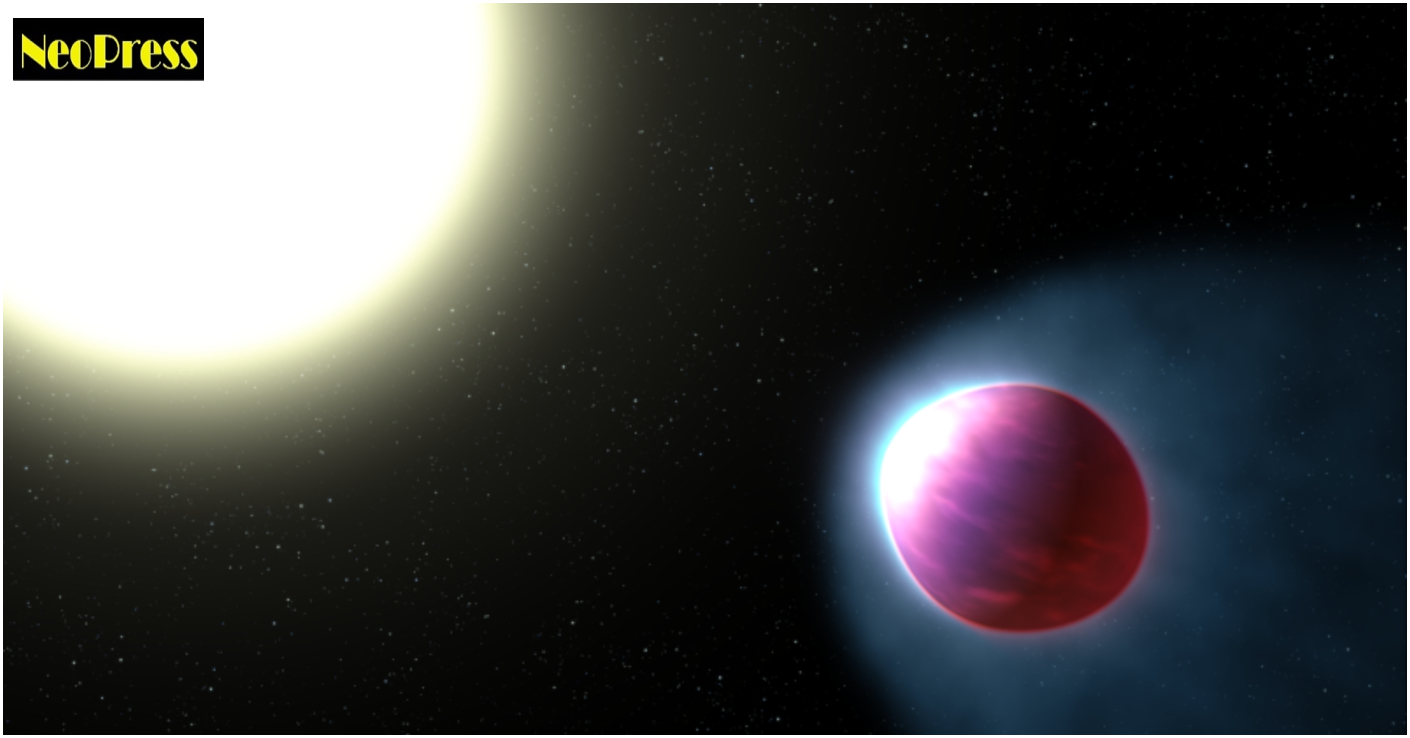
In a first, scientists have detected glowing water molecules in the atmosphere of a planet outside our solar system, implying that the exoplanet has a strong stratosphere.

The planet, WASP-121b, located approximately 900 light years from Earth, is a gas giant exoplanet commonly referred to as a “hot Jupiter.”

Finding glowing water molecules on the planet’s atmosphere, however, may not men detecting signs of alien life as its stratosphere – a layer of atmosphere where temperature increases with higher altitudes – is hot enough to boil iron.

“This result is exciting because it shows that a common trait of most of the atmospheres in our solar system — a warm stratosphere — also can be found in exoplanet atmospheres,” said Mark Marley, study co-author based at NASA’s Ames Research Center in California’s Silicon Valley.

“We can now compare processes in exoplanet atmospheres with the same processes that happen under different sets of conditions in our own solar system,” Marley said.

The discovery reported in the the journal Nature was made using NASA’s Hubble space telescope.

“The stratosphere of WASP-121b so hot it can make water vapour glow, which is the basis for our analysis,” said Drake Deming, Professor of Astronomy at University of Maryland and a co-author of the study.

To study the gas giant’s stratosphere, scientists used spectroscopy to analyse how the planet’s brightness changed at different wavelengths of light.

Water vapour in the planet’s atmosphere, for example, behaves in predictable ways in response to certain wavelengths of light, depending on the temperature of the water. At cooler temperatures, water vapour blocks light from beneath it. But at higher temperatures, the water molecules glow. The water molecules in the atmosphere of WASP-121b give off radiation as they lose energy, but it is in the form of infrared light, which the human eye is unable to detect.

“Theoretical models have suggested that stratospheres may define a special class of ultra-hot exoplanets, with important implications for the atmospheric physics and chemistry,” said Tom Evans, research fellow at the University of Exeter in Britain and lead author of the study. “When we pointed Hubble at WASP-121b, we saw glowing water molecules, implying that the planet has a strong stratosphere,” Evans said.

WASP-121b has a greater mass and radius than Jupiter, making it much puffier. But while Jupiter revolves around our Sun once every 12 years, WASP-121b has an orbital period of just 1.3 days. This exoplanet is so close to its star that if it got any closer, the star’s gravity would start ripping it apart. This close proximity also means that the top of the atmosphere is heated to a blazing hot 2,500 degrees Celsius – the temperature at which iron exists in gas rather than solid form.

“This new research is the smoking gun evidence scientists have been searching for when studying hot exoplanets,” said David Sing, Associate Professor University of Exeter and a co-author of the research paper. “We have discovered this hot Jupiter has a stratosphere, a common feature seen in most of our solar system planets,” Sing added.

As a technology lover you may like our daily important technology news series. It’s a playlist and you can retrieve the total day-wise videos. Please consider subscribing our YouTube channel:

Author: Technology Vista

Tagged : /

Apply for this job! NASA seeks officer to defend Earth from aliens

NASA is hiring a “planetary protection officer” who would be tasked to protect the Earth from potential alien contamination.

The US government’s official employment site advertised the job which is open to US citizens and nationals for applications until August 14, Newsweek reported on Wednesday.

“Planetary protection is concerned with the avoidance of organic-constituent and biological contamination in human and robotic space exploration,” the advertisement said.

The person who lands the job will draw a six figure salary — $124,406 to $187,000 per year — and security clearance is listed as “secret.”

“NASA maintains policies for planetary protection applicable to all space flight missions that may intentionally or unintentionally carry Earth organisms and organic constituents to the planets or other solar system bodies, and any mission employing spacecraft, which are intended to return to Earth and its biosphere with samples from extraterrestrial targets of exploration” the job advert said.

“This policy is based on federal requirements and international treaties and agreements,” it added. Candidates must have “broad engineering expertise,” and should be an expert in planetary protection.

“This includes demonstrated technical expertise to independently form technically sound judgments and evaluations in considerably complex situations,” according to the advert.

As a technology lover you may like our daily important technology news series. It’s a playlist and you can retrieve the total day-wise videos. Please consider subscribing our YouTube channel:

Author: Technology Vista

Tagged : /

Now, Control Microsoft Windows With your Eye! Microsoft launches ‘Eye Control’ beta for Windows 10

To empower people with disabilities to operate an on-screen mouse and keyboard, Microsoft has announced beta version of ‘Eye Control’ feature for Windows 10 that can be accessed by using eye movements.

According to a blog post by Dona Sarkar, Software Engineer at Microsoft, the ‘Eye Control’ feature requires a compatible eye tracker, like the ‘Tobii Eye Tracker 4C’, which can unlock access to the Windows operating system.

Once ‘Eye Control’ is turned on, a launchpad appears on the screen that allows a user to access the mouse, keyboard, text-to-speech and to reposition the User Interface (UI) to the opposite side of the screen. “To interact with the UI for ‘Eye Control’, simply look at the UI with your eyes until the button activates. A visual affordance will appear around the UI that you are looking at,” Sarkar said.

Users can control the mouse by simply selecting the mouse from the launchpad, position their eyes on the screen where they want the cursor to be placed.

Users can select the keyboard from the launchpad and dwell at the characters they want to type. However, the new tool faces challenges in direct sunlight and, therefore, the company said the device might require new calibration when moving to a location with different lighting conditions.

Also, the launchpad partially blocks the ‘Tobii UI’ during device calibration. “To work around this, turn off Eye Control during calibration and turn it back on when you are done,” Sarkar noted. The ‘Eye Control’ feature currently supports only selected eye trackers of ‘Tobii’ hardware.

As a technology lover you may like our daily important technology news series. It’s a playlist and you can retrieve the total day-wise videos. Please consider subscribing our YouTube channel:

Author: Technology Vista
Tagged : /

Now, sunglasses that can generate solar power

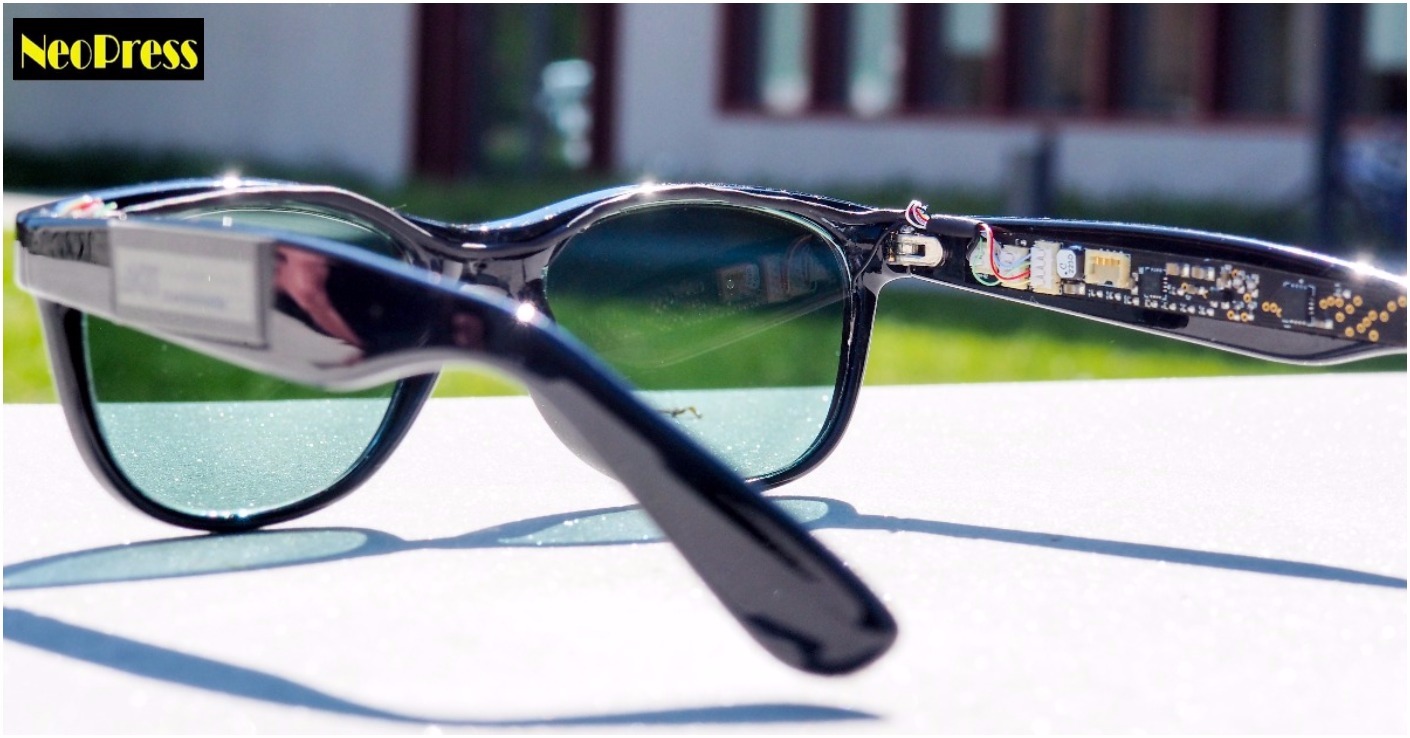
Researchers have designed new “smart” solar sunglasses incorporating semi-transparent organic solar cells that can generate electric power enough to operate devices such as hearing aids.

The invention can pave the way for other future applications such as the integration of organic solar cells into windows or overhead glazing, the researchers said.

“We bring solar power to places where other solar technologies fail,” said Alexander Colsmann, from the Karlsruhe Institute of Technology (KIT) in Germany.

“The solar glasses we developed are an example of how organic solar cells may be employed in applications that would not be feasible with conventional photovoltaics,” added Dominik Landerer, doctoral student at the KIT.

The solar cell lenses, perfectly fitted to a commercial frame, have a thickness of approximately 1.6 mm and weigh about six grams — just like the lenses of traditional sunglasses.

A microprocessor and two small displays are integrated into the temples of the solar glasses, which help these “smart” glasses to be self-powered to measure the solar illumination intensity and ambient temperature and view as bar graphs.

These solar glasses also work in indoor environments under illumination down to 500 lux — the usual illumination of an office or a living area.

Under these conditions, each of the “smart” lenses still generates 200 milliwatt of electric power — enough to operate devices such as a hearing aid or a step counter.

The solar cells, based on hydrocarbons, are very exciting devices due to their mechanical flexibility and the opportunity to adapt their colour, transparency, shape, and size to the desired application, Landerer added, in the paper detailed in the Energy Technology journal.

These solar glasses can also be integrated into the glass facades of high-rise buildings. Organic solar modules can be used for transforming the absorbed light into electric power, the study added.

As a technology lover you may like our daily important technology news series. It’s a playlist and you can retrieve the total day-wise videos. Please consider subscribing our YouTube channel:

Author: Technology Vista

Tagged : /
Verified by ExactMetrics