THIS WiFi chip by NASA consumes very low power and operates at whopping speed!

NASA’s new cool invention of this WiFi chip is going to be in great demand; once it is released in the market. Why? This chip, which can be used in computers, wireless phones, and other electronic devices, consumes 100 times less power than the conventional receivers.

Wifi

This chip was developed by Adrian Tang, researcher at NASA’s Jet Propulsion Lab in California and, University of California-Los Angeles professor, MC Frank Chang, Extension of battery life in nearly every device that uses WiFi, is guaranteed by using this chip. Amazed? Read on for the mechanism behind this.

The secret behind the chip’s speed is that it doesn’t generate its own signal, but instead, reflects a constant signal sent by a customised router. The data is then imprinted of the signal reflected.

Now, as it imprints the data, and the signal is a reflected one, no power is consumed.

chip20150722

The last problem that now arose, was that of recognizing the correct reflected signal carrying the data. For this purpose, a specialised router hardware was selected to isolate the signal and read the data being received. The team claims to have reached a whooping speed of 330 megabits/sec when transferring files with this chip.

[adinserter block=”7″]

Author: Technology Blog

Tagged : /

THIS is how Tidal Turbines works!

In the constant need to determine ways of utilizing the renewable resources of energy, the ocean is the big reservoir brimming with potential, literally. A British startup, has come up with the plan to build a fence which would harness the power of the ocean and generate electricity.

1375342906343927332

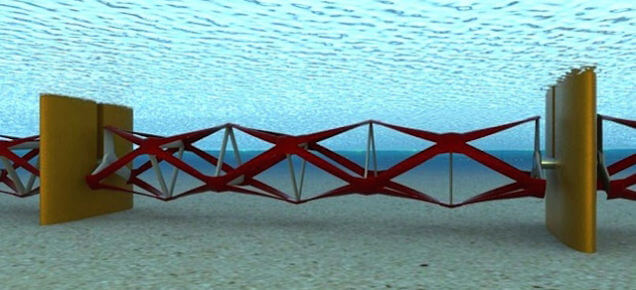
According to Kepler Energy, these fences are more efficient and handy than those off-shore wind farms. Not only will the model get to work as soon as it is installed, the length of the fence is proportional to the power generated. Hence, the longer the area of the fence constructed, the better it meets the energy requirements. Go to into the details, the Kepler’s “Transverse Horizontal Axis Water Turbine” consists of a string of linked carbon composite turbines, placed at the best spots beneath the ocean’s surface to exploit tidal flow.

These fences are assuredly placed at shallow water spots and slow moving tide, which would prove to be marine loving, and would keep from serving as a “shark shredder”, if you will. Much of precious marine life has been harmed in the past, and this fence hopes to be an improvement over the previous offshore wind and ocean power installments.

1375342906231452708

Kepler plans to raise $221 million USD to install the first prototype of 1 kilometer at the Bristol Channel. Kepler chairman Peter Dixon is taking the long view: “If we can build up to, say, 10km worth, which is a very extended fence, you’re looking at power outputs of five or six hundred megawatts,” he told Reuters. “And just to visualize that, it’s like one small nuclear reactor’s worth of electricity being generated from the tides in the Bristol Channel.”

[adinserter block=”7″]

Author: Technology Blog

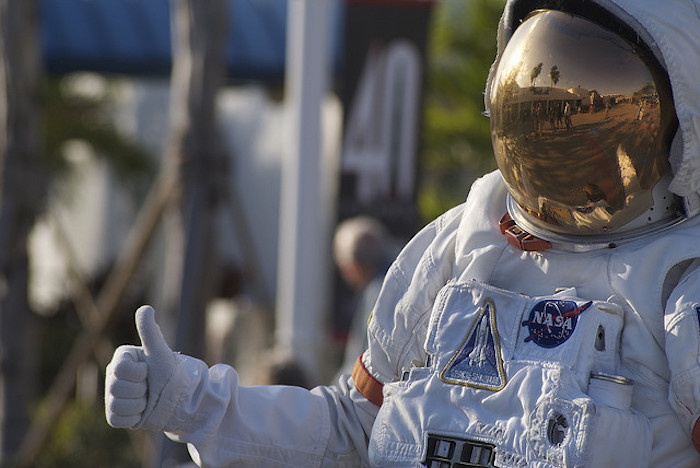
It’s tough being astronaut. NASA plans to convert human poop into astronaut meals!

Astronauts don’t have a usual job like us.. yes yes… you would say even we don’t have a usual 9 to 5 job! But even then, none of us have to leave our dear planet to work and isn’t that usual enough? Imagine orbiting the planets and in the space in zero gravity, wearing those heavy space suits and only canned foods as edibles. Not only this, but they have to wait for supply carriers for basic necessities. Oh God! Tough … isn’t it?

2219197593_83032ff94d_z

The current aim of the NASA is to send manned missions to the moon and the Mars. And from its last mission, space shuttle program that ended in 2011, it learned a lesson. Since the completion of that mission it has relied on commercial carriers like Space X and Orbital Sciences and other countries’ space programmes to ferry supplies to the astronauts working at the International Space Station. And during these ferry supply missions, delayed launches and explosions have proved problematic for feeding, those orbiting the Earth.

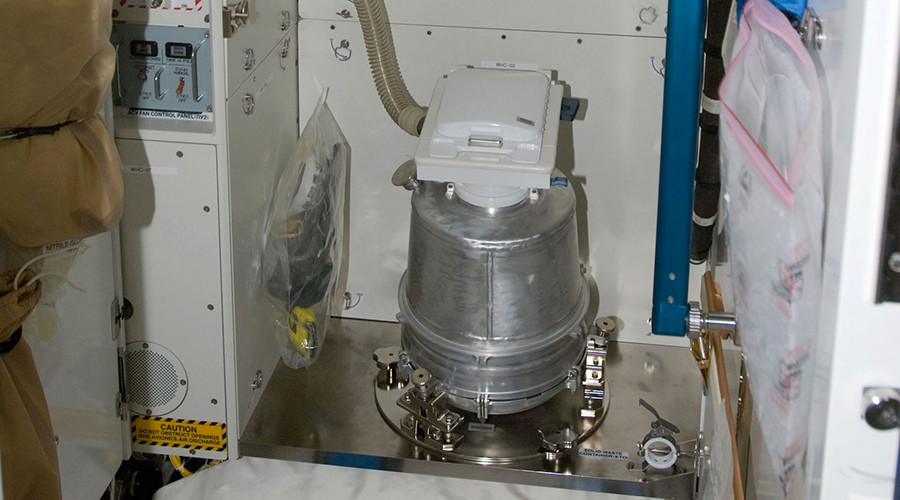
Taking a cue from all these problems NASA has decided to find innovative and renewable ways to feed its astronauts in the long run. Keeping this aim in mind, the space agency has granted $200,000 a year to a project that recycles human poop into man-made food. The project called Synthetic Biology for Recycling Human Waste into Food, Nutraceuticals, and Materials: Closing the Loop for Long-Term Space Travel is run by Mark Blenner of Clemson University in South Carolina.
Steve Jurczyk, associate administrator for NASA’s Space Technology Mission Directorate at the agency’s headquarters in Washington, DC, said:  “The faculty selected and their colleagues help assure a robust university research community dedicated to advanced space technology development. Investments in these technologies and technologists is essential to ensure NASA and the nation have the capabilities necessary to meet the challenges we will face as we journey to Mars.”

55d3af8bc46188900a8b45d1

It is to be noted, that keeping the same thing in mind, in May, ISS astronauts had begun growing red romaine lettuce in the final frontier by watering the plant roots. Half of the harvest was then transferred to Earth for testing after 33 days of growing in space. Since last Monday the lettuce is going through the phase of taste-testing.

[adinserter block=”7″]

Author: Technology Blog
Waiting impatiently! Where are all those aliens?

Who can forget the lovable, affable character of ET from Steven Spielberg’s classic movie E.T- The Extra-terrestrial and the bond it shares with the kids? That movie moved one and all and made everyone feel for the otherworldly creatures if they exist. “Do you believe in aliens?” is as ancient a question as “do you believe in ghosts?” There are billions of planets in our Milky Way and our Earth is just the size of the tip of a needle in the whole Universe. So it is natural that we can’t be alone in this whole universe; there have to be other beings like us somewhere in a far far world! But where and how far? The answer to this question according to a new paper is: the galactic centre! And the study also assumes that those alien friends are far more ancient than us humans.

200170-predator-006

There was a time when we didn’t even know about the planet we lived on. But now as time progressed and technology with it, we became capable enough to peep around in the space around our planet and make assumptions about the life beyond us. Now we know that our planet is not the only one, our sun is not the only one and there are thousand such worlds as ours. Mike Gowanlock, a post-doctoral researcher at MIT’s Haystack Observatory, said: “It’s only been recently with Kepler that we’ve learned there are small, Earth-sized planets around a range of stars.” But since earth is the only planet we know that has life as of now, we will have to start alien hunting with certain assumptions. If we consider our planet as a good prototype for planets with life then the basic requirements list will include a star of a certain brightness and metallicity, a healthy dose of evolutionary time and a relatively disaster-free cosmic environment. We can call these areas as “Galactic Habitable Zones” but where is the probability of finding such zones?

2921588-Hot_Toys_Scar_Predator

To answer this question, Gowanlock and his colleagues used computer simulations to construct the first ever “habitability heat map” of the Milky Way. This map was to help them identify the most promising regions for complex land-based life to emerge.  Their models took into account the mass and density of stars, star formation history, galactic chemical evolution, and time. They also included a cosmic disaster: Exploding stars. It is to be noted that supernova explosions are a major powerful cosmic event. When it happens, the neighbouring stellar members get showered with high-energy x-ray and gamma radiation so much so that any earth-like biosphere within a few parsecs will be fried and toasted resetting the evolutionary clock. Using the map and modelling millions of stars with a galactocentric radius of anywhere from 14 to 2.5 kiloparsecs (1 kpc = ~3,300 light years), Gowanlock found that overall habitability increases towards the galactic centre because in the inner reaches of the galaxy, stars are packed much more tightly and apocalyptic supernovae are much more common but the ‘reset’ events are outweighed by the sheer density of the stars which in turn provides more opportunities for life to flourish.

Next Page For More

Tagged : /
Verified by ExactMetrics