THIS glider controls deep sea pollution and protects our environment!

19 European countries and Britain’s National Oceanography Centre (NOC), is working on a project to build BRIDGES Glider in order to check and control deep sea unrest caused due to mining and other industrial activities.

bridges-glider@2x

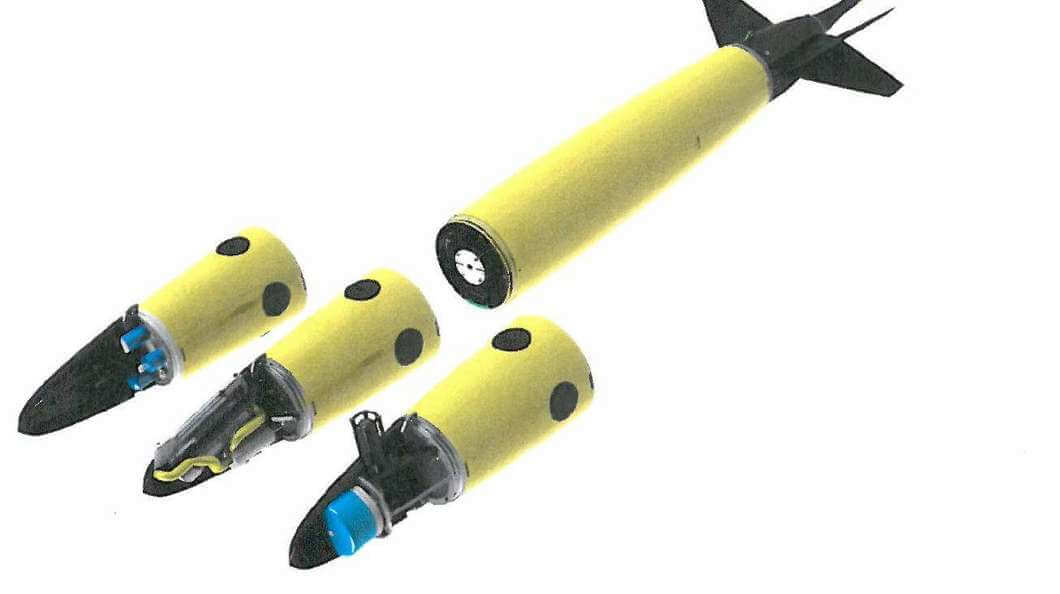
BRIDGES Glider specialises in determining the negative impact on the marine ecosystems, and monitoring the formation of sedimentary plumes from mining. This technology uses unique new modular payload design, and thus its nosecone and and other parts can be changed for different missions. New sensors and modus operandi never used before have been applied in this project. BRIDGES can handle up to three months of underwater cruises at about 16,400 ft depth. The convenience and usefulness of this glider, makes it a pretty nifty achievement.

“The development and integration of sensors that can work at these depths will be a real challenge,” says NOC project leader Dr Mario Brito. “It is something that has not been done before and so the science behind it is really innovative. Furthermore the range of sensors this glider can carry makes it well suited to a wide range of applications, both within research and industry.”

slocum_sea_glider_underwater_autonomous_vessel_internal_layout

Final testing of BRIDGES Glider is scheduled for September 2019.

[adinserter block=”7″]

Author: Technology Blog

Hawaii Power Plant Using Termal gradient of Water to generate Power!

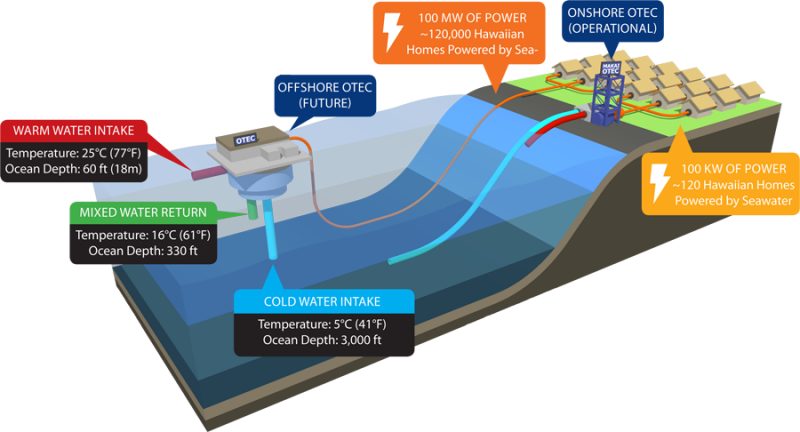
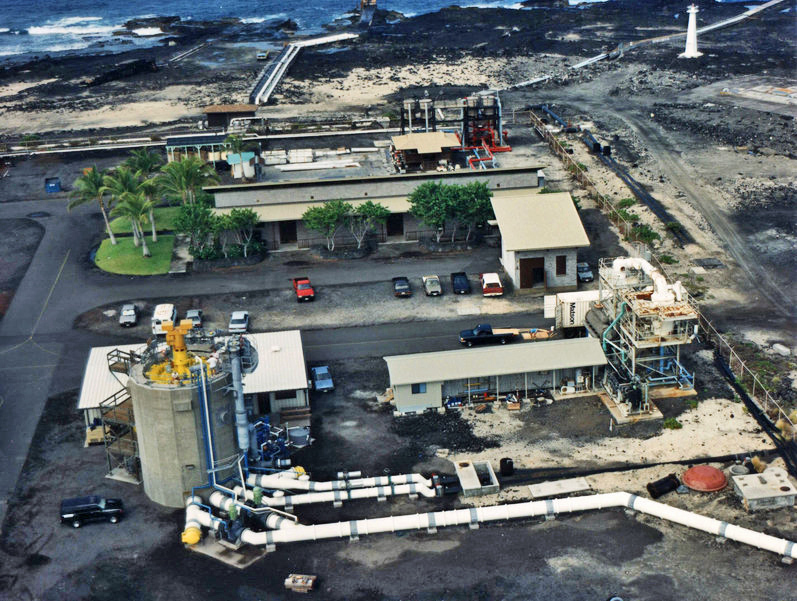
The ocean’s water have temperature variations to the extreme. We are tanned at the beach, and down on the ocean floor its past chilly. Power plants are being bought up with the idea to utilize this temperature difference. The latest of these power houses opened up in Hawaii last week and will be capable of powering 120 houses, according to estimates. The plant, built by Maki Ocean Engineering and situated at the Natural Energy Laboratory of Hawaii Authority (NELHA) is the largest plant of its kind in the world.

OTEC-Cycle-FINAL-png

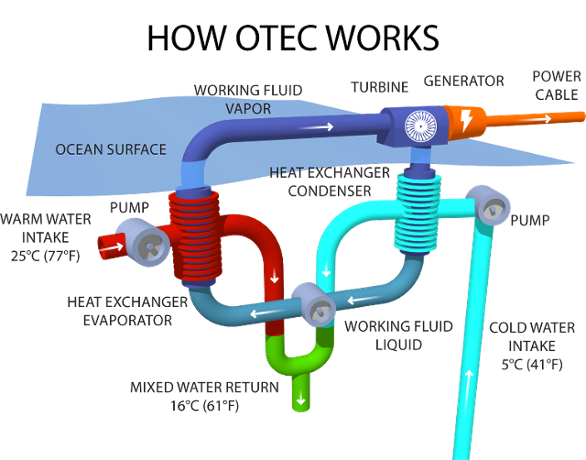
The theory behind these power plants is the Ocean Thermal Energy Conversion (OTEC). This concept is fairly old and had been put to use back in 1981. With emergence of need to using renewable resources, OTEC is back in demand. In 2010, a thermal engine was created and to power an unmanned submarine indefinitely.

The system of generating energy in the power plant is pretty straightforward and uses a liquid with very low boiling point, like ammonia. This is to ensure that not too much energy is needed to heat up the liquid. The liquid passes through an arrangement of close tubes where warm water from shallow waters (77 degrees Fahrenheit) heat it up, and when it passes through frigid (41 degrees Fahrenheit) seawater pumped up from depths of around 3,000 feet, it cools down. Heating up vaporizes the liquid and provides push to the turbine, and in turn energy. On cooling downing, the liquid condenses and returns to its original state and is pumped back into the ocean.

OTEC_in_Hawaii

Water is a plentiful and efficient renewable resource to exploit, and the Maki Ocean Engineering hope to move their operation offshore where it can directly use water from the appropriate depths and provide for up to 120,000 homes.

[adinserter block=”7″]

Author: Technology Blog

Harvesting sound energy-Boeing shows the Way

For people whose houses are near an airport, the sound of airplanes landing and taking off is a big nuisance considering the roar it produces. Jet engines as such are quite loud at approximately 140 decibels. What if this loud sound could be dampened and made useful in something constructive? Chin Toh, an employee of Boeing wants this to happen. Chin Toh has filed for a patent for a ‘method for producing electricity from airport acoustical energy.’ Toh expresses: “Heretofore, there has been no way to recycle the acoustic energy generated by aircraft during takeoffs and landings. This acoustic energy is left to dissipate and represents a lost energy resource.”

boeing-787

Toh’s idea is to harness the intensity of all those sound waves created by landing and taking off of planes and turning it into electricity that in turn can be used for various operations at the airport. Toh’s idea also suggests some changes in the appearance of how a runway now looks like.

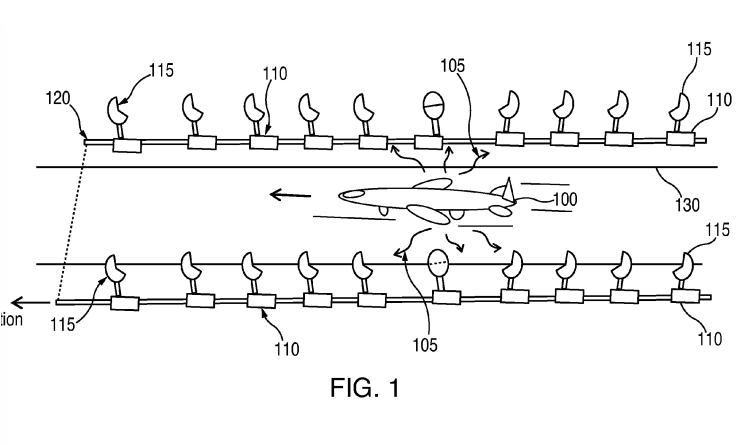
In Toh’s design, the runway would be lined with thousands of acoustic wave collectors situated along the edge of the runway like lighting systems. These acoustic wave collectors would then collect and focus the sounds—the vibrations—of the engine’s roar while taking off or landing. Then this vibration energy would be converted into air flow, powering a turbine that then generates electricity. A substation at the end of each link would collect and transmit this energy to the ultimate source.

Theoretically, the idea sounds great but if we take into consideration the MIT’s School of Engineering’s explainer on sound energy (which points out that what the human ear perceives as clanging cacophony—the roar of a train engine or the whine of a pneumatic drill—only translates to about a hundredth of a watt per square meter), the idea doesn’t make much practical sense. In addition to this, Toh’s design would also require a huge amount of work and money too to make changes on the runways in order to implement the project.

1442280959884427300

Though presently the idea doesn’t look that practical but it surely is a promising one, if sound harvesting technology can be improved in future to these extents. And if it really happens sometime in future, then not only will it generate extra electricity but will also put a creative end to the problem of noise pollution near airports.

[adinserter block=”7″]

Author: Technology Blog

Recover energy using regenerative braking: London tube trains is going to achieve that!

What with all the climatic changes happening all around us, the whole world has seriously started considering the importance of reducing carbon footprints. Moving on the same path, the Transport for London (TfL) authority, carried out a five-week trial of a regenerative braking system which is touted as the ‘world’s first’ that could knock off five percent of London Underground’s energy bills and lead to savings of up to £6 million (US$9million) per year.

london_tube_train.jpg.662x0_q70_crop-scale

It is to be noted that London’s Underground carries 1.2 billion passengers a year over 402 km of track contributing to a humongous energy bill every year. The technology that is being talked about uses an ‘inverter’ energy capture system which recovers energy from the train’s brakes and feeds it back into the mains in the form of electricity.

The trial of this new technology was carried out at the Cloudesley Road substation on the Victoria line and was part of a system-wide modernization programme. In a span of one week, the system under tests, recovered enough energy to power Holborn station for over two days per week.

TfL informs that the technology can recapture up to 1MWh of energy per day and this in turn could run 104 homes per year. Apart from supplying energy the new technology would reduce the Underground’s carbon footprint because braking a train turns the energy into heat which has to be carried away by air conditioning systems.

2.23925164

This new technology will ensure less heat, less need for air conditioning and greater energy savings. All in all, whenever this technology is put into practice it will be a win-win situation!

[adinserter block=”7″]

Author: Technology Blog

Tagged :

Only a Second Big Bang can explain the amount of dark matter present in the Universe!

Regular cosmology–that’s, the Big Bang Theory using its early span of exponential increase called inflation–is the prevalent scientific model for our universe, where the entirety of space and time ballooned from an extremely hot, very dense point right into a homogeneous and ever-enlarging vastness. This theory accounts for most of the physical phenomena we find. However, what if that is not all?

Big-Bang

Quantifying the quantity of dark matter is not any simple job. It’s dark after all and it will not interact in any substantial manner with normal matter. However, scientists are given an excellent notion of how much of it’s available by gravitational effects of dark matter. The very best estimates suggest that it makes up about a quarter of the universe of the mass energy budget, while common matter–which makes up our planet, the stars, and us–constitutes only 5 percent. Dark matter is the dominant type of material in the universe, which prompts physicists to formulate experiments and theories to comprehend how it is originated and how to investigate its properties.

Some theories those describe perplexing oddities in physics–for instance, the inordinate weakness of gravity in comparison with other fundamental interactions including the electromagnetic, strong nuclear, and weak nuclear forces–cannot be entirely accepted since they forecast more dark matter than empiric observations can support.

That issue is solved by this new theory. His co-workers and Davoudiasl put in a measure to the generally recognized occasions in the beginning of time and space.

In conventional cosmology, the exponential growth of the universe called cosmic inflation began perhaps as early as 10-35 seconds subsequent to the start of time. This explosive growth of the entirety of space lasted only fractions of a second, finally resulting in a hot universe, followed with a cooling period which has continued until the present day.

Next, when the universe was just seconds old–that’s, enough that was cool –the formation of the lighter elements started. Between those landmarks, there could have been other interludes that were inflationary, said Davoudiasl.

Initially, when temperatures soared billions of degrees in a comparatively modest volume of space, dark matter particles could run into each other and annihilate transferring their energy into normal elements of matter-particles like electrons. But dark matter particles fell upon one another much less frequently as the universe continued to expand and cool, as well as the annihilation speed could not keep up with the growth speed.

Thus, annihilation speed cannot continue at lower temperatures. Self-annihilation of dark matter becomes ineffective rather early, as well as the number of dark matter particles are frozen.

b7d3a3cf0aa812d0916cde29411e5a72f285c26e

On the other hand, the poorer the dark matter interactions, in other words, the less efficient the annihilation, the more complex the closing wealth of dark matter particles would be. There are several present theories that end up overestimating the amount of dark matter as experiments put ever more rigorous constraints on the potency of dark matter interactions. To bring theory into conjunction with observations, Davoudiasl and his co-workers propose that another inflationary period occurred, powered by interactions in a “hidden sector” of physics. This second, more moderate, interval of inflation, defined by a rapid increase in volume, would dilute particle abundances that are primordial, possibly making the density of dark matter to the universe now we watch.

“But we did not need to build something complicated. We reveal how a simple model can reach this brief quantity of inflation in the first universe and account for the quantity of dark matter we consider is available.”

Establishing the theory is another story completely. Davoudiasl said there might be a means to try to find at least the very weakest of interactions involving normal matter and the hidden sector.

[adinserter block=”7″]

Author: Technology Blog

Iris scanning technology: How will it impact you and the smartphone areana

Security remains an issue that plagues the mobile tech industry. So far, biometric technology has provided mobile owners the security they need to keep their data safe. Currently, there are two types of human scanners that are featured on smartphones today: face recognition scanners, which Google have been using since their Ice Cream Sandwich series, and fingerprint sensors that are commonly used on many of the expensive premium handsets available.

However, iris scanners, a new form of biometric technology will appear on the next wave of handsets. What do we know about this new form of mobile technology? Is it here for the long-term?

It’s more secure and cheaper
A group of researchers from Texas State University explained that iris scanning has been found foolproof. Compared to the face and finger scanning systems, the iris is the most authentic part of the body, which has been found to have patterns that remain stable throughout a person’s life. The uniqueness of the iris makes it difficult to forge. It also promises to be less intrusive, as it doesn’t use laser technology like you might see in the movies. Lastly, the speed of the technology to authenticate the user is extremely fast as it was essentially designed for large-scale applications such as ATMs.

Dr. Oleg Komogortsev, head of the research team, said that the new biometric identification is harder to imitate and will help make many devices safer.

Top companies are embracing the technology
It was Fujitsu who released the first iris scanning smartphone last year. The iris scanner, entitled the Iris Passport, can unlock the handset in 0.6 seconds. Apart from the Japanese tech giant, many mobile producers have released their own version of iris scanning mobile devices after, such as Microsoft (950 XL), Vivo (X5Pro), ZTE (Grand S3), Alcatel (Idol 3), and UMI (Iron).

At the moment, premium handsets are utilizing fingerprint-scanning technology. In fact, even those high-end smartphones that are now included in the January sale featured by O2 are using fingerprint sensor.

Samsung and LG are currently said to be working on their next flagship devices with built-in iris scanning technology. These include the Galaxy S7 and G5 respectively. Both handsets are expected to be released this year at some point, although no dates have been officially confirmed by the companies.

Other industries planning to use it
In India, iris sensors have been utilized by the government to record Indian citizen’s identities. In 2014, the country was able to enroll 600 million citizens, which is linked to their government ID and information protocols.

“One cannot improve human beings,” said Ram Sevak Sharma, the director general of the identity program. “But one can certainly improve systems. And the same flawed human beings with a better system will be able to produce better results.”

The financial industry will also be reshaped by iris scanning technology. ATMs will be equipped with biometric technology that will make each and every authentication process faster and more secure. Presently, CitiGroup is testing its potential among others. It will lessen the increasing problem of data theft and card skimming. Banking apps are projected to also maximize said feature, however many leading banks are currently undergoing extensive testing.

Given that biometric technology for smartphones is still in its infancy, it might be a significant amount of time before the public completely embraces the benefits brought by this innovation. Nevertheless, we hope it will be a staple feature of all smartphones in the future, whether high-end or budget-friendly handset. What do you think of iris scanning mobile devices? Share your thoughts with us.

[adinserter block=”7″]

Author: TechnoloJen

AVI

About The Author: TechnoloJen is a tech enthusiast from London, who has been following all the latest trends in the industry including the upcoming ones. She hopes to be invited to one of the top tech conferences to cover the latest news and share it in her blossoming number of social media and website followers. She is also a seasoned traveller, who has been to various natural reserves in the world from Europe to North America and Asia.

Verified by ExactMetrics