Your bosses are the ones who waste more time while working!!

A recent survey conducted by Bamboo HR may make both employers and employee very happy and there is more than one reason to do so. This age of social networking has created quite many distractions at the work place opine many. But if the Bamboo HR survey is to be taken into account, this is surely not the case. When it comes to distractions, the break room or water cooler still tops the chart.

office-2

The survey explains that the employers need not worry about employees spending time on social networking sites because however strange it may sound, but when it comes to wasting time, employees haven’t changed that much. The survey that involved over 1000 US based full-time workers over the age of 18 found that the most popular way of stealing time from work for employees is still taking breaks to the office kitchen, water cooler or break room. (After all we human beings are still primal and keep hunting for food!J ).

The second most popular way of wasting time, was taking bathroom breaks followed at the third spot by gossiping and participating in small talks with co-workers. The fourth most popular time-waster came out to be communicating with family members via phone, email, text and social media. The next four in the top eight time wasters were, running personal errands or shopping online, communicating with friends, using social media for personal purposes, and watching television! (And then people complain about workplace stress!)

But this is not all. The most interesting finding of the survey was (and this may cheer some of the lower level employees!) that across the board, upper management and executives spend more time or to be more precise waste more time in each of these activities as compared to lower level employees (entry level, intermediate and middle management). So if you are busy checking out the latest update on a friend’s profile, chances are, your boss is also busy buying some piece of jewellery online for his wife!

office-3

In addition to all these findings the survey though pointed out that despite ranking low in the list of time wasters, social media is the most hindering activity when it comes to productivity. According to the survey, 68 percent of employees considered that using social media for personal, non-work-related reasons each day as a break/distraction from work tasks was appropriate, although what exactly should be the duration for ‘appropriate’ nobody could tell. So fret not friends, next time whenever your boss scolds you for wasting time, you know what the reality is!

[adinserter block=”7″]

Author: Technology Blog

Sea trials begin for US Navy’s first Zumwalt-class destroyer

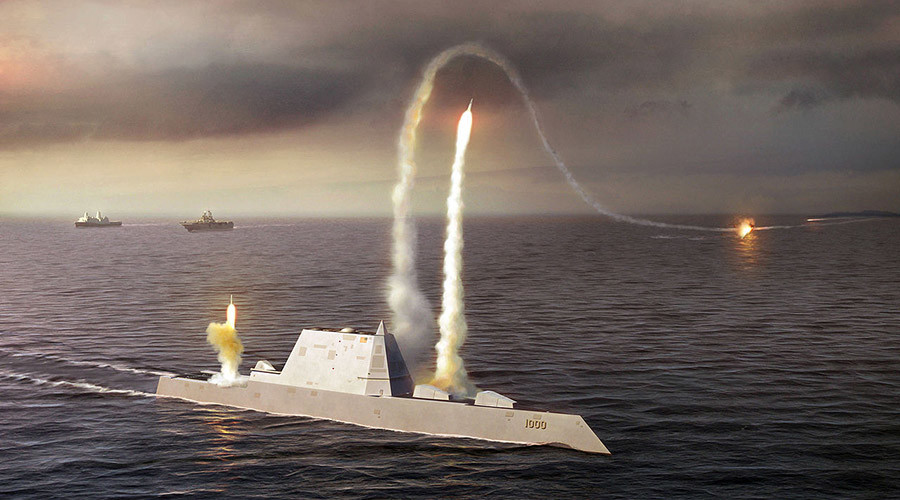
Wars and warships are inseparable. In present times when the security of one’s nation is the biggest thing on the minds of the leaders of various countries, improvement and enhancement in war capabilities is a must. US being a superpower and being a victim of terrorism (who can forget 9/11?), has always believed in this. With this belief, it has started at-sea tests and trials of the future USS Zumwalt (DDG 1000).  The warship has been named after former Chief of Naval Operations Adm. Elmo R “Bud” Zumwalt Jr.

zumwalt-3

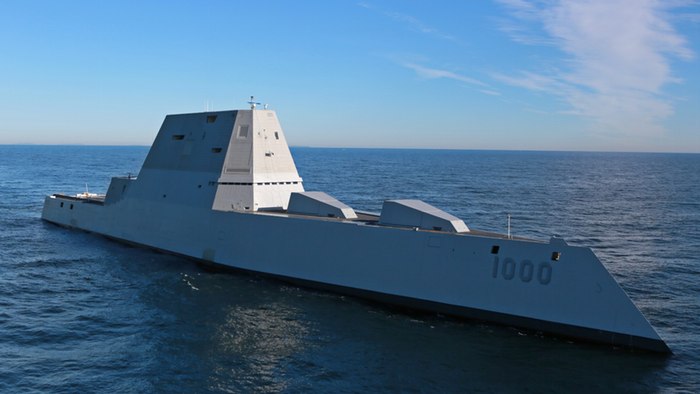
It is the largest destroyer ever built for the US Navy and the first of three Zumwalt-class destroyers. The construction of this US$4 billion warship began in 2009 and it was launched in 2014.

The Navy informs that it has been designed to operate independently in forward areas to provide presence and deterrence, as well as operating with joint and combined expeditionary forces as a multi-mission Anti-Air Warfare, Anti-Submarine Warfare, and Anti-Surface Warfare unit. The sea trials conducted in the Atlantic Ocean are the first in a series of tests leading up to the commissioning of Zumwalt next year.

The Zumwalt is unique not only because of its size but also because of its distinct tumblehome hull composite superstructure, which is part of a suite of advanced stealth features that reduce the ship’s radar profile by a factor of 50 over current destroyer designs.  The destroyer is armed with two 115 mm Advanced Gun Systems (AGS) firing rocket-powered precision Long-Range Land Attack Projectiles (LRLAP) with a range of 63 nm (117 km) which is three times greater than current surface gunnery. It can carry a crew of 130 and an air detachment of 28.

zumwalt-1

The US Navy informs that the Zumwalt is the first US warship to incorporate the Integrated Power System (IPS), which is an all electric system powered by gas turbines. The destroyer also boasts of 80 MK-41 peripheral vertical launch system (VLS) missile cells, a stern ramp for launching two Rigid Hull Inflatable Boats, and a flight deck for two MH-60R or one MH-60R and 3 VT Unmanned Aerial Vehicles.  Originally, 32 of the Zumwalt-class ships were ordered, but due to cost issues this number got reduced to three. Construction is already underway on the other two namely: Michael Monsoor (DDG 1001) and the Lyndon B Johnson (DDG 1001).

[adinserter block=”7″]

Author: Technology Blog
This Japanese exoskeleton without batteries could help users walk and run

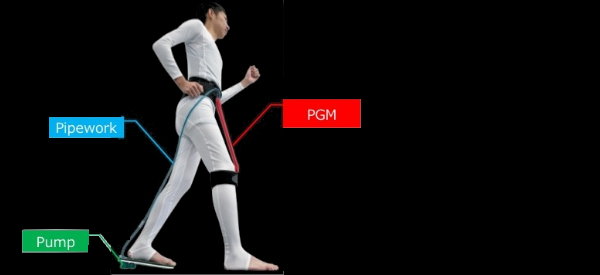
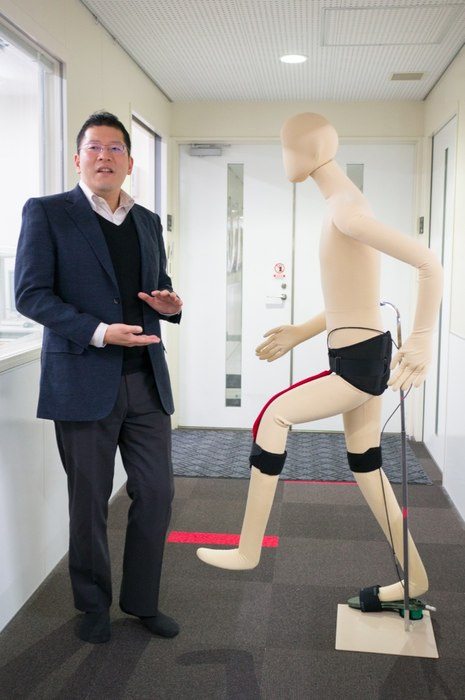
Assistive exoskeletons have proved to be quite useful in many scenarios and situations but the problem with most of these exoskeletons is that though they provide the users with a power boost a part of that power boost has to be utilized to move the extra weight of the heavy batteries and motors which are a part of the exoskeleton. To overcome this problem and to provide the users with a comfortable option, Japanese researchers at Hiroshima University and Daiya Industry Co. have created a minimalist exoskeleton that harnesses the power of the wearer’s own weight instead of heavy batteries and motors. This exoskeleton has been named as Unplugged Powered Suit (UPS).

UPS-2

The UPS consists of a pump located under the sole of the user’s foot, an air hose that runs up from the pump along the length of the leg and a PGM called Pneumatic Gel Muscle. When the wearer takes a step, his/her foot presses own on the pump. This push causes the air to run up the hose to a hip belt where it is relayed into the PGM. A gel is contained within the device. At the level of the hip belt the air relayed into the PGM causes the gel to compress temporarily.

This compression causes the whole thing to contract and relax like a natural muscle. In this exoskeleton, there is a possibility of getting different forms of supports and configurations depending on the position of pump under the foot and the PGM on the leg. One configuration increases the speed at which the user’s legs move while walking. Another configuration claims to decrease the overall effort in maintaining a jogging pace.

Associate Professor Yuichi Kurita explains: “The UPS is designed to support human motion where and when needed. This means that we can customize the UPS to the user’s particular needs such as muscle strength for athletes and rehabilitation. In the future, we can develop smarter assistive suits including wearable actuators and sensors by using our technique.”

UPS_3

The exoskeleton will be on display this month at the International Robot Exhibition 2015 in Japan. Also, because of the absence of heavy batteries and motors, the system will carry extra advantages of being inexpensive and easy to maintain.

[adinserter block=”7″]

Author: Technology Blog
Verified by ExactMetrics