Watch your sneeze in super slow motion

All of us remember how when we were little our mother would ask to cover our mouth when we sneezed. She would explain that our sneeze may cause someone to fall ill. And this is true because when one sneezes, the mucus and saliva launches out from the mouth at a speed of 10 miles per hour spreading various pathogens during this journey.

sneeze-4

But what path do these take? In order to understand the actual path the saliva and mucus take, researchers from MIT with the help of some volunteers studied the fluid dynamics of a sneeze.

For this study, the researchers asked some volunteers to sneeze 50 times in front of a high-speed video camera. After videotaping this, the team slowed down the footage. This super slow motion video of the sneeze showed that the mucus and saliva mix is actually a “sheet” of fluid when it first leaves the body, then breaks into scraps called bag bursts, then thins out into strings or “ligaments,” and finally disperses as germ-carrying droplets.

According to previous studies, smaller drops of fluid can travel amazingly long distances. So the next step the researchers want to move to is capturing sneezes in 3D using nine high speed cameras so that they get a chance to better understand how variable conditions change the size of the droplets.

sneeze-3

A better understanding of this phenomenon can help researchers and engineers stop the spread of diseases in confined spaces.

[adinserter block=”7″]

Author: Technology Blog
Pine cones inspired microbots may care for your skin

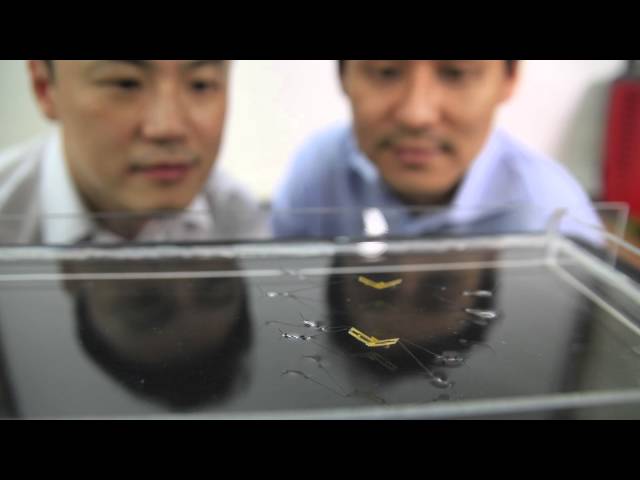
How would you feel if you had tiny robots taking care and attending to your skin problems? Amazing…. right? This is what a group of Seoul National University researchers are trying to do. They are trying to create tiny robots inspired by the slow motion of plants. Responding to change in humidity, parts of many plants (like mimosa leaves or seeds found in pine cones) swell and move.

Pine-2

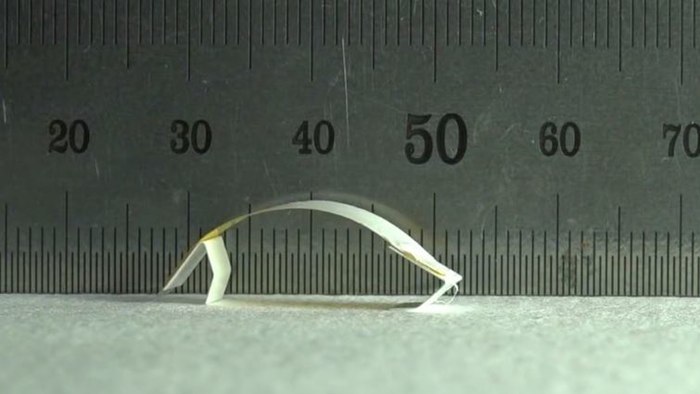
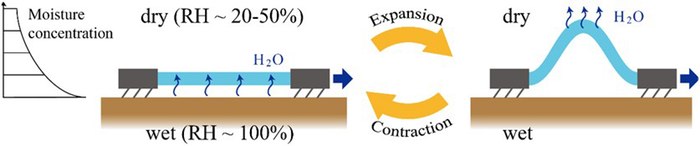
Changes in humidity cause these parts to bend and unbend repeatedly. The research team was interested to harness this motion to produce forward movement. Ho-Young Kim of Seoul National University explained: “This cyclic motion must be converted into directional motion to create a robot that moves. So we attached legs to our actuator, which allows only one-directional locomotion. We call the legs ‘ratchets’ and combined them with an actuator to build our bio-inspired robot.”

The point to note is that plants move really slowly, so much so that one cycle of bending an unbending takes an entire day. To overcome this problem, the researchers used active nano-scale fibres to increase the surface area-to-volume ratio of the absorbent layer; this enabled it to take in more humidity more rapidly. Since humidity changes occur all around us (for ex. Even breathing causes change in humidity as humid air is exhaled from our mouths) this concept can prove to be a game changer.

pine-3

The scientist community though is more interested in placing these microbots where humidity changes can be easily tapped into- the human skin. Docotr Kim explains in detail: “The concept is that by bending, some part of the robot will move away from the skin to encounter dry atmospheric air. When it dries, the robot will return to an upright position near the skin. Such a robot could do jobs like disinfecting wounds, removing skin wrinkles, and nourishing skin tissues.”

Pine-1

As far-fetched it may seem right now but we sure are keeping our hopes high.

[adinserter block=”7″]

Author: Technology Blog
Verified by ExactMetrics