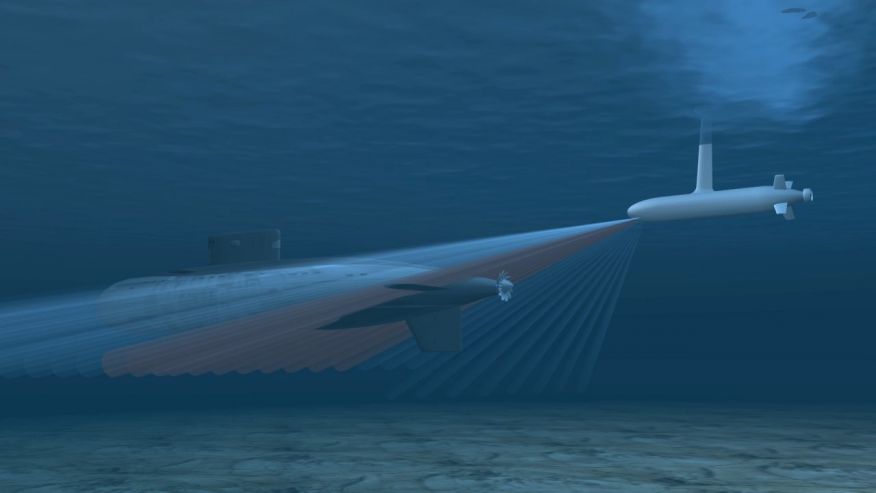
Wars and warships are getting smarter and more technical by each passing day. The one who can keep a step ahead of the other will be better poised to win. DARPA (Defence Advanced Research Projects Agency) keeps working on new technologies to better its defence systems in order to gain an edge in case of a war. Continuing with the same zest DARPA is just a few steps short in completing a 140-tonne 132-feet long unmanned surface drone capable of hunting submarines in the open ocean.
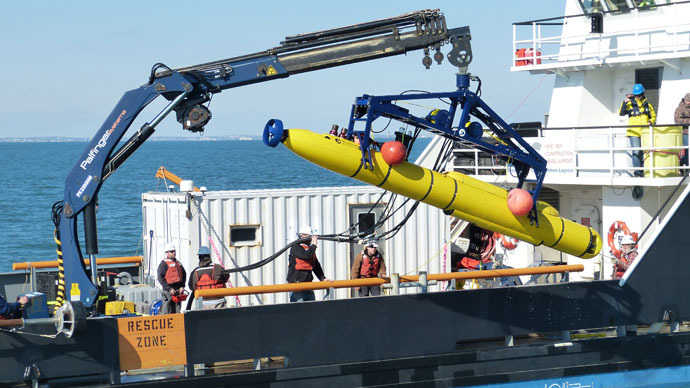
This drone has been christened as the Anti-Submarine Warfare Continuous Trail Unmanned Vessel (ACTUV for short). A huge advantage of using this drone would come in terms of money as according to DARPA estimates the vessel would cost drastically less than that of a typical naval destroyer, operating on roughly $15k to $20k per day as compared to around $700k per day for a traditional warship.
The ACTUV will be used to robustly track quiet diesel electric submarines. Apart from this, it has three primary goals. First, the agency wants to test the efficiency and effectiveness of of using an autonomous vessel in the field with a hope that not even a single human being is required to man the vessel. Secondly, DARPA looks to display the range the ACTUV is capable of covering on missions while remaining autonomously compliant with maritime laws. And finally, it hopes to demonstrate the drone’s unique ability to track and follow even the quietest of submarines over long distances.
[adinserter block=”7″]
Amongst the quality features of the drone, its ability to carry a larger payload than conventional ship-launched surface vehicles stands out. The drone also has the capacity to operate entirely on its own, launching and returning to a pier without any kind of human intervention. This is an important feature as it makes the requirement of companion ship an obsolete thing saving more money and time. In addition to all these, ACTUV has a really adaptable technology so it can be put to various different applications in other sectors of America’s armed forces like detecting mines.
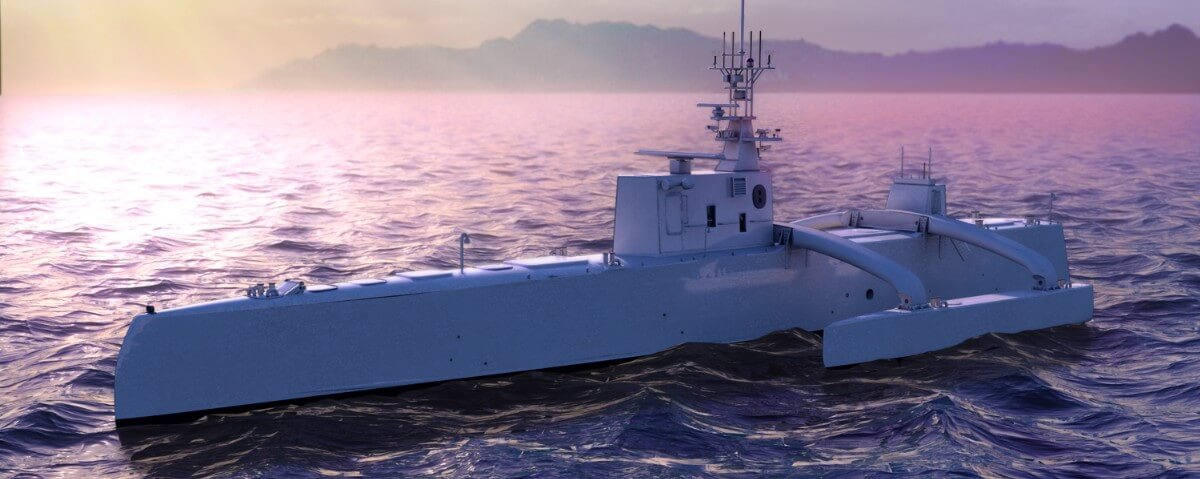
DARPA’s Tactical Technology Office program manager Scott Littlefield informs that, roughly 90 percent of the vessel’s hardware construction is finished, leaving just the ship’s software system left to complete. The command-and-control navigation system of the drone was regularly tested during the course of manufacture against the compliance requirements of International Regulations for Preventing Collisions at Sea. Further testing of the ACTUV will continue for approximately 2 years at San Diego’s Point Loma, and after all the software bugs have been dealt with, the drone will be ready for its maiden voyage though Littlefield acknowledges that the hardest part of this project was manufacturing a drone which was about as reliable as a vessel operated by experienced mariners.
Author: Technology Blog