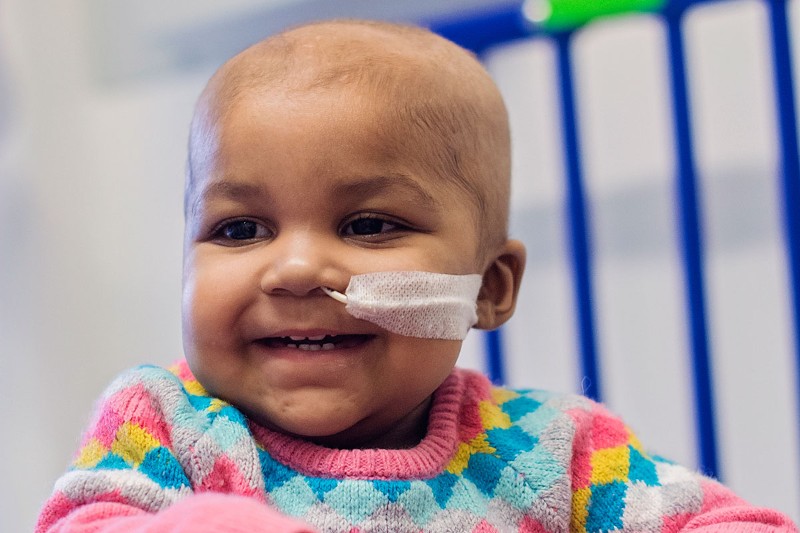
It was one-year-old Layla’s parents who couldn’t let the doctors give up, that inspired this treatment never before used on humans. Layla was diagnosed with acute lymphoblastic leukemia when she was just three months old, a disease in which cancerous stem cells in the bone marrow release vast numbers of immature immune cells into the blood. She had been suffering and in pain ever since, but the doctors took a shot with this method and it worked like a charm.

A gene editing technique in which the T cells are taken from the patient’s body and genetically engineered to combat leukemia was used on little Layla. Where all method including a bone marrow transplant had failed, this technique was particularly difficult to follow through as she didn’t have enough T cells to work with. Leukemic patients are given drugs that completely destroy their immune systems. This where donor cells came in.
T cells from a healthy donor were taken and modified as required. They are trained to seek out and kill any cells with a protein called CD19 on their surface – which is found on the cells that cause acute lymphoblastic leukemia. Such altered cells worked inside the dying Layla’s body. Many challenges were to be overcome before this, such as the donor cells would recognize all of Layla’s local cells as foreign. That would result in a total massacre of all her cells- healthy and otherwise. To prevent this, Waseem Qasim of University College London, who is developing a form of gene therapy to treat cancer, and his team used gene editing to disable a gene in the donor cells that makes a receptor that recognises other cells as foreign.
[adinserter block=”7″]
But there was still another problem. The recipient’s immune system also recognises non-matched T-cells as foreign and will attack them. In leukemia patients, this is not a problem because they are given drugs that destroy their immune system. Except, one of these drugs – an antibody – also destroys donor T-cells. So Qasim’s team also disabled a second gene in the donor T-cells, which made them invisible to the antibody.
When Qasim has originally been contacted about Layla’s case, his engineered T-cells, called UCART19 cells and developed in collaboration with New York biotech company Cellectis, had only ever been tested in mice. “It was scary to think the treatment had never been used in a human before,” said Layla’s father Ashleigh, “but there was no doubt we wanted to try the treatment. She was sick and in lots of pain, so we had to do something.” And it worked within weeks.
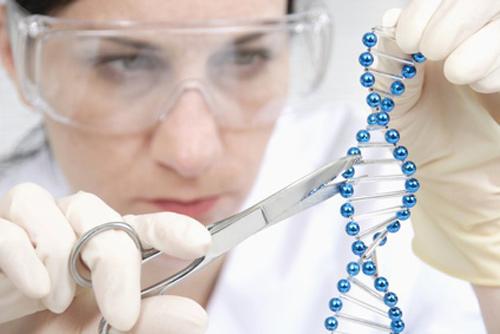
Sometimes the molecular scissors used to disable certain genes in the cells, snipe at the wrong places that might cause the cells to slowly turn cancerous. This being another point of concern, Layla underwent a second bone marrow transplant after three months, to restore her immune system. These healthy immune cells recognised the UCART19 cells as foreign and destroyed them, so Layla no longer has any genetically modified cells in her body.
“It is too early to say she is cured,” says Sujith Samarasinghe, a leukemia specialist at the hospital and one of Layla’s doctors, but she is alive and well.
Author: Technology Blog
