The Final Solution- Get Rid of That Toe Fungus

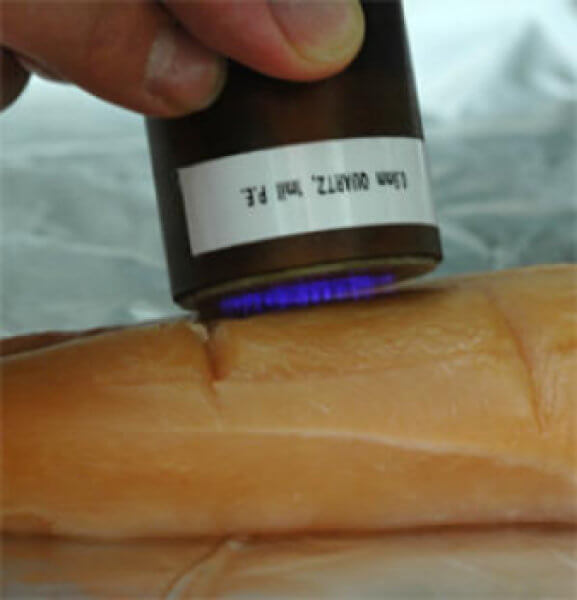
Tried all and nothing seems to work? Anti-fungal creams, laser treatments and pills all prove ineffective or invite a relapse? Well, this solution is here to stay, given by the researchers at the University of California, Berkeley, uses cold air plasma remedy for fungal infections. They described their work earlier this month at the Gaseous Electronics Conference in Honolulu.
Plasma-5

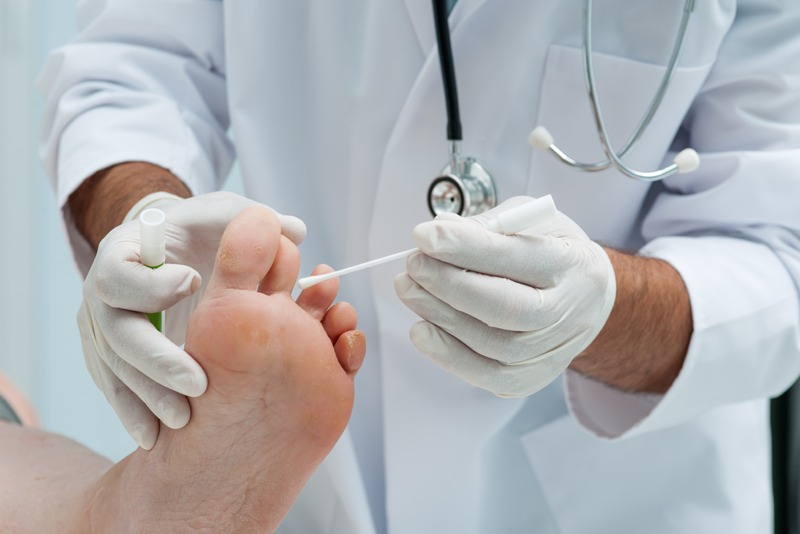
Fungi thrive in the moist area between your toes. The comparatively less circulation on your feet make it longer for the immune system to make its way over to the fungus there. Infections (known as ocychomycosis) typically start as white or yellow spots, and then dig deeper under the nail, causing discoloration, crumbling around the edges, and in extreme cases, pain and, um, a distinctly foul odor. The traditionally recommended treatments involve lengthy, expensive procedures that have side effects and only temporarily get rid of the fungi.

[adinserter block=”7″]

The startup company, Device Farm, working towards introducing this treatment in form of medical devices is performing tests on those fungi using cow hooves and nails from human cadavers, according to CEO Jeff Roe. The Berkeley scientists reported a significant reduction in e coli populations following the application of cold plasma, and Device Farm reported success as well, although it took a bit longer to kill the fungi than the e coli. FDA approval on the following is still pending.

Cold plasmas have be seen in the past as capable of killing bacteria, removing dental plaque, loosening the connections between tissue cells, helping coagulate blood and reducing bleeding, and perhaps one day even removing cancerous tumors.

Plasma-4

Although, the recovery time varies individual to individual, the patient can look forward to a 45-minute weekly session at the doctor’s. This method is pretty painless, as Roe bears testament to the fact. He suffered fromonychomycosis, on 9 of his 10 toenails. After the treatments, “All nine nails showed clear nail growth,” he reported. The fungus has since returned in two of his toes.

Author: Technology Blog
Sight to Sound: Smart Glass to Help Blind See

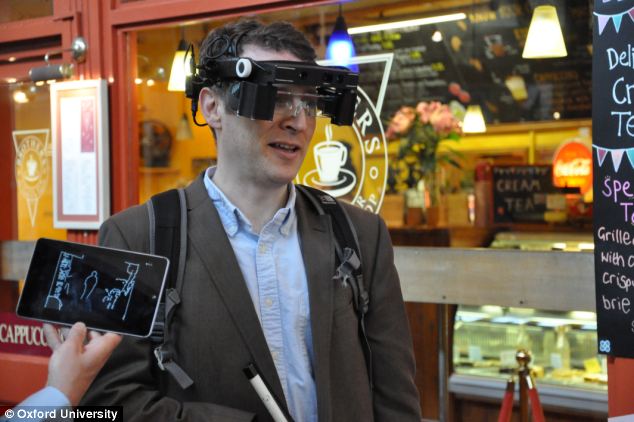
Sound has long been a substitute for sight in visual aids for the blind. From techniques like echolocation, the researchers of the California Institute of Technology in Pasadena have advanced the field a step forward with the creation of smart glasses that translate images into sounds that can be intuitively understood without training.

18J_019_BLIND GLASSES

The device, called vOICe (OIC stands for “Oh! I See”), is a pair of dark glasses with an attached camera, connected to a computer which uses an algorithm of the same name developed in 1992 by Dutch engineer Peter Meijer. The system works by converting pixels in the camera’s video feed into sound, mapping brightness and vertical location to an associated pitch and volume. The pixels situated low in the picture and dark correspond to a low sound and quite pitch, while the opposite is applicable for the bright pixels at the top of the frame.

“You’re taking something from vision and you’re putting it into audition,” says Caltech’s Noelle Stiles, who works on vOICe. “Your brain is doing the opposite – it’s taking in all of the sounds and it’s making sense of them visually.”

[adinserter block=”7″]

Stiles and her colleague Shinsuke Shimojo worked on the algorithm by asking a group of people to select images matching with certain sound. Visually impaired individuals were asked to select a sound for a given image or object. During final testing with the device, blind people with no experience of using it were able to match the shapes to the sounds as often as those who had been trained – both groups performed 33 per cent better than by chance.

“The result that select natural stimuli could be intuitive with sensory substitution, with or without training, was unexpected,” the researchers write.

“This research shows it’s not just important how much information you provide, but whether you provide it in a way that the person can intuitively make sense of,” says Ione Fine of the University of Washington in Seattle.

Blind-2

“They are basically saying that the magic bullet is going to be finding an intuitive mapping system and not relying on training,” she says.

Author: Technology Blog

Pumpkin Robots to Monitor Ocean Pollution

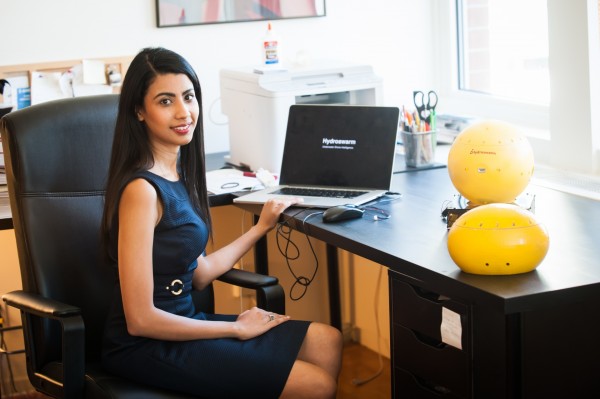
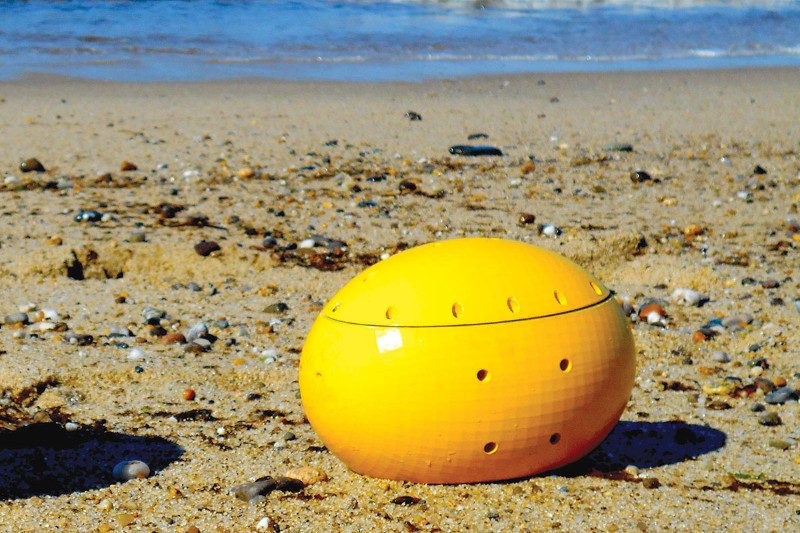
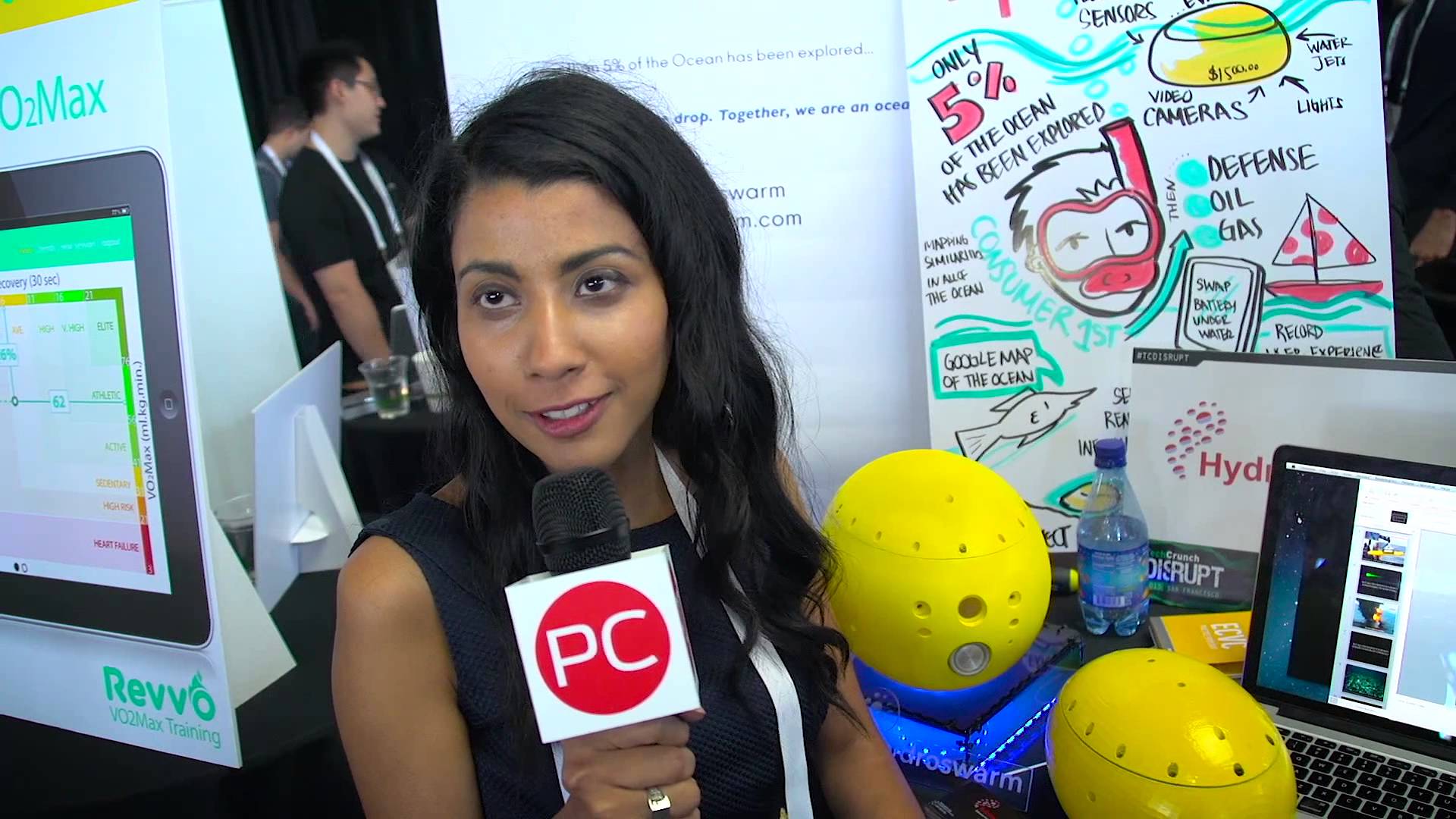
Underwater remains mostly an unexplored territory and it’s high time we know more considering that waters make up 70% of the earth surface. A start-up aims to do just that with EVE – the Ellipsoidal Vehicle for Exploration, the small robots that is yellow, cute and looks a lot like a pumpkin. EVE’s creator Sampriti Bhattacharyya, a mechanical engineer at the Massachusetts Institute of Technology, has a grand mission in mind for a swarm of EVEs: she wants to build Google Maps for the ocean.

pumpkin-2

“We do not yet have a very cheap, scalable, easily deployable method of scanning large areas of the ocean,” says Bhattacharyya, who founded her company Hydroswarm.

What’s great about EVE is that it’s completely autonomous, making it cheaper and less labour intensive. “With a swarm you can get faster coverage of a big area,” says Yogesh Girdhar of the Woods Hole Oceanographic Institution in Massachusetts.

These robots could be trained to find pollution due to oil spills, coral habitat loss and general pollution down in the depths of the oceans. It’s elliptical frame make it perfect for sensory fittings. Submerged aircrafts could be sought out by fitting the robots to track down pings from a downed jet’s black box.

“Underwater, if two robots are talking to each other, they pollute the entire sound channel,” says Girdhar. “That means everybody else on the network has to stay quiet.” EVE is probably too small to be picked up by other sensors currently working at the oceans. Real-time video processing is also a challenge. Not to mention, EVE’s battery life is about 2.5 hours which makes for short trips. “These are all challenges, but they’re all solvable theoretically,” Girdhar says.

pumpking-5

“I think autonomous robots right now are most needed underwater”, rather than in aerial or land environments, says Girdhar. “Hopefully these kinds of start-ups will bridge that gap. I think the future is small robots, and a lot of them.”

[adinserter block=”7″]

Author: Technology Blog

Verified by ExactMetrics