A Water Ball In Space. Read to Know How It Sparks Idea For A Future Industry

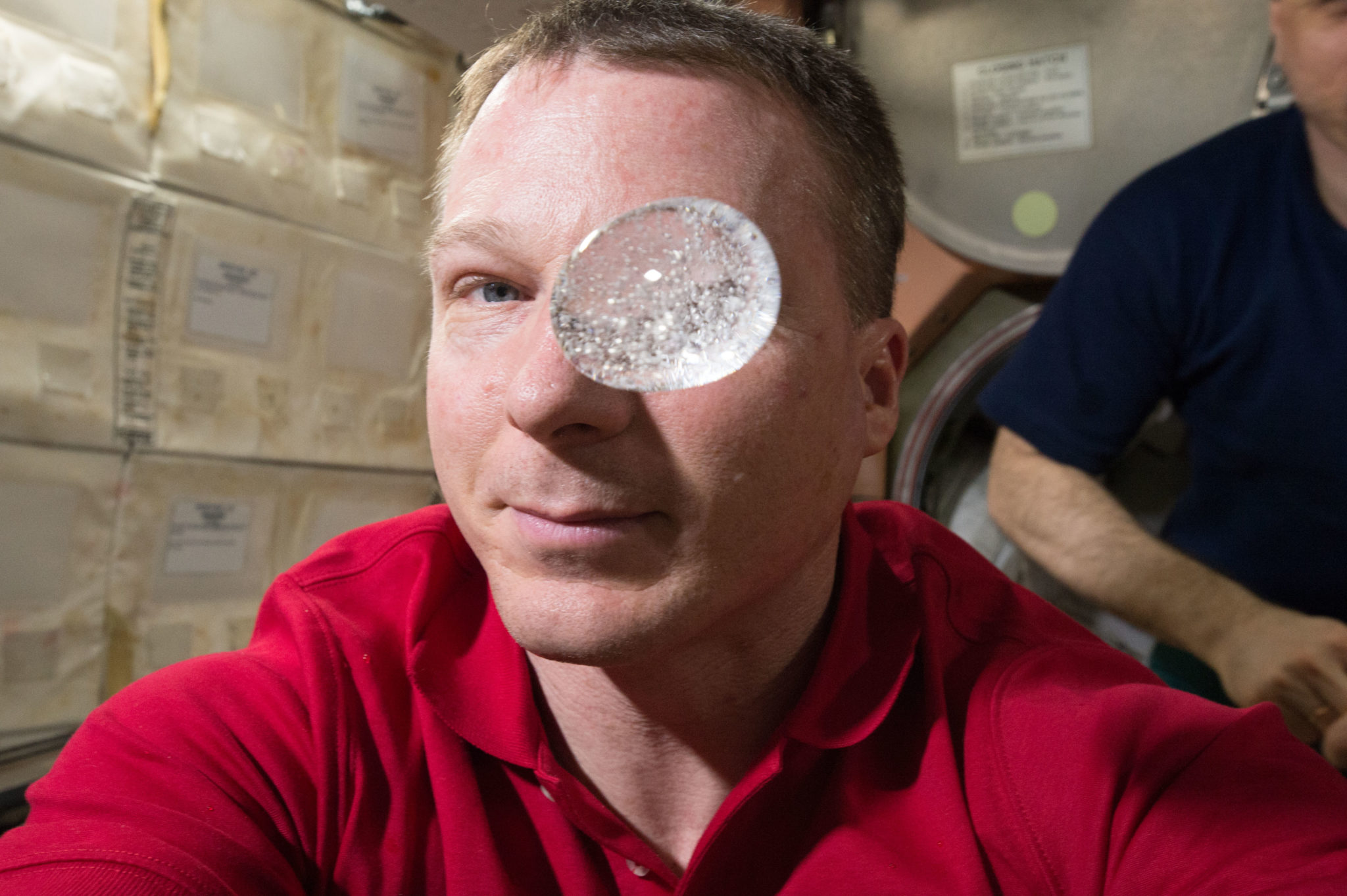
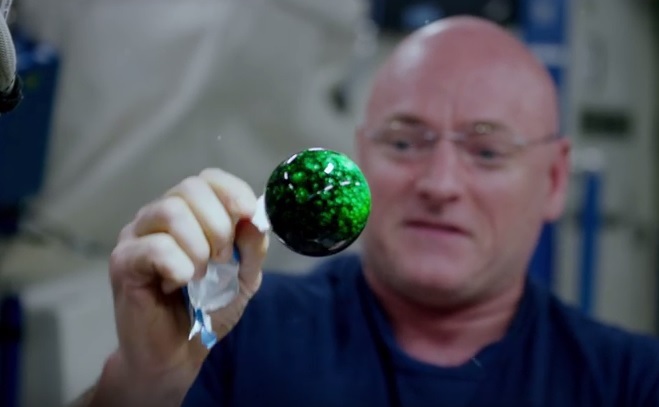
If you still haven’t got a chance to watch the viral video of ISS astronaut playing with a floating water ball in space, you should watch it now. In the video ISS astronaut Scott Kelly changes the colour of a floating water ball (a tennis-ball sized water blob) by injecting a few drops of dye. The coloured water blob looks really beautiful. Soon Kelly slips an Alka-Seltzer tablet.
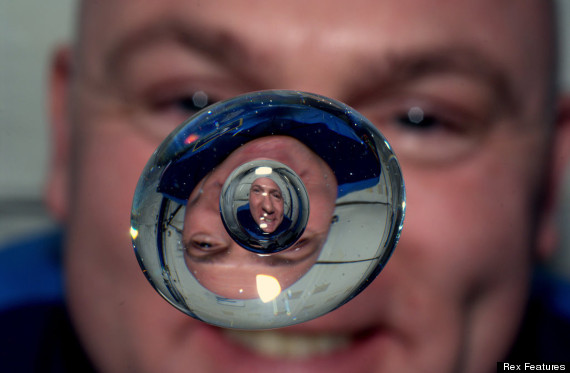
Editorial Use Only. No stock, books, advertising or merchandising without photographer's permission Mandatory Credit: Photo by ESA/NASA / Rex Features (1869992b) European Space Agency astronaut Andre Kuipers, Expedition 31 flight engineer, squeezes a water bubble out of his beverage container, showing his image refracted and reflected, on the International Space Station. European Space Agency astronaut Andre Kuipers, Expedition 31 flight engineer,plays with water in space - 20 Sep 2012 When ESA astronaut Andre Kuipers was on his six-month PromISSe mission on the International Space Station he conducted over 50 scientific experiments in the world's only permanent microgravity laboratory. He used to post pictures to Twitter including this fun image of him playing with water. On board the International Space Station, Andre squeezed a water bubble out of his drinks container, showing his image refracted and reflected. On Earth the bubble would rise and pop but in this case as there is no gravity, the bubble stays put and in the middle of the water drop is an evacuated sphere filled with air. When a beam of light passes through the bubble, the direction its traveling changes, which is why Andre's reflection is upside down, this is refraction.

The effervescent tablet then bubbles and fizzes inside the blob, meanwhile gas bubbles form inside and deform the blob when occasionally some of them manage to break the surface tension of the blob.

While watching this video, Daniel Faber, CEO of asteroid mining start-up Deep Space Industries realised the untapped value of space. He said this video could be the basic idea for a future industrial process which could take advantage of the odd properties of liquids in microgravity to keep substances separated from each other in a more controlled manner.

[adinserter block=”7″]

For example we can stumble upon a way to use the phenomena in the video to keep toxic substances in a liquid separate from other substances. Faber also cited the example that silicon carbide used in the production of semiconductors created in microgravity has fewer imperfections as compared to the same being created in labs on earth.

Tapping the power of microgravity is especially significant for Faber’s company because Deep Space Industries hope to start mining asteroids to supply raw materials for a new space economy that may include things like orbiting solar power stations and new communications infrastructure.
Ball-3

Wonder what a small coloured water blob can do when combined with science and technology.

Author: Technology Blog
Water desalination technique that works on low power developed by Egypt

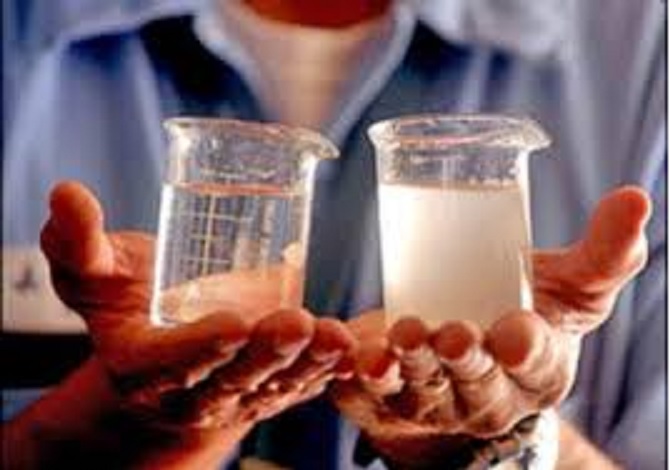
With the problem of ever increasing population of the world, the water resources on Mother Earth are under great stress as demand is exceeding the supply…. and what with climate changes causing lesser rainfall these resources are not even replenished properly. Though 71 percent of the earth is covered with water but most of it is unsuitable for drinking as it is not potable water as it is salt water found in the oceans. Though there are technologies that can remove salt from ocean water but these technologies are extremely expensive especially in developing countries. In addition to this, these also consume huge amounts of energy. To combat both these problems, a team of researchers at Alexandria University in Egypt, have come up with a simple filtration technique.

Water-3

In this technique, researchers use the process of pervaporation. In this process, salt water is first filtered though a membrane to remove larger particles. These filters contain cellulose acetate powder that, along with other components, will bind the salt particles as they pass through the membrane.  Once filtered, the water is vaporized under heat in a second purification step.

[adinserter block=”7″]

The vapour, containing pure water, is then condensed and collected for drinking purposes. The biggest advantage of this process is that made from materials common to Egypt and surrounding countries, the filters are affordable and can easily be produced in a laboratory setting. Ahmed El-Shafei, an associate professor of agricultural and biosystems engineering in Alexandria University says: “Using pervaporation eliminates the need for electricity that is used in classic desalination processes, thus cutting costs significantly.”

Water-5

The team of researchers now hopes to scale-up production of saline removing membrane and also start work on a pilot desalination unit to test the efficacy of this technique on a larger scale.

Author: Technology Blog

The magic of multitasking: How it works?

Multitasking- we all know it, we have all done it. Chances are, you’re doing it right now. But do you know which region of our brain is involved in this art? And how would it would affect our multitasking ability if certain regions of our brain are tampered with?

Woman juggling with several arms --- Image by © Lisbeth Hjort/cultura/Corbis
Woman juggling with several arms — Image by © Lisbeth Hjort/cultura/Corbis

Earlier this week, researchers at New York University published a paper in the journal Nature saying they identified one small region of the brain—the thalamic reticular nucleus (TRN)—as the one that controls our ability to multitask. This region of our brain handles all the stimuli we receive, and carefully filters out the rest to keep the most vital up in the front to focus on. Other all stimuli and response continue to take place in the backdrop of our mind. Solving the mysterious working of TRN in a healthy mind would help researchers to study diseases in which multitasking or sensory overload goes awry—autism, schizophrenia, and ADHD, for example.

“We have identified the [TRN] as a station. That is something that hasn’t really been described in the past, says Michael Halassa, a neuroscientist at NYU who led the research. “Now we can answer questions like whether individuals with autism have a broken TRN or potentially develop drugs that target [it].”

Francis Crick, one of the scientists involved in the identification of DNA structure, had long before pointed out the connection of the TRN with multitasking. But sadly, he had little evidence to back him up.

[adinserter block=”7″]

The researchers at NYU tested his long ignored hypothesis by running game-like experiments on mice. Some mice were trained to respond to light stimulus in a certain way to receive the reward of milk. As they completed the tasks with light stimulus, they were made to be distracted with sound stimulus too. In mice who were able to overcome the distractions, the TRN neurons that control hearing were highly active, meaning that they were suppressing sound signals so that the mice could focus more intensely on the light. The opposite was observed for other mice trained to respond sound stimuli for rewards.

Now, for the prefrontal cortex, when lasers stimulated this region of the brain, the TRN completely lost control and failed to suppress stimuli effectively. The prefrontal cortex is the area of the brain responsible for higher level functioning and this shows that the prefrontal cortex stores incoming sensory information, which the TRN then uses to suppress or not suppress certain senses, much in the same way that a switchboard works, explains Halassa.

Multi-5

“One commonality in patients with these disorders is that they have a really hard time suppressing [distracting stimuli],” says Halassa.

Halassa wants to use to information gained to find drugs that would help autistic and ADHD patients to gain better control over filtering out of unimportant stimuli.

Author: Technology Blog

Verified by ExactMetrics