Your sunscreen lotion is killing the beautiful coral reefs

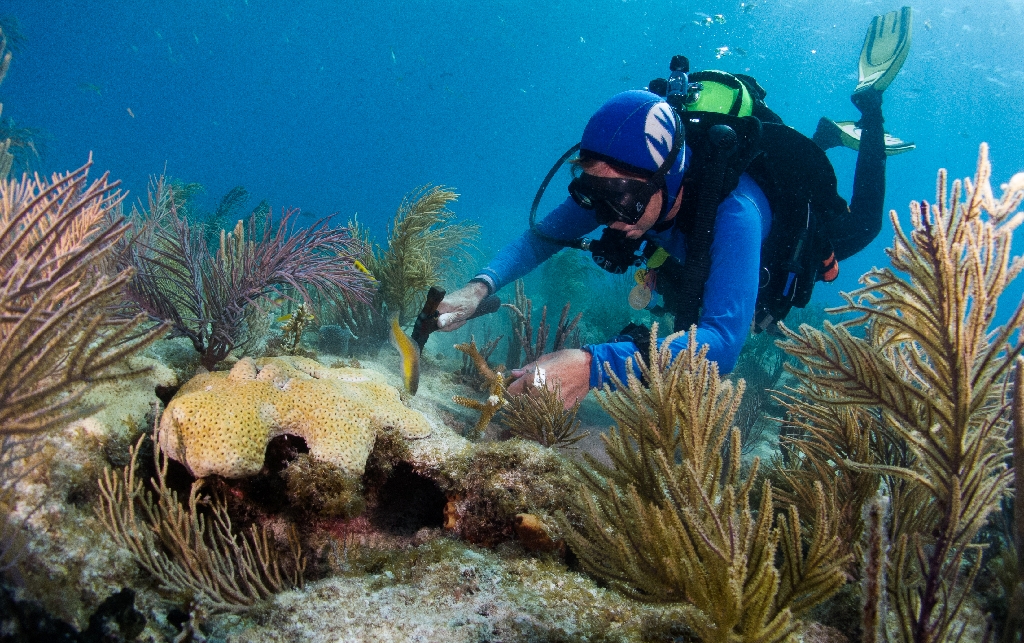
Coral reefs house nearly one fourth of the ocean’s biodiversity, help produce many of the fishes that humans eat and protect thousands of miles of coastline from storm surge. But if we do not take account of our wrong doings we are going to witness the sixth mass extinction i.e. the coral reefs. Scientists have been warning that oxybenzone, an ultraviolet-absorbing compound found in practically every major brand of sunscreen, might be one of the reasons of dying coral reefs.

Sun-2

According to a study published in Archives of Environmental Contamination and Toxicology, oxybenzone does kill corals. It disrupts their growth, increases the rate of coral bleaching, damages DNA, and can even cause the larval form of coral (called planula) to become trapped in their own skeleton. The study goes on to explain that even an extremely small amount of sunscreen, equivalent to a single drop in six Olympic sized swimming pools is enough to start the disruption of coral growth. Now imagine, how much damage would 14,000 tons of sunscreen cause which is discharged into coral reefs every year?

[adinserter block="7"]

A report from the National Oceanic and Atmospheric Administration concluded that we’re in the midst of a massive coral bleaching event, a phenomenon which occurs when high temperatures disrupt the symbiotic relationship between coral and its photosynthetic food source, a green alga called zooxanthellae. The report elaborates that this year’s coral bleaching could impact a full 38% of coral reefs worldwide. If current trends continue reefs could disappear entirely within the next several decades.
Sun-5

The co-author of the study Craig Downs informed one and all: “We have lost at least 80 percent of the coral reefs in the Caribbean. Any small effort to reduce oxybenzone pollution could mean that a coral reef survives a long, hot summer, or that a degraded area recovers.” And this isn’t something very difficult. You just have to check the ingredients list on the bottle of your sunscreen and check for oxybenzone. If it is there on the label, just chuck it in the dustbin. Because this is exactly what it is turning the ocean into right now – Dustbin! Climate change is one of the most serious problems that the mankind has faced in centuries and until unless we don’t take note of this serious situation and do something about it, we should keep ourselves ready for the total annihilation of our planet.

Author: Technology Blog

Here comes the brick-laying robot to make buildings

Amidst all the debates about robots replacing humans and snatching away their jobs, some engineers in Switzerland have created a robot that can lay bricks and help humans in making buildings. These scientists from Zurich’s Swiss National Center of Competence in Research have named this robot In-situ Fabricator.

DFAB Picture
DFAB Picture

It has a 2D laser range finder, two onboard computers along with sensors to know its own location. It uses its big arm to lay bricks in pre-programmed patterns, and uses its wheeled base to zip around construction sites, free of human help.

[adinserter block="7"]

In addition to this, it can also generate 3D maps of the work site which allows it to build different building designs that can adapt to the construction site and unforeseen circumstances.

brick-4

This robot has an ability to adjust to sudden changes like last-minute changes to the design-plan. So in a nutshell, they are trying to induce ‘adaptive learning’ in robots.

Author: Technology Blog

Eels use their electric shock as a weapon as well as a sensory system

You wouldn’t want to be in the vicinity of an electric eel and you know very well why. Who in their right minds would want to face a 600-volt shock inducing hunter? But this is not the only use they put their electric attacks to. They actually use these electric shocks to locate their prey. This was concluded in a study published in “Nature Communications” by neurobiologist Ken Catania.

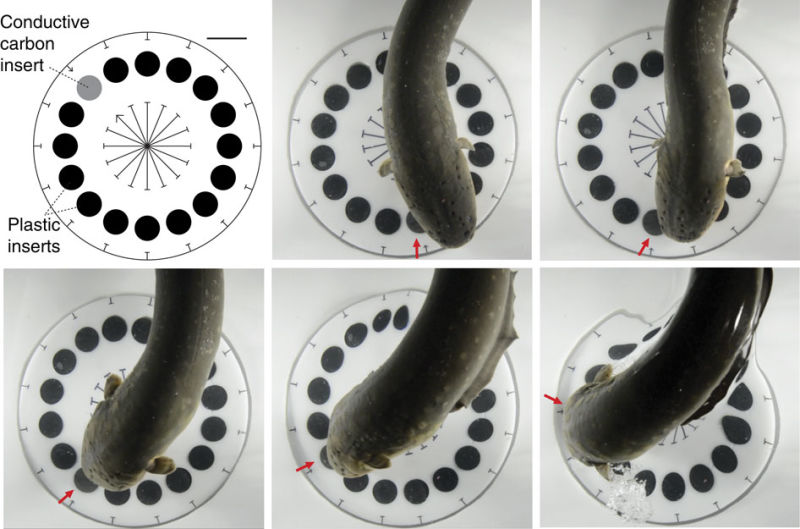
eel-1

Catania conducted a series of laboratory experiments to show how electric eels ‘electro-locate’ their prey after paralyzing it, using energy fields to locate and swallow their victims in an instant.
In the lab, Catania presented the electric eels brought into the lab with anaesthetized fish. These fish were insulated from the eel’s electro-receptors by plastic bags. With an electrode he then made the fish flinch causing the eel to discharge its high-voltage shock. But then the eel became clueless as to what it should do next.

[adinserter block="7"]

It did lung into the direction of the fish but didn’t attempt to swallow it. Then an electrically conductive carbon rod was put into the tank along with the fish. He again made the fish flinch and the eel attacked. But the fish became confused as sometimes it lunged towards the fish and sometimes moved towards the carbon rod assuming that the fish was at two different places. Actually what happens is, the electric eels’ high voltage attacks can stimulate their prey’s motor neurons, causing involuntary muscle twitching.

Using two or three small electric volleys, the eels will force prey to give away their location before charging up and delivering the paralyzing blow. So in Catania’s words, “The eel can use its electric attack simultaneously as a weapon and a sensory system.” This quality of the eels is an adaptation similar to echolocation in bats and dolphins. Nature has always its multiple mysterious layers to be peeled off one by one!

eel-2

Author: Technology Blog

Verified by ExactMetrics