Desert to Oasis- This Technique of Microbial Farming Could Help Terraform Life on Mars

With the discovery of flowing and abundant water on Mars last week, we have all been recharged to the prospect of actually inhibiting Mars and are brimming with the insurance that maybe all this wasn’t a hollow dream after all.

The next step towards this would of course be to find sustainable microbial life, and not the one kind people believe to already exist in water (perchlorate-respiring organisms). But a much larger biodiversity is necessary for us to survive.

popsci-mars-brine

We have had many hints in the past about life existing in dormant conditions, waiting to burst out with the slightest prodding. Twenty five years ago, NASA suggested specialised niche ones, evaporites which are areas of crystalized brine that would be dry in nature but the water in the form of hydrated crystals would still allow the bacteria to grow. The 2003 study that found in the gypsum flats of Guerrero Negro microbial life living in stasis, just waiting to be awoken with water.

The above microbial life can clearly survive in brine. But, studies in the arid environments such as the Atacama Desert in Chile also proved their survival abilities in those harsh climates. Algae, fungi and microbes are all capable to inhibiting these arid conditions.

The collection of species from one and simply growing them in another is not all there is of it. Similarly, on Mars, these species would need higher humidity and oxygen levels. This can be achieved using technology already known to exist such as the Mars In-Situ Propellant Production precursor. Cultivating these species on the South pole, which has a rich supply of oxygen would help create a thick atmosphere by increasing the oxygenation rates.

The above is all on the surface and we also need to concentrate below by peeling of the layers. Even as early as 1970, researchers have known microbes can survive under the soil in a form of stasis, proven by the subsurface of the Atacama Desert. By getting down into the dirt, we may be able to find these creatures and allow them to interact with the now replenished niche zones to increase biodiversity.

Now will this work practically? We have an experiment to prove that it just might click. A Chinese team of researchers performed the experiment in the Gurbantonggut Desert hinterlands of Eurasia, back in 1990, when they started using a combination of irrigation and fertilizer to plant winter wheat for a period of 20 years. In the end the region of plantation, and the surrounding untreated desert land were compared. As expected, there was great difference of biodiversity both the samples. What was even more surprising was how the change occurred not only at the topsoil level but also in the subsurface.

gallery-1430936484-mars-pathfinder

Thus there is hope of a properly functioning microbial niche environment of Mars in the foreseeable future.

[adinserter block=”7″]

Author: Technology Blog
Tapping the self-healing power of the human body: ElectRX

God is the greatest engineer and our body is a marvel in itself as far as engineering is concerned. Along with many other things, it has an amazing capacity to rectify problems in its own system. There are numerous things that our body can do to correct things and bring them back to normal in order to let the body work normally. Now DARPA wants to tap into this same ability with ElectRX. ElectRX actually stands for electrical prescriptions programme and DARPA is investing quite a lot of time and money into it.

military-medic-600x390

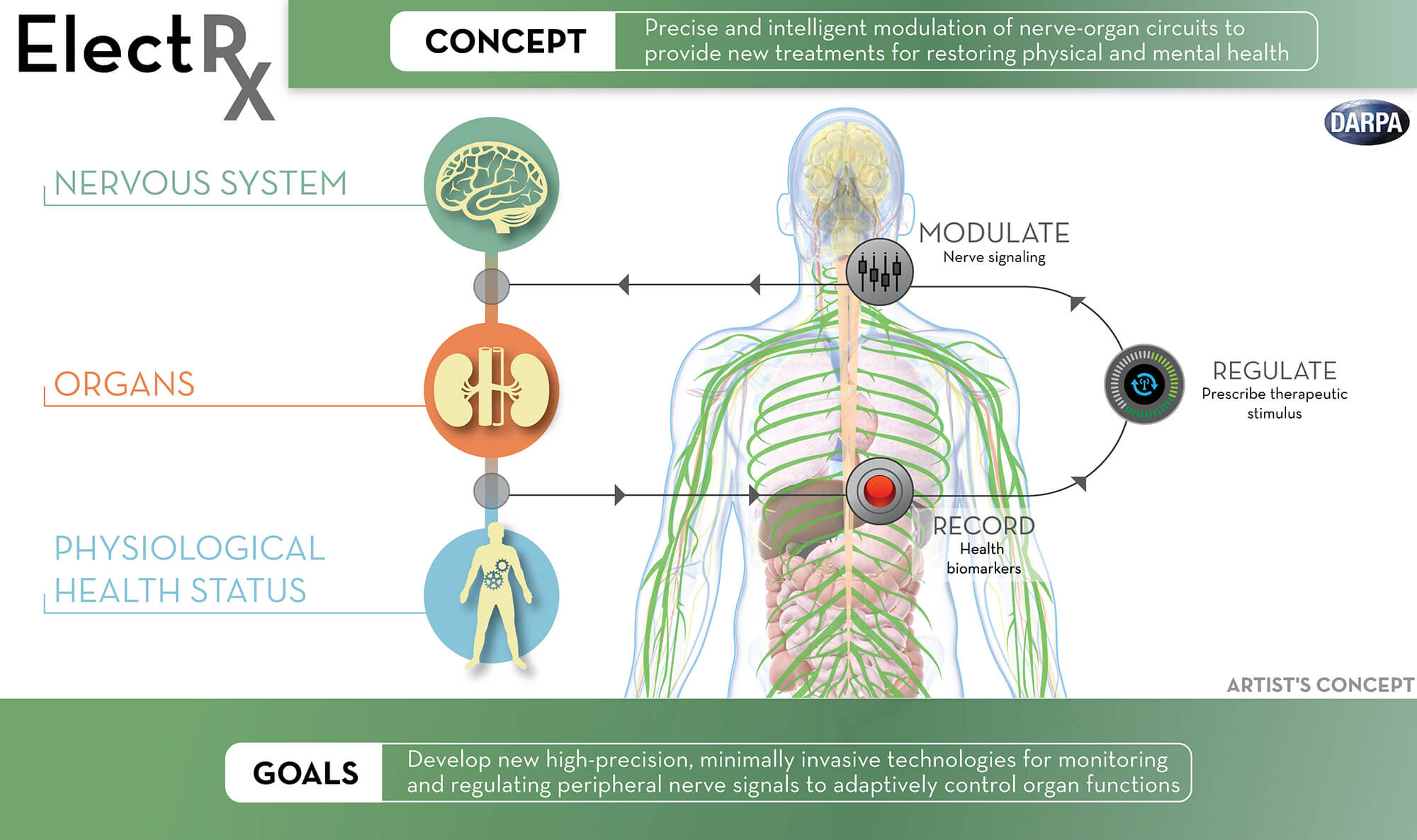
If you know about a cardiac pacemaker you must know that it is basically a device that delivers targeted electric shocks to the muscles of the heart to stimulate it to beat at a normal rate. Now what if a device far tinier than this could be delivered through a needle? What if this device could be designed to constantly monitor certain conditions in the body  and then directly stimulate certain nerve pathways using neuromodulators to trigger the body’s correct response mechanism when it’s not working as it should be? This is exactly the aim of ElectRX programme.

The technology is indeed a promising one but the current neuromodulators are quite large, comparable to the size of a deck of cards. This large size makes it difficult to target nerves precisely which can in turn lead to unwanted side-effects. What ElectRX is aiming right now is ultra-miniaturizing these devices to increase the precision.

DARPA is pumping a humongous 78.9 million US dollars in the funding of ElectRX programme in the following fields:

  • Investigating whether the management of neurochemicals that regulate learning and memory in the brain could offer new treatments for post-traumatic stress and other mental health disorders.
  • Investigating thermal activation of the adrenal gland.
  • Investigating the stimulation of the vagal nerve to induce neural plasticity for the treatment of post-traumatic stress.
  • Investigating whether direct triggering of the spleen or other organs could help treat rheumatoid arthritis and other inflammatory conditions.
  • Investigating whether inflammation control in the brain could help treat depression.

All this money has been put in to utilize this programme as a great aid in battlefields. For example, Management of the inflammatory response could make a big difference to spinal injuries, in which frequently it’s the swelling and not the original trauma that does the worst damage.

electrx-darpa-implant-diagram

There are many negatives and positives associated with this concept. For example, if you put these things in people you like, you can do all sorts of positive things. It can also be used in creating super-soldier potential as controlling hormones and brain chemistry could help put soldiers in an ideal emotional and physiological state for certain operations or training exercises.  Apart from these positive things, a targeted nerve stimulation device could also do all sorts of horrible things like pain generation to emotional manipulation if implanted in somebody you’re less fond of.

Pros are cons are a part and parcel of any technology. So let’s see where this amazing technology leads us to.

[adinserter block=”7″]

Author: Technology Blog

Leukometer to monitor your immune system on a continuous basis

White blood cells are extremely important for the overall immunity of our body. And these become even more important when chemotherapy receiving patients are under question. The chemotherapy can lead to suppression of the immune system, a decline in white blood cells and hence giving rise to the possibility of infections and other complications. As a prevalent method, the patients undergo regular blood tests so that the doctors can keep an eye on things. But blood tests are unpleasant tasks when conducted at short intervals.

leuko-2

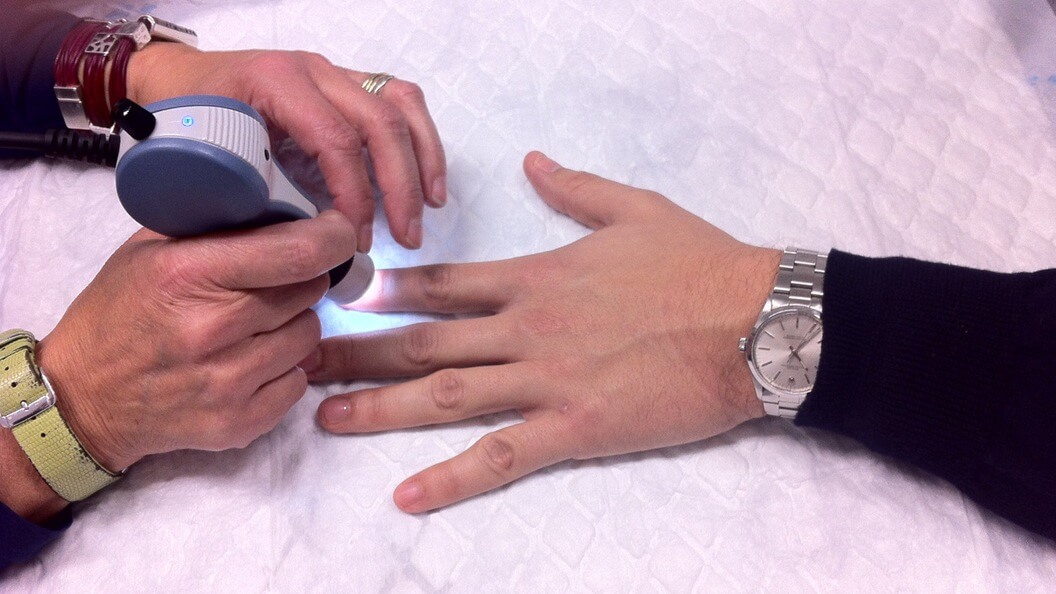
In order to make this test less invasive, Carlos Castro, biomedical engineer at MIT and his team, which includes researchers from Boston University, the Universidad Politécnica de Madrid and the Spanish National Cancer Research Centre (CNIO), have developed a prototype for a device called leukometer. This new testing device can simply be stuck onto a fingertip with the ability to tally up white blood cells through the skin in real time.

In real life situations it is really not that easy and realistic to be carrying out blood tests on chemotherapy patients every hour, while it doesn’t always take long for things to take a turn for the worse, so the greatest advantage that this device comes with is its immediacy. If a decrease in white blood cell count can be picked up early on, drugs can be prescribed to return it to safe levels and allow the body to better fight off infection. Additionally, if a patient is recovering from immune-suppression faster than expected, medication could be adjusted accordingly to cut the overall recovery time.

How does a leukometer work? It works like a pulse oximeter. The device projects light and gathers images of capillaries just under the surface using an array of LEDs and a small lens. As light at certain frequencies is absorbed by the blood’s haemoglobin (a protein that carries oxygen around the body), but not by the white cells, they show up as small transparent particles moving through the capillary. The device then uses algorithms to analyze these images and give an estimation of the white blood cell concentration in the blood. The best part is that, all these things can be done by this portable user-friendly device that could help patients monitor their own white blood cells count even at their homes. This can turn to be more advantageous for in rural areas and developing countries.

MIT-Biocom-1-press

Carlos Castro opines: “It would also be possible to perform measurements on a continuous basis, opening up treatment options that were previously not possible.” The researchers hope that if they can gather enough funding, a beta product will become available for testing in 2017, with a market ready product to follow in 2019.

[adinserter block=”7″]

Author: Technology Blog
Verified by ExactMetrics