BrainNet: Geographically Separated Brains Linked

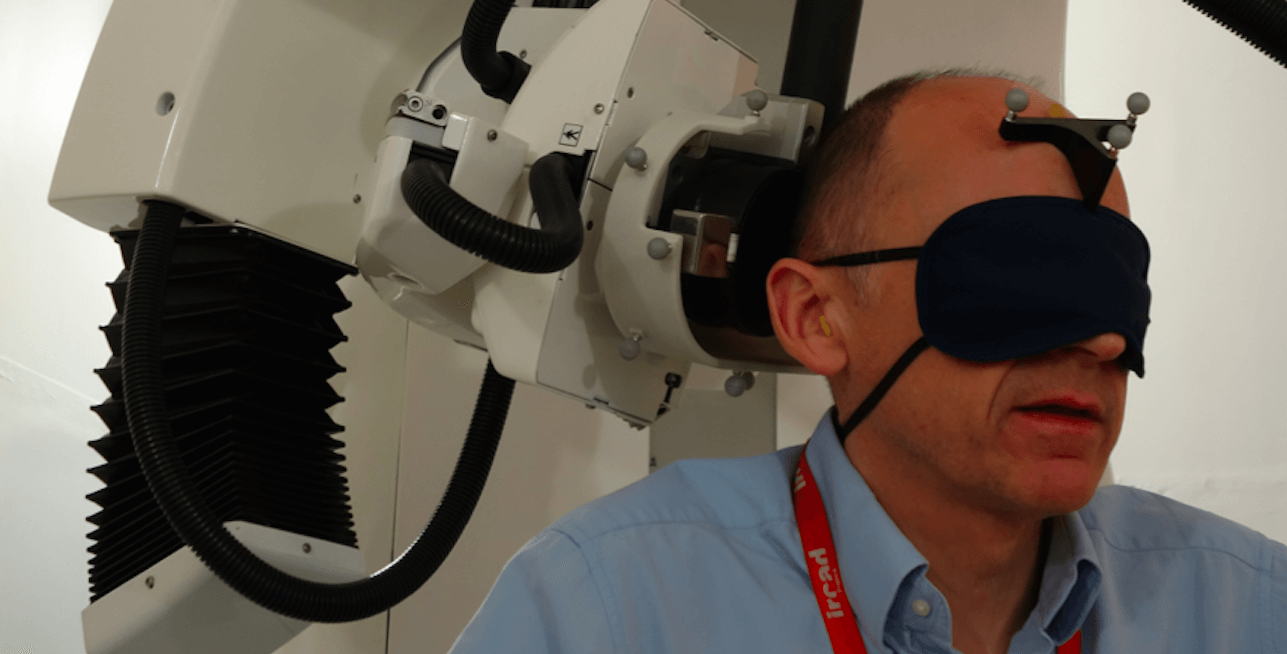
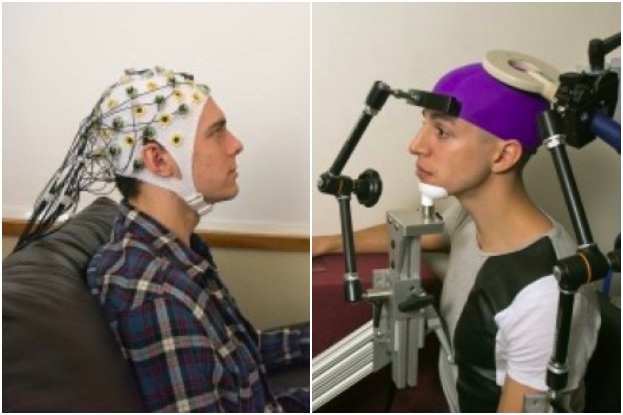
A subject wearing a cap working on an electroencephalography machine (EEG) and another subject located far away wearing a cap working on transcranial magnetic stimulation (TMG) connected together in the transfer of brain signals from the first subject to the second, namely the answerer to the asker, are the big step over the 2014 success of transmitting the brain pattern of hand movement to another person’s brain, causing the second person’s hand to move.

BrainScanPic

The answerer is shown a picture on the screen to be identified. The asker, on the other hand, is shown a screen with a 20 Questions style to pick what the former answered and has been sent to her as brain signals over the internet. There are two “Yes” and “No” flashing LED lights of different frequencies on either side of the screen. What is even more intriguing is that the asker tells “Yes” or “No” for the signal received by staring at either one of the lights.

Chantel Prat, a psychologist at the University of Washington and a co-author on the paper, explains that the computer can distinguish what light is looked at because different frequencies of light trigger different brain patterns in response.
If the answer transferred is yes, the magnetic coil in the asker’s cap, emits a visual cortex stimulating pulse. A phosphene is thus triggered from the stimulation pulse which can look like a flash of light, a blob, a blur, or a wavy line. In turn, if the answer is a no, the coil gives out the same sounds and sensations, but not a pulse strong enough to cause a phosphene. The asker notes the occurrence of the phosphene flash if any, and then moves onto the next.

This guessing game proved accurate 72 percent of the time. Cheating was counter checked by introducing certain instances where the participants thought they were communicating but no data was being sent. !8 percent results are correct at those times.
But as the scientists try to progress the level of communication among the subjects, there are many people who continue to express their scepticism on the matter. “People get nervous that others could read their thoughts without them being aware,” said Prat. “It’s not possible that someone could be doing this to you without you knowing about it and consenting to it.”

There are many things to be taken care of before this study can advance. Not to mention, the equipment is bulky and twitchy to the point that even a quarter inch away from the asker’s skull nullified the effect.
Brainconnection_web_1024

The nest approach to this study would be to conduct an experiment between high-achievers and strugglers to see if a better concentrating brain could signal and guide another towards improved learning and attentiveness.

[adinserter block=”7″]

Author: Technology Blog
Photons take place of electrons to change the face of computing

Ever heard about Von Neumann bottle-neck? It is actually a phenomena in which the speed with which electrons can be sent down the interconnects, between memory and processor are slower than the speeds at which faster silicon can eat through the information. So in a nutshell, electrons are quick, but they are not quick enough. Infact they are so slow that they are actually holding back the speed of modern computing.

memory-chip

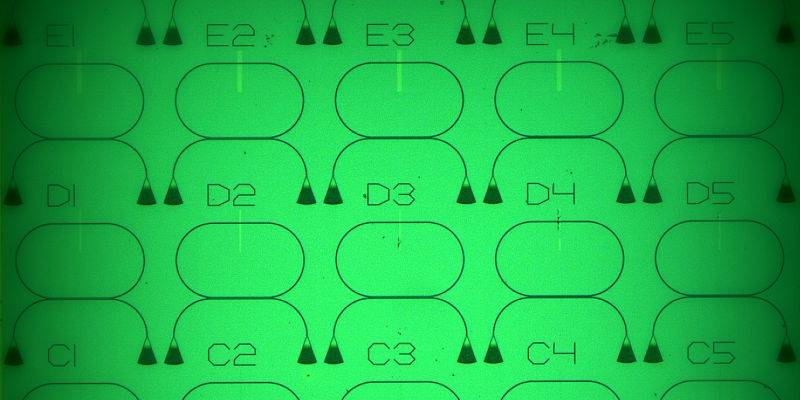
It has been noticed that the clock speeds of chips haven’t really increased so instead of accommodating more in one place, our computers now come equipped with multi-core processors, marking out tasks to be completed on separate chips. The reason for this is the inability to transmit data between memory and chip and that too keeping up with higher clock speeds. Considering all these things, a team has developed the world’s first ever light-based memory chip that can store data permanently, and it could help change the face of computing.
It is based on the concept that if the electrons could be swapped with photons and the electrical interconnects could be replaced with something optical, information could be sent between memory and processor at the speed of light. Then, there would be no trouble in transmission keeping up with the speed of computation. Scientists have tried to create this kind of photonic memory before, but it’s always required power to store data. When the power was turned off, the data was lost.
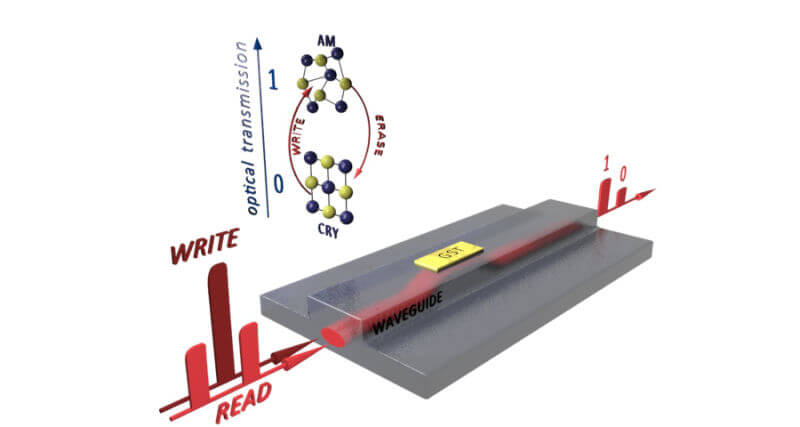
Considering all these aspects, the new kind of memory, developed by researchers from the Universities of Oxford and Exeter in the UK and the University of Munster and KIT in Germany, uses what’s known as a phase-change material as the basis of its storage. It uses an alloy of germanium-antimony-tellurium known as GST —the same material that’s used in rewritable CDs and DVDs. This substance is advantageous in the way that it can be forced to assume an amorphous state, like glass, or a crystalline state, like a metal, by using either electrical or optical pulses. And according to Harish Bhaskaran, from the University of Oxford’s Department of Materials, “These two states have very different physical and properties, and that means you can store information in the state of the material.”
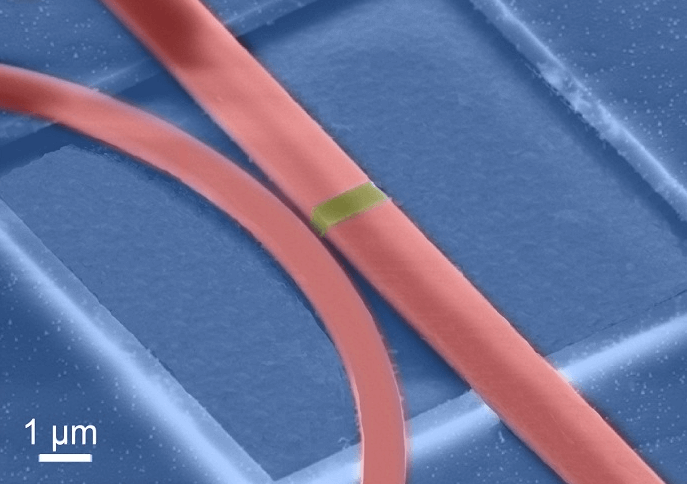
Bhaskaran and his team managed to build the device in which a one micron piece of GST sits on top of a silicon nitride ridge, known as a waveguide that acts a miniature fibre optic cable that can carry light. When the team fires high intensity pulses of light down the waveguide, they can change the state of the GST. A very intense pulse can be used to momentarily melt and quickly cool the GST, causing it to assume an amorphous (glass-like) structure. By sending a slightly lower intensity pulse down the waveguide, the team can raise the temperature above the crystallization point but below the melting point, which puts it into a crystalline state. But the twist in the story is: when a light with a much lower intensity is sent through the waveguide, a little of light seeps out into the GST. Depending on what state the GST happens to assume, a little more or a little less light is transmitted from one end of the waveguide to the other. The team can measure the differences with incredible accuracy, which allows them to tell if the GST is crystalline or amorphous. By writing with strong pulses and reading with weak pulses, the researchers can easily replicate the 1s or 0s you’d find in normal memory. And the best part is, unlike the previous optical memory, the new device holds on to what’s written on it, with or without power.
The team was also able to show that it was possible to send different wavelengths of light through the waveguide at a given point of time. Theoretically this means, that the team can read and write to thousands of bits at the same time, providing infinite bandwidth.
There is another surprise element associated with the device. The team has found that different intensities of strong pulses can actually be used to create different mixtures of amorphous and crystalline structure within the GST — making it 10 percent amorphous and 90 percent crystalline say, or 50-50. When the lower intensity pulses are then sent down the waveguide to read the contents of the device, those subtle differences in composition can be seen in the transmitted light, too, allowing the researchers to reliably write and read off eight different levels of state composition — from entirely crystalline to completely amorphous.

1440365029000065421

This multi-state capability of the device can usher a whole new era of computing because using this device instead of the usual 0 or 1, the researchers in theory would be able to represent a 0, 1, 2, 3, 4, 5, 6 or 7, quadrupling the amount of data that can be stored in a single bit.
Though this whole concept and device is at its nascent stage and there is still work to be done like shrinking the device a little in size and the most important thing: the architecture required to make purely optical computing a reality. So understandably the next thing on the team’s agenda is the opto-electrical interconnects that are required to link the memory to a processor.
Using photons instead of electrons is surely a revolutionary idea in itself and when and how this idea turns into reality is something worth waiting for!

[adinserter block=”7″]

Author: Technology Blog
Verified by ExactMetrics