Robots may feel more human with the help of this futuristic muscle material

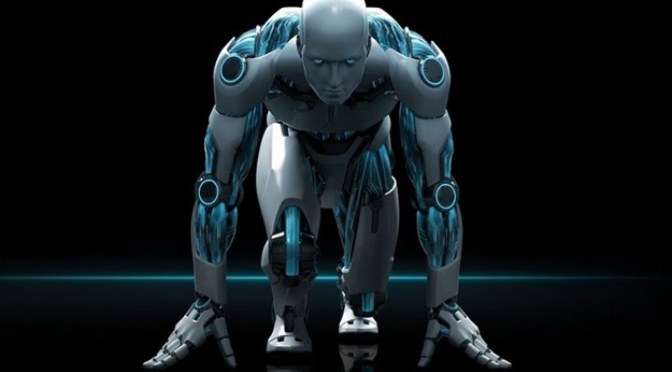
An accident of a loved cousin prompted Ras Labs co-founder Lenore Rasmussen to embark on a journey of finding a new material to develop robotic limbs that are flexible like human ones.  Years ago, Rasmussen had accidentally stumbled upon the synthetic muscle material while mixing chemicals in the lab at Virginia Tech. Due to wrong proportions, the experiment produced a blob of wobbly jelly that contracted and expanded like human muscles when Ramussen passed current through it. So now, Ras Labs is working with the International Space Station to test such smart materials that can expand, contract and conform to our limbs just like human muscles when a current is passed through them. It is hoped that these materials can be used to make robots move and feel more human to touch.

taucidrigev1l8czqzrd0h5luxtx3zfs5ua2kvjamok

Ras Labs CEO Eric Sandberg says that the team is actually trying to recreate Luke Skywalker’s arm of Star Wars episode 5. According to Ramussen and her team, the material will be able to conform to and fit human flesh which ensures that the prosthetic liners will shrink and fill in the space to maintain a comfortable fit. In addition to this, Sandberg reveals that the material will even react and adjust when the wearer is dehydrated after a run or hiking. The materials are still in their testing phase though, as some materials are stiff but not flexible while others are flexible but not strong.

The use of this material on Earth will revolve around prosthetics whereas when it comes to the matters of the Space, Ramussen has sent a batch of these polymers with the SpaceX 6 Falcon 9 rocket earlier this spring to see how they hold up in space. She informed: “They’re able to withstand a variety of really hostile environments for life. What they’re being tested for up on the International Space Station is radiation resistance.” But for this, she will have to wait for the results as those materials will remain in orbit until sometime in 2016 when the rocket comes back to Earth.
cropped-ai3

But Rasmussen thinks she’ll be able to apply her synthetic muscles to both human and robot in the next five years. The hope is that the material will be included as part of the NASA 2020 Mission to Mars. With a possibility to make fleshy and human like limbs, they are a step closer in making robots that may feel more human.

[adinserter block=”7″]

Author: Technology Blog
A smart door lock that knows your finger print

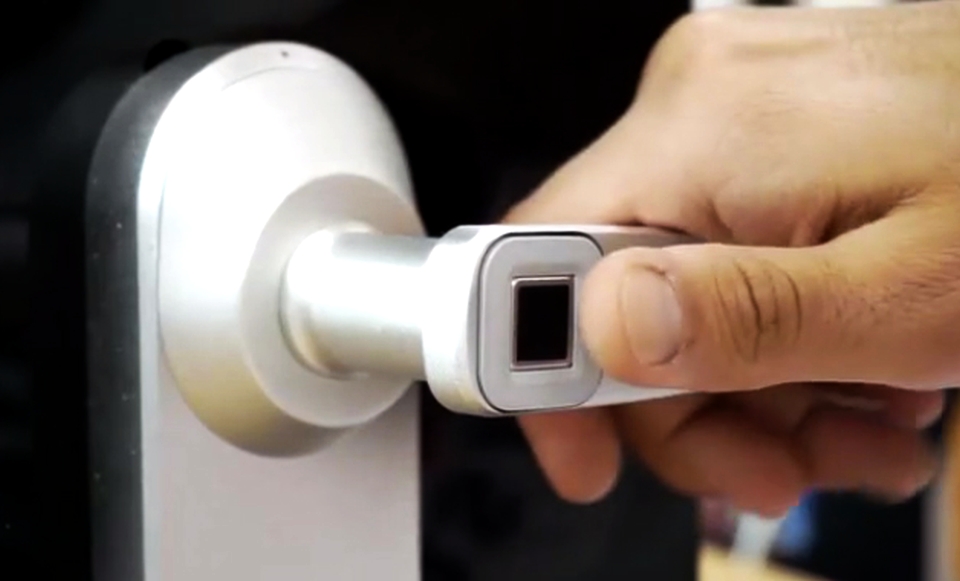
As soon as you build a property, whether it is your apartment, your one room office, your godown or your workshop, the first thing that comes to your mind is its security to avert break-ins. So locks; that too smart ones, come in handy for this. Smart locks and door bells make your property much safer and even you too feel safer and confident. 129 year old company Westinghouse has introduced a new lock called Nucli Smart Lock. The best feature of the product is that it is a two-in-one system.

Ola-Fingerprint-Smart-Lock-03

It incorporates a door bell and a dead bolt as well. In addition to this, this smart lock has a camera and microphone that enables you to see and communicate with the person standing outside your door keeping yourself safe within the confines of your home or office. It also has a facility of accepting messages i.e. your visitors can leave messages if you are away from home or your phone.

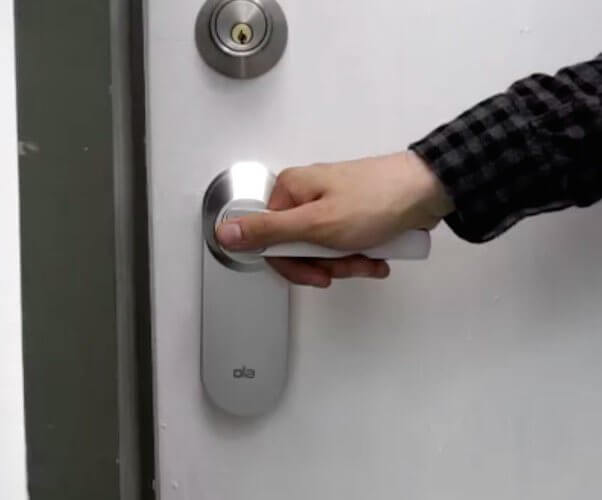
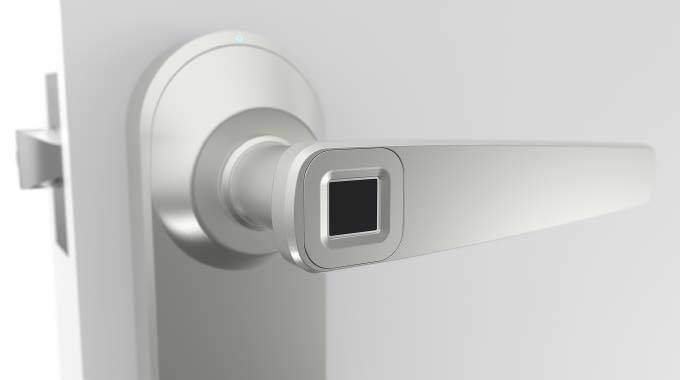
Using accompanying Android, iOS or Windows app you can easily lock and unlock your door remotely. There are four ways by which Nucli can let you enter inside your home or office: with the app, using a key fob, with a keypad and the pin or using your fingerprint. You can give unique pins to 50 different people to gain entry in the building if you are using it for business purpose. The Nucli doesn’t have any slot for traditional keys in case you get locked out when the batteries die. To overcome this problem, the battery-operated Nucli has a slot for a 9-volt battery as a backup.

ola_fingerprint_smart_lock_1

With all these amazing features, the lock doesn’t come cheap. Once out in the markets, the lock will retail for $440.

[adinserter block=”7″]

Author: Technology Blog
Human beings are wired to be lazy beings and science says so!

Don’t blame anyone if he/she is a couch potato, doesn’t exercise or loves spending time sprawled on his/her bed. It is not their fault; they are wired to do so! Well this is what a team of Canadian researchers are claiming. And how did they arrive on this conclusion? As a part of a study, they asked nine volunteers to wear robotic exoskeletons (quite like leg braces). These exoskeletons offered resistance to the wearer while they walked. Just after a few minutes of wearing that exoskeleton, each volunteer worked out a way to walk in which he/she had to spend lesser energy (nearly 5%).

Mid adult man sitting on sofa using computer game control

According to the findings of the study the human body prefers a gait which is optimally energetic for it and there is a preferred step frequency for that. When subjects were held away from their preferred step frequency using a metronome and then released, they returned to their new preferred step frequency within seconds.

Though people have a set way of walking since their birth, they readily adapted established motor programs to minimize energy expenditure, and they did so for quite small energetic gains. Continuous energetic optimization benefits motor adaptation by keeping movements close to energetically optimal, helping people to efficiently adapt to changing terrains, compensate for injury or motor deficits, and learn new tasks.

how-to-stop-being-lazy-and-get-more-done

All this points out that a complex series of biological sensors are constantly trying to find ways so that you spend the least amount of energy or trying to make you lazier in other words! J But this is also a part of our evolution. Our ancestors used to hunt and were sometimes being hunted down so they needed to save their calories for the same. That is the reason why energy conservation or optimization is in our system since long.

[adinserter block=”7″]

Author: Technology Blog
Verified by ExactMetrics