Starfish Killing Autonomous Machine to Save Coral Reefs

Crown of Thorn Starfish (COTS) are a species of starfish that are corallivorous i.e., feed of all kinds of corals. COTS have characteristic “explosions”. They have this rapid increase in number, and these population explosions have been increasing over the past decades. The Indo Pacific coral reefs are in danger as these poisonous spiny creatures feast continue to feast on them.
Cotsbot_concept_drawing-1441260592054Although COTS occur naturally in low numbers on coral reefs, they sometimes appear in high densities called “outbreaks”. An outbreak is usually defined as 30 or more adult starfish per hectare on reefs, or when they reach densities such that the starfish are consuming coral tissue faster than the corals can grow.

Although, COTS are preyed on by fish higher on the food chain, excessive fishing has led to declining number of predator, and in turn factors to keep these starfish in check. That’s why a team hailing from the Queensland University of Technology in Australia has spent the past decade developing a fully autonomous COTS-hunting robotic submarine to help bring these populations back into balance.

cotsbot-starfish-robot@2x

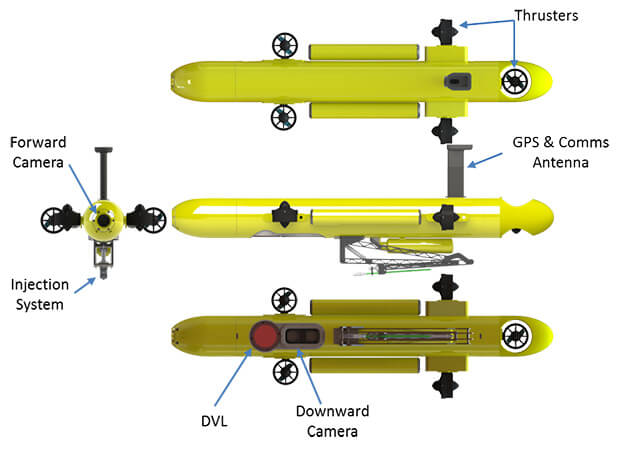
They employed the only solution: poisoning the starfishes, and took that solution’s implementation to a new level. The COTSbot is torpedo shaped, 65 pound AUV (Autonomous Underwater Vehicle).

It is fitted with self-functioning targeting and navigation system, with the poison -an integrated injector system loaded with a toxin thiosulfate-citrate-bile salts-sucrose agar –specifically designed to kill COTS in 24 hours with a single injection, but causing no harm to anything else on the reef. This machine works to the efficiency of 99% compared to human efficiency of 120 COTS/hour.

[adinserter block=”7″]

Author: Technology Blog
Hidden Chaos Explains What Went Wrong in the Jurassic Park?

The Chaos theory used to explain all forms of unpredictability to date, suggests that even in a deterministic system, if the equation are nonlinear then a tiny change in the initial conditions can lead to a cataclysmic and unpredictable result. A deterministic situation would be the motion of the pendulum of the grandfather clock. With a few key variable at any given time, the past, present and future of the system could be predicted.

18mnylps3df2tjpg

In this article, we talk about how discrepancies might arise even in a deterministic system, which could make it potentially unpredictable and chaotic. That is what is meant by hidden chaos. Take for example, four Christmas bulbs stacked in a pyramid. We if try to trace all the photons reflecting of the bulbs, most of them would observe a clear, defined trajectory. A random few, on the other hand, would get trapped inside the pyramid, bouncing from one spherical surface to another. This chaotic path of the trapped photons are because there are hidden variables within the system itself, in addition to the known outside variables affecting how the system evolves.

It’s important if you’re trying to better understand, and possibly control, complex chaotic systems that you think detecting hidden pockets of turbulence in the atmosphere. You can’t just focus on small variations early in the system’s evolution — the essence of the traditional definition of chaos. You also have to monitor those external factors that continue to influence how things evolve over time.

In a new paper by two University of Maryland mathematicians, Brian Hunt and Edward Ott, they propose the concept of a new quantity dubbed “expansion entropy” that is more flexible, and serves as an excellent stand-in for chaos in their broader mathematical definition. The theory used to further them was the concept of entropy, the one which states that the universe constantly works towards increasing disorderliness. Although this is was ideal to explaining real-life scenarios.

“Our definition of chaos identifies chaotic behavior even when it lurks in the dark corners of a model,” Hunt said. Their model serves as a perfect mathematical tool for identifying a system about to spiral into chaotic unpredictability.

1413118501533867921

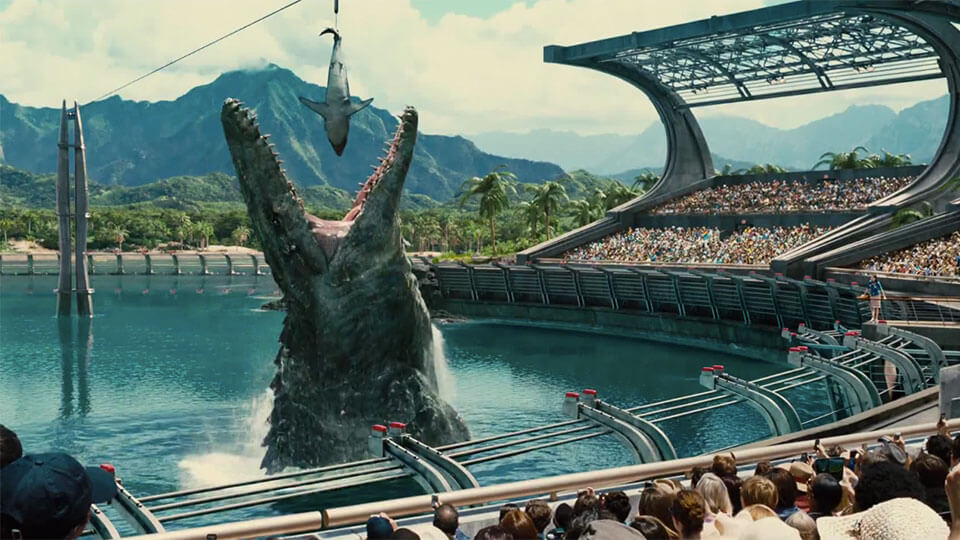
If only the “expansion entropy” model had been invented before the cloned dinosaurs at the Jurassic park went berserk; the scientists would have known the dinosaurs were aiming for chaos.

[adinserter block=”7″]

Author: Technology Blog

Half the Trees In The World have Been Wiped Out by Us!

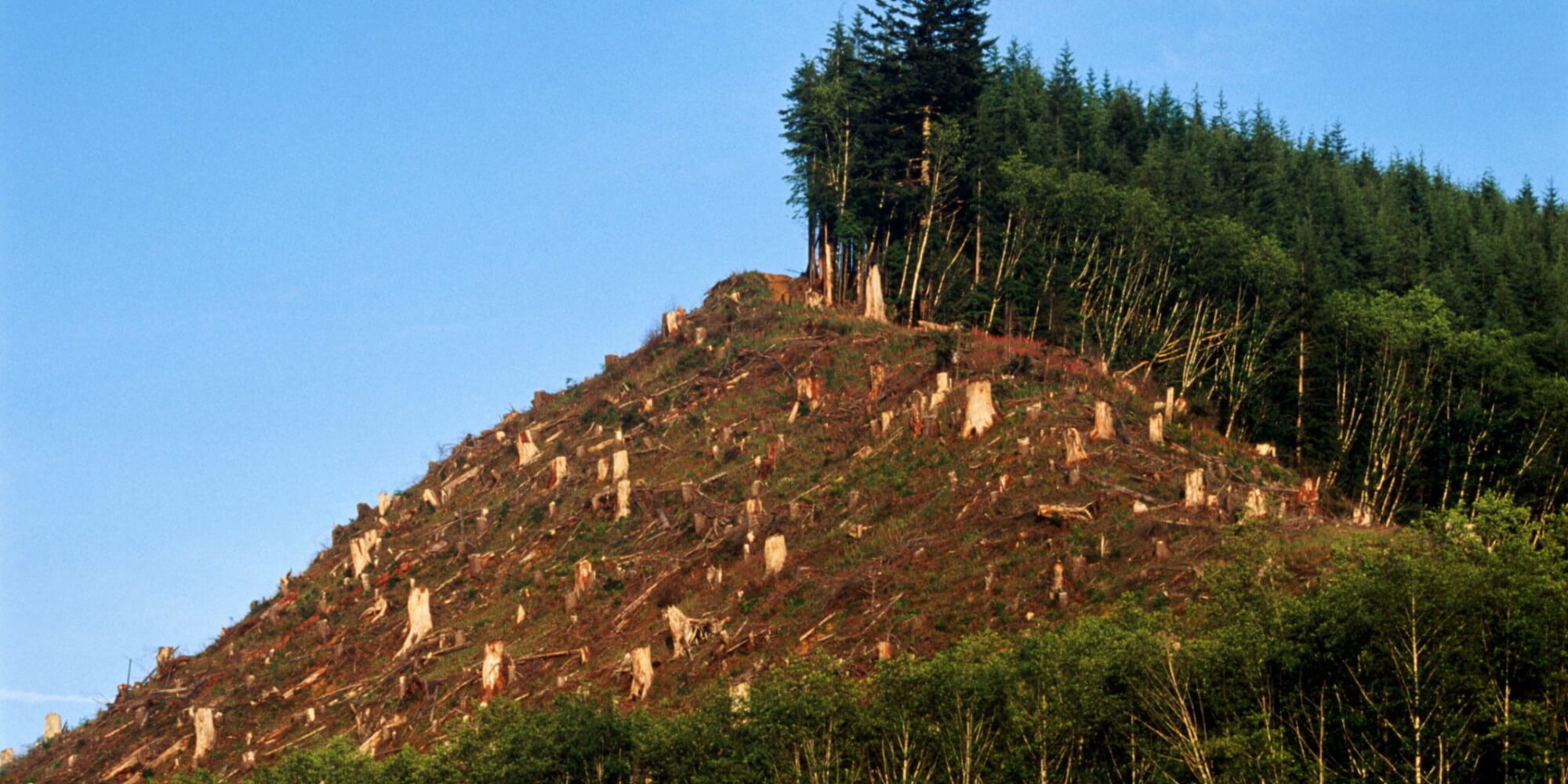
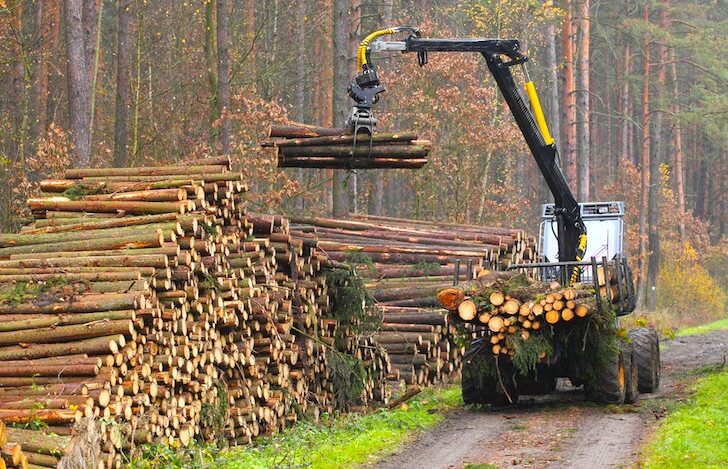
A massive ecological study in the journal Nature, offers the very first data-driven global tree census. According to this, we started out with approximately 3.04 trillion trees- roughly 422 per person. This is about seven times the number we had calculated in our previous global estimate. But, this happy mistake will soon be more or less nullified if we humans continue the way we have come; the world’s trees have been reduced to 54% of their original number by abusing humans.

Deforestation

The procedure for the global estimate was to collate 429,775 ground-sourced measurements of tree density from every continent on Earth (except Antarctica). Combining these field measurements with satellite data on climate, topography, and human land use, a constructed a series of models predicting tree density worldwide at the resolution of a single square kilometer were drawn out. Combining this resultant models with the spatial maps of forest cover loss, the study’s authors estimate that humans are currently removing some 15.3 billion trees from the planet each year. Loss has been more towards the tropics, which also hold majority of the forest cover, about 13.9 trillion. Loss of 10 billion/year is softened somewhat by recovery in the temperate region.

“I didn’t expect human activity to come out as the strongest control on tree density across all of the biomes [habitat types], lead study author Thomas Crowther told The Guardian. “It was one of the dominant regulators of the number of trees in almost all of the world. It really highlights how big an impact humans are having on the Earth at a global scale.”

For those of you not familiar with the benefits that make trees indispensable to human life, they give us oxygen, prevent soil erosion, bring rain, have medicinal value, is a source of livelihood for million across the globe. We if lose trees, we lose the ability the ability to breathe, harvest crops and control carbon gas emission among other things.

forest

“We’ve nearly halved the number of trees on the planet, and we’ve seen the impacts on climate and human health as a result,” lead study author Thomas Crowther said. “This study highlights how much more effort is needed if we are to restore healthy forests worldwide.”

Simply put, we stop acting out on trees, before they start acting.

[adinserter block=”7″]

Author: Technology Blog

Verified by ExactMetrics