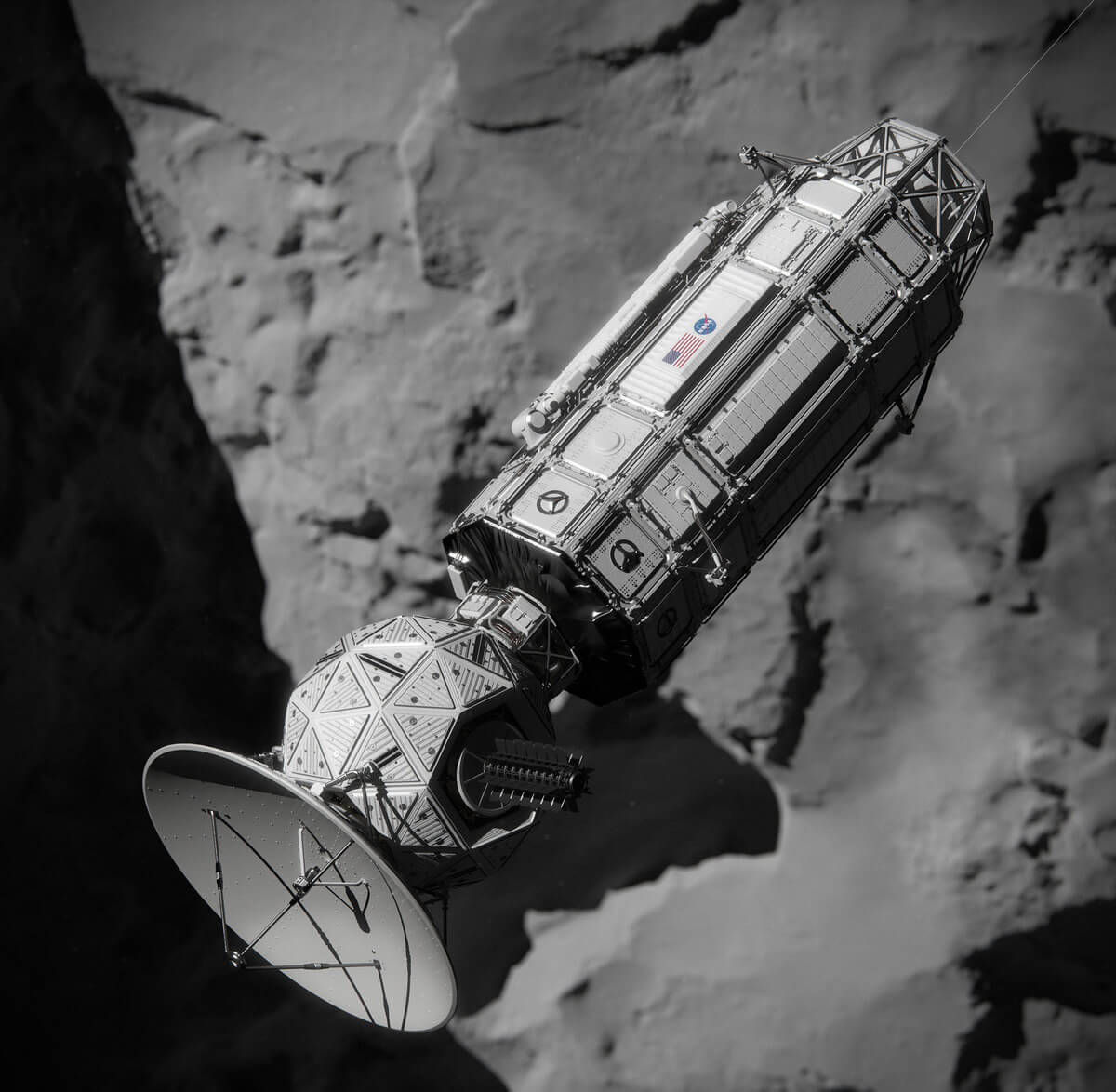
NASA and Arx Pax to build a “Magnetic Tractor Beam”

Arx Pax, who boasts of its amazing technology called ‘hovercraft’ is entering in a new partnership with NASA. NASA wants to use its hover-engine technology to catch and manipulate micro-satellites. They plan to do this with the help of a ‘tractor beam’ which they are trying to build together.
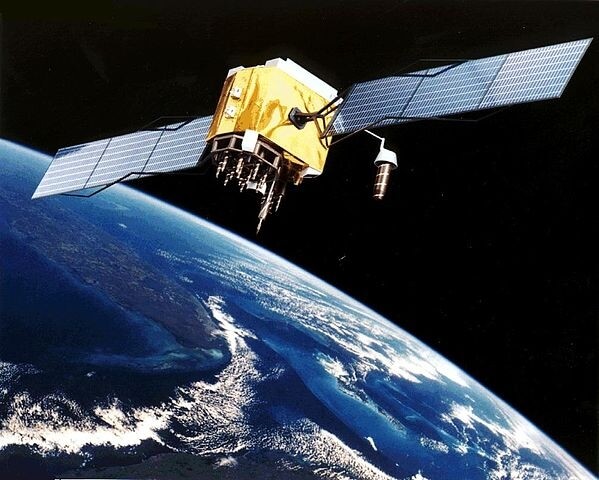
satellite

The company has patented its Magnetic Fiels Architecture (MFA) technology, the principle of which is: a ‘hover engine’ generates swirls of electricity in a conductive surface, which in turn produces a concentrated magnetic field. Another conductive material is placed below. The concentrated magnetic field induces an opposing field in this material causing it to lift from its place.

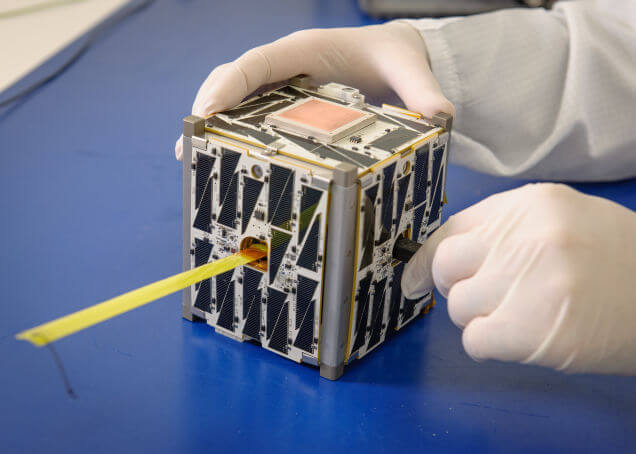
It was clear from the beginning that Arx Pax had something bigger in mind concerning MFA viz. Levitating houses to protect them from earthquakes or using magnetic fields to attract satellites to one another. Arx Pax CFO Greg Henderson informed, “What we are providing NASA is a way of manipulating objects in space without touching them.” At this stage, the focus of this partnership is to link up cubesats (lightweight, 10X10 cm satellites used to monitor the earth).
1412111500290329159

Henderson added: “We are trying to figure out how do you link cubesats together, connect them and move them around relative to one another.” Since it is too early to comment on how this partnership is planning to power the tractor beam, nothing much can be said. But if we ever succeed fully in a huge tractor beam, then we would be able to trot around the universe with the help of well-connected satellites.

As a technology lover you may like our daily important technology news series. It’s a playlist and you can retrieve the total day-wise videos. Please consider subscribing our YouTube channel:

Author: Technology and Beyond
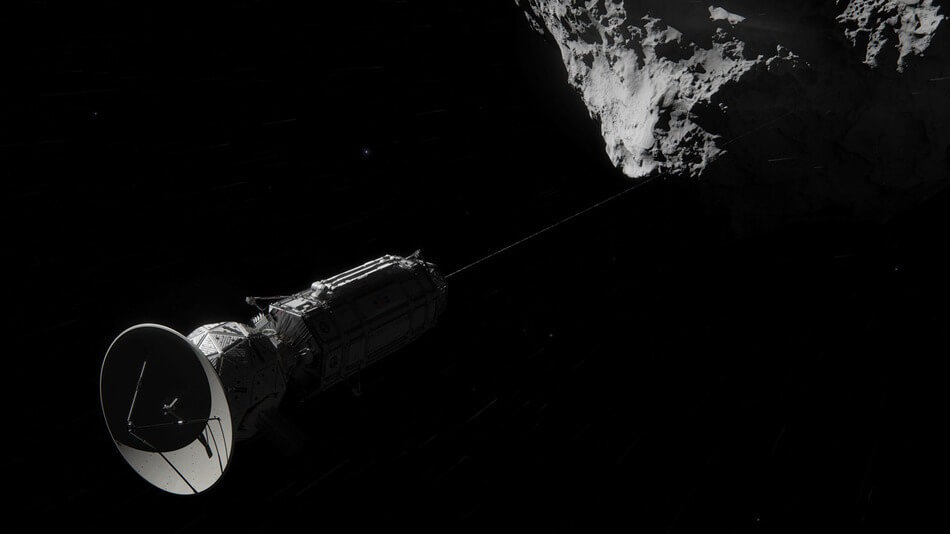
Cosmic hitchhiking: Inspired from fishing

What if just like a fish you could throw a line at a comet, and reel it in towards yourself like a fish? Funny and imaginative… right? Well NASA has really found its inspiration from this same concept.

hitchhiker20150901b

Developing a new concept ‘Comet Hitchhiker’ NASA wants to use a tether and harpoon to reel a robotic spacecraft in for a landing on a comet or asteroid. This would allow the small craft to land on the smaller celestial bodies and study them from close quarters. This in turn would help scientists learn about the universe, the earth and how life started on it.

Theoretically it may sound easy but it is going to be a far more technical and calculative work because in order to land on a comet or asteroid, the Hitchhiker would have to shoot its harpoon into the body of the celestial body and then reel itself in, just like fishing. These kinds of plans can be extremely beneficial for those missions where landing on low-gravity objects is a requirement.

Screen-Shot-2015-09-03-at-11.36.57-PM

The concept is still at its nascent stage and scientists are still trying to test the feasibility of it by using some supercomputer simulations. But if the concept succeeds on the required essential parameters, then we really do have an amazing concept in our hands.

[adinserter block=”7″]

Author: Technology Blog

Bluetooth has an alternative wireless transmission system now

When it comes to short range wireless communication, Bluetooth beats one and all. But despite being the king in this area, it comes with its own limitations. It works efficiently only when there is a clear air path between the two devices; it requires a significant power boost to push the signal through obstacles like the human body, known as “path loss”.

2-wirelessdata

Now a team of researchers from the University of California, San Diego have announced that they had developed a proof-of-concept wireless transmission system that is both more efficient and more secure than Bluetooth. It works by sending data signals through your body’s natural magnetic field instead of over the air and could lead to a new class of ultra-low power wearables.

And because it can send signals through the body, the research team estimates that the path loss associated with this technique is roughly 10 million times lower than Bluetooth. This in turn translates into longer battery lives and significant energy savings. In the prototype, PVC-wrapped wires coiled around the user’s extremities generated magnetic fields that transmitted signal between the various body parts. This system also offers increased security over existing wireless standards.

2-wirelessdata

UCSD Ph.D student and lead author Jiwoong Park said in a statement: “A problem with wearable devices like smart watches is that they have short operating times because they are limited to using small batteries. With this magnetic field human body communication system, we hope to significantly reduce power consumption as well as how frequently users need to recharge their devices.” Science is really full of wonders, isn’t it?

[adinserter block=”7″]

Author: Technology Blog

Verified by ExactMetrics