Artificial Photosynthesis Helping Achieve Hydrogen Production Efficiency Goal

The supply of nonrenewable resources can’t stand up to their demand much longer. As scientists are frantically trying to find a feasible, sustainable renewable resource to fall back on, the possibility of using Hydrogen as a daily fuel can’t be overlooked. The packaging and storage of Hydrogen poses some significant problems, but it is nothing in the face of its theoretical efficiency. Not to mention, we need just water as a starting product to produce it.
water_splitting

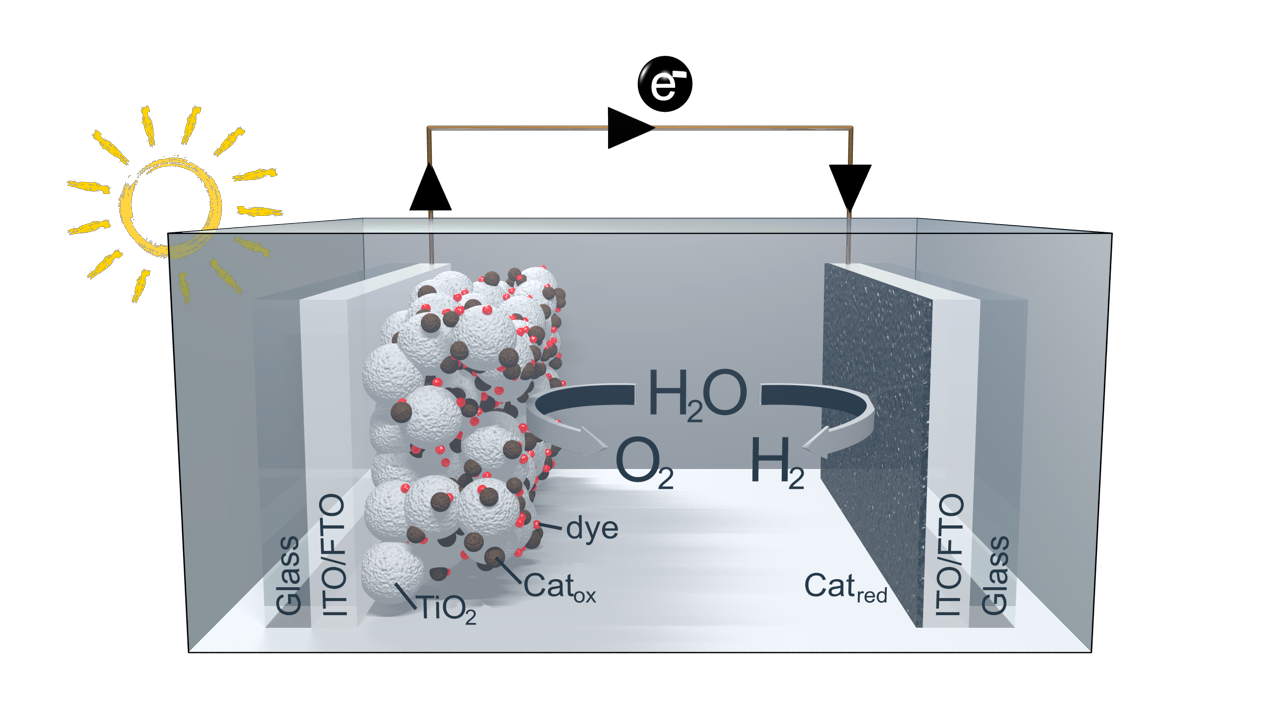
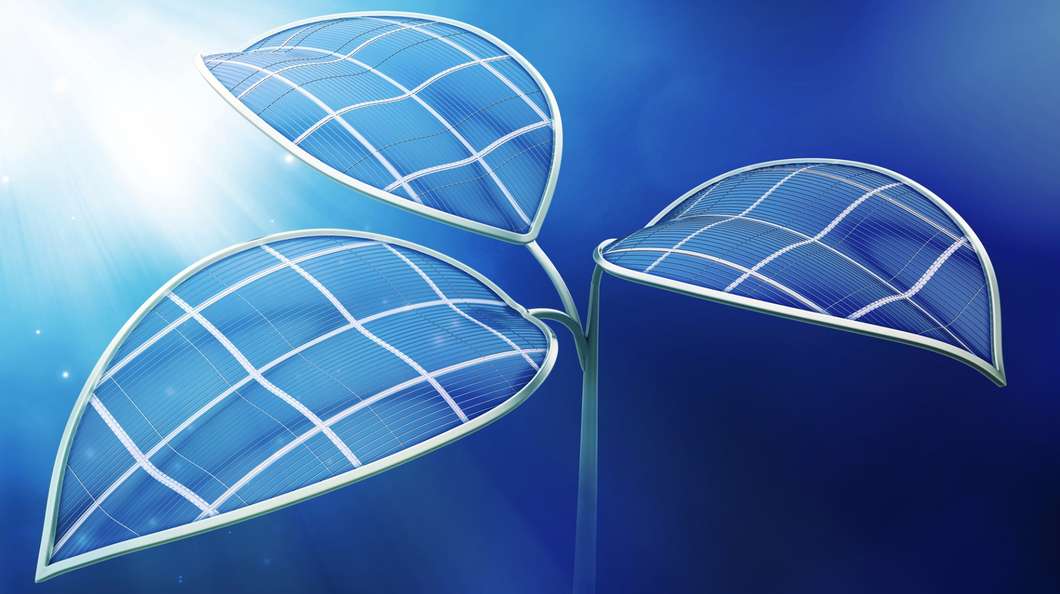
While researchers at Monash University in Melbourne claim to have created a solar-powered device that produces hydrogen at a world-record 22 percent efficiency, its practical efficiency achievement continues to progress over the years.

Splitting of water has by far been the most popular and preferred method of production of Hydrogen, as of date. That being said, the net output has been quite low to be of any commercial use, input costs would go up to ramp up the output. In this situation, we have to look for ways to tweak the instruments and other factors involved in the process, to optimise the output. Solar power is the best choice to make the input costs nearly zilch.
“Electrochemical splitting of water could provide a cheap, clean and renewable source of hydrogen as the ultimately sustainable fuel.” said Professor Leone Spiccia, lead in the research, from the School of Chemistry at Monash. “This latest breakthrough is significant in that it takes us one step further towards this becoming a reality.”

To help achieve the required solar-input efficiencies, the very best commercial-grade multi-junction (indium gallium phosphide, gallium arsenide, and germanium) solar cells available must be employed in the process to ensure the maximum sunlight to electricity conversion. Expanded foam Nickel electrodes, increased the surface area and only local river water and pH buffer solution sufficed to bring about the reaction.
In short, high-yield electrodes and high-efficiency cells seem to be the tweaks resulting in this record-breaking 22% goal. Soon, hydrogen might be abundant and its production could become cheap enough to consider as an alternate fuel.
artificial-photosynthesis@2x

“Hydrogen can be used to generate electricity directly in fuel cells,” said Professor Doug MacFarlane, ARC Laureate Fellow and leader of the Energy Program of the ARC Centre of Excellence for Electromaterials Science at Monash. “Cars driven by fuel cell electric engines are becoming available from a number of car manufacturers. Hydrogen could even be used as an inexpensive energy storage technology at the household level to store energy from roof-top solar cells.”

[adinserter block=”7″]

Author: Technology Blog

Converting atmospheric CO2 into Carbon Nanofibers Made easier

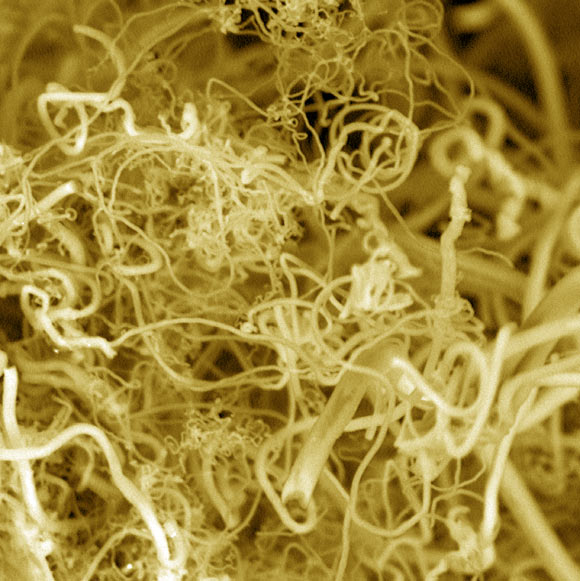
Carbon nanofibers are not new, but still we are excited to talk about these somewhat mysterious product of carbon which is so expensive and difficult to manufacture. But, there seems to be a way to convert carbon dioxide from the atmosphere directly into nanofibers by an electrochemical process.

9284.0

To begin with, the researchers had come up a with a “capture and requester” technique, in which they capture carbon in our environment. The ways on the list till now are, injecting carbon dioxide into porous basalt rock, where it is mineralized and then buried, making it impossible for it to seep into the atmosphere (Iceland), and a copper material that can be used to turn captured CO2 into fuel (Dept. of Energy).
Now in this method given by George Washington University’s Department of Chemistry, the carbon dioxide from the atmosphere is taken into a lithium carbonate pot and subjected to a low voltage, whereupon, the solid carbon deposits in the cathode, and oxygen in the anode. Now, if we are not careful, of the temperature attained, and carbon dioxide might form carbon monoxide instead, which is very dangerous to health. This reaction is facilitated by the conversion of visible rays of sunlight into electricity through photovoltaic techniques.

image_3147-Carbon-Nanofibers

The nanofibers produced are currently about 30 to 100 times more expensive than aluminium. So even though they make for incredible sturdy structures in construction, they are not much in use or demand at the moment, but this new technique might open doors and lead to falling of prices for this material. It’s like killing two stones with a bird, as this uses solar energy, produces oxygen and would reduce the levels of global warming if harnessed on a large scale.

[adinserter block=”7″]

Author: Technology Blog

Tiny Lab Grown Human Brain to help Understand Autism

Ohio State University researcher have succeeded in growing a human brain which has up to 99 genes similar, as found in a fetal brain. The study of this organoid would give us insight as to how genes and environmental affect the brain and its development, and the effect drugs have on it. This method would prove to be cheaper and more convenient.

human-brain-stem-cell-afp-290813

This brain, about the size of a pencil eraser, has been made from pluripotent cells that can form just any organ of the human body. Researchers have aimed to produce, and succeeded, in making many organs from totipotent skin cells in the past, but the human brain with its complex array of nerves, is the “holy grail”, as described by Rene Anand, the chemist and neuroscientist behind the work.
Using specific cellular triggers, same as in a human fetus, the cells were arranged into a structure closely resembling a fetus brain at 5 weeks. With further maturity, it developed into a 12-week fetus brain, which had 99 genes matching. The brain also contained major parts such as a retina, a spinal cord, and signaling circuitry etc.
Such a sophisticated structure could help use study genetic and environmental factors which result in autism and Alzheimer’s.
“In central nervous system diseases, this will enable studies of either underlying genetic susceptibility or purely environmental influences, or a combination,” Anand said. “Genomic science infers there are up to 600 genes that give rise to autism, but we are stuck there.” Mathematical calculations aren’t enough to understand what causes autism, he added—“You need an experimental system – you need a human brain.”

A lab-brain grown brain has its limitations as it lacks a blood vessels and veins found in abundance in a human brain. But the optimists speculate that in 16-20 weeks, the development would be more, and the brain would maybe even fill up for the lacking gene.

[adinserter block=”7″]

Author: Technology Blog
Verified by ExactMetrics