Floating libertarian city designs

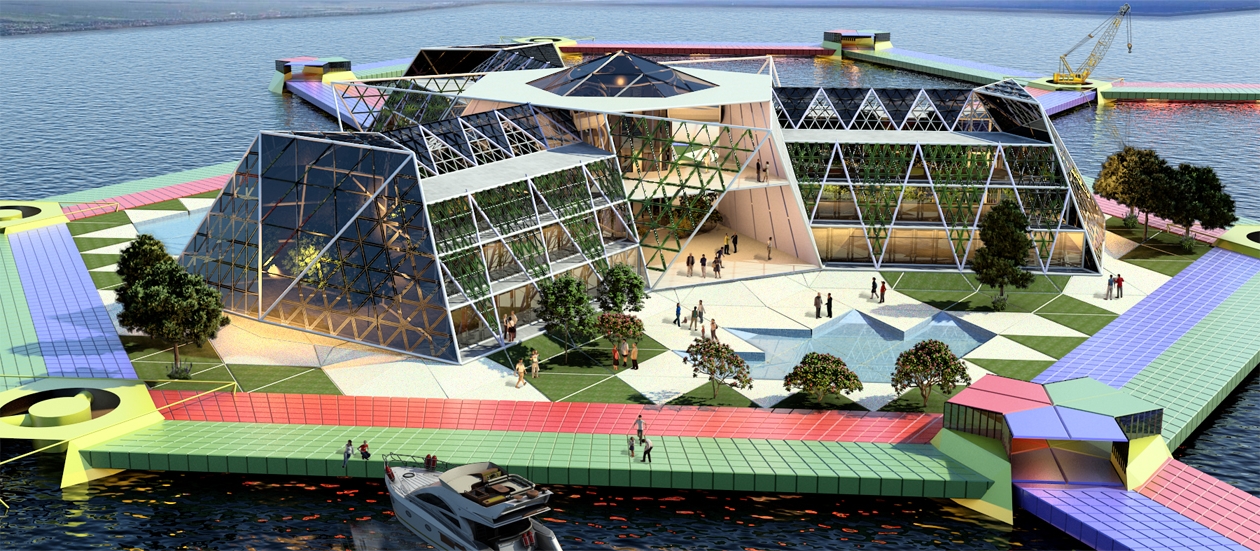
Ever heard of the term Libertarianism? Libertarianism is the view that each person has the right to live his life in any way he chooses so long as he respects the equal rights of others. And what about Seasteading? It is the concept of building floating cities that are independent of the government. Both these ideas are creative nonetheless but expensive too. Seasteading is something that would require billions of dollars of investment and decades of work.
AndrasGyorfi

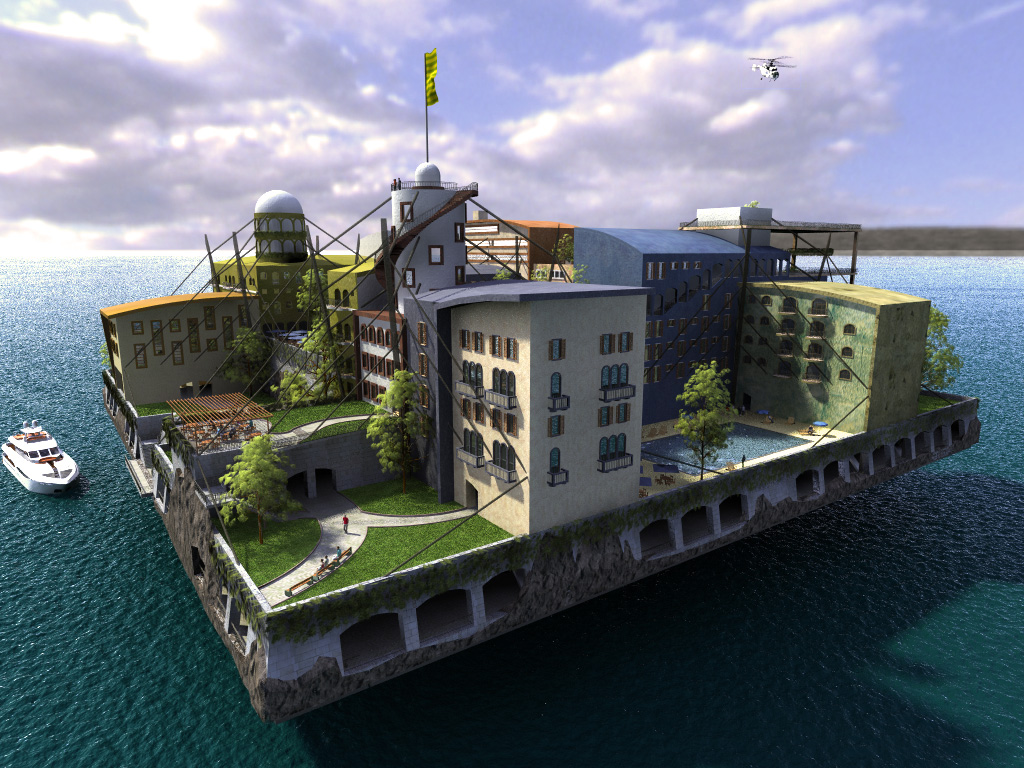
You can’t even know how these communities will look unless you see one created in front of you. So to give everyone a peek into this world of Liberatirans combined with seasteading, a design competition was announced by The Seasteading Institute that invited designers and architects to visualize these floating cities. The Seasteading Institute is a group founded by Peter Thiel in 2008, which believes that seasteading is the ideal solution to the government’s inability to “innovate sufficiently.”

It’s a movement that has grown up in the tech world, attracting interest from libertarians and techies alike. The competition was held just to evoke interest in general public. Judged by architects, scientists, engineers, and seasteaders themselves, the competition wrapped up this month—and the results were recently posted online.

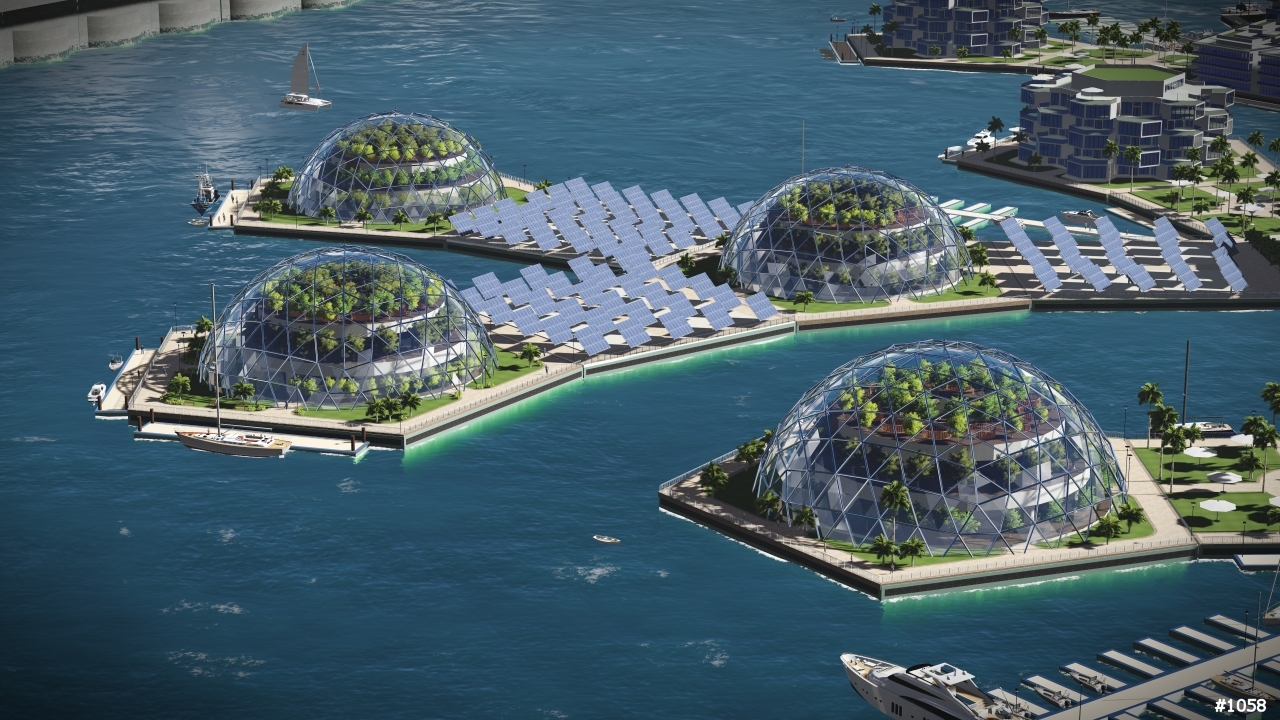
The various winners or designs that won include Simon Nummy, an architect, who proposed a three-storey floating buffer surrounding the community to shield it from storms and rough waves. His proposal also included huge tubes made of strong fabric anchored to the ocean floor to create ecosystems where harvestable sea life could flourish. Another winner, titled, Artisanopolis, created by a team of three architects from Roark 3D—-imagines a circular series of wave-breakers surrounding modular floating piers, where PVs and wave-powered turbines collect energy to power the island.
1391254330946812745

Apart from these, huge luxurious yachts, geodesic-inspired biodomes and the tessellated facade (designed by third place winner Matias Perez) were the ther designs that stood out in the competition. These designs may not propose realistic engineering solutions for self-sustaining communities but they do depict the hyper-utopian design ethos of the tech world.

[adinserter block=”7″]

Author: Technology Blog
The biggest thing in the universe gives a setback to age old cosmos theory

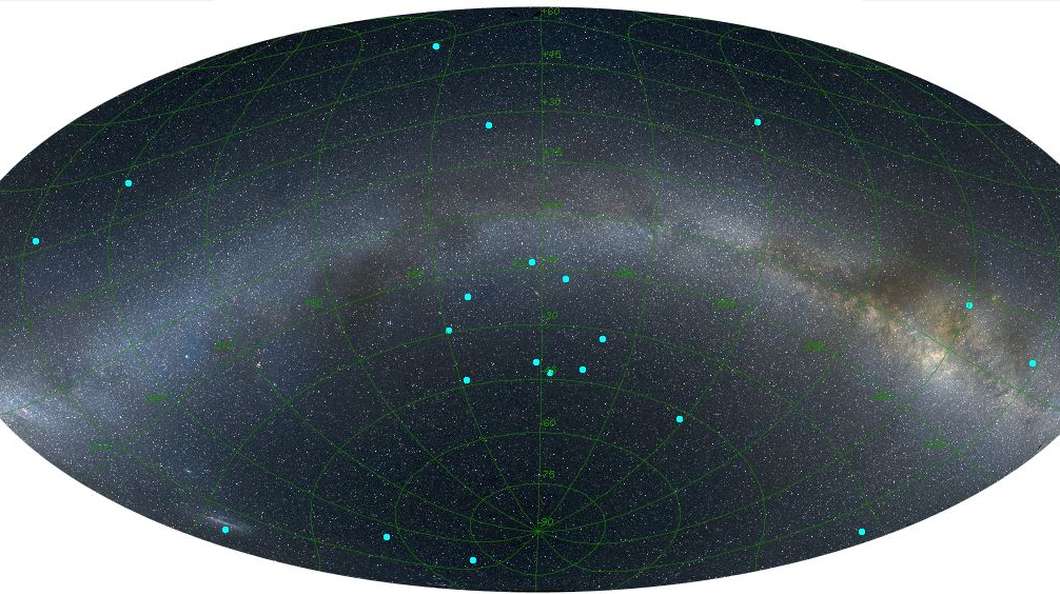
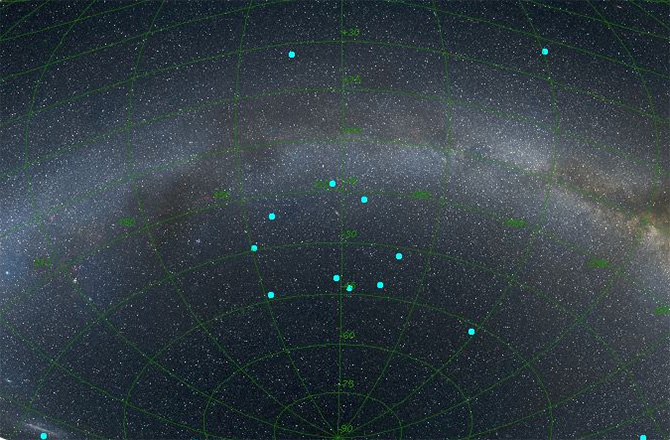
It seems the Cosmological Principle first asserted by Sir Isaac Newton is in jeopardy, as a team of Hungarian-US scientists led by Prof Lajos Balazs have found the largest regular formation in the universe which is a ring of nine galaxies. The Cosmological Principle was developed on the basis of observations of the cosmic microwave background radiation and the structure of the early universe in the past century.

M104_ngc4594_sombrero_galaxy_hi-res

It states that at the largest scale, the structure of the universe is uniform so no matter where you are it looks essentially the same. And even recent works indicate that the largest structures can’t be more than 1.2 billion light years across. But the new discovery contradicts this concept too as this ring of galaxies is seven billion light years away and five billion light years wide and it covers third of our sky.

The team was able to spot the rings by nine Gamma-Ray Bursts (GRB), that originated from those nine galaxies. GRBs are actually most energetic events in the entire universe that produce as much energy in seconds as the sun produces in a lifetime. They are caused by very massive stars collapsing into neutron stars or black holes in times ranging from milliseconds to a few hours. These bursts also help the astronomers to estimate the distance of other galaxies from Mother Earth. The GRBs from these galaxies indicate that the nine galaxies are positioned in a ring shaped like a shell and are all at a similar distance from the earth.

6a00d8341bf7f753ef01bb085e0190970d

Though one can’t see the rings from earth but if one could, it would cover 36 percent of the sky making it 70 times bigger than the full moon. The next important step for the team of astronomer’s is to see if the processes controlling galaxy formation and large scale structure could have produced the ring without violating the Cosmological Principle. If not, it could require rethinking how the Universe evolved. Prof Lajos Balazs commented: “If we are right, this structure contradicts the current models of the universe.”

[adinserter block=”7″]

Author: Technology Blog

The Cost of your Thoughts! Too Cheap?

On what seems to be an idea that popped up from the phrase “penny for your thoughts”, the University of Leicester has conducted a study to determine the price of brainpower in English pennies. A value of a penny was found to be worth of three hours, seven minutes and thirty seconds of thinking.

Brain_power

Osarenkhoe Uwuigbe, a Natural Sciences student at the University of Leicester’s Centre for Interdisciplinary Science, mashed up Economics of thinking and several assumptions about brain power to arrive at the conclusion that 20 watts of energy were used in thinking, i.e., 20% of the total 100 watts of average energy produced. For calculating the cost of power, he used the price per kilowatt hour (kWh) offered by UK energy providers as a reference point.

To break it up:

20 W = 1/5 kW power to keep our minds ticking.

A penny buys 1/16th of a kWh (assuming you can speak as fast as you can think),

This works out to (1/16) ÷ (1/50) = 3.12 hours.

Lastly, Uwuigbe points out the limitations of this paper, and the assumptions that could be wrong, “This model is likely to be an underestimate as power required for the brain to operate does not necessarily translate to power used in thought,” says Uwuigbe. “The brain has several autonomic functions it carries out during thought processing and as a result thought processing could not take 100 percent of the power consumption of the brain.

Penny-for-your-thoughts

Furthermore, it is unlikely that it is possible to think as fast as you speak due to delay caused by biological constraints such as conduction velocity of nerves carrying the signal from the brain to the mouth, the release of Ca2+ ions during muscle contraction of the tongue and lips and so on.”

[adinserter block=”7″]

Author: Technology Blog
Verified by ExactMetrics