‘Brainy mice’ to help find the cure of Alzheimer’s and schizophrenia

Our brain is a complex maze of nerves and even a small glitch can cause major problems. There are many diseases linked to the brain like Alzhiemer’s, schizophrenia, etc that have posed big questions in front of the researcher fraternity. Now according to a study published in Neuropsychopharmacology, researchers from University of Leeds, UK and Mount Sinai Hospital, Toronto have created bold and intelligent mice by altering a single gene. This little alteration resulted in mice that were less likely to feel anxiety or recall fear.

MICE

Researchers altered a gene to inhibit the activity of an enzyme called phosphodiesterase-4B (PDE4B), which is present in many organs of the vertebrate body, including the brain. In behavioural tests, the PDE4B-inhibited mice showed enhanced cognitive abilities. They tended to learn faster, remember events longer and solve complex exercises better than ordinary mice.

These brainy or smart mice were quicker at learning the location of a hidden escape platform in a test called Morris water maze, showed better quality than ordinary mice to recognise another mouse that they had been introduced to before and also had less recall of a fearful event after several days. They also showed less anxiety, spent more time in open, well-lit spaces as opposed to ordinary mice that prefer dark, enclosed spaces.

391664-brain-disorders

Though the study was conducted using mice, it is to be noted that the enzyme PDE4B is also present in humans. So it is hoped that this study could form the basis for research into new treatments for age-related cognitive decline, cognitive disorders such as Alzheimer’s disease and schizophrenia, and other conditions. Dr Alexander McGirr, from the University of British Columbia, who co-led the study, opines:”In the future, medicines targeting PDE4B may potentially improve the lives of individuals with neuro-cognitive disorders and life-impairing anxiety, and they may have a time-limited role after traumatic events.”

[adinserter block=”7″]

Author: Technology Blog

You don’t need glasses for this 3-D display

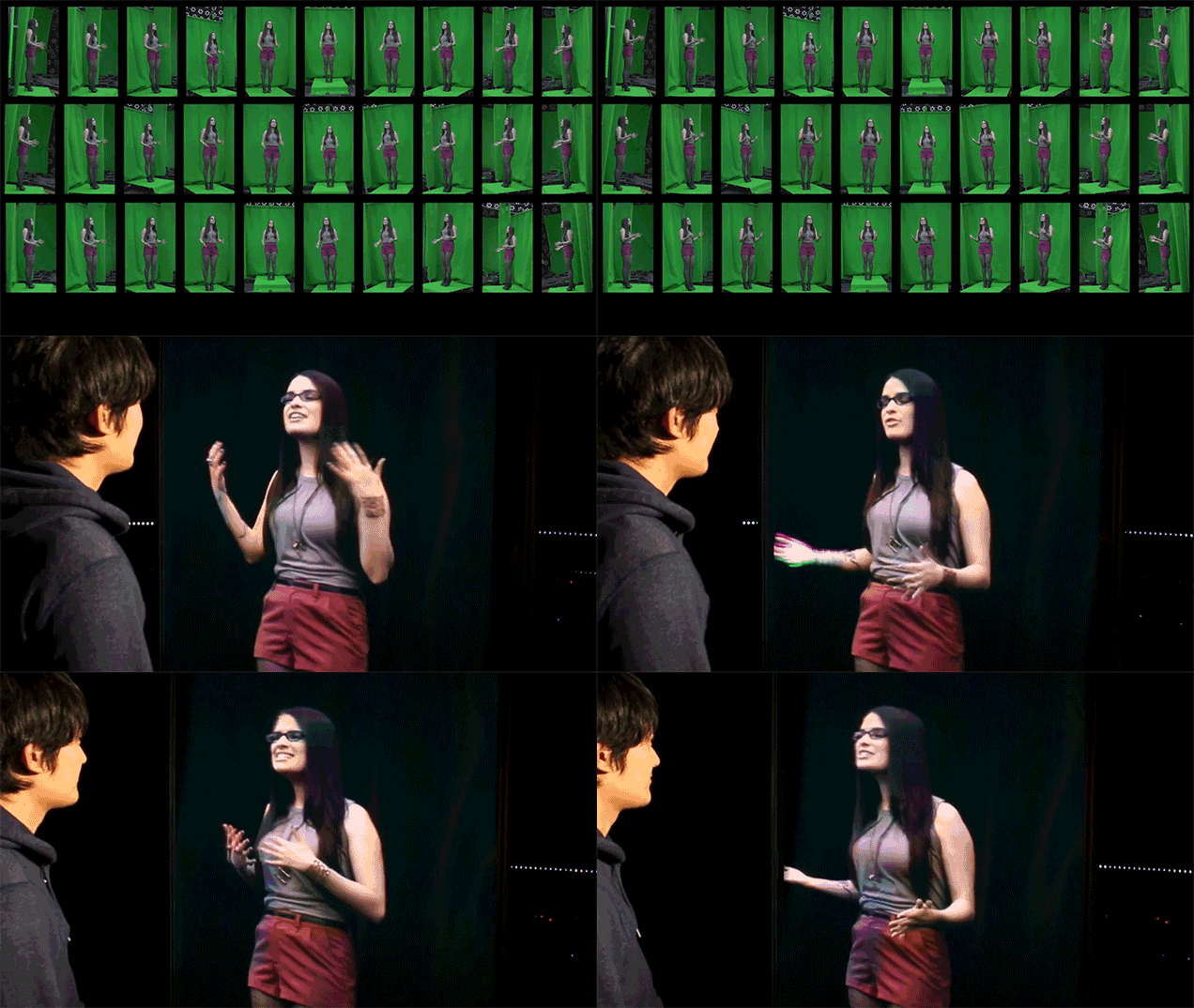
Watching something in 3-D has its own charm and excitement. The third dimension enhances the visual experiences. But the goggles and glasses accompanying this experience somewhat annoy us and finding a way to watch 3-D content without using those glasses has been a challenge for interface designers from quite a long time. To present a goggle/glass-less 3-D viewing experience, a group of researchers presented a display at this year’s SIGGRAPH, which creates a 3-D human in terrific, minute detail using a 216 projector cluster.

1385847188634292651

This creative group belongs to USC’s institute for Creative Technologies. They have built an auto-multiscopic 3D display which makes a 3D model of the person with video. The video of the person is captured using 30 cameras in intensely bright light. The images are then divided among the 216 projectors. These projectors are then arranged in a semi circle around a large screen so that when the viewers walk around the screen their eyes smoothly transition from one projection to the other giving the whole experience a feeling of the third dimension and other details.

wedge blue & red AT 091027(2)

The technology produces such realistic images that it is being used to create full scale digital humans that can successfully makes themselves useful in museums or for some educational project. Though it is not interactive, the speech recognition in this technology helps cue up answers to questions so it ‘feels’ interactive. Also the humans are extremely realistic and you get a feel that they are actually listening and maintaining an eye contact with you. This goggle/glass less 3D experience technology is really something to look out for.

[adinserter block=”7″]

Author: Technology Blog
Gecko Inspiration for Space Adhesive

The large diversity of flora and fauna on this planet have all different stories to tell. All the stories have a moral we can take away something from. Scientists have been clever enough to realize this and, many new gadgets and inventions are inspired from the behaviour of a creature already found on the earth.

sm_triplet_feat

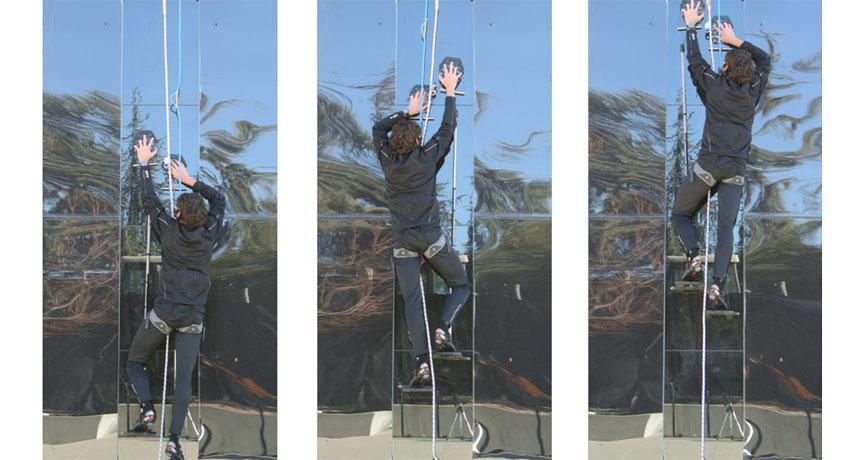
The latest example of this would be how gecko gave us an idea to use as extra-terrestrial adhesives. Velcro was the former preferred from of adhesion, but this system poses the problem of needing a “mating surface” to join with the Velcro base.

Geckos have countless tiny hairs on their feet which let them climb walls. These hair encrusted feet create van der Waal forces between the wall and the feet as they climb. A related NASA statement explains, “A slight electrical field is created because electrons orbiting the nuclei of atoms are not evenly spaced, so there are positive and negative sides to a neutral molecule. The positively charged part of a molecule attracts the negatively charged part of its neighbor, resulting in ‘stickiness.’”

international-space-station-4-640x0

Van der Waals forces are not affected by temperature, pressure, heat or rain, thus this is a full proof “gecko-gripper” system. NASA tested the adhesive they created with this logic and the technology was “able to stick to and manipulate a 10 kilogram cube and a 100 kilogram person.” Over 30,000 successful tests later, Aaron Parness of NASA’s Jet Propulsion Laboratory noted that with this new technology, “We might eventually grab satellites to repair them, service them, and we also could grab space garbage and try to clear it out of the way.”

[adinserter block=”7″]

Author: Technology Blog
Verified by ExactMetrics