The mission of the millennium, the idea of venturing far into the universe and setting up human colonies and the concept of inhabiting Mars, all have been doing the rounds and making everybody feel excited and proud about the Homo sapiens species that seems to conquer everything which crosses its path. Precisely, the Mars One mission has kept us all glued to the news relating to the space and universe but will the mission see the light of the day or will it go down in the history as the most revolutionary and talked about mission that failed miserably? Well the chances of latter seems more ripe based on a debate that took place at the annual Mars Society Convention where Mars One cofounder Bas Lansdorp was pitted against MIT PhD candidates and vociferous Mars One critics Sydney Do and Andrew Owens. The topic of the debate was simple: “Is Mars One Feasible?”

The Mars One mission envisages sending pairs of human colonists on a one-way journey to Mars every 26 months, beginning in the 2020s. But the big question is will they be able to survive and if yes, then how? According to Sydney Do and Andrew Owens, there may be a humongous hype around this mission but the technologies needed to sustain human life on Mars are not even mature till date, forget implementing them. Lansdorp on the other hand had no consolidated facts, figures or answers to prove it otherwise. Do and Owens presented their feasibility analysis in a condensed form based on various points.
To survive on Mars, humans will require two types of technologies, one, life support that is the stuff inside the supposed Martian habitats which will recycle the air to breathe, water and nutrients and will also keep CO2 and oxygen in balance. The second thing is in situ resource utilization that is using the technology to extract water from the Martian soil to drink, and nitrogen and oxygen from the air to build an atmosphere.

According to Lansdorp the technology does indeed exist as he is referring to the life support systems that are used on International Space Station (ISS). Undoubtedly the life support systems on ISS work really well in all practicality but the biggest thing that we are missing is that these systems are repaired and maintained regularly using spare parts located just 249 miles below the station and every three months there are resupplies but if one considers the case of Mars One, we are talking 26 months between resupply and no return vehicles… yes….. NO return vehicles for the colonists in case things go haywire. So are we going to send hoard of spare parts with every two colonists and will have to keep sending with every crew of two members? By doing this, practically we will be increasing the cost of the mission by a whopping amount.
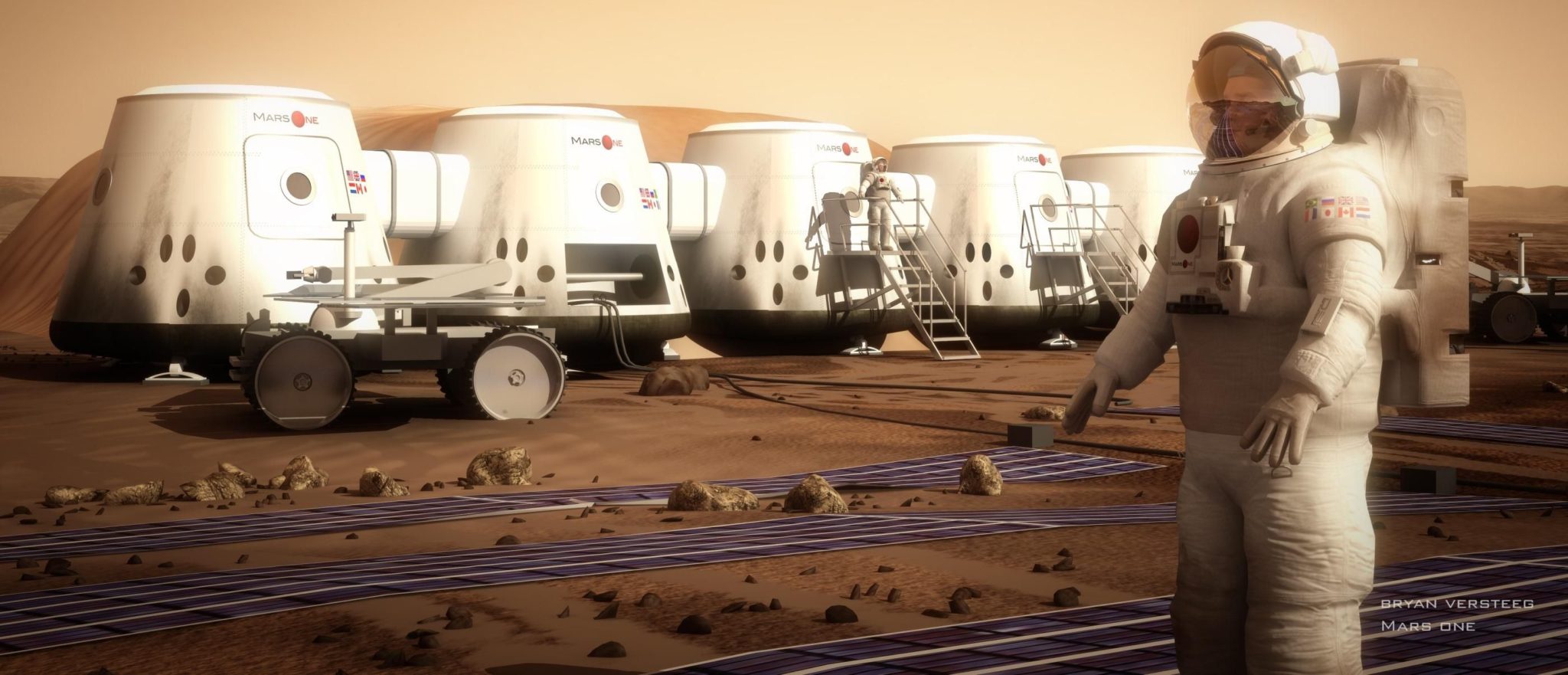
If supplying spares is not feasible then we are left with the other option that is utilizing the resources of the planet Mars to provide spare parts. The question now arises, do we have a technology or a physical process to accomplish this or even if we have was it ever done or tested practically? Talking theoretically about a process is entirely different from putting that process into implementation in an environment so different from our own planet. And thankfully, Lansdorp admitted this that the technology needed to manufacture spare parts doesn’t exist at all. He added: “What’s very important is that we need to start producing stuff on Mars locally”
The problem is Mars One in reality doesn’t have any money to start something as huge as this so it is at that stage right now where it is showing all the rosy pictures it can to attract investors. It can develop technologies, test them and implement them only if it has huge stores of money. But it seems really foolish to send humans to that other planet before the technology isn’t even ready with us. What’s the point of slaughtering precious humans just for the sake of a whim to prove what they think can be done? Mars One also admitted it in a different manner, citing: “its crews are going to have to get very innovative when addressing unforeseen life support challenges on Mars.”
Mars One may see the light of the day, but the main thing to be considered is the technology to do so. Nothing can be done if technology is not completely developed, tried and tested BEFORE we start sending humans to Mars.
[adinserter block=”7″]
Author: Technology Blog