Scientists have gone overboard with freaky transplantation cases since time immemorial. The world has really kind of turned into one big Dr. Moreau’s island. This time it’s legal.
A pig heart alive in a baboon for 945 days and a kidney swap between the same species lasted for just 136 days. And then there was ‘Baby Fae’, the 1984 case, of a Californian newborn being given a baboon heart. That experiment lasted about three weeks before the heart failed. A Los Angeles woman who got a pig liver in 1992 died within 34 hours. The last time a doctor transplanted a pig heart into a person, in India in 1996, he was arrested for murder.
Thousands of people die each year, waiting for organ that work. Out of the countless less that lost each day, there is more than enough for every candidate of the waiting list. But getting an organ is not enough, the question of compatibility comes into the picture. So many organs are rejected after transplantation, even with enough dosage of immunosuppressant.
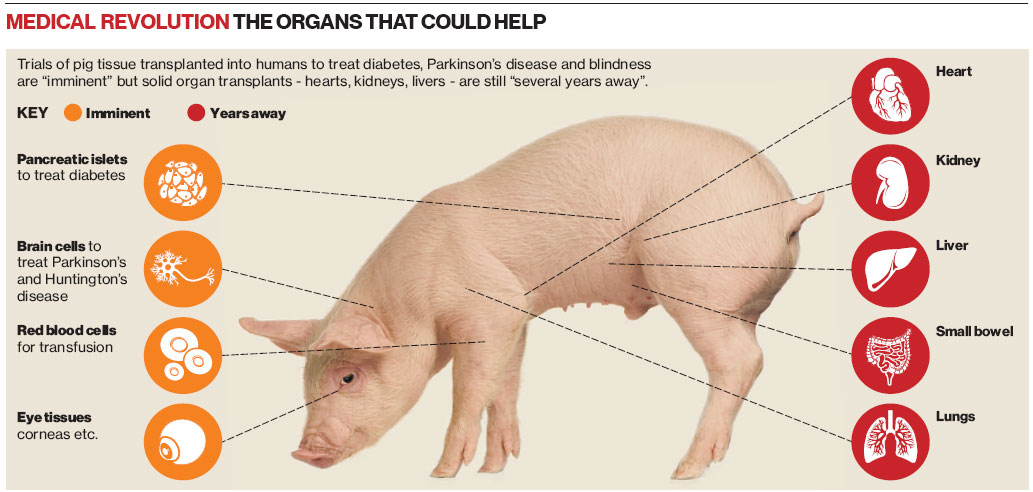
The idea which the scientists are currently working on is to “humanize” pig organs by added up to five human genes in the organs. This would reduce the chances of infection by the human body. The goal of this technique dubbed “xenotransplantation” is to ensure an “unlimited supply of organs”, and to carry out a successful pig-to-human lung transplant in a few years. The inspiration behind this research is Martine Rothblatt’s (founder and co-CEO of Revivicor, a division of the biotechnology company United Therapeutics, Blacksburg, Virginia) daughter suffering from a rare fatal lung condition called pulmonary arterial hypertension. The company, in addition to GM pigs, is working on tissue-engineered lungs and cryopreservation.
“We want to make organs come off the assembly line, a dozen per day,” says Rothblatt. In 2011 her company paid about $8 million to take over Revivicor. She has given her vision for the facility to breed 1,000 pigs each year and a private helipad for quick transportation of organs to hospitals.
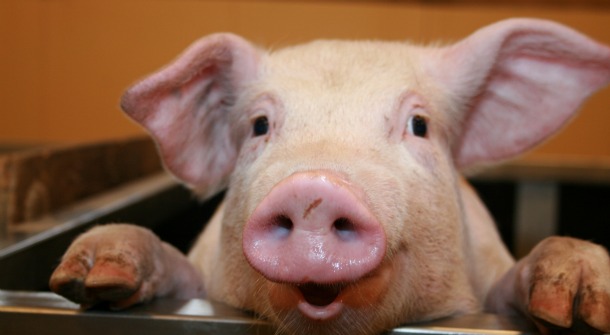
Pig genes are even more distant to humans than baboon genes, and this increases the chances of rejection of the organ. So why do we continue to work with GM pigs? The simple answer is because they are easily available, and the young pigs possess organs of the ideal size.
One major help was the removal of the sugar molecule which normally lines the blood vessels of pigs, but is involved majorly in the rejection of the organ. The version of thrombomodulin (prevents blood clotting) was created in the pig organ, as the original version was wrong with human blood.
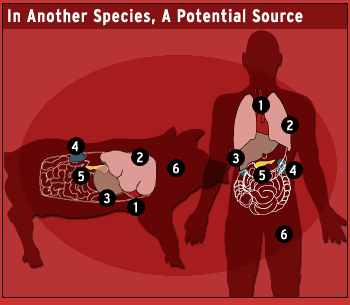
“We are adding the human genes to the pig so you have the organ repressing the immune response, rather than have to give a whopping dose of immunosuppressant,” says David Ayares, responsible for the removal of the sugar molecule.
In case of heterotopic transplants, the stats have been better; Muhammad Mohiuddin, a transplant surgeon and researcher at the National Heart, Lung, and Blood Institute, in Bethesda, Maryland, says a heart from one of Revivicor’s pigs lasted two and a half years inside a baboon. Heterotopic surgery is when both the baboon and the pig heart reside and are not swapped out. Thus, the pig heart doesn’t have to pump blood to sustain the body.
Transplant surgeons say the money is a big factor as each surgery costs $100,000 and involves eight people. There was also other ethical and social issues which need looking after. The majority of the research going on at Revivicor is being funded by Rothblatt herself.
[adinserter block=”7″]
Author: Technology Blog