Fresh funding for DARPA space plane concept

What if there comes a future when an astronaut tells his wife: “Honey! I am leaving for my space expedition today but please do send me my favourite apple pie via the return space plane tomorrow evening!” Funny? because it is practical impossible? Well, DARPA wants it to become a reality and is funding humongous amounts of money to realize this dream.

This-Futuristic-Military-Space-Plane-Could-Deliver-Troops-And-Supplies-Around-The-World-At-Warp-Speed

Till this date, rockets have been the most reliable source to put objects in the space. According to the Pentagon’s research wing DARPA, rocket, which is pushed into the space via a single-shot thrust and which then disintegrates into unsalvageable parts, needs to be replaced with something smarter.

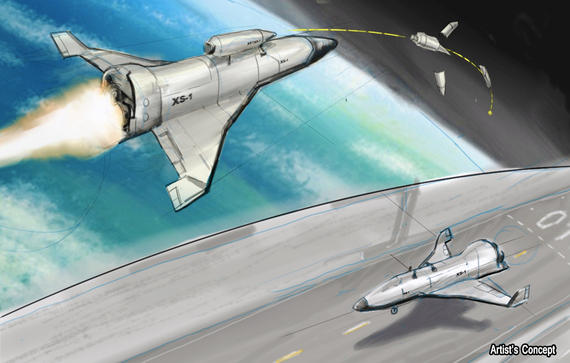
DARPA has set an extremely ambitious goal to create a vessel (under their XS-1 programme) that could go into space 10 times in 10 days with flight costs as low as $5 million. They have so much faith in this programme that they have funded the second stage in their design competition.  The dream is to make a reusable space plane under the XS-1 programme which is the workhorse successor of the Space Shuttle fleet.

1280x720-_NR

The concept has a lot of scientific and financial challenges queued up but it is believed that DARPA can take this challenge head-on by rounding up the talents of the aerospace industry. $6.5 million have been awarded to each of the three teams that belong to Boeing and Jeff Bezo’s Blue Origin, Northrup Grumman featuring Scaled Composites and Virgin Galactic and Masten Space Science Systems together with XCOR Aerospace. All these three teams have to use this money to continue with the development of the cheap, reusable space planes as proposed by DARPA. If we could find success at the end of this tunnel then sending things to the space would be so much easier and economical.

[adinserter block=”7″]

Author: Technology Blog
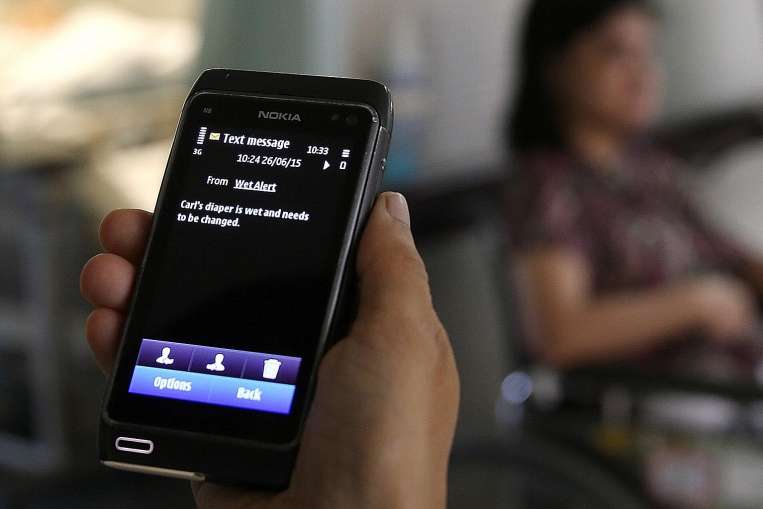
Wetness Sensor Diapers Coming Soon

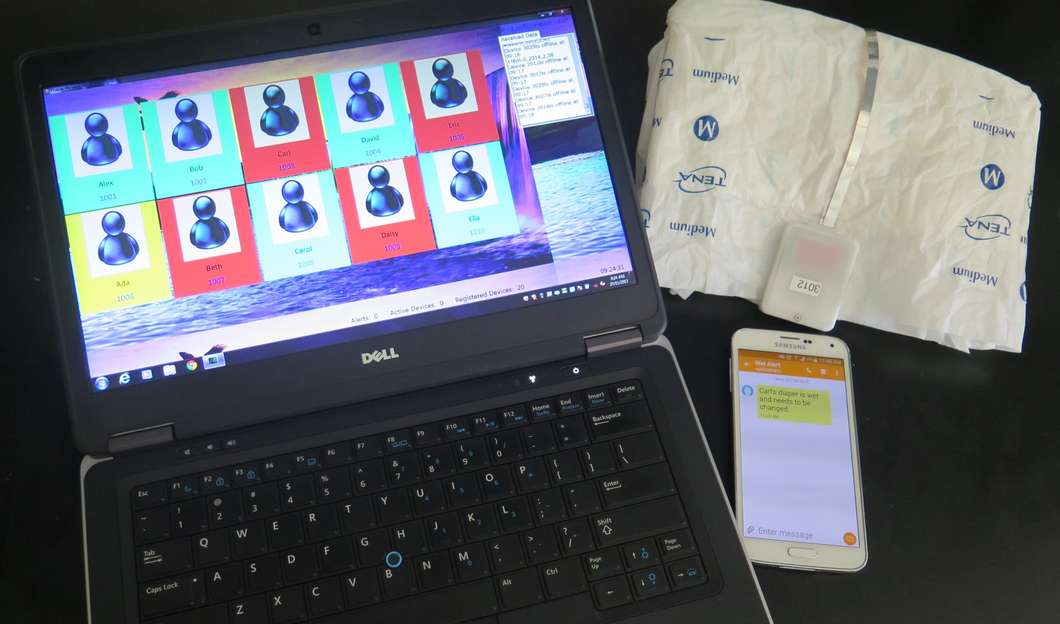
Researchers at the Agency for Science, Technology and Research’s Institute of Bioengineering and Nanotechnology (IBN) in Singapore have come up with an adult diaper that notifies the user after a certain amount of wetness has been reached. The notifications are sent straight to the specified mobile.

sleep-side

The arrangement includes a thin disposable sensor strip, a compact wireless transmitter and a receiver. These diapers could be useful to adults struggling with cognition and speech.

Sensors used by these, can also be applied to a current standard adult diaper. After making use of the diaper, it can be discarded. The wireless transmitter can be saved for future reuse.

diaper-sensor-1@2x

20 elderly residents at a retirement home in Singapore between November and December 2013 and validated by the Agency for Integrated Care and geriatrician Dr Philip Yap, who works at Khoo Teck Puat Hospital. The study safely concluded that the people wearing diapers with sensory device spend 90% less time in wetness than the ones who don’t.

[adinserter block=”7″]

Author: Technology Blog

Now have Printable Solid State Batteries

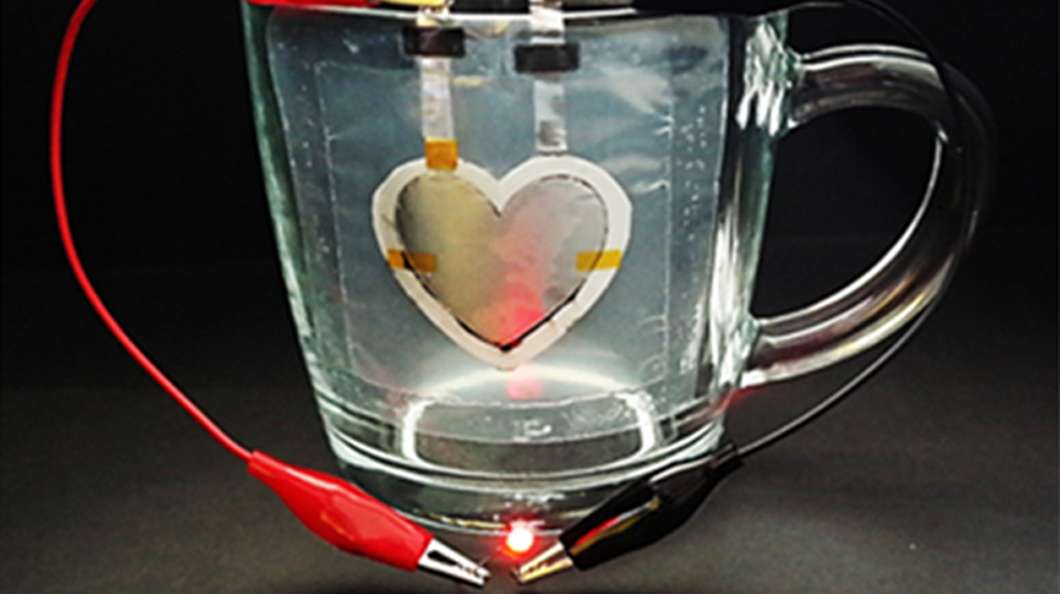
If you’re tired with the same old type of batteries with the few varying shapes and leaking walls, it’s time to switch to these new printable solid-state batteries, which can be of any shape under the sun and be fitted into any surface you want.

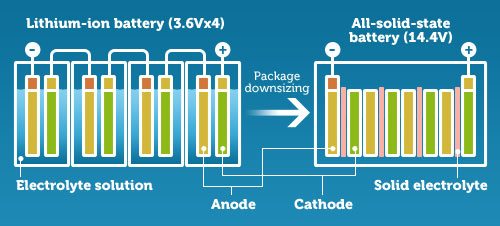
The main difference between these new batteries and the conventional ones is that the Li-on batteries come with a divider between two electrolytes so as to avoid mixing. These new inventions come with solid electrolytes that acts as ion-conducting medium.

printablesolidstatebatteries@2x

“The new solid-state electrolytes are printable and also solidify after exposure to UV irradiation, eventually acting as an alternative separator membrane,” says Sang-Young Lee, a Professor at the Ulsan National Institute of Science and Technology (UNIST) in South Korea.

The electrodes inside the battery are encased by a paste-form of electrolyte. After the batteries are printed out in the desired shape, and fixed onto a surface, (For instance, the frame of a mobile phone could itself be a battery), the battery is exposed to UV rays and the paste hardens.

The printed battery has been shown to provide just as much runtime as traditional batteries. It is to be shown that 90 percent capacity retention after 30 cycles with no loss of charge. These properties of the printed battery are attempting to be improved upon by change in the density and/or increase in the printing area.

“We are trying to find unprecedented application fields that we have not yet encountered, most of which have difficulties using traditional batteries due to shape/design limitations,” Lee says. “One of most promising application fields is wearable electronics and the IOT (Internet of Things).”

4937730bf21683c92e880a2922330796

Technologies like 3-D, and ink jet would greatly benefit from these printed batteries. If all goes well, 5-7 years of waiting before these batteries are out.

[adinserter block=”7″]

Author: Technology Blog
Verified by ExactMetrics