3-D printing to print some amazing things and objects!

Till now, you have read about a lot of weird things 3-D printing can do: making stuffed animals, creating fake meat and all but now the technology is gearing to do some serious work in its field. Just read on and find what amazing things can be printed using this technology.

198e80e3-c438-4316-9e51-df506d393031-1020x612

  • Customized detailed moulds of your jaw: Our body is one such thing that requires customization for almost everything related to its health. 3-D printing can really prove to be a boon in this field. For example you must know or unluckily might have had to know via your own experience how jaw moulds are created. You have to leave that cement stuff in your mouth to create impressions of your pearlies on it so that the dentist or orthodontist can create things like retainers or braces. 3-D printing is surely making its progress in the field of creating dental trays and no wonder in a much easier and no-hassle way than the traditional one.
  • Organs and bones: There is a lot of hope that in future, 3-D printing can actually create internal organs along with eyes, nose, ears, skin, blood vessels and bones. In 2013, medical company Organovo started selling 3D-printed liver tissue. And already, companies are creating cheap, 3D-printed prosthetic limbs for kids. Not stopping at this, with the help of CT scan it would be possible to create replica of people’s internal organs.
  • Customized surgical stents: 3-D printing can also make itself useful in making stunts- the little tubes that surgeons put in our bodies (in a blood vessel or artery) to hold it open and allow it to function. One such stent was actually fitted above an infant boys’ lung to open the airways and help them breathe normally.
  • Replacement parts for your organs: 3D printing can amazingly be used to make surgically-implanted hardware that protects or supports damaged organs. This could lead the way to custom repairs for damaged tracheas or windpipes For instance, Feinstein Institute of Medical Research actually produced bio engineered trachea using this technology and that too cheaply and quickly.
  • Models of molecules: Till this date molecule models were made with popsicle sticks but using 3-D printing, huge, tangible models of molecules can be created as it can print even those complex geometries where obscure shaped stuff like zillion-sided polygons can also be printed.
  • Lighter airplanes: 3-D printing technology is poised to produce lighter and more fuel efficient airplanes cutting the total weight up to 55% in all its probability. 3-D printed polymers have high strength to weight ratios so if 3-D printed plane parts are used it will bring down the total weight of the plane and hence increase its fuel efficiency.
  • Personalized car parts: customized car parts can be made using the 3-D printing technology, for example an ergonomic steering wheel custom-built for the driver’s body and comfort. This technology also makes the process of prototyping very easy and fast and cheaper hence helping in frequent testing.


18ljch0osb13vjpg

Jonathan Jaglom, CEO of 3D printer manufacturer MakerBot, sums up quite correctly “3D printing bridges the gap between the digital and the physical world, and lets you design pretty much anything in digital form and then instantly turn it into a physical object.”

[adinserter block=”7″]

Author: Technology Blog
How Driving Might Become Illegal

With driverless cars and continuous advancements in technology in the field of transport taking place, future generation might not drive. But what we are talking about here is an absolute ban on driving.

2014_volvo_autonomous_drive_me_testing_01-0430-mc-819x819

We’ll be too lazy to lift our hands to control the steering wheel anyway, in the future. So what calls for the ban?

Driving is the most dangerous task an average person will be undertaking in their entire lifetime. We drive to places daily. To work and back, to the grocery store and back…in that process, we multitask. We take selfies, we drink coffee, we text and we listen to music in the car or motorcycle. But did you know that actions such as drinking coffee, talking on the cell phone or eating, could reduce one’s reaction time same as an ounce of alcohol? Now that might not seem as much, but driving accidents have been increasing every year from easily avoidable actions on the part of the driver. More than 1.2 million people are killed in car accidents globally each year (which is more than the total casualties suffered by both sides in the Korean War).

Let’s say that you are sober and completely in control, looking out for the red lights and stop signs. But your office has been working you late and you are too sleepy to look straight. BAM! According to the National Sleep Foundation, 69 percent of adult drivers report driving while drowsy at least once a month.

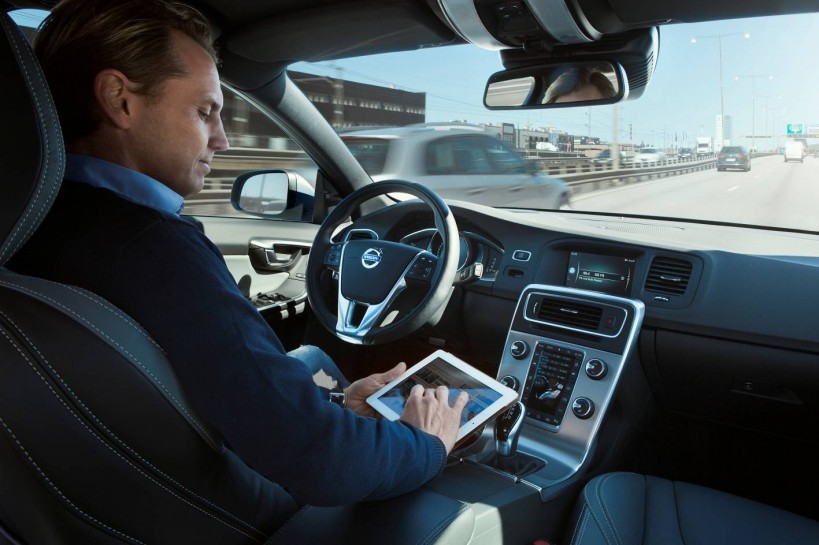
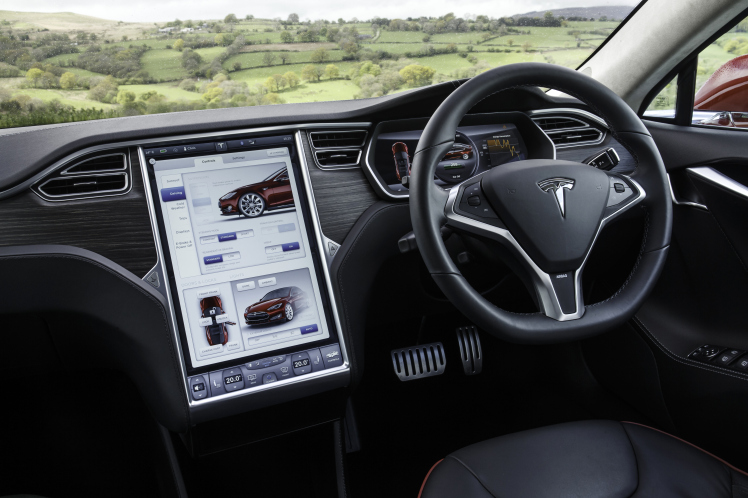
Autonomous vehicles don’t need rest. They do not get distracted while on the job. They are fitted with cameras, infrared sensors, networked maps and a host of other software, which enables them to foresee and plan accordingly to avoid danger in ways that the human mind is too “scattered” to solve. They can brake faster, swerve quicker and also communicate with each other more efficiently and effectively than human-navigated vehicles.

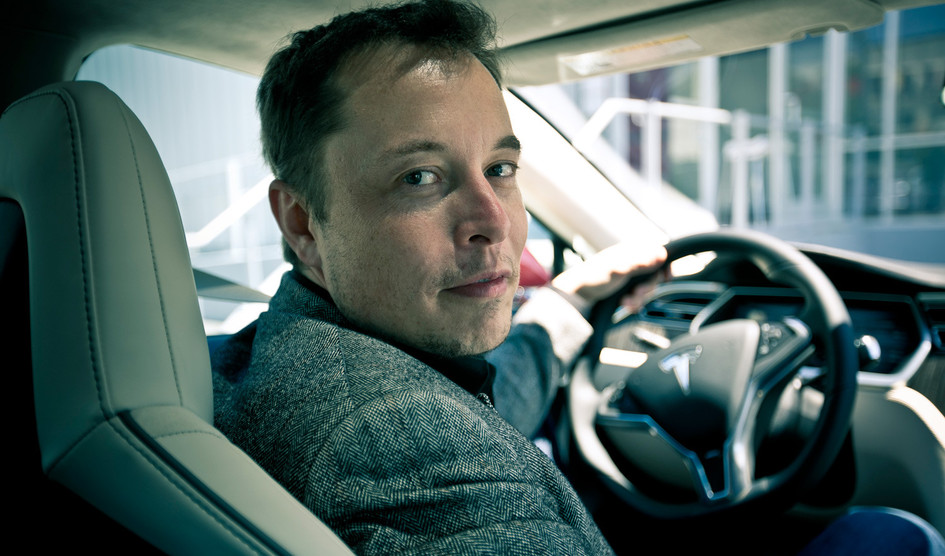
Tesla CEO Elon Musk shocked the world when he proclaimed, “people may outlaw driving cars because it’s too dangerous.”

tesla_wales_may2014_154

But according to the Eno Center for Transportation in Washington, D.C., about 21,000 a year would be saved if even a partial fraction of people stop driving manually. The faith in this belief that autonomous vehicles is the lifesaving solution can be evident seen in many countries. For example, the University of Michigan just dedicated 32 acres to build a self-driving test track. And the British government recently invested more than £50 million for trials to make British a global hub of self-driving cars tester and their component manufacturer.

[adinserter block=”7″]

Author: Technology Blog
Tiny Fusion Reactors are the Future

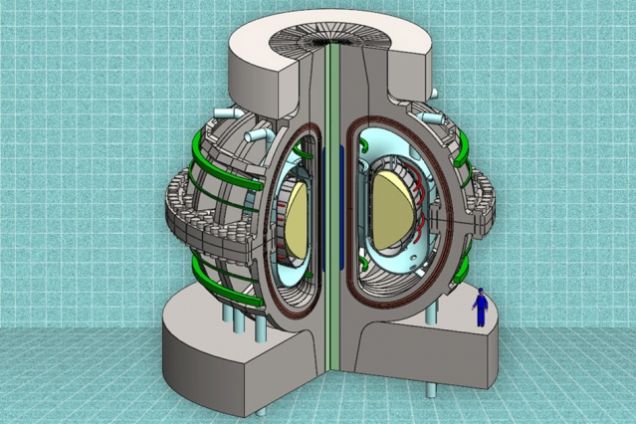
Magnet technology has made an advancement which would led us to believe that we might be closer to small nuclear fusion reactor. This fusion reactor, half the diameter of existing models,  is made up of barium oxide-based superconductors and produces magnetic fields strong enough to power electricity for 100,000 people.

1381265281583919143

Fusion is a process when two hydrogen atoms bang together and form helium, at extremely hot temperatures. The hot hydrogen plasma is the only limiting factor; we can’t bring it up to the temperature sustained inside the sun. Thus, we have our hopes on magnetic fields. But to produce this much energy, the great size of the fusion reactor required would be unrealistic.

The journal Fusion Engineering and Design talks about the type of fusion reactors we can hope to have. The strong magnetic fields created by the Earth’s superconductor, would reduce the original estimated size greatly. The fusion reactor, in theory, should produce 10 times the energy by a standard semiconductor, without getting short circuited and derived continuous, uninterrupted supply of electricity for a fair period of time.

Solid materials that make up the insulation for the chamber inside the reactor, have been swapped out for liquids instead. The argument being is that liquid can be drained off without any elaborate procedure, and could help with cost effectiveness.

dynomak-5

“Fusion energy is certain to be the most important source of electricity on earth in the 22nd century, but we need it much sooner than that to avoid catastrophic global warming,” said David Kingham, CEO of Tokamak Energy Ltd in a statement. “This paper shows a good way to make quicker progress.”

[adinserter block=”7″]

Author: Technology Blog
Verified by ExactMetrics