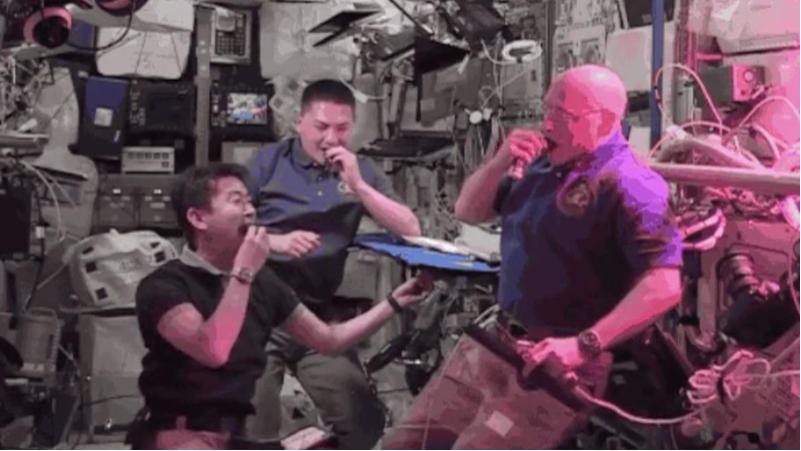
Space grown lettuce: A giant leap in the field of space station self-sufficiency!

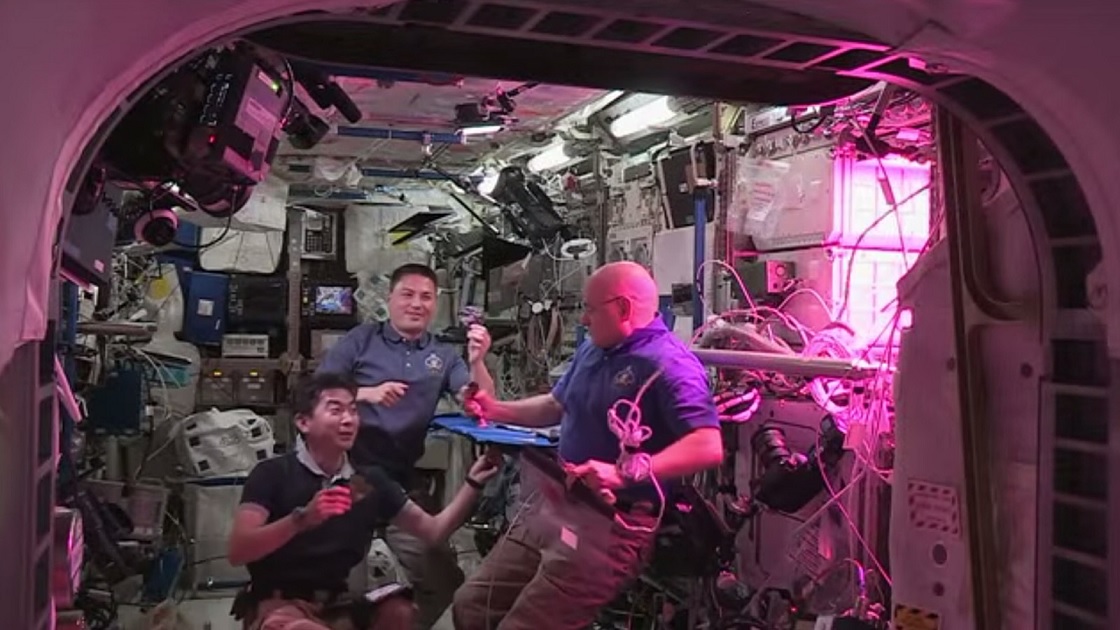
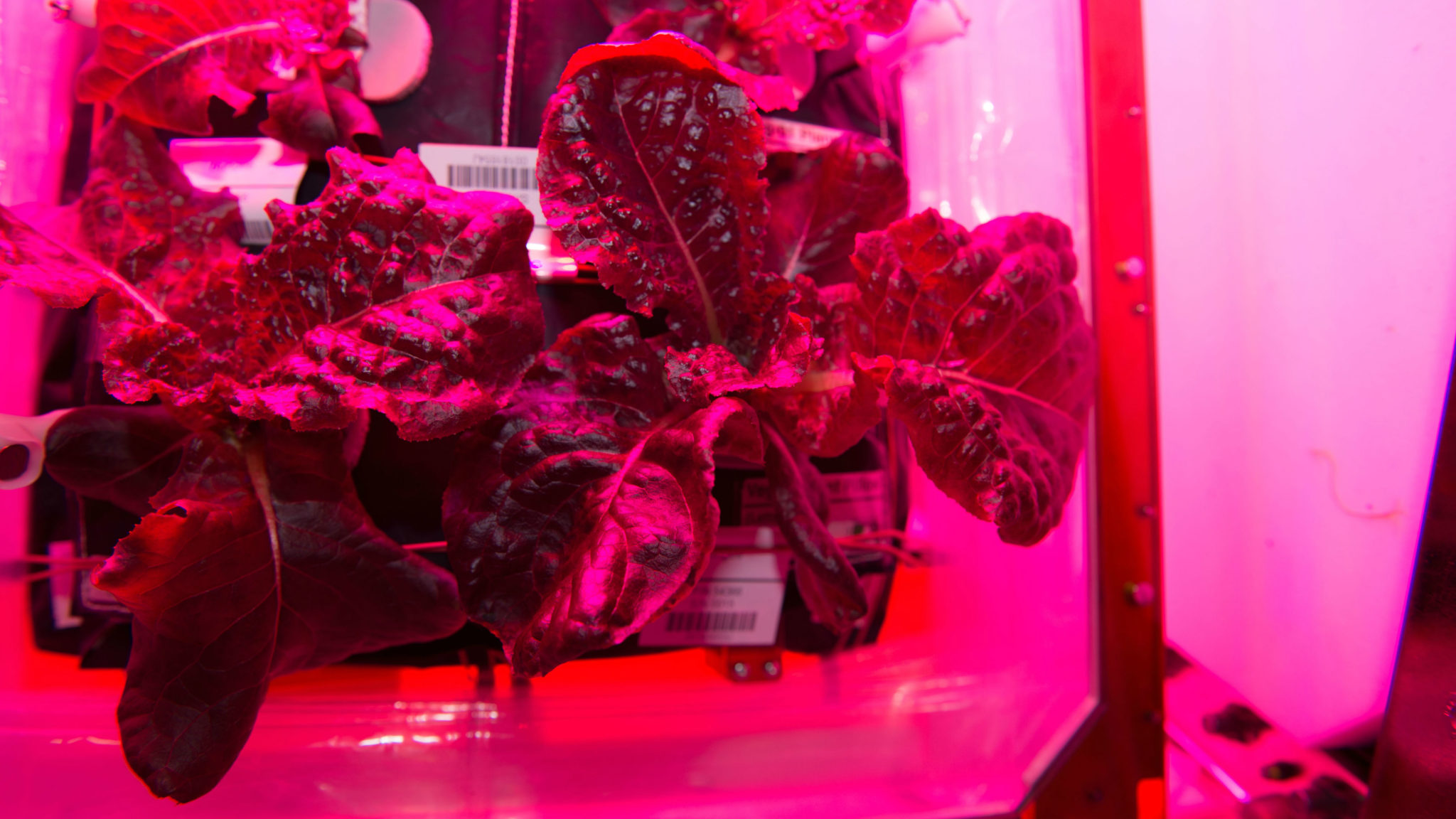
Under the Veggie Experiment of ISS, which involves growing vegetables in space, first seeds were activated in May 2014 and then in July 2015. In both the cases, plants were watered, grown and matured over a period of 33 days aboard the ISS and then sent back to earth for food safety testing. The lettuce grown in second batch is now going to walk down the path of history as it is the first space grown lettuce that will be eaten by the members of the International Space Station’s (ISS) Expedition 44 crew. These plants were grown right there on the space station in zero gravity in miniature greenhouses called “Veggie.”
Untitled1

According to Ray Wheeler, lead for Advanced Life Support activities in the Exploration Research and Technology Programs Office at Kennedy: “There is evidence that supports fresh foods, such as tomatoes, blueberries and red lettuce are a good source of antioxidants. Having fresh food like these available in space could have a positive impact on people’s moods and also could provide some protection against radiation in space.”
space_lettuce

If this proves successful, it will cut down the number of supply missions for any project and will also prove to be a very important phenomenon in NASA’s manned mission named Journey to Mars that is expected to take place in 2030’s. NASA payload scientist Gioia Massa commented on this success story and said: “The farther and longer humans go away from Earth, the greater the need to be able to grow plants for food, atmosphere recycling and psychological benefits. I think that plant systems will become important components of any long-duration exploration scenario.”

[adinserter block=”7″]

Author: Technology Blog

Targeted Nanocapsules to Save Lives

Heart attacks and heart attack like events invariably result in blood clots, almost instantaneously. If not tended to quickly, clots can prove deadly by hemorrhaging. Drugs to dissolve clots are present, but their delivery is the catch. The doctors have to deliver the right dosage, at the right time, to the right place of the clot before it’s too late.

c4cc04248d-f1_hi-res

A team of Australian scientists from the Baker IDI Heart and Diabetes Institute and the University of Melbourne have come up with a solution that could prove revolutionary in this respect, as it uses the very substance which is present in fresh clots.

Thrombin is an enzyme that plays a major role in blood clotting. It is an essential substance without which we would not be able to stop bleeding even from a minor injury. Thrombin makes cross links between clots to make them stronger.

The scientists have taken a previously approved clot buster into work, called urokinase (uPA) and loaded it into a nanocapsule. This capsule is made up of a careful design of peptide sequences arranged so that it doesn’t break down before it reaches the target.

nanocapsules

Thrombin is present is freshly formed clots. On reaching a recent clot, thrombin will break down the nanocapsule and the clot buster can work its magic. The capsule can’t break down in any other location owing to the lack of thrombin.

“If you have a clot that is old, it won’t trigger the process as there is not enough thrombin,” lead researcher Christoph Hagemeyer explains. “The intention is to give the drug as soon as possible. It could be given in a heart attack straight away, in the ambulance as soon as there are symptoms.”

[adinserter block=”7″]

Author: Technology Blog

Verified by ExactMetrics