Trying to get pregnant? A little gadget in the ear can tell you about your most fertile days!

Pregnancy is the most wonderful phase in a woman’s life but those women who are trying to get pregnant the wait can really spell doom if they can’t conceive as per their plan. To find out their ovulation days, the most common way is to record their BBT (Basal Body Temperature) that is their lowest body temperature in 24 hour period. For this, the woman has to wake-up and has to take her temperature before sitting up preferably at the same time, everyday.

yono-fertility-monitor-and-app-600x400

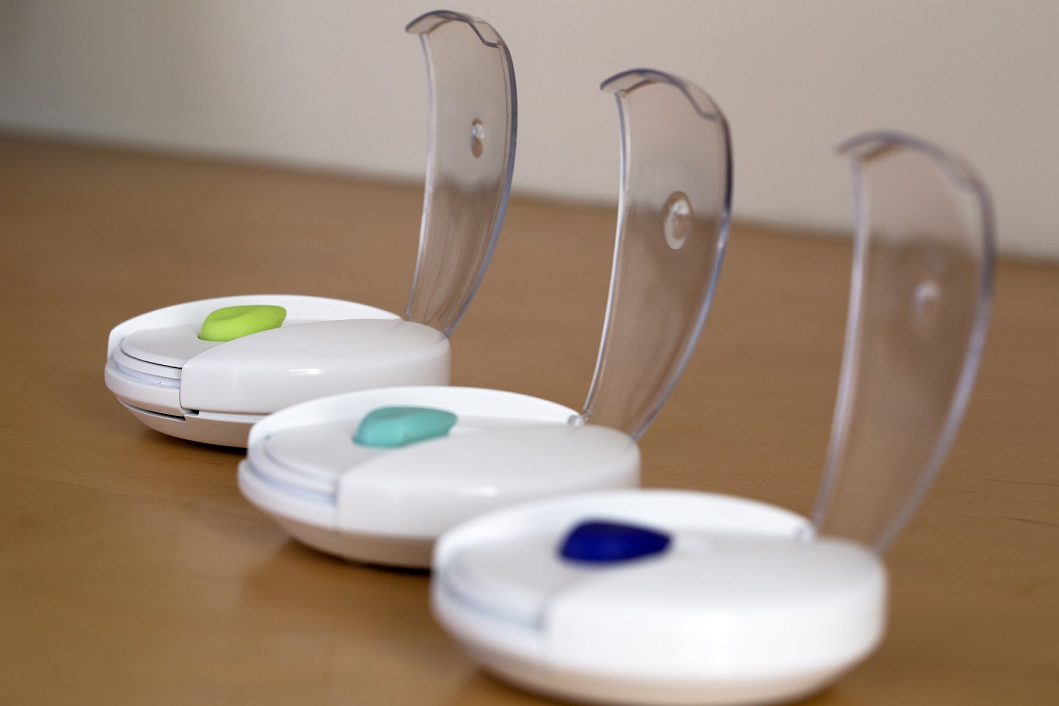
Now, a small gadget YONO comes to their rescue. The small gadget is designed to wear in the ear. One just has to slip it on at night and the YONO tracks the body temperature to determine when it reached its lowest, gathering data every five minutes. The next morning, the YONO is removed and placed on its charging cradle which then broadcasts the data from the earpiece to a mobile app via Bluetooth.

Vanessa Xi, CEO and founder of Bay Area-based YONO Labs says that, “Our technology is quite different from infrared technology, which you see in traditional in-ear thermometers. Our sensor measures the body temperature in the ear canal.” It is said that the BBT of a woman generally occurs between 2 am to 6 am and the device does require you to be a sound sleeper. The earbud is designed in such a way that it doesn’t cancel any voices and stays put throughout the night and women do not need to get up and sleep at fixed time daily. Adding to this, there won’t be any problem if you don’t transfer data, everyday. Every three to five days is normal. Once the data is transferred to the app, YONO will determine through BBT when a woman is ovulating.
yono

Priced at $ 149 it is pricey, but the company is starting a leasing programme which will offer women a chance to use YONO for four months for $60 and a $15 refund per month not used if pregnancy happens quickly. According to the company it is perfectly safe to give YONO to a friend or family member even after it has been used. Hope the little gadget helps bring many little ones into this world!

[adinserter block=”7″]

Author: Technology Blog
The Best Tsunami Shelters! Possibly!

This summer’s New Yorker Cascadia Subduction Zone story, warned about a possible devastating earthquake and tsunami in Pacific Northwest. This article not only impacted the magazine readers, but was spread and soon known by many more. Sadly, a section of the story also told about small communities that were helpless for their own safety, as every attempt to build a shelter was dwarfed and eliminated by the lack of funds. People were adamant against even a marginal increase in their salaries, however insignificantly. One K-12 school in Oregon suffered in this way as, “The tax increase for residents amounted to two dollars and sixteen cents per thousand dollars of property value,” wrote Kathryn Schulz. “The measure failed by sixty-two per cent.”

1375269061080785812

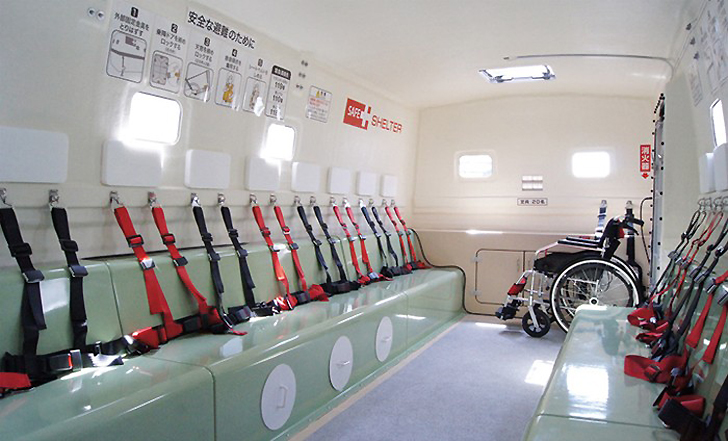
According to this week’s Hakai, the coastal-science magazine, in the US town of Westport, Washington, publicly-funded tsunami shelter is being built in what can only be called- a two-in-one design. This shelter, which can support 1000 people easily, is to being built above a gym previously constructed for the Elementary High School. This structure would safely keep the refugees of the shelter 55 feet above sea level.

“The gym will be bolstered by reinforced concrete cores at each corner with staircases leading to the roof. Even if the walls are ripped away, the cores should remain intact through both the quake and the tsunami”, Ash said.

This two-in-one design is called a vertical tsunami shelter. This design would be a good idea as it is fairly cheaper to bring about than a completely new construction. It only added 20% to a Westport budget.

1375269061432467348

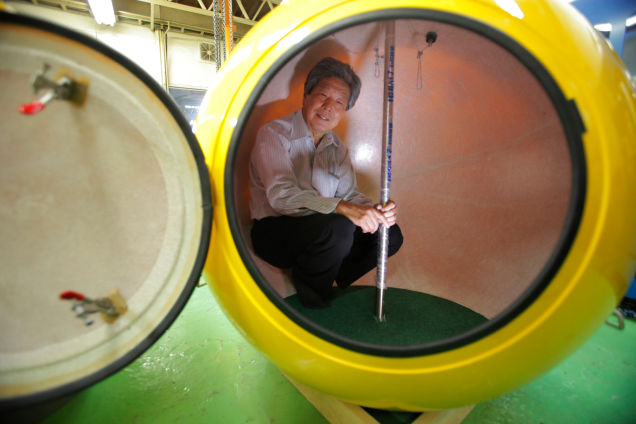
The Westport model is revolutionary as it is inspiring low lying communities, with less funding, to build a similar cheap model. Other specialised techniques pill-shaped concrete pods built by a company called STATIM, can protect about 80 people each, but costs $100,000 a pop, according to New Scientist.

[adinserter block=”7″]

Author: Technology Blog

Verified by ExactMetrics