Head Shooting Venom: How Lethal Can a Frog be?

Nearly all of us are aware of the notorious blue poison dart frog. It is native to Brazil, and is of a curious blue colour. And, as you can probably guess, is very poisonous. Then scientists come up with these species of head shooting venomous frogs, and you got to wonder: how deadly can frogs?!

First you got to hand it to these tiny beings, small and adorable with the distinct “ribbit”, they seem harmless. But when you observe their colour diversity and toxic varieties, you are forced to think twice.

2B26A84600000578-0-Carlos_Jared_Butantan_Institute-a-41_1438878407432

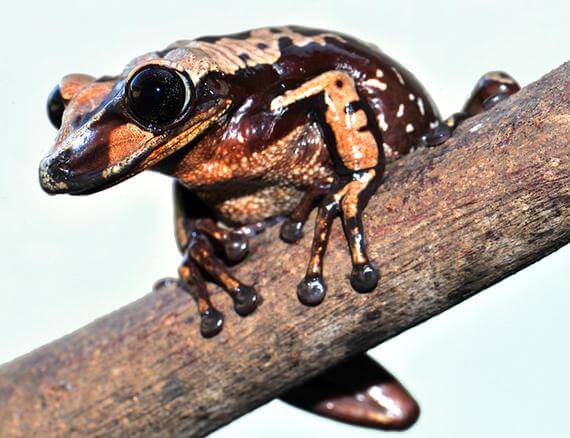
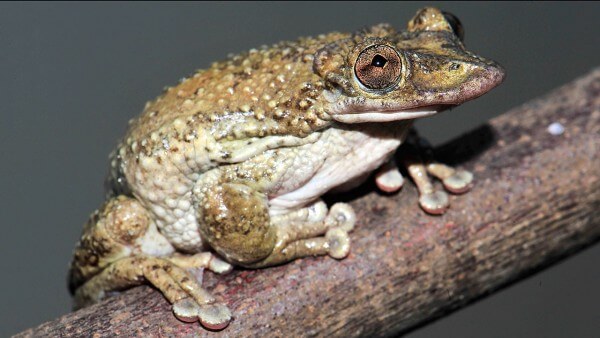
Carlos Jared, a scientist from Instituto Butantan in São Paulo, Brazil, discovered this the hard way when a C.greeningi frog shoot its venom into his finger with which he had accidentally touched the spiny head of the frog and the poison caused “intense, radiating pain for a period of about five hours,” according to the statement.

Out of the two new frogs, Corythomantis greeningi and Aparasphenodon brunoi, also known as Bruno’s casque-headed frog, discovered the C. greeningi is luckily the less venomous of the two.

greeningi and A. brunoi have come to become the first species of venomous frog discovered, with the bony spines located on their heads that can deliver the venom. The study says that C. greeningi possesses the “greatest development of head spines and enlarged skin glands producing a greater volume of secretion.” Bruno’s casque-headed frog delivers “more lethal venom” that is 25 times deadlier than the venom of a pit viper.
sn-frogheads

In addition to this, these frogs possess the highly toxic skin secretions common with almost all the frogs. Even though scientists are trying to discover further species which have been overlooked on their venom injecting ability, and hope to form other uses of these venom and poisons. Even though the researchers from Arizona State University came up with how the venom from poison dart frogs could make an excellent protective skin for airplane wings that prevents ice buildup for an hour and lasts more than 60 times longer than “superhydrophobic coating”, we would find it in our own best interests to steer away from these vicious beings.

[adinserter block=”7″]

Author: Technology Blog

The Future Sun

Southern Owl Nebula is a planetary nebula, and gives off gas when it gets to the end of its lifetime. The star’s hot core, ionizes the gas and makes the body glow. This structure looks more like the ghost of the star.

CoRoT-Mission-Will-Help-Unveil-the-Future-of-the-Sun

The nebula was from European Southern Observatory’s Very Large Telescope, in Chile. There is a count of 10,000 planetary nebulas present in our Milky Way galaxy.

Astronomer William Herschel thought they were round like planets, and the name stuck in the 1700s.

space6

Our sun is a vibrant, living star now. The collapse and death of a start takes just 20,000 years. By astronomical time scales, it’s like the equivalent of the blink of an eye. Our sun is safe for another few billions years, sources estimate.

[adinserter block=”7″]

Author: Technology Blog

This GE robot inspects nuclear reactors

Nuclear reactors are the need of the hour. In today’s world they are a necessity. But the problem is, these reactors are complex things when it comes to inspecting them. Immersed in a pool of coolant water and to moderate the nuclear reaction, the reactor and the water vessel that contains it, requires periodic cleaning and inspection to ensure that it’s safe and operating efficiently which is a very expensive and labour intensive task. Adding to that the fear of exposure to radiation always hangs in the air. In order to let workers do their job, special bridges need to be hauled in and installed over the pool of coolant so that workers can walk out with poles tipped with tools and instruments.

ge-stinger-2@2x

In a bid to make this whole burdensome process safer, cheaper and faster GE Hitachi Nuclear Energy has developed a free-swimming robot “Stinger” that can replace humans for cleaning and inspecting reactor vessels. The “Stinger” swims about using an advanced camera and remote positioning technology and an operator controls it sitting in a tent far away from the radiation area.

Nuclear-Reactor

This not only removes the need for a bridge, but also allows refuelling operations to continue uninterrupted. Jerry Dolan, Senior Tooling Manager at GE explained, “Stinger uses a hydrolaser to blast welds with water before it shoots HD video of the weld. This video is then beamed near real-time to Nuclear Regulatory Commission-approved inspectors at our global Center of Excellence in Wilmington, NC, where they are analyzed. Stinger literally replaces eight people standing on the bridge of the reactor lowering cameras and brushes with ropes and pulleys. It is much faster and more accurate than previous methods while also significantly reducing radiation dose.” Science does indeed serve humanity in a wonderful manner.

[adinserter block=”7″]

Author: Technology Blog

Verified by ExactMetrics